

Picking a replacement bulb for recessed cans shouldn’t feel like decoding a parts catalog. The right bulb transforms a kitchen ceiling from flat and forgettable into something genuinely welcoming, and the wrong one leaves you squinting at dinner. I pulled together this list for homeowners who want warm, reliable light without spending a weekend comparing spec sheets. Each option below fits a different fixture size, dimming need, and budget, so you can match the bulb to the room instead of forcing a square peg into a round socket.
The Main Contenders
Vinaco PAR30 Short Neck Flood Light Bulb 75W Dimmable

Vinaco PAR30 Short Neck Flood Light Bulb 39W

Vinaco PAR30 Short Neck Halogen Flood 50W

Philips Hue BR30 White & Color Ambiance Smart Bulbs
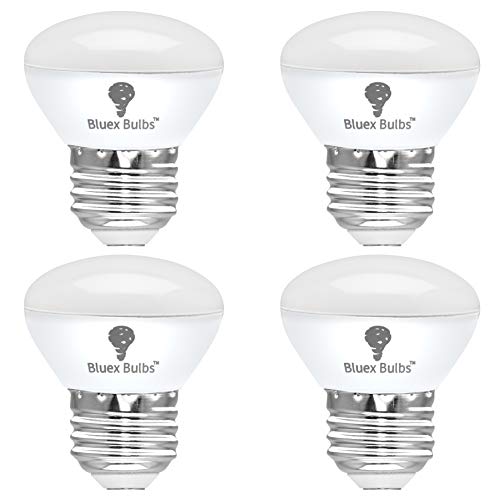
Bluex Bulbs 4-Pack R14 Mini Reflector LED 4W

Feit Electric BR30 LED Bulb 5CCT 6-Pack

VSTAR PAR36 LED Bulb 15W Daylight 2-Pack

Gardencoin MR16 LED 5W Dimmable 6-Pack

KOR PAR38 LED Flood Light Bulbs 100W Eq 2-Pack
Inside Each Recommended Option
This PAR30 short-neck halogen fits the snug housings found in many older ceiling cans, where longer-neck PAR30s simply won’t seat properly. The 75W rating delivers a generous pool of warm 3000K light, which lands comfortably for kitchens where you’re chopping vegetables or for living rooms where you want that classic incandescent warmth rather than a clinical blue tint.
The standard E26 base means it drops into the same socket as a regular household bulb, so there’s no rewiring or adapter hunt. Compared to the lower-wattage Vinaco PAR30 below, this one trades a smaller energy bill for noticeably more punch on the countertop, which most homeowners chasing brightness will appreciate.
Where It Excels
- The 75W output floods medium and large recessed cans with enough light to handle task-heavy rooms.
- Warm 3000K tone reads as cozy rather than cold, suiting dining nooks and family rooms.
- Short neck geometry fits tight 4-inch and 5-inch housings where standard PAR30s wobble or fail to seat.
- Standard E26 base means no special socket or wiring change at install time.
- Dimmable performance lets you drop the room from task mode to movie mode with a standard wall dimmer.
Things To Consider
- Halogen runs hotter than LED, so enclosed cans need adequate ventilation to avoid premature failure.
- The 75W draw will show on the monthly utility bill more than the 39W sibling below.
Key Specs
Who It Suits Best
Homeowners with short-neck recessed housings who want a halogen glow with real brightness and standard dimmer support.
Where Another Pick Suits Better
The Feit Electric BR30 LED 6-Pack is the smarter call for anyone prioritizing low heat and 5CCT flexibility over halogen warmth.
The 39W version of the Vinaco PAR30 cuts the energy draw roughly in half compared to its 75W sibling, while still casting a familiar halogen 3000K warmth. That makes it a sensible swap when you’re rewiring a hallway full of cans and don’t want each fixture to feel like a small heater bolted into the ceiling.
Light output lands lower at 400 lumens per bulb, so a single fixture won’t carry a large kitchen on its own. For ambient zones like bedrooms, dining edges, or a cozy den, this wattage reads as more flattering and less glare-prone than higher-output halogens.
What Helps Most
- The 39W draw keeps ceilings cooler, which helps in poorly ventilated older housings.
- 3000K tone stays consistent with the 75W version, so you can mix wattages room-to-room without color drift.
- Short neck fits shallow cans that block longer PAR30 necks.
- Standard E26 base keeps installation as simple as screwing in a household bulb.
Worth Noting
- 400 lumens is modest, so larger rooms will need multiple cans lit to feel properly bright.
- Halogen lifespan is shorter than LED alternatives in this lineup, which matters for hard-to-reach ceilings.
Right Fit For
Readers outfitting a bedroom or hallway who want warm recessed lighting without high wattage or excessive heat at the trim.
Consider Something Else When
Anyone chasing true smart features should reach for the Philips Hue BR30 set instead.
The 50W Vinaco PAR30 sits in the middle of the halogen family, which makes it my default suggestion when someone is replacing mismatched cans across a whole home and wants the light to feel uniform. The 3000K warm tone matches what most homeowners picture when they imagine recessed lighting at night.
At roughly 650 lumens, it lands in a comfortable middle ground: enough light to read by in a living room, but not so intense that a dining table feels like an operating theater. In practice, this is the wattage people gravitate toward when they don’t want to commit to either “soft ambient” or “task lighting” extremes.
Practical Advantages
- 50W output gives a balanced lumen count that suits living rooms, hallways, and bedrooms equally well.
- 3000K warm white complements wood floors and warm paint tones without washing them out.
- Short neck PAR30 form fits shallow 4-inch recessed cans where longer bulbs won’t seat.
- E26 base keeps the swap a one-step, no-tool install.
Room For Improvement
- Halogen heat output still exceeds LED, which can shorten trim gasket life over years of daily use.
- Lifespan trails the LED options on this list by a wide margin, so ceiling-height replacements happen more often.
Feature Snapshot
Made For
Homeowners standardizing one bulb across an entire home’s recessed cans who want a halogen glow without extremes.
Skip It When
The KOR PAR38 LED 2-Pack is a better fit for tall ceilings that need broader flood coverage.
The Philips Hue BR30 turns ordinary recessed cans into a fully programmable lighting system, with millions of colors and full Bluetooth control out of the box. Add the Hue Bridge later and you unlock automations, remote access, and the deeper app features most smart-home enthusiasts end up wanting anyway.
For a living room used for movie nights, dinner parties, and quiet evenings with a book, the ability to shift from a candle-warm 2200K to a saturated teal in seconds genuinely changes how a space feels. The trade-off is that you pay for the ecosystem, so it makes the most sense if you’re already thinking about smart lighting room by room.
The Helpful Details
- Bluetooth control works without any hub for renters and first-time smart-home users.
- Millions of colors and tunable white give full control over mood lighting from one app.
- 25,000-hour rated lifespan means years between replacements even in high-traffic rooms.
- Compatible with Alexa and Google Assistant when paired with the Hue Bridge.
Small Caveats
- Full feature set requires the separate Hue Bridge, which adds to the total cost of entry.
- Hue pricing sits well above non-smart BR30 LEDs like the Feit option later in this list.
Best Suited To
Smart-home builders and entertainment-room owners who want color control and voice integration from their recessed cans.
A Better Fit Elsewhere
Feit Electric’s BR30 5CCT 6-Pack is a friendlier choice for shoppers who want color-temperature flexibility without the smart ecosystem.
The R14 mini reflector is a specialty size designed for tight fixtures where a standard BR30 simply won’t fit, like curio cabinets, small picture lights, and certain compact recessed step lights. The 4W draw produces the equivalent brightness of an older 40W incandescent, which is genuinely useful when the goal is highlighting a collection rather than lighting a whole room.
Because it’s an LED, you get the full dimming range without the flicker that often plagues dimmable mini incandescents on inexpensive wall dimmers. In a glass-front display case, the warm 2700K tone flatters collectibles without the yellow cast you’d get from cheaper LED minis.
The Practical Payoff
- The R14 mini form factor fits compact display fixtures where larger bulbs physically won’t seat.
- 4W LED replaces older 40W incandescents, cutting energy use in always-on display lighting.
- 2700K warm white flatters wood, ceramics, and textiles inside curio cabinets.
Potential Drawbacks
- Output is limited compared to full-size BR30 bulbs, so it won’t carry a whole room.
- The E26 base is standard, but some very small fixtures still want an E12 candelabra base, which this isn’t.
Perfect Match For
Collectors and hobbyists lighting curio cabinets, small display niches, or short recessed step fixtures.
Not Your Match When
Standard ceiling cans need the broader beam of the Feit Electric BR30 6-Pack instead.
Feit’s 5CCT (5 selectable color temperatures) feature solves a problem most homeowners don’t realize they have until they’re staring at three boxes of bulbs. Soft White, Bright White, Neutral, Cool, and Daylight all live inside one bulb, switchable via a small toggle on the bulb itself. That’s a genuine lifesaver when a kitchen refresh changes the cabinet color and suddenly 3000K reads too yellow.
As an LED, it uses a fraction of the energy of older 65W incandescents while still producing a similar lumen output, which keeps electric bills reasonable for homes with a dozen or more recessed cans. The 6-pack also covers most full-room retrofits in a single purchase.
Everyday Advantages
- 5 selectable color temperatures on the bulb itself remove the guesswork when matching new paint or cabinets.
- Replaces older 65W incandescents at a fraction of the energy cost.
- 6-pack covers a typical full-room recessed retrofit in one purchase.
- Dimmable on standard wall dimmers without flicker at low settings.
Trade Offs
- Switching color temperature requires flipping a physical toggle on the bulb, so it’s less convenient than app-controlled color tuning.
- Warmest setting reads slightly cooler than a true halogen like the Vinaco PAR30 family above.
Whose Shelf It Belongs On
Renters, recent movers, and frequent redecorators who want one bulb type that survives style changes.
Reach For A Different Pick When
The Philips Hue BR30 is the better fit when you want app and voice control rather than a manual toggle.
The VSTAR PAR36 is a specialty bulb built for low-voltage and DC applications, which makes it stand apart from the 120V household options elsewhere in this list. The 15W LED produces around 2050 lumens, an output strong enough for workshop bays, garage cans, and outdoor recessed fixtures where ordinary household bulbs would dim or fail entirely.
The integrated lenses throw a tight, focused beam rather than the broad flood you get from a BR30, which is exactly what you want when lighting a workbench or a specific work zone. The 5000K daylight tone keeps colors true, which matters in workshop and detail-oriented settings.
Well-Handled Touches
- DC and AC low-voltage compatibility lets it run on solar systems, trailers, and dedicated low-voltage lines.
- 2050 lumen output competes with older 100W halogen work lights at a fraction of the energy.
- Integrated lenses focus the beam precisely where it’s aimed rather than scattering it across a ceiling.
Where It May Fall Short
- Low-voltage DC/AC spec rules out a direct swap into standard 120V ceiling cans without a compatible transformer.
- The 5000K daylight tone can feel harsh in living spaces used for relaxing.
Built With In Mind
Workshop owners, garage tinkerers, and off-grid households running low-voltage DC lighting systems.
Look Elsewhere When
Standard household recessed cans call for a 120V BR30 like the Feit Electric 6-Pack above.
The MR16 form factor is the standard for low-voltage track lighting and many accent recessed cans, and the Gardencoin 6-pack brings LED efficiency to that niche. The 5W draw replaces older 35W-50W halogen MR16s, which matters when an accent system runs all evening or has 12 fixtures on one transformer.
The aluminum housing pulls heat away from the LED chip, which is the practical detail that determines how long these bulbs actually last in enclosed fixtures. The 2700K warm white reads beautifully against textured walls, artwork, and stone, which is exactly why people install MR16s in the first place.
The Case For It
- Aluminum housing manages heat well, helping the bulb reach a longer real-world lifespan in enclosed fixtures.
- 5W LED replaces 35W-50W halogen MR16s, easing the load on low-voltage transformers.
- 2700K warm tone flatters accent applications like artwork, stone walls, and wood features.
Some Limits To Know
- GU5.3 bi-pin base requires a low-voltage 12V transformer, which standard ceiling cans don’t provide.
- Beam is tightly focused, so it’s not the right tool for general room lighting.
The Right Fit
Homeowners with low-voltage track or accent recessed systems who want LED efficiency without rewiring.
Swap It Out When
Standard 120V ceiling cans need a PAR30 or BR30 like the Vinaco or Feit options earlier in this list.
PAR38 is the largest standard reflector size, and KOR’s 100W-equivalent LED floods rooms with high ceilings where smaller floods lose their impact halfway to the floor. The wide flood pattern covers broad zones in a single fixture, which is exactly what you want in a great room, open-concept kitchen, or large foyer.
The 15W actual draw replaces a 100W incandescent while keeping the same physical footprint, so existing cans and trims don’t need any adjustment. The high CRI (Color Rendering Index, a measure of how accurately a bulb shows true colors) rating makes skin tones and food look natural, which matters in dining and entertaining spaces.
Points In Its Favor
- 100W-equivalent output fills tall ceilings and large rooms that smaller floods can’t properly illuminate.
- High CRI 90 rating renders skin tones, food, and fabrics accurately in living and dining areas.
- 15W draw replaces older 100W incandescents without changing trim or housing.
Honest Caveats
- PAR38 size won’t fit smaller 4-inch recessed cans designed for PAR20 or PAR30 bulbs.
- 2-pack may leave larger rooms short, so count cans before ordering.
Quick Facts
Who Should Grab It
Homeowners with tall ceilings, great rooms, or oversized recessed cans who need serious flood output.
Another Choice May Suit
Vinaco’s PAR30 short-neck 75W is the better match for shallow or small-diameter recessed housings.
Choosing The Right Bulb For Your Recessed Setup
The first detail that matters is the bulb shape and base, because a beautiful bulb is useless if it doesn’t seat in your housing. PAR30 short neck fits shallow 4-inch cans that block longer bulbs, while BR30 and PAR38 work in standard 5-inch and 6-inch housings respectively. Pull an existing bulb before ordering, or measure the inside diameter of the trim opening.
Color temperature changes how a room feels more than most people expect. 2700K reads warm and cozy, ideal for bedrooms and living rooms. 3000K is a versatile middle ground that suits most kitchens and hallways. 4000K and above start to feel clinical and are usually best for workspaces, not living areas. Feit’s 5CCT option helps when you’re unsure.
Dimming compatibility trips up a lot of retrofits. Older incandescent dimmers sometimes flicker or buzz with LED replacements, so check that your wall dimmer is LED-rated. For households wanting app or voice control, the Philips Hue line integrates with most smart-home ecosystems, though it does come at a higher entry cost.
Finally, think about how the room is used. A kitchen needs bright, even task lighting across counters, which suits a wider flood BR30 or PAR30. A living room used for movies wants dimmable output and warm color, which suits the Vinaco halogens or Hue smarts. Bedrooms benefit from gentler wattages like the 39W Vinaco, while tall great rooms reach for the KOR PAR38.
Key Considerations Across These Picks
Common Shopping Slip Ups
The biggest mistake is assuming any bulb with the right base will fit. PAR30 short neck and PAR30 long neck look similar but don’t share the same seating depth, and forcing the wrong one into a shallow housing can leave the bulb hanging or fail to seat against the gasket. Measure before you buy.
Another frequent miss is overlooking dimmer compatibility. LEDs paired with old incandescent dimmers commonly buzz, flicker, or refuse to dim below a certain level. An LED-rated dimmer is a small extra step that prevents months of annoyance.
What The Higher Tier Buys
Spending more on smart or specialty bulbs usually buys control, not raw brightness. The Philips Hue premium pays for app control, voice integration, and millions of colors. The KOR PAR38 premium pays for the larger reflector needed in tall-ceiling rooms. If your needs are basic warm light at a fair cost, the Vinaco halogen family and Feit Electric LED 6-pack cover the essentials without overspending.
Frequently Asked Questions
What bulb shape fits recessed cans?
Most household recessed cans accept BR30 or PAR30 bulbs in 4-inch and 5-inch housings, with larger 6-inch cans typically using PAR38. Pull an existing bulb to confirm before ordering a replacement.
Is LED or halogen better for recessed lighting?
LED runs cooler, lasts longer, and costs less to operate, while halogen offers a slightly warmer color rendering and lower upfront cost. For most homeowners, LED is the better long-term value, especially in hard-to-reach ceilings.
What color temperature should I pick?
2700K-3000K reads warm and works for living rooms, bedrooms, and hallways. 3500K-4000K suits kitchens and workspaces. Above 4000K usually feels too clinical for residential living areas.
Do I need a special dimmer for LED recessed bulbs?
Yes, an LED-rated dimmer is recommended. Older incandescent dimmers can cause LED replacements to flicker, buzz, or refuse to dim smoothly at low settings.
Can smart bulbs work without a hub?
The Philips Hue BR30 works over Bluetooth without the Hue Bridge, but full app control, voice integration, and remote access do require the bridge. Other ecosystems may differ.
Final Takeaway
The right bulb for your recessed cans depends on your housing size, dimmer setup, and how the room is used day to day. Match the form factor first, choose a color temperature that fits the room’s mood, and decide whether smart features or simple warmth matter more to you. Any of the picks above will give you years of reliable light if the fit is right.