

I’ve spent enough late evenings squinting under dim bulbs to know the frustration of “daylight” labels that barely register. The brightest home light bulbs that actually deliver start with honest lumen counts, a usable color temperature, and the right base for the socket you already have. I pulled ten options spanning garages, dining rooms, chandeliers, fridges, and outdoor floods, so the right pick depends less on chasing numbers and more on matching the room.
The Choices Worth Comparing

GT-Lite LED Garage Bulb 60W (300W Equivalent) 6,000 Lumen

GT-Lite 3000 Lumen LED Garage Light 300W Equivalent

Energetic 24-Pack A19 LED Bulb 60W Equivalent Daylight 5000K E26

DAYBETTER A19 5000K Daylight LED Bulbs 100W Equivalent 12-Pack

GoBright E12 LED Candelabra Bulbs 40W Equivalent 5000K Flame Tip 6-Pack

GT-Lite 15,000 Lumen LED Adjustable 4-Panel Bulb 140W

SANSI 400W Equivalent 6000 Lumen Brightest LED Light Bulb
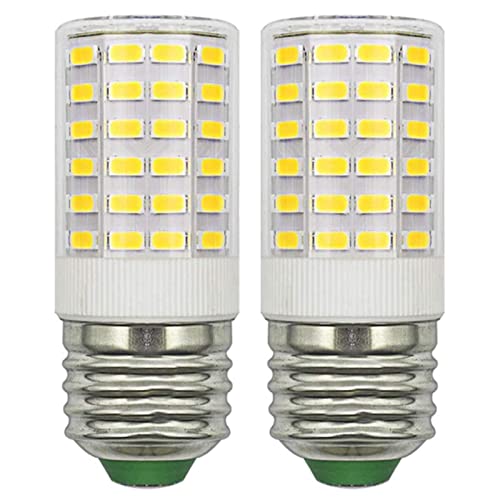
ZHENMING E26 Refrigerator Light Bulb 7W 6000K Cool White

EdisonPar Full-Glass PAR38 LED Flood Bulb 4000 Lumen 5000K 4-Pack
SANSI Super Bright LED Bulbs 3000 Lumen 5000K A21 2-Pack
A Closer Look At Each Pick
Most ceiling sockets weren’t built for 6,000 lumens, which is precisely why this bulb works so well in two-car garages with eight-foot ceilings. It draws 60 watts to push out light that would have required a 300-watt incandescent, and the medium E26 base means it drops into standard lamp holders without rewiring.
The protective shield around the LED element helps keep workshop dust and moisture from shortening its life, which matters in a space where airborne debris is constant. For anyone replacing a tired fluorescent shop fixture, this is a simpler swap than a full fixture replacement.
Useful Strengths
- 6,000 lumens from a single bulb gives most two-car garages even coverage
- Reaches roughly 30,000 hours of rated life, so the ladder stays in the garage for years
- Standard E26 base fits fixtures most homes already have installed
- Draws 60 watts for the same usable light as an old 300-watt bulb
Things To Consider
- The bulb runs warmer than smaller LED options, so enclosed fixtures without ventilation can shorten its life
- Output is unidirectional, which can leave wall corners dimmer than the center of the room
Who It Suits Best
Homeowners with a workshop or two-car garage who want one bulb to brighten the whole space without rewiring fixtures.
A Better Fit Elsewhere
The SANSI 400W Equivalent 6000 Lumen bulb is a smoother fit for enclosed table lamps where cooler-running LED chips matter more than raw output.
If the previous GT-Lite is a floodlight, this one is a steerable spotlight. Three panels pivot 90 degrees up and down and rotate 180 degrees, so the light goes exactly where the work is, not where the ceiling happens to be.
At 3,000 lumens in 5000K daylight white, it draws only 30 watts. For a one-car garage, basement workshop, or laundry area with a single socket, that flexibility often matters more than doubling the lumen count. The base still fits a standard E26 medium socket, so no electrician is required.
Well-Handled Touches
- Adjustable panels let one bulb cover a workbench, a tool wall, and a parked car at the same time
- 3,000 lumens is plenty for a single-bay garage without flooding the neighbor’s yard
- 30-watt draw keeps it friendly with circuits already loaded by freezers or door openers
Worth Noting
- Once panels are angled outward, the bulb extends further from the socket than a standard A19
- Low-hanging ceilings can catch the panel edges when the door opens
Made For
One-car garages and basement workshops where a single fixture needs to throw light in three directions at once.
Skip It When
Anyone running a barn-style space with high ceilings should step up to the GT-Lite 15,000 Lumen 4-Panel bulb instead.
Anyone staging a whole-home swap knows the math changes fast when you buy one bulb at a time. The 24-pack brings 60-watt-equivalent, 5000K daylight bulbs to every room and closet, all on the same E26 medium base that fits standard table lamps and ceiling fixtures.
These are workhorse bulbs, not statement bulbs. Non-dimmable, frosted, and rated to a long life that means the next swap won’t happen for years. For households finally retiring a forest of mismatched incandescents, the upgrade path is straightforward.
What It Does Well
- Buying 24 at once costs less per bulb than picking up a four-pack at a hardware store
- Universal E26 base fits standard lamps, ceiling fixtures, and vanity lights
- Crisp 5000K daylight keeps kitchens and craft rooms looking clean
Trade Offs
- Non-dimmable design means existing dimmer switches need to be bypassed or these bulbs skipped on those circuits
- Smaller lumen output per bulb won’t replace garage-class fixtures
Right Fit For
Whole-home refreshers who want consistent daylight across hallways, bedrooms, and bathrooms in a single shopping trip.
Consider Something Else When
Anyone chasing raw lumen counts for a high-ceiling workshop will find more useful output in the GT-Lite 3000 Lumen LED Garage Light.
Home offices feel different once the overhead light actually competes with a window. These A19 LEDs put out roughly 1,500 lumens each at a 5000K color temperature, which is the bracket I associate with focused desk work rather than evening wind-down.
The 15-watt draw replaces older 100-watt bulbs, so swapping an office full of lamps at once doesn’t blow the monthly bill. Twelve in a pack means spares are sitting in a drawer when one finally gives up the ghost.
Noteworthy Benefits
- 1,500 lumens per bulb makes screen-heavy tasks easier on the eyes
- Rated lifespan means the office won’t see another bulb change for many years
- E26 base fits common desk lamps and overhead fixtures
Honest Caveats
- 5000K daylight reads cooler than a typical living room needs after sunset
- Non-dimmable, so mood lighting requires switching the bulb, not the switch
Key Specs
Who Should Grab It
Remote workers and crafters who run one or two rooms a day and want strong daylight without rewiring.
Look Elsewhere When
The SANSI Super Bright 3000 Lumen bulbs are the better match when a single socket needs to light an open living area.
Decorative fixtures almost always lose brightness in the name of style, and candelabra sockets are where that trade-off stings most. These E12 bulbs pair a flame-tip silhouette with a daylight 5000K color temperature, so the chandelier over the dining table actually lights the table.
They pull 4 watts each to replace older 40-watt incandescents, and the dimmable driver plays nicely with most wall dimmers. For ceiling fans, sconces, and sputnik-style pendants, this is one of the few candelabra bulbs where “daylight” and “elegant” land in the same product.
Useful Touches
- Decorative flame-tip shape keeps the fixture’s design intact
- Dimmable driver works with standard wall dimmers
- 460 lumens per bulb is far brighter than typical 25-watt chandelier replacements
Small Caveats
- E12 candelabra base doesn’t fit standard E26 lamp sockets
- 6-pack leaves larger chandeliers a bulb or two short
Best Suited To
Homes where the dining room, foyer, or ceiling fan needs daylight output without sacrificing the fixture’s silhouette.
Reach For A Different Pick When
The DAYBETTER 12-Pack is the more useful choice for lamp-based reading nooks that use standard E26 bases.
When one bulb needs to handle a workshop the way a small sun would, this is the option GT-Lite built for the job. It throws 15,000 lumens from four independently folding panels, drawing 140 watts, which lands roughly where a 750-watt incandescent would have lived.
The panels fold down for direct downlighting and tilt upward for omnidirectional coverage, so a single bulb can replace a four-tube fluorescent fixture. Owners should expect it to live in open sockets only, since enclosed fixtures trap heat and shorten the LED’s already-long lifespan.
Advantages To Know
- 15,000 lumens covers barn ceilings, hobby shops, and oversized two-car garages without supplemental fixtures
- Independent panel adjustment lets one bulb serve four different zones at once
- Rated life of around 30,000 hours keeps maintenance rare
Points To Keep In Mind
- Not rated for enclosed fixtures, which rules out lamp use
- 140-watt draw needs a circuit that isn’t already loaded by other shop tools
Feature Snapshot
Built With In Mind
Owners of pole-barn workshops, detached garages, and serious hobby spaces who need one fixture to do the work of four.
Swap It Out When
A standard one-car garage usually does fine with the smaller GT-Lite 3000 Lumen LED Garage Light instead.
Some bright bulbs deliver the lumen count but punish the eyes with flicker. SANSI’s 6,000-lumen bulb uses high-transmission optical lenses spread across more than 200 LED chips, so the light reads steady rather than strobing under a phone camera or peripheral vision.
It pulls 40 watts to replace a 400-watt incandescent, which is the kind of swap that actually shows up on a monthly bill. For reading nooks, finished basements, and craft rooms where the bulb runs for hours, the steady output matters more than raw numbers.
Where It Excels
- Optical lens design cuts visible strobing on screens and reflective surfaces
- 6,000 lumens replaces the brightest traditional incandescents without rewiring
- 40-watt draw keeps the cost of long reading sessions reasonable
Room For Improvement
- Non-dimmable, so existing dimmer switches need replacing
- Heavier heat sink than smaller LEDs, which can sag in cheap plastic sockets
Whose Shelf It Belongs On
Anyone replacing a single high-output bulb in a reading nook, finished basement, or craft room who values steady light over flashy specs.
Where Another Pick Suits Better
For a four-panel garage fixture, the GT-Lite 15,000 Lumen 4-Panel Bulb gives better directional coverage.
Most appliance bulbs die quietly and never get replaced until the fridge interior turns yellow. This ZHENMING bulb fits refrigerators with an E26 medium base, draws only 7 watts, and pushes roughly 950 lumens at a 6000K cool white, which makes leftovers, produce, and labels easier to read at a glance.
The compact tubular shape, about 1.12 inches in diameter and 2.95 inches tall, fits most enclosed fridge light housings. Owners should measure their existing bulb before ordering, since some refrigerators use a smaller E17 base that this product won’t fit.
The Practical Payoff
- 950 lumens brightens the full interior rather than just the front shelf
- 7-watt draw cuts energy use versus older 60-100W appliance bulbs
- Universal 100V-265V input handles any household wiring
Practical Considerations
- E26 medium base only fits fridges with that socket size, not E17 models
- Non-dimmable, so it should never be wired to a dimmer switch
Perfect Match For
Households replacing a tired fridge bulb with a brighter, cooler-running LED that shows what’s actually in the back of the shelf.
Not Your Match When
The EdisonPar PAR38 flood bulbs are the better choice for outdoor fixtures that need weatherproofing.
Full-glass PAR38 bulbs are the classic shape for outdoor floods, security lights, and signage, and this EdisonPar version delivers roughly 4,000 lumens per bulb at 5000K daylight. The all-glass envelope also means the beam looks like an old halogen flood rather than a chunky plastic puck.
The 27-watt draw replaces older 300-watt outdoor floods, and the waterproof rating keeps it in service through driving rain. For driveways, backyard patios, and detached garage exteriors, this is the bulb that finally gets rid of the dim yellow puddles.
Positive Takeaways
- Full-glass envelope matches the look of traditional halogen floods
- Weatherproof rating handles outdoor soffit and driveway fixtures
- 4,000 lumens per bulb replaces 300W outdoor floods on a 27W draw
Some Limits To Know
- Non-dimmable design means it runs at full output whenever it’s on
- PAR38 size won’t fit smaller PAR20 or PAR30 fixtures
Who Will Love This
Homeowners replacing outdoor security floods who want daylight output without swapping fixtures or hiring an electrician.
Where A Sibling Pick Shines
For indoor ceiling fixtures needing similar output, the DAYBETTER 100W Equivalent 12-Pack is the more useful choice.
For most kitchens, hallways, and living rooms, 3,000 lumens from a single bulb hits the sweet spot between dim and clinical. SANSI’s A21-shape bulb pulls 22 watts to deliver that output, replaces a 200-watt incandescent, and uses the same optical lens technology as the higher-output SANSI in this list.
Two bulbs in a pack make sense for the rooms where one socket alone isn’t enough. With standard E26 bases, they drop into table lamps and overhead fixtures without rewiring, and the daylight 5000K tone keeps interiors looking crisp without veering into blue.
Why It Works Well
- 3,000 lumens covers a typical kitchen or living room from a single bulb
- 22-watt draw keeps runtime costs low across long evenings at home
- Flicker-free optical lenses cut visible strobing on reflective surfaces
Soft Spots
- Non-dimmable design limits placement on circuits with existing dimmers
- Two-pack may leave larger rooms a bulb or two short
Feature Card
Built With In Mind
Anyone who wants to brighten a kitchen, hallway, or living room with two well-placed bulbs rather than rewiring fixtures.
Not Your Match When
Whole-home refreshers buying ten or more bulbs at once will find better value in the Energetic 24-Pack.
What To Weigh Before Choosing The Brightest Bulb For Your Space
Lumen Count vs. Wattage
Lumens measure how much light a bulb produces, while watts measure how much energy it draws to do so. A 3,000-lumen LED that pulls 22 watts works the room without inflating the utility bill, and that efficiency gap widens the longer the bulb stays on each day.
Color Temperature And Room Mood
Color temperature, measured in Kelvin, decides whether a room reads warm or cool. The 5000K daylight bulbs in this list feel right for offices, craft rooms, and kitchens, while warmer 2700K-3000K options usually suit living rooms and bedrooms.
Base, Shape, And Fixture Fit
An E26 medium base fits the standard sockets most homes already have, while E12 candelabra bases only work in chandeliers, ceiling fans, and decorative fixtures. PAR38 floods are built for security and outdoor housings, so swapping the wrong shape just means the bulb won’t seat properly.
Key Considerations Across These Picks
Mistakes Worth Dodging
The first slip I see is shopping by wattage rather than lumens. Two 60-watt LEDs can deliver wildly different brightness, and the package numbers aren’t comparable across brands. Another common miss is buying non-dimmable bulbs for a fixture already wired to a dimmer switch, which leads to flicker or early burnout.
Where The Extra Money Goes
Premium options like the SANSI optical-lens bulbs and GT-Lite’s four-panel designs command higher prices because the engineering spreads light more evenly and lasts longer in tougher environments. The upgrade pays off in spaces where the bulb runs for hours, like home offices and workshop bays, but adds little in a closet that’s only flipped on for thirty seconds at a time.
Frequently Asked Questions
How Many Lumens Do I Need For A Living Room?
A 200 to 300 square foot living room typically reads well with 3,000 to 4,500 lumens total spread across a few bulbs or one ceiling fixture. The SANSI 3,000 Lumen bulb or two DAYBETTER 1,500 lumen bulbs both land in that range.
Are Daylight Bulbs Too Harsh For Bedrooms?
Daylight bulbs around 5000K do read cooler, which can disrupt wind-down routines in bedrooms. Most people find warmer 2700K to 3000K bulbs more restful in sleeping spaces, and reserve 5000K for kitchens, bathrooms, and offices.
Can I Use A Garage Bulb In A Table Lamp?
Most garage bulbs run hotter than enclosed table lamp housings are designed to handle, which shortens bulb life and can damage the socket. Table lamps usually do better with A19 or A21-shape bulbs like the SANSI 3,000 Lumen or DAYBETTER 12-Pack.
What Does Non-Dimmable Actually Mean?
A non-dimmable bulb only works at full output on a standard on/off switch. Wiring one to a dimmer switch can cause flicker, buzzing, or early failure, so non-dimmable bulbs belong on circuits without dimmers.
Are LED Bulbs Safe For Enclosed Fixtures?
Some LEDs are rated for enclosed fixtures, while others explicitly are not. Bulbs like the GT-Lite 15,000 Lumen four-panel design run hot enough that enclosed fixtures can shorten their lifespan, so they belong in open sockets only.
Wrap Up
The brightest home light bulbs that earn their spot in your home match the socket, the room, and the runtime. A workshop needs raw lumen counts and adjustable panels, a kitchen needs steady daylight from a manageable draw, and a chandelier needs form factor before anything else. Match the bulb to the room, and the upgrade pays for itself in the first month.