

Power outages rarely warn you first. A storm rolls in, a breaker trips, or a grid fault cuts the lights mid-evening, and suddenly every dark hallway becomes a decision point. Battery emergency lightings are the quiet insurance that keeps exits visible, workbenches usable, and tents livable when the grid goes dark. I’ve put together this lineup of nine solid options across two camps: hardwired commercial units for shops, corridors, and stairwells, plus portable lanterns for camping trips, vehicle kits, and home backup. The goal here is simple: help you match the right form factor to the right space without overspending or overbuilding.
A Quick View Of The Lineup

Lithonia Lighting Weatherproof LED Emergency Light Remote Head (Gray)
Streamlight 44931 Siege Compact Lantern (Coyote)

Lithonia Lighting Quantum LED Emergency Light, 2 Adjustable Heads (UVOLT)

Consciot CL1 Mini Dual Light Sources LED Lantern

Power Sentry Emergency Battery Back Up Compact T8 Ballast
Lithonia Lighting Power Sentry Battery Back Up T5 T8 Compatible
EZORKAS 2-Pack Collapsible Camping Lanterns

Ropelux Rechargeable LED Camping Lantern (1500lm)

Lithonia Lighting Basics LED Emergency Light, Adjustable Heads 2-Pack
A Closer Look At Each Pick
Outdoor egress paths need lighting that shrugs off rain, splash, and seasonal cold without losing aim. The Lithonia Lighting Weatherproof LED Remote Head delivers a single, fully adjustable square lamp head rated for wet locations, paired with a high-impact thermoplastic housing that handles the bumps of a busy service yard or loading dock.
Eight integrated 1W white LEDs handle the illumination side, which is enough to mark an exit door or a stair landing through a long storm. It’s the kind of unit I’d point a facility manager toward when the existing fixture cluster falls short on coverage.
The Upside
- Wet-location rating suits open-air walkways, canopies, and parking structures
- Fully adjustable square head lets you aim the beam precisely where it’s needed
- High-impact thermoplastic shell resists dents from routine outdoor wear
- Single-head design keeps the visual profile clean on building exteriors
Worth Noting
- Acts as a remote head, so it needs a compatible emergency driver unit elsewhere on the circuit
- Eight 1W LEDs are purposeful rather than floodlight-grade, which may read as modest in open lots
- Wiring the unit typically requires a licensed installer familiar with emergency circuits
Feature Snapshot
Who It Suits Best
Facility managers outfitting outdoor exit paths, canopies, or loading-dock egress where wet-location ratings matter more than raw lumen output.
Look Elsewhere When
The Lithonia Lighting Basics LED Emergency Light twin-pack serves small interior stairwells and offices where wet-location ratings aren’t needed.
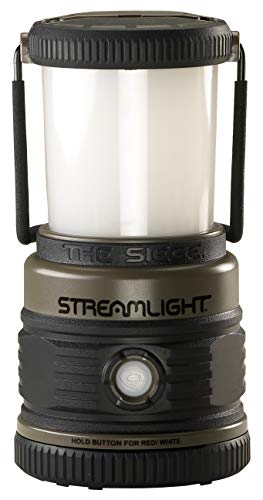
Camp tables and blackout nights both want the same thing: even, room-filling light without a hot bulb hanging over the dining setup. The Streamlight 44931 Siege Compact Lantern throws a 360° beam from a sealed body, and the coyote finish hides scuffs well on dusty tailgates.
On its high setting it pushes 540 lumens (a measure of how much visible light the lantern puts out), with stepped-down modes for tent reading. A red LED with a steady-on and SOS flash mode covers the night-vision and roadside-help situations, and the lantern floats, which is a quietly reassuring feature near boats or river camps.
Positive Takeaways
- 540-lumen high mode lights up a picnic table or small tent without harsh hot spots
- Multiple lighting modes including a red SOS for roadside emergencies and tent use
- Sealed, impact-resistant body that floats in water
- Compact form factor slips into a pack lid or glove box
Trade Offs
- Runs on user-supplied batteries rather than a built-in rechargeable pack
- Higher output drains cells faster, so pack spares for multi-day trips
Made For
Campers, overlanders, and households that want one rugged lantern to grab for power outages, porch duty, and weekend trips alike.
Swap It Out When
The Ropelux Rechargeable LED Camping Lantern is the better match for people who prefer built-in rechargeables and want eight lighting modes instead of four.
Long commercial corridors and split-level egress paths demand twin heads and broad voltage flexibility. The Lithonia Lighting Quantum LED Emergency Light runs on UVOLT, which is a Lithonia term for universal voltage that accepts a wide input range from common low-voltage control circuits up to standard line voltage, so it adapts to whatever the building’s wiring plan already uses.
Two adjustable heads can be aimed in different directions at once, useful where the hallway bends or where one side feeds a stair landing and the other points toward a final exit. The fixture is built to mount on standard ceilings or walls and is intended for permanent indoor commercial installations.
What Helps Most
- Twin adjustable heads cover corners and bends in corridors
- UVOLT input range reduces wiring guesswork during installation
- Built for permanent indoor commercial mounting
- Optical design focuses light where occupants move, not just straight down
Honest Caveats
- Not weatherproof, so it needs an interior or protected exterior mounting location
- Commercial installation usually means a licensed electrician on the job
Feature Snapshot
Right Fit For
Building owners and contractors outfitting multi-unit corridors, stairwells, and split-level egress paths where permanent installation matters.
Reach For A Different Pick When
The Lithonia Lighting Basics LED Emergency Light twin-pack suits smaller offices and shops that need a more approachable setup without the Quantum’s voltage flexibility.
Some setups ask for charm first and survival lighting second. The Consciot CL1 Mini leans into a retro lantern look while still functioning as a real emergency tool, with a dual light-source design that splits its work between a top beam and an ambient side glow.
Stepless dimming on the side panel means the brightness slides up and down without stepping through preset modes, which is great for shifting from dinner-table mood to hallway backup light. It’s small enough to live on a bookshelf or nightstand without dominating the room.
A Favorable Mix
- Dual light sources cover both ambient glow and focused top lighting
- Stepless dimming lets you settle on the exact brightness without preset jumps
- Compact retro form factor works as decor when not in emergency use
- Light enough to move from kitchen to bedroom during an outage
Things To Consider
- Battery-powered only, so spare cells belong on the shopping list for long outages
- Not built for the kind of wet, rough use a hardcore camp lantern takes
Quick Facts
Best Suited To
Apartment dwellers and anyone wanting a small decorative lantern that quietly doubles as blackout lighting on a shelf or nightstand.
A Better Fit Elsewhere
The Streamlight 44931 Siege Compact Lantern is the smarter grab for serious outdoor use, where 540 lumens and a sealed floating body earn their keep.
Tight ceiling cavities and shallow troffers (the recessed fluorescent light fixtures common in dropped office ceilings) punish bulky emergency hardware. The Power Sentry PSQ500QD MVOLT is a compact emergency ballast designed to slip into low-bay fixtures, including lensed troffers, downlights, and industrial housings where space is at a premium.
A quick-disconnect feature simplifies maintenance and swap-outs without rewiring the fixture from scratch. The MVOLT designation means multi-voltage operation, so the same unit works across common building circuits.
Why It Works Well
- Compact form factor fits shallow troffers and low-profile industrial fixtures
- Quick-disconnect wiring speeds up field maintenance and lamp changes
- Multi-voltage input handles varied commercial wiring
- Designed specifically as an emergency ballast, not a retrofit afterthought
Room For Improvement
- Requires a compatible fluorescent or LED lamp already in the fixture
- Best installed by an electrician familiar with emergency ballast wiring
Built With In Mind
Facility teams retrofitting existing fluorescent fixtures who need emergency backup without ripping out ceilings to make room for a separate unit.
Where Another Pick Suits Better
For new installations or longer lamp runs, the Lithonia Lighting Power Sentry T5 T8 Compatible ballast delivers higher output and broader lamp compatibility.
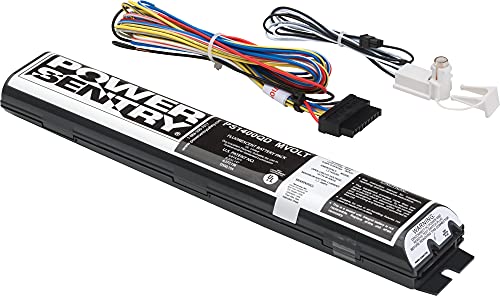
Long lamp runs and bigger bays need more than just a one-lamp trickle. The Lithonia Lighting Power Sentry PS1400QD MVOLT M8 drives one or two T5 or T8 fluorescent lamps (the thin and standard tube styles common in commercial ceilings) during an outage, covering a wider area of a shop floor or warehouse aisle than a single-lamp ballast.
Lamp selectivity lets the installer tune output to the specific lamp wattage in the fixture. Combined with multi-voltage input, it lands well in mixed-vintage buildings where older and newer fluorescent fixtures share a ceiling.
The Good Stuff
- Drives one or two T5/T8 lamps for broader area coverage
- Lamp-selectable tuning matches common fluorescent wattages
- Multi-voltage operation across varied commercial circuits
- Quick-disconnect wiring for cleaner service work
A Few Limitations
- Larger unit than the compact PSQ500, so it needs deeper fixture cavities
- Tied to fluorescent lamp formats rather than modern LED tubes
Feature Rundown
Whose Shelf It Belongs On
Maintenance teams and contractors upgrading emergency backup for shops, warehouses, and schools running fluorescent lamp fixtures.
Not Your Match When
The Power Sentry Compact T8 Ballast fits tighter ceiling cavities better, especially in low-profile troffers where space is limited.
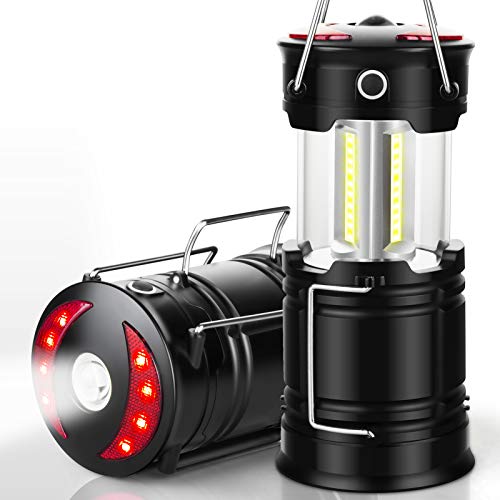
Outfitting a family tent or a storm kit usually means more than one lantern. The EZORKAS 2-Pack ships two collapsible COB LED units (COB, or chip-on-board, packs many small LED diodes into a single bright panel) in one box, so a parent can set one on the picnic table and hand the other to a kid at the sleeping pad without rationing gear.
Each lantern pulls double duty as a flashlight when collapsed, and the four-mode switching covers most camp and emergency tasks. The pair works well split between a vehicle trunk and a kitchen drawer for backup.
Where It Delivers
- Two-pack format spreads light across a tent and a picnic area at once
- Collapsible design doubles as a handheld flashlight when closed
- Four lighting modes cover reading, area glow, and emergency flash
- Approachable price point for family and group kits
Where It May Fall Short
- Plastic construction is fine for casual use but not built for hard knocks
- Battery operation means spare cells need to live alongside the lanterns
Perfect Match For
Families and group campers who want two usable lanterns without paying for premium brand pricing on either one.
Consider Something Else When
Solo campers and overlanders will get more use out of the Streamlight 44931 Siege Compact Lantern, with its sealed floating body and stronger single-unit output.
Multi-use emergency kits ask one light to play many roles, and the Ropelux Rechargeable LED Lantern leans into that. It pairs a front main beam, a rear lamp head, and side floodlights into a single unit, giving eight lighting modes that cover far-distance spotting, close-up reading, and red-flash signaling without swapping gear.
A built-in rechargeable battery cuts down on cell swaps during extended outages, and the lantern also pulls double duty as a portable power source for small device charging. It’s a versatile pick for people who don’t want a drawer full of single-purpose flashlights.
The Practical Payoff
- Eight lighting modes span far beam, flood, red flash, and dim reading levels
- Built-in rechargeable battery skips the cell-swap routine
- 1500-lumen top output handles wide-area lighting in a power outage
- Side floodlights add soft ambient coverage for tents and tables
Practical Considerations
- More modes means more buttons to learn before the first real outing
- Higher output drains the pack faster, so recharge access matters on long trips
Who Should Grab It
Prep-minded households, car campers, and tailgaters who want one lantern that handles reading, signaling, and area lighting without separate units.
Skip It When
The EZORKAS 2-Pack Collapsible Camping Lanterns serves families better, especially when more than one lantern is needed at the campsite.
Small offices, clinics, and apartment hallways need reliable egress lighting without enterprise-grade pricing. The Lithonia Lighting Basics LED Emergency Light ships as a two-pack, so a single purchase covers both ends of a stairwell or a long corridor without mixing brands.
Each unit has dual 1W LED heads that swivel and pivot for directional aiming, and the high-impact thermoplastic housing handles the wear of a busy interior space. The 120/277V input covers the standard North American low-voltage and commercial line-voltage options.
A Strong Showing
- Two-pack format outfits both ends of a stairwell or corridor in one order
- Dual adjustable heads direct light where occupants walk
- High-impact thermoplastic shell handles routine bumps
- 120/277V input covers common North American commercial circuits
Things To Weigh
- Not weatherproof, so it belongs in protected interior locations only
- Two 1W heads are purposeful rather than high-output floodlights
Whose Shelf It Belongs On
Small business owners and property managers outfitting offices, clinics, and apartment common areas with practical egress lighting.
Where A Sibling Pick Shines
The Lithonia Lighting Quantum LED Emergency Light fits larger commercial corridors better, especially where tunable voltage and broader optical design matter.
What To Weigh Before Choosing Battery Emergency Lightings
Hardwired vs. portable changes everything about how these lights get used. Hardwired units, including the Lithonia remote head, the Quantum, the Power Sentry ballasts, and the Basics twin-pack, run on building power with internal batteries that take over during outages. They’re installed once and largely forgotten until an outage tests them. Portable lanterns like the Streamlight Siege, Consciot CL1, EZORKAS pair, and Ropelux live in a closet or pack until you need them, and they’re the right tool for camping, vehicles, and renters who can’t modify the building.
Mounting location shapes the next decision. Wet or outdoor spots need weatherproof ratings like the Lithonia remote head. Indoor commercial corridors and stairwells do fine with thermoplastic units. Voltage flexibility (UVOLT, MVOLT, 120/277V) matters more in mixed-use buildings than in single-tenant shops.
For portable picks, runtime and recharge style lead the conversation. Battery-powered lanterns need spare cells, while rechargeable units like the Ropelux simplify long-term ownership but require access to power for top-ups. Lumens tell you how bright the unit gets on its highest mode, but sustained mid-mode runtime is usually what matters during a multi-hour outage.
Mode count is a real differentiator in the portable camp. Two-mode lanterns keep things simple, while the Ropelux’s eight modes earn their place for prep-focused shoppers who want one tool that does many jobs.
What Separates These Picks At A Glance
Where Shoppers Go Wrong
Many shoppers grab a portable lantern for a stairwell or a hardwired unit for a campsite, and end up unhappy with both. The honest move is to match form factor to the actual location: hardwired egress fixtures for permanent paths, portable lanterns for grab-and-go use. Another common slip is ignoring voltage requirements on commercial units, which leads to compatibility headaches during installation. Always confirm the input voltage range matches the existing circuit before ordering a hardwired model.
The Upgrade Payoff
Higher-tier picks like the Lithonia Quantum and the PS1400 ballast earn their price through voltage flexibility, broader lamp compatibility, and longer runtimes. For most homes, the Basics twin-pack handles the job well. For mixed-vintage commercial buildings or longer lamp runs, the upgraded units reduce future rework and lamp-matching headaches, which is where the extra cost quietly pays off.
Frequently Asked Questions
How long do battery emergency lightings typically run during an outage? Most hardwired commercial units are rated for roughly 90 minutes of emergency illumination, which is the standard target for safe egress. Portable lanterns vary widely depending on brightness mode, so runtime on the lowest setting is often several times longer than on high.
Can I install a hardwired emergency light myself? In most jurisdictions, a licensed electrician handles the final connection to the building’s emergency circuit. Local codes vary, so checking with the local authority before any DIY wiring is the safer path.
Do portable lanterns work for daily home use during blackouts? Yes, and they’re often the right tool for renters and apartment dwellers who can’t modify the building. A pair of lanterns covers a kitchen and a hallway well during a typical evening outage.
What’s the difference between UVOLT and MVOLT? Both are manufacturer terms for wide-input voltage ranges. UVOLT appears on Lithonia Lighting fixtures, while MVOLT is used on the Power Sentry ballast line. Practically, both accept a broad range of common commercial voltages, reducing wiring guesswork.
How often should I test my emergency lighting? A monthly brief test and a yearly full-duration test are common practice for hardwired units. Portable lanterns benefit from a quarterly battery check, especially before storm season.
Closing Remarks
Battery emergency lightings come in two flavors that rarely overlap: installed fixtures for permanent egress paths and portable lanterns for grab-and-go use. Picking the right type for the right space matters more than chasing peak lumen counts. Match the form factor to the location first, then dial in the features that match your real scenarios. That’s how you end up with lighting that actually helps when the grid blinks.