

I still remember hunting for the right vintage filament bulb for my own kitchen, and the truth is, “60 watt incandescent” means different things today than it did a decade ago. Some folks want the genuine warm-glowing filament in an Edison shape, others need a halogen flood that matches that old 60W output, and plenty of us just want a vanity bulb that mimics the look without the electric bill. This roundup walks through nine options that cover all three of those worlds: classic filament globes, halogen PAR floods for directional lighting, and energy-saving LEDs rated to replace a 60W incandescent. Each pick comes with its real-world use case, the trade-offs you should weigh, and a clearer sense of who it’ll suit.
A Snapshot Of The Selections

Sevici ST64 Edison 60W Dimmable Bulbs 6 Pack

Vinaco Halogen PAR16 Flood 45W Dimmable

Dekang G25 LED Vanity Bulbs 4000K 16-Pack

Dekang G25 LED Vanity Bulbs 5000K 16-Pack

Vinaco Halogen PAR16 Flood 60W Dimmable

Vinaco Halogen PAR20 Flood 39W Dimmable

Vinaco Dimmable PAR30 Long Neck 60W

Vinaco PAR30 Long Neck 39W Halogen
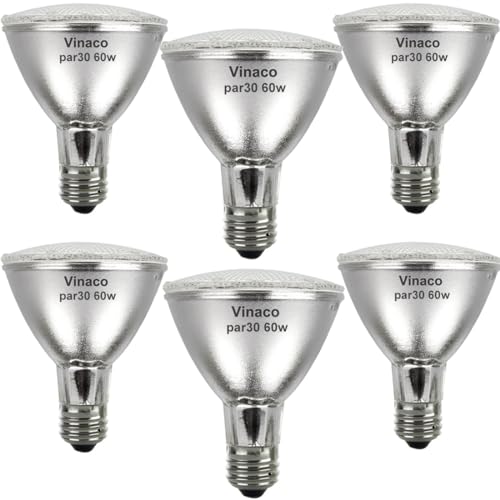
Vinaco PAR30 Long Neck 60W Halogen
Meet The Standout Selections
These Sevici ST64 Edison bulbs are the kind of thing that earns its place over a kitchen island or inside a caged pendant where the filament becomes part of the look. Each bulb draws a genuine 60 watts at 120V from a standard E26 base, so there’s no adapter fuss and no surprise wattage math to do. The 2200K warm white output is noticeably warmer than a typical 2700K household bulb, giving off the amber, candlelit glow that suits farmhouse and industrial interiors especially well.
Compared to the LED vanity options I’ll cover later, these are unapologetically old-school: a real tungsten filament pulling real power. That trade-off is exactly why they’re charming, but it’s also why they’re not the right fit for every socket in the house.
The Helpful Details
- True incandescent filament with 2200K warm white output, ideal for ambient mood lighting.
- Standard E26 medium base drops into most common household fixtures without rewiring.
- Fully dimmable on a compatible dimmer switch, so the same bulb can shift from dinner-bright to lounge-soft.
- Six-pack format keeps spare bulbs on hand for fixtures with multiple sockets.
Things To Consider
- Rated around 2,500 hours of average life, so they’ll need replacing more often than the LED alternatives on this list.
- 280 lumens per bulb is modest, meaning a single fixture may feel underlit unless multiple bulbs are clustered.
- Higher wattage means more heat at the bulb surface, so enclosed glass pendants should have some venting.
Key Product Details
Made For
Homeowners finishing a vintage, farmhouse, or industrial-style space who want genuine filament warmth in open pendants or sconces.
Consider Something Else When
Energy-conscious shoppers outfitting a whole house should look at the Dekang G25 LED Vanity Bulbs 4000K 16-Pack instead, which mimic a 60W equivalent on a fraction of the wattage.
The Vinaco PAR16 halogen is a small-format flood built for tight-beam accent work, the kind of install you’d see over a kitchen pass-through or along a short stretch of track lighting. At 45W, it sips less power than the 60W versions while still pushing a usable 350 lumens at 2800K. The dimming range is wide enough to slide from a functional spotlight down to a subtle wall wash.
The PAR16 footprint is what sets this apart from the bigger PAR20 and PAR30 siblings further down the list: it slips into shallow recessed housings and narrow track heads where larger floods simply won’t seat.
Practical Advantages
- Compact PAR16 form factor works in shallow recessed cans and tight track heads.
- 2800K warm white paired with high color rendering keeps wood tones and fabrics looking natural.
- Smooth 10%-100% dimming on a compatible dimmer, with no audible buzzing.
- Lower 45W draw than the 60W halogen versions, trimming energy use without sacrificing beam punch.
Honest Caveats
- Halogen bulbs run hot, so they’re not ideal near paper shades or in fully sealed enclosed fixtures.
- Beam angle on PAR16 floods is narrow, so covering a wide wall area takes multiple heads.
- Like all halogens, expected lifespan is shorter than LED equivalents, so spares are useful.
Right Fit For
Apartment dwellers or studio owners installing low-profile track lighting who want warm accent light from a small fixture.
Look Elsewhere When
Shoppers lighting a deep recessed can should pick up the Vinaco Dimmable PAR30 Long Neck 60W, which has the reach and brightness for taller housings.
This Dekang 16-pack is a different animal from the first two picks: it’s a globe-shaped LED designed to slot into vanity fixtures where each bulb faces the person at the mirror. At 5W, it pulls roughly an eighth of the power of a true 60W incandescent while still delivering 500 lumens of 4000K natural daylight. The G25 globe shape is the standard size for Hollywood-style vanity bars, so it should drop right in without adapters.
Where the earlier Sevici Edison bulb is all about warmth and ambience, this one is built for clarity. Natural daylight color temperature helps you see true skin tones, which matters more than most people expect until they try to match foundation under soft warm light.
Useful Touches
- 4000K natural daylight tone renders skin and makeup colors accurately for grooming tasks.
- Only 5W of draw replaces a 60W incandescent output, which adds up across sixteen bulbs.
- CRI 85+ keeps colors faithful, so fabrics and paint samples don’t read drab under the light.
- Long 30,000-hour rating means most households won’t replace these for years.
Worth Noting
- Non-dimmable, so installing on a dimmer switch will cause flicker or shortened life.
- Sixteen bulbs is more than a single-vanity home needs, so the extras are most useful for multi-bath setups.
- Globe shape may not fit every enclosed fixture, so check the diameter before ordering.
Feature Snapshot
Best Suited To
Anyone updating a multi-bulb bathroom vanity who wants clean, accurate task light without swapping fixtures.
A Better Fit Elsewhere
People who prefer a softer, warmer glow at the mirror should consider the Dekang G25 LED Vanity Bulbs 5000K 16-Pack, which leans brighter and crisper rather than neutral.
The 5000K sibling to the previous Dekang pack trades the soft-neutral tone for a sharper, blue-leaning daylight feel. Same 5W draw, same 500 lumens, same E26 base, same 30,000-hour life, but the color temperature lands closer to what you’d see through a north-facing window at midday. It’s a niche preference, but people who hate warm cast in their bathroom tend to feel it strongly.
Think of this as the “wake up and get to work” version of a vanity bulb. If the 4000K option feels slightly yellow to you, this is the natural step up.
A Favorable Mix
- 5000K daylight tone delivers the cleanest, most alert feel at the vanity mirror.
- Matches the brightness and beam spread of the warmer Dekang pack for a consistent look across rooms.
- Five watts per bulb keeps total draw low even when sixteen sockets are filled.
- E26 base and G25 globe shape fit standard Hollywood vanity fixtures out of the box.
Trade Offs
- Cool daylight color can wash out warmer skin tones, so it isn’t the most flattering for evening routines.
- Non-dimmable design won’t pair with most bathroom dimmer switches.
- Like the 4000K version, sixteen bulbs assume a generous multi-bath or oversized vanity setup.
Feature Snapshot
Whose Shelf It Belongs On
Shoppers outfitting a primary bathroom for bright morning routines, where clarity matters more than a cozy tone.
Skip It When
Anyone aiming for a softer spa-like bathroom should reach for the Dekang G25 LED Vanity Bulbs 4000K 16-Pack, which reads warmer and more relaxed.
Step up from the 45W version and you land at this 60W PAR16, the same compact form factor but with the brighter output that suits displays, artwork, or small reading nooks. At 480 lumens and 2800K warm white, it tracks a true 60W incandescent in feel while fitting into fixtures too shallow for a full-size flood. The tungsten filament inside fires up instantly, so there’s no warm-up delay.
For galleries or kitchen alcoves where you want a punchy warm beam from a track head, this is the one to reach for first.
The Case For It
- 60W output brings genuine incandescent brightness to a compact PAR16 footprint.
- High color rendering index keeps artwork, food, and wood grains looking accurate.
- Full dimming compatibility lets one fixture serve as both accent and task light.
- Tungsten filament reaches full brightness immediately on switch-on.
Minor Gripes
- Higher 60W draw means more heat at the bulb, so proximity to fabrics matters.
- Tungsten halogen lifespan is shorter than LED replacements, so plan for occasional swaps.
- Beam is narrow, which is a strength for accents and a limitation for wide coverage.
Made For
Homeowners lighting wall art, niches, or kitchen prep zones from short track heads that need real punch.
Reach For A Different Pick When
Energy-conscious buyers should pick the Vinaco PAR30 Long Neck 39W Halogen, which keeps a warm beam but drops the wattage meaningfully.
The PAR20 sits in a useful middle ground between the pint-sized PAR16 and the longer-throw PAR30. Vinaco’s 39W version delivers 480 lumens at 2800K, functioning as a 50W incandescent equivalent while sipping less power. Its wider reflector surface makes it a stronger fit for standard recessed ceiling cans where you want even coverage rather than a focused spot.
Where the PAR16 floods we’ve already covered feel like surgical lights, this one starts to feel like general room lighting, which is exactly the role most residential cans play.
A Few Strong Suits
- PAR20 reflector shape spreads light evenly across standard 4-to-6-inch recessed housings.
- 39W halogen output replaces older 50W incandescent floods with similar warmth.
- Compatible with standard dimmers, supporting a wide range of moods.
- Full-brightness startup, no wait for the beam to fill in.
Points To Note
- Halogen heat output means care around insulation-rated fixtures that trap warmth.
- Shorter rated lifespan than LED, so replacements should be expected over years of use.
- Beam is still directional, not a full ambient wash, so multiple cans are needed for whole-room lighting.
The Right Fit
Homeowners retrofitting older recessed cans in a kitchen or living room ceiling who want warm halogen light without jumping to LED.
Swap It Out When
People outfitting deeper recessed cans or high ceilings should choose the Vinaco PAR30 Long Neck 60W Halogen, which throws further and brighter.
The PAR30 long neck is what you reach for when a recessed housing is too deep for a standard flood to seat correctly. This Vinaco version delivers a full 60W output at 1000 lumens, the brightest of the halogen options on this list, while the extended neck keeps the reflector face flush with deeper ceilings. The 2800K warm white and high CRI keep the light flattering rather than clinical.
If you’ve ever installed a bulb only to see it disappear into the can and barely light the room, you’ll understand immediately why the long-neck form factor exists.
Notable Gains
- Extended neck design clears deep recessed housings where shorter floods would sit recessed.
- 1000 lumens provides strong task-level output for kitchens and work areas.
- Compatible with most standard dimmer switches for flexible brightness control.
- Full-spectrum halogen output shows colors without the slight blue cast of some LEDs.
Practical Considerations
- At 60W, heat is significant, and tight insulation-contact housings should be checked for rating.
- Halogen bulb lifespan is shorter than LED, which matters in hard-to-reach ceilings.
- Long neck may not fit shallow housings, so measure your can depth before ordering.
Built With In Mind
Homeowners with tall recessed ceilings or deep-insulation housings who need warm, bright flood light to actually reach the room.
Another Choice May Suit
Anyone watching long-term energy cost should pick the Vinaco PAR30 Long Neck 39W Halogen instead, which throws similar warm light at lower wattage.
This 39W version of the PAR30 long neck keeps the deep-housing fit while cutting power meaningfully. Output drops to 500 lumens, which behaves like a 50W incandescent equivalent in brightness, and the same 2800K tone holds the warm character intact. For shoppers who like the long-neck geometry but want to ease back on wattage, this sits right in the middle of the trade-off curve.
It’s the bulb I’d grab in a dining room where the recessed cans stay on for hours at a time and the electric meter matters.
Standout Benefits
- Long neck geometry fits deep recessed cans the same way the 60W version does.
- 39W draw undercuts classic 50W incandescent floods while preserving a similar beam.
- Warm 2800K color keeps wood furniture and food looking natural.
- Standard E26 base drops into existing fixtures without rewiring.
Points To Keep In Mind
- 500 lumens is meaningfully dimmer than the 60W long neck sibling.
- Halogen technology still generates heat and ages faster than LED alternatives.
- Not a fit for every dimmer, so older rotary dimmers may need upgrading.
Who Should Grab It
Households with multiple deep recessed cans that stay lit for long stretches and want to manage the utility bill without losing warm light.
Not Your Match When
Shoppers needing brighter task output from deep cans should choose the Vinaco Dimmable PAR30 Long Neck 60W, which doubles the lumens.
Rounding out the list is the full-output 60W PAR30 long neck, a true workhorse for tall ceilings and large rooms. At 1000 lumens and 2800K, it produces the strongest flood on this entire roundup, making it the right pick for kitchens, stairwells, and great rooms where one bulb has to carry real weight. The tungsten filament fires up to full brightness with no warm-up, so the room lights up the instant the switch flips.
Where the smaller PAR16 floods are surgical, this is the broad floodlight that anchors a room.
Everyday Wins
- 1000-lumen output handles large room or high-ceiling recessed installations comfortably.
- Long neck geometry solves deep-can seating issues common in modern construction.
- High color rendering keeps interior colors accurate under the warm 2800K tone.
- Compatible with standard dimmer switches for adjustable room mood.
A Few Limitations
- Higher wattage means more heat and higher running cost than LED replacements.
- Tungsten halogen lifespan is shorter, especially in hard-to-reach ceilings.
- Long neck won’t seat correctly in shallow housings, so fixture depth should be confirmed first.
Spec Overview
Perfect Match For
Homeowners lighting a kitchen, stairwell, or open-plan living area from tall ceilings where a single bulb has to anchor the whole room.
Consider Something Else When
Shoppers focused on trimming the electric bill in a frequently lit room should reach for the Vinaco PAR30 Long Neck 39W Halogen, which preserves the form factor at lower wattage.
Picking The Right Wattage And Shape For Your Space
Walking into a lighting aisle without a plan usually ends with the wrong shape in your cart. Start with the fixture type, since that dictates the form factor before anything else. Open pendants and exposed sconces call for filament-style bulbs like the ST64 Edison shape, while recessed ceilings and track heads almost always need a PAR reflector (PAR16 for shallow tracks, PAR20 for medium cans, PAR30 long neck for deep or tall ceilings). Vanity bars usually take G25 globe LEDs to keep the face evenly lit.
Color temperature matters more than most people expect. Anything below 3000K leans warm and amber, which suits living rooms, dining areas, and vintage-style fixtures. The 4000K range reads neutral, the way a north-facing window feels, and tends to flatter grooming tasks. Above 5000K starts to feel blue and alert, which is great for a workshop but punishing in a bedroom.
Wattage and lumens tell you how much light to expect. An old 60W incandescent puts out roughly 800 lumens, so halogen replacements like the 60W PAR30 long neck hit that mark almost exactly. LED replacements reach the same brightness on a fraction of the wattage. CRI, or color rendering index, measures how faithfully the bulb shows colors: anything CRI 80+ is solid for general living, while CRI 85+ is the threshold most folks want for makeup, art, or photography work.
Watts Versus Lumens In Plain Terms
Watts measure energy used; lumens measure light delivered. An old 60W incandescent bulb delivers around 800 lumens, a 60W halogen flood delivers roughly 1000 lumens at the same warmth, and a 5W LED rated as “60W equivalent” matches that brightness on a fraction of the power. When switching from incandescent to LED, compare lumens, not watts.
Key Considerations Across These Picks
Pitfalls Shoppers Hit
The most common mistake I see is buying a 60W incandescent equivalent LED and then wiring it to an old dimmer switch, which causes flicker or shortened bulb life. Another is choosing a long neck PAR30 for a shallow recessed can, where the reflector ends up recessed inside the housing and throws almost no light. And a third is grabbing an Edison filament bulb for an enclosed glass fixture, where the heat has nowhere to escape.
Where The Extra Money Goes
Higher-tier bulbs in this category usually buy you longer life, higher CRI, or a more accurate color temperature. A premium halogen with high CRI matters most in art or photography setups, where color shift is obvious. A premium LED buys you longer lifespan and consistent tone across thousands of hours, which matters in fixtures that are awkward to reach.
Frequently Asked Questions
What Does “60W Equivalent” Actually Mean On An LED Bulb?
It means the LED produces a similar brightness to a classic 60W incandescent, usually around 800 lumens, while drawing only a fraction of the wattage. The LED itself uses roughly 5 to 9 watts to reach that output.
Are 60W Incandescent Bulbs Still Available?
Traditional 60W incandescent household bulbs have been largely phased out of standard production in many regions due to efficiency rules. Specialty filament-style incandescent bulbs in decorative shapes like ST64 Edison are still sold for specific fixtures, and halogen options cover the rest.
Halogen Or LED For A Recessed Ceiling?
Halogen gives you crisp, warm light and dimmer compatibility with most switches, but runs hotter and ages faster. LED runs cooler, lasts much longer, and costs less to run, but early LED options sometimes struggled with dimmer compatibility. For new installs, LED is usually the better long-term pick.
What’s The Difference Between PAR16, PAR20, And PAR30?
The number refers to the bulb diameter in eighths of an inch, so PAR16 is 2 inches across, PAR20 is 2.5 inches, and PAR30 is 3.75 inches. Larger numbers generally throw a wider, longer-reaching beam and fit deeper recessed cans.
Can I Put A Dimmable Bulb On A Non-Dimmable Switch?
Yes. Dimmable bulbs work fine on a standard on/off switch, you simply won’t have dimming control. The reverse, putting a non-dimmable LED on a dimmer, is what causes flicker and early failure.
Bottom Line
The right 60W incandescent-style bulb comes down to what your fixture actually needs, whether that’s vintage filament warmth, halogen flood punch, or LED efficiency. Match the form factor to the housing, pick a color temperature that fits the room’s mood, and decide how much wattage you want to commit to. Any of the nine options above will get the job done well when those basics line up with your space.