

Pixel-control LED strips open up a small craft world for hobbyists, makers, and anyone who wants richer lighting effects than a single color can deliver. The trick is matching the strip’s voltage, density, and pixel protocol to the project, since 5V and 12V versions behave differently over distance. I pulled together eight 5V-friendly strips that cover the usual bases: addressable RGB projects, tight spaces, USB-powered TV backlighting, and high-density pixel runs.
A Snapshot Of The Selections

SVFISHKK WS2812B LED Strip 5V RGB 150LED Black PCB

BTF-LIGHTING WS2815 LED Strip 12V 300 LED IP30

BTF-LIGHTING WS2815 LED Strip 12V 300 LED IP65

BTF-LIGHTING FCOB 5V USB Green COB LED Strip
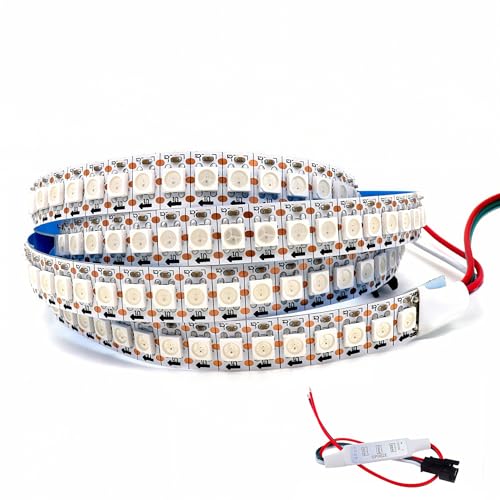
SVFISHKK WS2812B LED Strip 5V 144LED/m White PCB
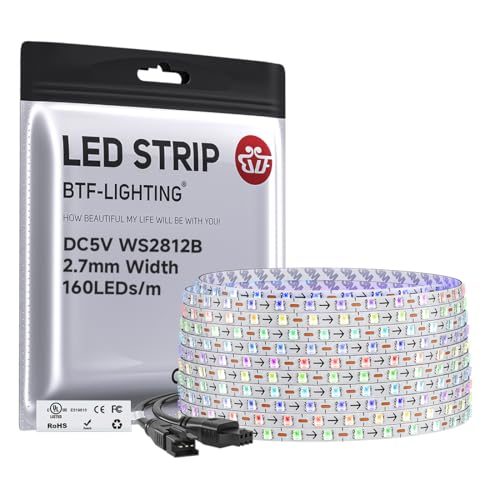
BTF-LIGHTING WS2812B LED Strip 5V 2.7mm 0807SMD

BTF-LIGHTING WS2812B LED Strip 12V 2.7mm 0807SMD

BTF-LIGHTING WS2812B LED Strip 5V 5mm 2020SMD
A Breakdown Of The Leading Choices
The SVFISHKK WS2812B strip is the kind of roll I recommend when someone is wiring their first addressable project and just wants the classic formula. Each 5050 SMD LED carries its own driver IC, which means I can set any pixel to any color independently rather than controlling the whole strip at once. Running on 5V DC lets me power it from a phone charger or a bench supply without extra conversion hardware.
The 16.4-foot length lands at 150 LEDs, which spreads out nicely for a desk edge or shelf outline. The black PCB helps the LEDs pop visually against darker surfaces, which matters when the strip is visible rather than hidden. Compared to the higher-tier BTF-LIGHTING options later in this list, this one skips the UL certification, but the core WS2812B behavior stays the same.
Real-World Strengths
- Built-in driver IC on every LED, so individual pixel control comes standard rather than requiring extra boards.
- 5V DC input pairs naturally with common USB power supplies, which most hobbyists already own.
- Black PCB reduces light bleed between pixels for cleaner visuals on dark surfaces.
- Cuttable between LEDs lets me resize the strip to fit a specific enclosure or shelf.
- Pure gold wire bonding supports a longer operational lifespan under typical home use.
Things To Consider
- IP30 rating means no protection from splashes, so outdoor or kitchen-sink projects are off the table.
- 5V drops voltage over longer runs, so owners commonly report adding power injection points past the first few meters.
- The strip does not include a controller, which adds a separate purchase for newcomers.
Who It Suits Best
First-time addressable-LED hobbyists wiring a desk edge, gaming monitor, or bedroom accent who already plan to buy a separate controller.
Consider Something Else When
The BTF-LIGHTING WS2815 12V strip handles longer runs more cleanly for anyone stretching past five meters.
The WS2815 from BTF-LIGHTING is the natural step up from a basic WS2812B setup, and the upgrade shows up where it counts: signal reliability. Dual-signal redundancy means the strip carries a backup data line, so a single dead pixel does not black out the rest of the run. That single design choice removes the most common failure I see on longer installations.
At 12V DC with 300 LEDs across 16.4 feet, voltage drop becomes far less of a headache than the 5V SVFISHKK strip above. The UL listing also gives some peace of mind for permanent indoor installs where safety certifications matter. The trade-off is needing a 12V supply rather than a random USB brick.
Everyday Perks
- Dual-signal redundancy prevents total signal loss when one pixel fails mid-run.
- 12V operation cuts voltage drop, so the far end stays bright without extra power injection.
- UL listing helps meet code for permanent indoor builds.
- 5050 SMD with 24-bit color depth gives smooth gradients instead of banded transitions.
Worth Noting
- Requires a 12V power supply, which is one more piece to source than a USB-driven strip.
- IP30 means it stays indoors, ruling out patio or under-eave projects.
Feature Snapshot
Made For
Makers running ceiling coves, staircases, or full-room accent lighting where signal reliability over distance matters.
A Better Fit Elsewhere
The SVFISHKK WS2812B 5V roll is friendlier for absolute beginners on a USB-only power budget.
For projects that have to handle a splash or two, this IP65-coated version of the WS2815 brings the same dual-signal reliability indoors or out. The silicone sleeve guards against rain and dust, which makes it a sensible pick for patio edges, garden paths, or a bar area where condensation forms.
Inside, the strip is identical to the IP30 sibling above, so the pixel-level behavior stays consistent. The coating adds a small amount of bulk, which can affect how tightly it tucks into aluminum channels. In most cases, that is a reasonable trade for the freedom to mount it almost anywhere.
Benefits That Matter
- IP65 silicone coating blocks splashes and dust for outdoor mounting.
- Same dual-signal WS2815 IC for pixel-level reliability on long runs.
- 12V DC keeps brightness even at the far end of the 16.4-foot reel.
Points To Note
- Silicone sleeve prevents cutting between every pixel, which limits fine-grained resizing once the strip is sealed.
- Slightly thicker profile can resist fitting inside slim aluminum extrusions designed for bare strips.
- Not rated for permanent submersion, so pool edges and fountain interiors are still out of bounds.
Right Fit For
Backyard builders and bar owners who want addressable effects in spots where the occasional splash is inevitable.
Look Elsewhere When
The BTF-LIGHTING FCOB USB strip is a cleaner fit for indoor TV bias lighting without a separate power brick.
This BTF-LIGHTING FCOB strip breaks from the addressable-RGB crowd and goes in a different direction. Flip Chip On Board (FCOB) packs the LEDs tightly enough that I get a smooth, dot-free line of green light rather than the spotted look of standard SMD strips. That makes it especially nice behind a TV, where visible pixel dots can be distracting in a dark room.
USB power is the headline convenience feature, since it pulls cleanly from a TV’s USB port without needing a separate brick. The 5V rating and 320 LEDs per meter mean a short 3.28-foot length covers the back of most monitors without voltage issues. Compared to the WS2812B picks above, there is no per-pixel control, so it trades animation for a clean glow.
The Upside
- FCOB construction produces a continuous, dotless line of light for bias lighting.
- 5V USB input plugs straight into a TV or laptop, with no external power brick.
- 320 LEDs per meter keeps the glow bright and even across short runs.
A Few Limitations
- Single-color green only, so it does not work for animated or full-RGB setups.
- Not individually addressable, which limits its appeal for makers building pixel-mapped effects.
Product Snapshot
Best Suited To
Anyone wanting subtle green bias lighting behind a TV or monitor without programming addressable effects.
Reach For A Different Pick When
The SVFISHKK WS2812B 5V 150-LED strip serves hobbyists who want per-pixel color control instead of a single-color glow.
When a project calls for a short but detail-rich strip, this 144-LED-per-meter WS2812B from SVFISHKK puts nearly as many pixels into a single meter as the 150-LED 16.4-foot roll above. The 3.2-foot length makes it ideal for small builds like a costume accessory, a desktop matrix, or a PC interior accent.
The white PCB blends visually with light-colored surfaces and reflects a bit of light back to brighten the strip. The trade-off is the same 5V voltage drop concern that affects the longer SVFISHKK roll, which is fine on a short run but can dim the far end of anything longer.
Standout Benefits
- 144 LEDs per meter delivers dense pixel resolution on a compact strip.
- 3M-style adhesive backing speeds up placement on most smooth surfaces.
- Each pixel is independently addressable for animated text, patterns, or chasing effects.
- White PCB matches lighter surfaces and reflects some light back for added brightness.
Honest Caveats
- 3.2-foot length limits how far it can stretch before another strip is needed.
- 5V drop still requires power injection if multiple strips are daisy-chained.
Who Should Grab It
Cosplay builders, PC modders, and small-scale matrix makers who want dense pixels in a compact form factor.
Skip It When
The BTF-LIGHTING WS2812B 2.7mm strip is the smarter call for installations where the strip has to vanish into a slim gap.
Most LED strips are wide enough that they peek out of a channel or shelf gap. This BTF-LIGHTING WS2812B at 2.7mm wide is built for those awkward installations where the strip needs to disappear. I have used strips like this inside cabinet reveals and along thin shelves, where a standard 10mm strip would have been too obtrusive.
The 0807 SMD package keeps each LED small enough to fit on the narrow PCB without crowding. It still runs on 5V and supports full per-pixel addressing, so the lighting behavior matches the larger SVFISHKK strip reviewed earlier. The honest read is that bending and cutting take a bit more care because the thin PCB is easier to kink than wider boards.
What Helps Most
- 2.7mm width fits into cabinet reveals and shelf gaps where standard strips stand out.
- Individually addressable 5050-class behavior preserves full RGB animation despite the slim build.
- Bends and cuts cleanly for custom-fit installations in tight corners.
Small Caveats
- Thin PCB kinks more easily than wider strips, so installation calls for gentler handling.
- Same 5V voltage drop consideration applies over extended runs.
Feature Rundown
Built With In Mind
Cabinet makers, furniture modders, and detail-oriented DIYers hiding lighting in narrow channels.
Not Your Match When
The BTF-LIGHTING WS2815 12V 300-LED strip is the right pick when signal range matters more than width.
The 12V sibling to the previous pick offers the same narrow 2.7mm profile but with the voltage advantage of a higher-tolerance supply. For installs that stretch across multiple sections or wrap around furniture, the 12V feed keeps brightness consistent where a 5V strip would visibly fade at the far end.
The 160-LED-per-meter density still delivers solid pixel resolution for text or chase patterns. The combination of slim board and 12V input is rare, which makes this a useful problem-solver for projects where neither width nor voltage can be compromised.
The Helpful Details
- Narrow 2.7mm width paired with 12V operation is uncommon and useful for mixed-length installs.
- 12V feed reduces voltage drop across the full 16.4-foot length.
- Per-pixel addressing supports animated text and color chasing despite the slim PCB.
Where It Is Less Suited
- Needs a 12V supply rather than a USB port, which adds a piece of hardware.
- Thin PCB still requires careful handling to avoid kinks during installation.
Quick Technical Notes
Whose Shelf It Belongs On
Hobbyists building furniture accents or display cases who want narrow strips but cannot tolerate voltage drop on longer spans.
Swap It Out When
The BTF-LIGHTING FCOB USB strip is the cleaner fit for quick TV bias lighting with no controller required.
The 5mm 2020 SMD version from BTF-LIGHTING sits in a useful middle ground between the ultra-thin 2.7mm strip and standard 10mm boards. The 2020 LED package is small but a touch larger than the 0807, which makes soldering and connector attachment more forgiving during repairs or custom cuts.
At 5V and 160 LEDs per meter, this strip pairs well with microcontroller projects that need a slim profile without going to the extreme 2.7mm width. Model railroaders, scale modelers, and diorama builders commonly reach for this size because it fits into structures and scenery where a wider strip would look out of scale.
Where It Excels
- 5mm width balances slim profile with easier soldering than the 2.7mm option.
- 2020 SMD LEDs stay compact enough for scale modeling and detailed scenery.
- 5V input keeps wiring simple with common USB supplies.
- Full per-pixel addressing for animated effects on small models.
Possible Compromises
- 5V drop still requires power injection over longer runs.
- Slightly wider than the 2.7mm strip, so it will not fit the absolute tightest reveals.
Perfect Match For
Scale modelers, diorama builders, and electronics hobbyists who want a slim-but-solderable strip for small projects.
Another Choice May Suit
The BTF-LIGHTING WS2812B 2.7mm 5V strip is a better fit when the strip has to disappear into the narrowest possible channel.
Matching The Strip To The Project
Picking the right 5V LED strip starts with voltage, since 5V and 12V addressable strips behave very differently past a few meters. A 5V strip is great for short runs because it pulls power from a USB port or a phone charger, but voltage starts dropping visibly after the first three to five meters. A 12V strip keeps brightness more consistent across longer spans but requires a dedicated 12V supply.
LED density and SMD size matter next. Higher density (more LEDs per meter) means smoother animations and finer text, while smaller SMD packages (0807, 2020) shrink the strip width for tight installations. Pixel control protocol is the third piece, since WS2812B is the most common individually addressable IC, while WS2815 adds dual-signal redundancy for longer or higher-stakes runs.
Indoor hobby projects usually land on IP30 strips with no moisture sealing, while outdoor or bar builds call for at least IP65 silicone coating. For desk accents and TV bias lighting, USB-powered strips with dense FCOB construction produce a cleaner, dot-free glow than standard SMD strips.
What Sets These Picks Apart
Pitfalls Shoppers Hit
One common mistake is grabbing a 5V strip for a 5-meter hallway and expecting the far end to stay bright. Voltage drop is real, and adding power injection mid-run saves the project. Another slip-up is assuming any addressable strip works with any controller, since WS2812B and WS2815 use slightly different protocols that need compatible firmware or libraries.
Where The Extra Money Goes
Premium picks in this category tend to add dual-signal ICs, UL certification, weatherproof coating, or denser FCOB construction. Those upgrades matter most for permanent installs, outdoor builds, and runs long enough that signal loss becomes a real risk. For short hobby projects, the value picks cover the same lighting behavior at lower cost.
Frequently Asked Questions
Can I cut these LED strips?
Most addressable strips are cuttable between designated solder pads, usually between every LED or every few LEDs. Cutting anywhere else damages that segment.
Do I need a separate controller?
Yes, addressable strips require a microcontroller or dedicated LED controller to feed them data. A basic Arduino, ESP32, or off-the-shelf pixel controller handles most projects.
What is the difference between WS2812B and WS2815?
WS2812B uses a single data line, while WS2815 adds a backup signal line. That redundancy keeps the strip running even if one pixel fails mid-run.
Can I power a 5V strip from a USB port?
Short strips pull under 1 to 2 amps and run fine from a TV or laptop USB port. Longer runs need a higher-current supply or power injection at multiple points.
What does IP65 mean for LED strips?
IP65 means the strip is protected against low-pressure water jets and dust, which suits outdoor mounting but not full submersion.
Wrap Up
The right 5V LED strip really depends on the project scale, the available power supply, and how visible the strip will be once installed. Short runs and tight spaces lean toward slim 5V picks, while longer installs benefit from 12V or dual-signal options. With a clear sense of length, density, and environment in mind, the picks above should map cleanly to almost any build.