

Swapping out old fluorescent tubes can feel like a guessing game, especially when half the fixtures in your shop or basement seem to have a different wiring setup. I’ve spent years helping homeowners, contractors, and small-business owners sort through LED upgrades, and the 4ft size keeps coming up because it still dominates offices, garages, warehouses, and kitchens across the country. This roundup covers eight solid picks that handle everything from plug-and-play replacements to battery-backup emergencies, so you can match the right tube to the way your space actually gets used.
A Quick View Of The Lineup

GoToLed 4FT T8 LED Tube Light Type A+B (24 Pack)
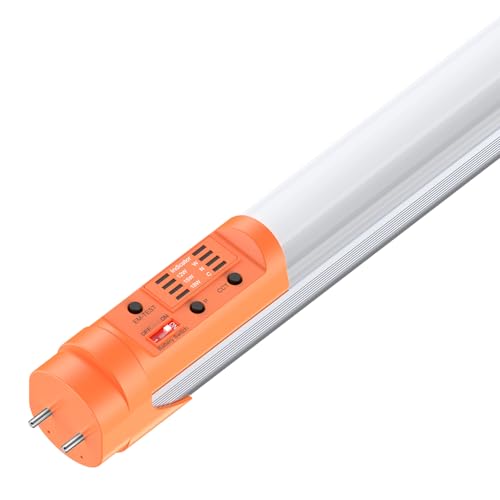
dephen Emergency T8 LED Tube 4ft with Battery Backup

JOMITOP 4ft US Plug Power Cable Wire for T5 T8 LED Tubes (5-Pack)

dephen 4FT LED Shop Light with Emergency Backup

JCE T8 LED Bulbs 4 Foot 18W 5000K Daylight Frosted Glass
ELEKICO 20-Pack T8 LED Bulbs 4 Foot 24W 6500K Daylight

jimwhen 4FT LED Retrofit Kit 24W 5000K Daylight (2-Tube Kit)

dephen Emergency T8 LED Tube 4ft Hardwired G13 Battery Backup
The Details Behind The Selections
If you’re staring at a ceiling full of mixed fixtures and not sure what each one needs, this 24-pack from GoToLed takes a lot of the guesswork out. Each 48-inch tube runs in Type A mode (uses your existing ballast) or Type B mode (ballast bypassed, hardwired), so the same box works for older shops and newer builds. The wattage can be flipped between 12W, 15W, 18W, and 22W, and the color temperature switch on the tube lets you choose 3000K, 4000K, 5000K, or 6500K without buying separate SKUs.
For contractors handling whole-building retrofits, that kind of flexibility is genuinely useful. You can stock one item and adjust per room, instead of juggling four different boxes on the truck.
Where It Helps
- One SKU covers four wattages and four color temperatures, simplifying inventory for multi-room jobs.
- Type A+B dual compatibility means the same tube fits fixtures with or without a working ballast.
- Single-end and double-end wiring supported, so it works with both shunted and non-shunted lamp holders.
- Wide 120V to 277V range covers most residential and commercial panel setups.
Things To Consider
- You’ll need to confirm your specific ballast against the manufacturer’s compatibility list before assuming a plug-and-play install will work.
- 24 tubes is a lot for a single-room homeowner, so this only makes sense if you’re tackling multiple fixtures at once.
- Single-end wiring requires non-shunted lamp holders, which adds a small rewiring step some DIYers may not expect.
Key Specs
Who It Suits Best
Contractors, property managers, and serious DIYers doing whole-floor or whole-shop retrofits where one flexible tube reduces ordering headaches.
Consider Something Else When
Homeowners doing a one-room garage swap should look at the JCE T8 LED Bulbs 4 Foot 18W, which keeps things simpler for a smaller job.
This dephen tube does double duty: it lights your space normally and keeps it lit when the power drops. A built-in lithium battery kicks in during outages, and the same tube that runs at full brightness during the day drops to a lower emergency output that still keeps the room navigable. The 3 wattage and 3 CCT tunable settings give you flexibility on the regular side, so you don’t have to give up modern LED features just to get backup lighting.
For stairwells, corridors, and small commercial back rooms, that combination matters. Code requires emergency egress lighting in many commercial spaces, and this is one of the cleanest ways I’ve seen to meet that requirement without bolting on a separate emergency unit.
Everyday Advantages
- Combines standard shop lighting and emergency backup in a single 4ft tube, reducing fixture clutter.
- Tunable wattage and color temperature match the look of nearby non-emergency tubes.
- Lithium battery integrated into the tube itself, so there’s no external battery box to mount.
Worth Noting
- You’ll want to test the backup function periodically, since batteries degrade over years of standby use.
- Emergency output is dimmer than normal mode by design, so don’t expect full work-bay brightness during an outage.
Who Should Grab It
Building owners outfitting stairwells, hallways, or commercial spaces where code or common sense demands egress lighting during outages.
Look Elsewhere When
You just want brighter shop lighting without emergency features; the jimwhen 4FT LED Retrofit Kit covers that need at a different price point.
Most of the picks on this list are tubes, but accessories like this JOMITOP cord solve real headaches. Integrated LED tubes, the kind with their own driver built in, often ship with bare leads or hard-to-find connectors. This 4ft, 3-prong US plug cable lets you wire an integrated tube into any standard outlet without cutting into your home’s wiring. It’s grounded, lightweight, and sold in a 5-pack so you can wire several fixtures in one go.
For people running temporary setups, like a market stall, a craft fair booth, or a basement workshop that’s still evolving, this kind of plug-and-play cable is the difference between a one-hour job and a “call an electrician” job.
Noteworthy Benefits
- Standard US 3-prong plug sidesteps hardwiring for temporary or rental spaces.
- 5-pack covers a small project’s worth of fixtures in a single purchase.
- Compatible with T5 and T8 integrated tubes, so it works across different fixture styles.
Trade Offs
- Not a replacement for proper permanent wiring in commercial ceilings, which generally requires hardwired connections.
- Verify your specific integrated tube has a matching 3-pin input before assuming compatibility.
Right Fit For
Anyone setting up integrated LED tubes in a workshop, garage, or event space where running new circuits isn’t practical.
Skip It When
You’re doing a standard ballast-bypass install on existing fluorescent fixtures, since those tubes use the fixture’s internal wiring and don’t need a separate power cord.
Unlike replacement tubes, the dephen shop light is a complete fixture you hang and wire into your ceiling. It pairs tunable wattage (20W, 30W, or 40W) with selectable color temperature (3000K to 5000K), which is handy when one garage handles woodworking, car repairs, and a paint station. The integrated lithium battery keeps the space lit during outages for over 90 minutes, which is more than enough to wrap up a job or find the breaker.
It’s the kind of fixture I recommend when someone is gutting a garage ceiling anyway and doesn’t want to deal with old fluorescent ballasts at all.
Notable Gains
- Whole-fixture design skips the ballast compatibility question entirely.
- Three wattage options let you scale brightness to ceiling height and room size.
- Emergency mode covers most short outages without a separate battery unit.
Points To Note
- Hardwired installation requires basic electrical comfort or a hired electrician.
- Battery life depends on usage cycles, so owners in hot attics or uninsulated garages may see shorter lifespan.
Key Specs
Who It Suits Best
Homeowners and small-shop owners replacing a full ceiling run and wanting tunable brightness plus emergency backup in one fixture.
Reach For A Different Pick When
You’re trying to keep existing fluorescent housings; the JCE T8 LED Bulbs 4 Foot 18W drop straight into those without replacing the fixture.
The JCE tube is a straightforward Type B ballast-bypass replacement that puts out 2300 lumens at 5000K daylight. The frosted glass housing is the detail worth noticing here. Glass holds up better over time than many plastic tubes, which can yellow or crack after years in a hot fixture ceiling. It’s a single color temperature and a single wattage, which keeps the price accessible for offices, classrooms, and retail spaces doing one-room upgrades.
Compared to the multi-mode GoToLed pack at the top of this list, the JCE is the simpler, less-flexible option, but sometimes simple is exactly what you want.
What It Does Well
- Frosted glass resists yellowing and stays clear longer than typical plastic housings.
- Type B ballast bypass means a clean, single-purpose install once the old ballast is removed.
- Compatible with single or double-ended fixtures after the bypass is done.
- Wide 100V to 277V range handles most panel types.
Honest Caveats
- Single 5000K daylight color means no warm-white option for residential mood lighting.
- You must remove or bypass the existing ballast, which adds a wiring step versus plug-and-play tubes.
Feature Snapshot
Best Suited To
Offices, schools, and retail floors where daylight color and durable glass construction outweigh the need for tunable settings.
A Better Fit Elsewhere
Residential kitchens or living spaces wanting warmer light should consider the ELEKICO 20-Pack, which gives a brighter lumen count at a similar price.
When lumen count matters more than color tuning, this ELEKICO pack delivers. Each 24W tube pushes out 3600 lumens at 6500K daylight, the highest output on this list. The 20-pack quantity suits warehouses and commercial floors that need many fixtures lit at once, and the G13 base with dual-end powered Type B install keeps the wiring standard once the ballast is removed.
Compared to the JCE tube at 2300 lumens, this one trades lower wattage for noticeably more brightness, which is the right call in tall-ceiling spaces.
A Favorable Mix
- 3600 lumens per tube covers tall ceilings and high-bay style layouts.
- 20-pack quantity keeps per-fixture cost down for big projects.
- G13 base fits standard T8 fluorescent housings after ballast bypass.
Points To Keep In Mind
- 6500K daylight skews blue-white and can feel harsh in home kitchens or living rooms.
- 24W draw per tube is higher than the 18W JCE alternative, so check your circuit capacity for big retrofits.
- Ballast bypass is required, which means basic rewiring work on each fixture.
Whose Shelf It Belongs On
Warehouse managers and commercial contractors lighting large floor areas where bright, cool daylight output reduces eye strain.
Swap It Out When
You’re lighting a residential garage or workshop where 6500K feels too clinical; the dephen 4FT LED Shop Light offers tunable warmth with similar brightness.
The jimwhen retrofit kit takes a different approach. Instead of swapping individual tubes, you replace the guts of an existing 2×4 troffer fixture. One kit includes one magnetic LED driver and two tubes, which install in roughly five minutes per fixture according to the manufacturer. The frosted cover softens the light compared to clear covers, and 3600 lumens at 5000K is a noticeable jump from older fluorescent troffers.
For drop ceilings in older office buildings, this kind of kit is often cheaper than buying whole new LED fixtures.
Well-Handled Touches
- Magnetic driver mount speeds installation and reduces lost parts during setup.
- Retrofit approach costs less than full fixture replacement for drop-ceiling grids.
- Frosted cover softens glare in office environments.
Small Caveats
- Not dimmable, so it won’t integrate with existing dimming controls in older buildings.
- Only fits 2×4 troffer-style fixtures, not strip fixtures or pendant mounts.
- Single 5000K color temperature means no flexibility for warmer tones.
Technical Highlights
Who Will Love This
Property managers and office tenants refreshing a drop-ceiling floor without tearing out the existing grid.
Another Choice May Suit
Homeowners with simple strip fixtures should look at the GoToLed 4FT T8 LED Tube Light Type A+B instead, since it works with the standard T8 sockets most homes already have.
This is the second emergency tube from dephen in this roundup, and it’s the brighter of the two. Normal mode runs at 18W and 2200 lumens, while emergency backup mode holds at 8W and 960 lumens for over 90 minutes during outages. The hardwired G13 base fits standard T8 fixtures after the ballast is removed, and the lithium battery is integrated into the tube itself.
Compared to the dephen Emergency T8 with tunable wattage, this version is a single fixed output and fixed color, which makes it a more focused pick for spaces where consistent, predictable brightness matters more than flexibility.
Where It Delivers
- 960-lumen emergency output is brighter than most competing backup tubes in this category.
- Hardwired G13 base fits standard T8 fluorescent fixtures after bypass.
- Integrated lithium battery cuts down on external hardware to mount.
A Few Limitations
- Single fixed color temperature means no tuning if your space changes use over time.
- Battery has a finite lifespan, so plan on eventual replacement after years of standby use.
- Hardwired install requires bypassing or removing the existing ballast, which adds setup time.
Core Details
Made For
Commercial spaces needing brighter emergency backup than basic egress lighting, such as small server rooms or back-of-house corridors.
Where A Sibling Pick Shines
For tunable wattage and color on the same emergency platform, the dephen 4FT LED Shop Light with Emergency Backup is the better fit.
Choosing 4ft Fluorescent Tubes That Actually Fit Your Space
The first thing to settle is the wiring situation. Type A tubes work with your existing fluorescent ballast, which makes install as easy as swapping a bulb. Type B tubes require you to remove or bypass the ballast and wire line and neutral directly to the lamp holders, which adds a small rewiring step but eliminates a part that can fail years down the road. Some tubes, like the GoToLed pack, do both, so you can decide per fixture.
Color temperature matters more than most people expect. 3000K to 4000K reads warm and friendly, the kind of light you want in a kitchen or finished basement. 5000K to 6500K leans cool and clinical, which is sharper for detail work but can feel sterile in living areas. If you’re unsure, a tunable tube that lets you flip between options after install is worth the small upcharge.
Brightness is about lumen count, not wattage. An 18W LED tube can outshine a 40W fluorescent because LEDs convert more energy into light rather than heat. For most home garages and workshops, 2000 to 2500 lumens per tube is plenty. Warehouses and tall-ceiling commercial spaces usually want 3000+ lumens.
Finally, decide whether emergency backup is part of the job. For code-driven commercial spaces, integrated battery tubes like the two dephen emergency options save you from bolting separate emergency units to the ceiling. For homes, emergency backup is usually overkill unless your area has frequent outages.
Key Considerations Across These Picks
Common Buying Traps In This Category
The biggest mistake is assuming plug-and-play compatibility without checking the ballast list. Not every existing ballast works with every Type A LED tube, and a mismatch can cause flicker, early failure, or no light at all. Always verify your ballast model against the manufacturer’s compatibility sheet before assuming a simple swap.
Another trap is buying the wrong color temperature for the room. 6500K daylight feels energizing in a workshop but harsh in a kitchen, and most people don’t realize how much that affects comfort until they’ve lived with it for a week. When in doubt, a tunable tube is cheaper than redoing the install later.
Where The Extra Money Goes
Higher-tier tubes earn their price with better drivers, longer-lasting glass housings, and wider voltage ranges. A cheap plastic tube can yellow or crack in a hot ceiling fixture over a few years, while frosted glass housings like the JCE tube age much more gracefully. Tunable wattage and color also add cost, but they save you from buying multiple SKUs if your space evolves. For long-term owners, the upgrade usually pays back in fewer replacements and better light quality.
Frequently Asked Questions
What is a ballast, and do I need to keep it? A ballast is the component inside your old fluorescent fixture that regulates current to the tubes. With Type A LED tubes you keep and reuse it; with Type B tubes you remove or bypass it and wire power directly to the lamp holders.
Are LED tubes brighter than fluorescent tubes? In most cases, yes. A modern 18W LED tube typically matches or beats a 40W fluorescent tube, because LEDs waste less energy as heat and put more of it into visible light.
Do LED tubes work in any fixture? Not every fixture, no. The tube length, socket type (usually G13 for 4ft tubes), and wiring setup all need to match. Some fixtures also have shunted lamp holders that only work with double-ended wiring.
How long do 4ft LED tubes typically last? Most quality LED tubes are rated for 30,000 to 50,000 hours of use, which works out to many years of typical operation before any noticeable drop in brightness.
Are emergency backup tubes worth the extra cost? For commercial spaces required by code to have egress lighting, yes. For typical home garages and basements, they’re usually overkill unless your area has frequent power outages and you rely on the space during them.
Wrap Up
The right 4ft tube comes down to your fixture type, your color preference, and how much rewiring you want to take on. Flexible multi-mode packs suit bigger projects, simple fixed-output tubes work for one-room upgrades, and emergency backup tubes solve a specific code or safety need. Match the tube to the room, and the swap pays for itself in better light and lower energy use.