

Picking a 2×4 LED flat panel used to mean choosing between harsh office-grade fixtures and dim home options that left you squinting at spreadsheets. The current crop blurs that line hard, with selectable color temperatures, wattage flexibility, and slimmer housings that drop into a grid ceiling without looking industrial. I’ve sorted through nine solid options that cover everything from small home offices to full commercial retrofits, weighing what each one actually delivers for the people wiring them up.
The Main Contenders

Lifgright 2×4 LED Flat Panel 16 Pack 7800LM 5000K Dimmable

Deamoris 2×4 LED Flat Panel 4 Pack 3000K-6500K Selectable
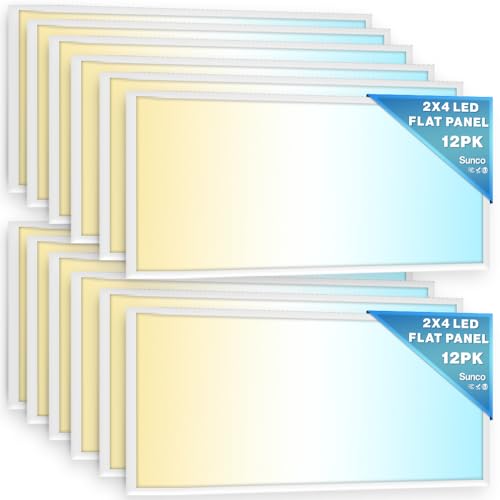
Sunco 12 Pack 2×4 LED Flat Panel Lights 3CCT Selectable Dimmable

Sunco 30 Pack 2×4 LED Flat Panel Lights 3CCT Selectable Dimmable

Amico 36 Pack 2×4 LED Flat Panel Fixture Dimmable ETL Listed
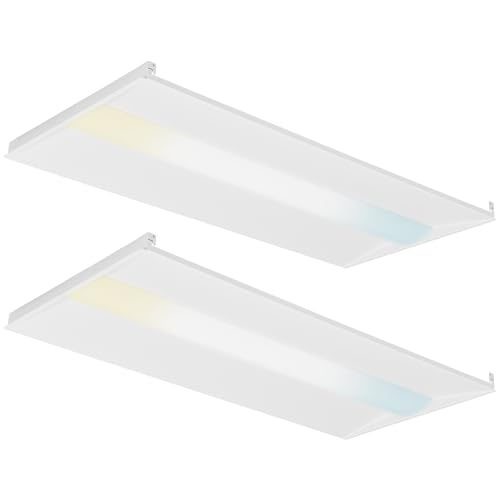
Cortelco 2×4 LED Troffer 2 Pack 3000K-5000K Dimmable

Metalux MMS Multi-Mount 2×4 LED Panel 3 CCT Lumen Select

Msbfi 2×4 LED Flat Panel 4 Pack 5 CCT 5 Wattage Dimmable

AIKVSXER 6 Pack 2×4 LED Flat Panel 5 CCT 30-70W Dimmable
Taking A Closer Look At The Options
The Lifgright 16-pack shows up ready to light a serious floor of cubicles. Its edge-lit troffer design (meaning LEDs fire sideways into a diffuser, creating soft, even output rather than harsh downcast beams) pushes 7800 lumens per panel at a 5000K daylight white tone, which suits detail-heavy task work like drafting, bookkeeping, or color-sensitive retail floors.
For installers replacing an entire drop ceiling in one sweep, the bulk count keeps the job moving without constant reorders. 0-10V dimming (an analog control signal that pairs with compatible wall dimmers and building automation systems) lets facility managers dial output down after hours for energy savings.
Notable Upsides
- Sixteen panels cover roughly 400-500 square feet of standard grid ceiling in a single order
- ETL listing (an independent safety certification recognized by U.S. electrical inspectors) keeps commercial inspectors happy at final walkthrough
- Edge-lit optics reduce the harsh spotlight effect some cheaper panels throw on glossy desks
- Recessed lay-in design drops into standard T-bar grids without bracket hardware
Worth Noting
- Color temperature is locked at 5000K, so warm-tone preferences need a different pick
- Dust accumulates on the diffuser face over time and requires ladder access to wipe clean
Who Should Grab It
Facility managers and contractors handling full-floor office refreshes where daylight-toned, dimmable output matters more than color flexibility.
Look Elsewhere When
The Deamoris 4-pack suits smaller home-office installs where tunable color temperature outranks raw lumen count.
The Deamoris panel rewards people who haven’t quite committed to a color temperature. A small toggle on the back of each fixture flips between five settings from warm 3000K to cool 6500K, and a second switch steps wattage through 30W, 40W, 50W, 60W, and 70W stops. That dual selector means a single SKU covers a basement workshop, a kitchenette, and a sunroom addition without three separate orders.
For homeowners retrofitting a finished bonus room, this flexibility prevents the classic mistake of buying daylight-white panels that make a cozy den feel like a morgue. Each panel maxes out around 7700 lumens at the top wattage, plenty for a 100-square-foot room.
Well-Handled Touches
- Five-step wattage selection lets you right-size brightness without buying separate fixtures
- 0-10V dimming pairs with common wall dimmers for evening ambient modes
- Wide voltage range (100-277V, the standard commercial electrical input range) handles both home and light-commercial circuits
Points To Note
- Four-panel pack may leave a small room short or a large room needing a second order
- The selector toggle sits on the rear, so changes mean pulling the panel from the grid
- Color consistency between panels can shift slightly in mixed batches
Feature Snapshot
Made For
Homeowners and small-office renovators who want one fixture that adapts as room use changes from season to season.
Swap It Out When
The Lifgright 16-pack makes more sense for whole-floor commercial jobs where color flexibility is irrelevant.
Sunco has built a name in mid-tier LED lighting, and this 12-pack carries that reputation into the troffer category. The 3CCT selector (a switch offering three preset color temperatures: 4000K, 5000K, and 6000K) covers the practical daylight-to-cool range without overcomplicating the choice, and wattage scales between 30W and 50W depending on the room.
For a small clinic, church hall, or single-floor office, twelve panels typically finish the job without leftovers or shortfalls. The slim, dustproof housing holds up in spaces where HVAC returns push air past the ceiling grid regularly.
Everyday Wins
- Three-temperature slider keeps the setup decision simple for first-time installers
- 0-10V smooth dimming avoids the flicker some panels show at low settings
- Dust-resistant construction suits workshops and garage conversions
Trade Offs
- Color range starts at 4000K, so warm-toned residential rooms may feel cool
- Wattage ceiling at 50W caps output for very high-ceiling commercial spaces
Best Suited To
Small business owners and church or school facility coordinators handling one-room-to-one-floor upgrades.
Consider Something Else When
The Amico 36-pack fits larger commercial renovations where aluminum housing and higher lumen output matter more than brand familiarity.
The 30-pack version of Sunco’s panel turns the same reliable fixture into a warehouse-scale solution. Wattage steps from 40W to 60W push output higher than the 12-pack sibling, so high-ceiling spaces like distribution centers, automotive bays, and big-box retail floors stay evenly lit without clustering fixtures.
For property managers upgrading an entire building wing in one sweep, the bulk quantity trims per-unit cost noticeably. Same 3CCT selector and 0-10V dimming carry over from the smaller pack, keeping the spec language consistent across multiple rooms.
Features That Help
- Higher 40-60W ceiling handles warehouse and gymnasium heights cleanly
- Thirty-panel count aligns with typical commercial floor plates of 1,000+ square feet
- Same proven Sunco housing as the 12-pack simplifies spare-parts inventory
Minor Gripes
- 30 panels demand dedicated storage space before install day
- Higher wattage draw may require circuit planning on older electrical panels
Whose Shelf It Belongs On
Property managers and electrical contractors running multi-room or whole-building LED conversions.
A Better Fit Elsewhere
The Deamoris 4-pack works better for homeowners replacing fixtures room-by-room over time.
Amico built this panel for spaces where downtime means lost revenue. The aluminum housing pulls heat away from the LEDs efficiently, and an integrated driver (the power-conversion module built into the fixture, eliminating the need for a separate external transformer) cuts a failure point that plagues cheaper panels. Three color temperatures and three wattage stops cover most office and classroom applications.
At 36 panels per order, this lands squarely in the territory of hospitals, large schools, and multi-floor office renovations. The dustproof design also handles garage and light-industrial environments where airborne particles would clog lesser fixtures.
Points In Its Favor
- Aluminum housing and integrated driver extend service life in demanding spaces
- ETL listing plus FCC compliance (confirming the fixture meets electromagnetic interference standards) simplifies inspection paperwork
- 6250 lumen output per panel handles standard 9-foot ceilings without crowding
Soft Spots
- Color range tops out at 6500K and skips 3000K, limiting residential warmth
- 36-panel orders require freight shipping logistics rather than parcel delivery
Quick Facts
Right Fit For
Facility directors and commercial electrical contractors handling schools, medical offices, and large corporate floors.
Reach For A Different Pick When
The Msbfi 4-pack suits homeowners who want warm-tone options and simpler wattage selection.
Cortelco’s center-basket troffer design (a recessed fixture with an inner reflector that bounces light before it exits, softening glare) puts eye comfort ahead of raw output. The aerospace-grade aluminum housing runs cooler than stamped steel competitors, and the anti-yellowing PC lens keeps the diffuser from ambering after years of UV exposure.
Two panels per pack makes sense for a single private office or a small conference room upgrade. The 7500-lumen ceiling at full power delivers solid task lighting, and the 0-10V dimming brings the room down to a comfortable presentation level when needed.
Noteworthy Benefits
- Center-basket optics reduce direct glare on screens and paperwork
- Aerospace aluminum housing supports long-term thermal management
- Anti-yellowing lens maintains color accuracy over years of use
Honest Caveats
- Two-pack quantity runs short for any room larger than 200 square feet
- Color range stops at 5000K, missing the cooler 6000K-6500K options some prefer
Perfect Match For
Private office and small conference room upgrades where glare control matters more than maximum output.
Where A Sibling Pick Shines
The AIKVSXER 6-pack gives wider wattage selection and a six-panel count for whole-home renovations.
The Metalux MMS solves a problem most panels ignore: not every ceiling has a T-bar grid waiting for a lay-in fixture. This unit supports surface mount, recessed, wall, and suspended installations (the suspended kit ships separately), so a single spec handles exposed-joist basements, drywall ceilings, and high-bay industrial spaces alike.
The 90 CRI rating (Color Rendering Index, a 0-100 scale measuring how accurately a light source reveals true colors; 90+ is considered excellent for color-critical work) pushes this panel into art studios, design firms, and any space where paint samples, fabric swatches, or photography need honest color. Three CCT presets plus lumen select round out the spec sheet.
Where It Helps
- Four mounting styles remove the need to stock separate fixture families
- 90 CRI supports color-accurate work in studios and design spaces
- Integrated surface mount hardware cuts accessory costs on simple ceilings
Details To Watch
- Suspended mounting requires a separate hardware kit purchase
- Single-unit packaging means multi-room installs need multiple orders
The Numbers That Matter
Built With In Mind
Design studios, finished basements, and renovation projects where the ceiling type varies room to room.
Not Your Match When
The Lifgright 16-pack fits large grid-ceiling commercial jobs where mounting flexibility is irrelevant.
Msbfi leans hard into the “one fixture, many moods” approach. Five color temperatures from warm 3000K to crisp 6500K plus five wattage stops make this a strong pick for homeowners who haven’t decided yet and want to experiment after the panels are already mounted.
The dip-switch selector on the driver (a small slider block that lets you set color temperature and wattage before or during installation) is straightforward enough that a first-time DIYer can handle the setup. Four panels cover a two-car garage, a workshop, or a finished basement without overcommitting to a single aesthetic.
Positive Takeaways
- Five-color selector covers every residential palette from warm den to bright task zone
- Dip-switch layout is easier than toggle switches for less confident installers
- ETL listing gives inspectors the certification they look for
Things To Weigh
- Brand recognition is lighter than Sunco or Amico, so spec sheet scrutiny pays off
- Four panels run short for any open-concept space over 350 square feet
Who Will Love This
DIY homeowners finishing a basement, garage, or bonus room where flexibility beats brand prestige.
Where Another Pick Suits Better
The Cortelco 2-pack works better for buyers who prioritize glare control and premium housing materials over color count.
The AIKVSXER 6-pack splits the difference between small-room and whole-floor scale. Six panels handle a two-room renovation or a mid-size workshop comfortably, and the 30W-to-70W wattage range means each fixture can serve as either ambient fill or bright task lighting depending on the toggle position.
Five color temperatures and a 7700-lumen ceiling at top output give this panel real flexibility. The 120-277V input range accepts both home circuits and light-commercial feeds without rewiring.
Useful Touches
- Five-step wattage selection reaches 70W for high-output task zones
- Six-panel count suits two-room residential renovations without ordering extras
- Wide voltage input covers both home and small-business circuits
Things To Consider
- Less established brand means less long-term field data than Sunco or Amico
- Color selection dial sits on the rear, requiring grid removal to adjust
Feature Card
The Right Fit
Homeowners and small-shop owners tackling a two-room renovation who want wattage headroom for a workshop or garage bay.
Skip It When
The Sunco 30-pack fits whole-building projects where brand track record outweighs per-panel flexibility.
What Matters Most Before Choosing 2×4 LED Flat Panels
Color Temperature and CRI
Color temperature, measured in Kelvin (K), sets the mood from warm 2700K (cozy residential) through 4000K (neutral office) up to 6500K (crisp daylight). Most flat panels now offer selectable CCT, but the available range matters: a 3000K-6500K spread covers everything, while a 4000K-6000K spread skips the warmest tones. CRI (Color Rendering Index) measures how accurately the light shows true colors. Anything at 80 CRI or above reads fine in offices; 90 CRI or higher suits art studios, design work, and retail displays where color accuracy drives sales or quality control.
Wattage Flexibility and Dimming
Wattage-selectable panels save real money when room sizes vary within the same project. A small conference room at 30W and an open bullpen at 60W both run off the same fixture SKU. 0-10V dimming remains the dominant commercial standard, so panels with that protocol pair with common wall dimmers and building automation systems without needing special interfaces.
Mounting Style and Ceiling Type
Standard T-bar grid ceilings accept lay-in panels directly. Exposed joists, drywall, and suspended installations need surface-mount or fixture-hung alternatives. Panels like the Metalux MMS handle four mounting styles in one unit, while most others lock into the grid-ceiling category. Matching the panel to the ceiling type before ordering prevents last-minute adapter hunts.
Key Considerations Across These Picks
Common Shopping Slip Ups
The biggest mistake is locking color temperature before living with the panel for a week. A 5000K daylight panel can make a wood-paneled den feel like a warehouse, while a 3000K warm panel leaves a craft room feeling dim and yellowed. Selectable CCT panels solve this, but only if you actually use the selector before final install. The second trap is undercounting fixtures. Standard 2×4 panels cover roughly 80-100 square feet each at comfortable brightness, so a 600-square-foot room needs at least six to eight panels for even illumination without dark corners.
What The Higher Tier Buys
Premium panels in this category spend the extra money on housing materials, driver quality, and CRI accuracy. Aluminum housings pull heat away from LED junctions better than stamped steel, which extends service life in spaces that run lights 12+ hours daily. Integrated drivers eliminate the external transformer box that cheaper panels depend on, cutting a common failure point. High CRI ratings cost more because the manufacturer sorts for LED bins (factory groupings of LEDs matched for consistent color output) with tighter tolerances, which matters when paint sales, photography, or medical examination hinges on color truth.
Frequently Asked Questions
What size room does one 2×4 LED flat panel cover?
A single 2×4 panel typically lights 80 to 100 square feet of standard 9-foot ceiling at comfortable brightness. Larger rooms, higher ceilings, or task-heavy work may need closer spacing or higher wattage settings.
Can I install 2×4 LED flat panels in a ceiling without a grid?
Most lay-in panels require a T-bar grid ceiling. For drywall, exposed joist, or suspended installations, look for surface-mount or multi-mount panels like the Metalux MMS that ship with hardware for those ceiling types.
What does 0-10V dimming mean?
0-10V dimming uses a low-voltage analog control signal (0 volts = off/minimum, 10 volts = full brightness) sent from a compatible wall dimmer or building automation system to the fixture’s driver, allowing smooth brightness adjustment without flickering.
Are selectable color temperature panels worth it?
For mixed-use spaces, renovations, or rental properties where room function might change, selectable CCT panels prevent the cost of replacing fixtures when preferences shift. Single-purpose rooms with committed use can save money by choosing a fixed temperature.
How long do 2×4 LED flat panels last?
Quality LED flat panels commonly rate for 50,000 hours of operation, which translates to roughly 17 years at 8 hours per day. Aluminum housings and integrated drivers tend to outlast cheaper stamped-steel designs with external drivers.
Bottom Line
The right 2×4 LED flat panel comes down to ceiling type, room use, and whether color flexibility matters more than raw output. Commercial buyers running whole-floor retrofits should look at the Lifgright and Amico bulk packs, while homeowners and small-shop owners get more mileage from the selectable-CCT options like Deamoris or AIKVSXER. Match the panel to the room, not the other way around, and the install will pay off for years.