

Hunting for a grow light that’s actually built in the States used to mean sifting through warehouse-style panels and clunky shop fixtures. The category has matured, and now there are options that fit a tiny apartment shelf, a serious 4×4 tent, or a living room corner that needs to look like part of the decor. I’ve spent time comparing five different American-made options across form factors, light output, and mounting styles, and the honest read is that the right pick depends entirely on what you’re growing and where. Casual herb gardeners, full-cycle growers, and people who just want their fiddle leaf fig to stop dropping leaves all have very different needs. This list walks through the trade-offs, so the choice feels obvious by the end.
A Closer Look At The Lineup

GLOWRIUM 48W Full Spectrum LED Plant Light with Stand

HLG 600 Rspec FR 600W LED Quantum Board Grow Light

GLOWRIUM LED Grow Light Bar Full Spectrum

GLOWRIUM Smart Grow Light Full Spectrum
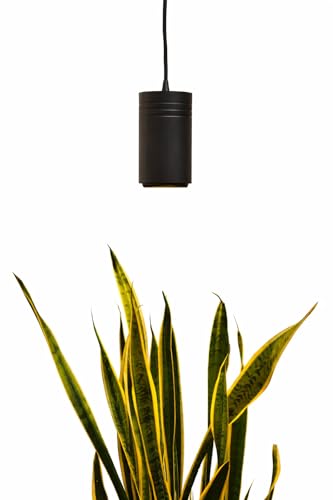
Soltech Aspect Gen 2 Pendant Grow Light (Black)
The Strengths Of Each Pick
The GLOWRIUM 48W arrives almost fully assembled, which is a relief for anyone who has fought a grow tent pole at midnight. The four-section pole telescopes up to roughly 79 inches, so it covers a tall plant on the floor or short seedlings on a tabletop without much fuss.
Where this one earns its spot is the stepless dimmer, paired with a 48-watt full-spectrum output. A person raising basil in the kitchen or hardening off tomato starts under a window can tune the light down to a soft glow or push it higher as plants mature. It’s a thoughtful entry point, and a meaningful step up from the small clip-on panels many beginners start with.
Notable Upsides
- Stand extends to about 79 inches, giving floor plants real headroom.
- Stepless dimming (a continuous brightness slider, not fixed steps) lets a grower match intensity to seedling or mature growth stages.
- Three light modes cover propagation, leafy growth, and flowering phases.
- Freestanding design means no shelf clamp or wall mount needed.
Things To Consider
- The base footprint takes up floor space, so small apartments may find it intrusive.
- 48 watts is modest for dense flower cycles, so serious growers will outgrow it.
- Owners commonly report the telescoping joints need a periodic tighten to stay at the set height.
Who It Suits Best
New indoor gardeners tending herbs, starts, and a few leafy houseplants in a single bright corner.
Consider Something Else When
Anyone running a full 4×4 flowering tent should look at the HLG 600 Rspec FR instead, since it delivers the canopy penetration this floor stand can’t.
The HLG 600 Rspec FR is the panel serious growers reach for, and it shows in the spec sheet: a 600-watt quantum board (a flat panel of high-output LEDs spread across an aluminum board for even light distribution) built for a 4×4 tent. The “Rspec FR” naming hints at a richer red and far-red mix, which is the part of the spectrum flowering plants respond to most.
Compare that to the GLOWRIUM 48W floor stand: this is the grown-up sibling. Quantum boards run cooler than older blurple-style panels, so the environment stays easier to manage. For anyone investing in a real grow setup, this is the workhorse tier, and it explains why HLG has such a loyal following.
Notable Gains
- Custom-engineered for a 4×4 ft footprint, so coverage is even without awkward daisy-chaining.
- Rspec FR spectrum pushes flowering and fruiting stages harder than generic full-spectrum panels.
- Dimmable driver lets the same fixture run seedlings at low power and mature plants at full power.
- Quantum board design dissipates heat more effectively than older COB or chip-on-board styles.
Worth Noting
- Requires a tent or a hung setup; it isn’t a plug-and-play shelf solution.
- 600 watts pulls real current, so older circuits may need verification before installation.
- The panel alone, without hangers, leaves mounting hardware as a separate decision.
Quick Facts
Built With In Mind
Home growers running a 4×4 tent and pushing plants from veg through flower on a serious schedule.
A Better Fit Elsewhere
A casual shelf gardener would do better with the GLOWRIUM LED Grow Light Bar, since this fixture is overkill for a few pothos plants.
The GLOWRIUM grow light bar takes a different approach than the tall floor stand I covered first. It’s a slim bar meant to mount on a plant shelf, with a 100-degree beam angle that washes a wide area without harsh hotspots. That wide spread is genuinely useful on tiered setups, where a single point-source light leaves the edges dim.
Three angle settings give the user a way to aim the bar toward the canopy, which matters once plants start leaning toward the light. For anyone running a small propagation rack or a row of low-light houseplants, this bar fits where panels and stands just won’t.
Advantages To Know
- 100-degree beam covers a wide shelf without multiple fixtures.
- Three angle adjustments help redirect light as plants grow.
- Slim bar profile tucks under shelves or mounts to the underside of a cabinet.
- Full spectrum supports the full growth cycle, not just greens.
Points To Note
- Mounting hardware and exact shelf width are worth measuring before purchase.
- Output is enough for herbs and light-leafy growth, less so for heavy flowering.
- Some owners report the included mounting clips feel light on thicker shelves.
Best Suited To
Anyone running a multi-tier plant shelf, a small propagation rack, or a row of low-light foliage plants.
Look Elsewhere When
Living room decorators should consider the Soltech Aspect Gen 2, since a hanging bar still looks like a grow bar, not a piece of furniture.
The Smart Grow Light is the connected version of the lineup, pairing 32 calibrated full-spectrum LEDs with both an inline controller and an app. For people who already manage their home from a phone, scheduling a light cycle without walking to the shelf is a real convenience, especially across a vacation.
The LED mix combines 4000K white light (a balanced daylight tone that mimics noon sun) with 660nm red diodes (a wavelength plants use heavily during flowering), which together support everything from leaf development to fruiting. The build bridges the gap between the casual shelf bar and the tent-ready HLG panel, depending on how it’s used.
A Strong Showing
- App and inline control allow on/off cycles without manual switching.
- Calibrated spectrum (4000K white plus 660nm red) supports all growth stages.
- Higher output density than a basic bar at similar wattage.
- Useful for travelers who can’t be home to toggle a light daily.
Small Caveats
- App setup occasionally requires patience during the first pairing.
- Smart features are wasted on a single plant that doesn’t need a schedule.
- Not a tent fixture, so serious flowering growers will still want the HLG.
Feature Snapshot
Made For
Tech-forward hobbyists who want scheduling, automation, and clean light output in one fixture.
Reach For A Different Pick When
Someone set on a quiet corner lamp for a fiddle leaf fig would prefer the Soltech Aspect Gen 2, which looks the part of a designer pendant.
The Aspect Gen 2 is the one to buy when a grow light can’t look like a grow light. It’s a pendant fixture, warm white in tone, and it hangs like a piece of designer lighting in a living room or open-plan space. Soltech built the brand around exactly that idea, and the Gen 2 raises output noticeably over the original Aspect.
It’s a different category than the GLOWRIUM floor stand or the HLG tent panel. Where those belong in a utility corner, this one earns its place above a monstera, beside a reading chair, or in a dining area where guests should never suspect it’s feeding the plants.
Where It Delivers
- Pendant form factor blends with normal home lighting, not grow-room gear.
- Warm white output reads as natural light to the eye.
- Higher output than the original Aspect, supporting more demanding plants.
- Dimmable, so the same fixture can be ambient light and plant light.
Honest Caveats
- Pendant mounting requires a ceiling hook or hardwire, which adds install effort.
- Coverage suits a single plant cluster, not a full shelf.
- Some users find the warm tone less ideal for leafy greens craving blue-rich light.
Feature Rundown
Whose Shelf It Belongs On
Apartment dwellers and design-conscious plant parents who want serious light output without the industrial look.
Skip It When
Someone running a propagation shelf or a 4×4 tent should pick the HLG 600 Rspec FR, which is built for that environment.
What To Weigh Before Picking American-Made Grow Lights
Spectrum quality comes first, since the right light wavelengths drive photosynthesis, the process plants use to convert light into growth energy. Look for full-spectrum output with both blue-rich diodes for vegetative growth and red-rich diodes for flowering. The HLG’s Rspec FR leans into red-heavy output for bloom phases, while the GLOWRIUM Smart combines 4000K white with 660nm red for a more generalist profile.
Wattage and coverage matter more than people think. A 48-watt stand covers a single herb cluster; a 600-watt panel covers a full 4×4 tent. Match the fixture to the space, and resist the urge to overbuy, since oversized lights on small plants can bleach foliage and waste electricity. Quantum board designs also tend to run cooler, which simplifies ventilation in enclosed spaces.
Mounting style often decides the choice before specs do. A floor stand works in an open living area, a bar mounts to a shelf, a pendant hangs from a ceiling, and a tent panel needs a hanging kit. Measure the install location first, then pick the form factor that actually fits, since returning a 600-watt panel because it doesn’t fit a bookshelf is a frustrating lesson.
Build origin and warranty are part of the USA-made appeal. American-assembled fixtures tend to use name-brand drivers and offer replaceable parts, which extends service life. Look for ETL or UL certification (independent safety testing marks for electrical products) and clear warranty terms, especially for higher-output models that run for 12 to 18 hours a day.
Key Considerations Across These Picks
Common Shopping Slip Ups
The biggest mistake is buying by wattage alone. A 600-watt panel on a single basil plant is wasted hardware, and a 20-watt bar over a flowering tent is barely useful. Match the fixture to the grow space, then check the recommended coverage area in the manual. Buyers also overlook heat: high-output panels raise tent temperatures and may require extra ventilation, which adds to the real cost. Finally, mixing spectrums randomly produces leggy seedlings or sparse flowers; choose a fixture whose spectrum fits the stage you grow in most.
What The Higher Tier Buys
The jump from a basic bar to a quantum board isn’t just about brightness. Better drivers, higher-efficiency diodes, and improved thermal management mean more usable light per watt and longer diode life. A panel like the HLG 600 Rspec FR also brings stronger red and far-red output, which translates into denser flower development for the plants that respond to it. For serious growers, that upgrade pays for itself in a single harvest. For casual plant keepers, a mid-tier bar or smart fixture is usually the smarter spend.
Frequently Asked Questions
Are USA-made LED grow lights better than imported options? Often, yes, in build quality and component sourcing. American-assembled fixtures tend to use name-brand drivers, replaceable parts, and tighter safety certifications, but the diodes themselves come from a small global supply chain. The real advantage is serviceability and warranty support.
What spectrum do indoor plants actually need? Most leafy houseplants thrive under balanced full-spectrum light with strong blue and moderate red wavelengths. Flowering and fruiting plants want extra red, sometimes including far-red, to trigger and sustain bloom cycles.
How far should a grow light hang above the plants? Generally 12 to 24 inches for high-output panels, and 6 to 12 inches for lower-wattage bars. Leaf bleaching or curling toward the light means the fixture is too close, while stretching stems signal it should be closer.
Do smart grow lights actually help? For multi-plant setups with consistent schedules, app-controlled timers reduce manual effort and keep cycles stable. For a single plant on a windowsill, the smart features tend to go unused.
How long do LED grow lights last? Quality diodes commonly run 30,000 to 50,000 hours, which translates to several years of normal home use. Driver components often wear out before the diodes do, so replaceable drivers extend the life of higher-end fixtures.