

I’ve lit plenty of soffits over the years, and the right fixture changes how a home feels after dusk. Soft wash across eaves, accent glow along a porch ceiling, gentle path lighting near the garage: the effect pulls together architecture that disappears during the day. Recessed wafers and permanent outdoor string systems both solve the problem, but they speak different languages. Three recessed picks handle interior soffits, ceilings, and tight new-construction work. Three permanent outdoor systems wash the eaves year-round, from Halloween drama to a quiet January dinner outside. I’ll walk through each, who it suits, and where a different pick on this list fits better.
How The Shortlist Stacks Up

Ensenior 24 Pack 4 Inch LED Recessed Light, 5CCT Dimmable Wafer

Ensenior 6 Pack 6 Inch 5000K Dimmable Canless Wafer

Govee Permanent Outdoor Lights Pro, 200ft with 120 RGBIC LEDs
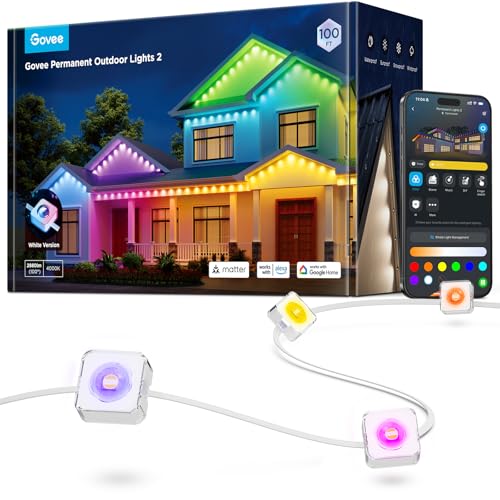
Govee Permanent Outdoor Lights 2, 100ft RGBIC Outdoor Lights

Govee Permanent Outdoor Lights Prism 200ft, White

Ensenior 12 Pack 3 Inch LED Recessed Light, 5CCT Dimmable Wafer
A Deeper Look At The Lineup
A bulk pack of canless (no separate housing can required) recessed wafers makes sense when the project spans more than one room. Twenty-four 4-inch units cover a small open-concept layout or a long hallway plus several bedrooms, leaving a few spares for the inevitable miscut hole. I lean toward this format whenever the ceiling is accessible from above and the joist spacing allows a 4-inch cutout without surprises.
The 5CCT switchable white (five selectable color temperatures on one fixture) is the quiet hero here. It lets a homeowner settle on the right tone after drywall is up rather than guessing at warm versus cool before ordering. For DIYers retrofitting a condo or finishing a basement, that flexibility alone can save a return trip.
Bright Spots
- Twenty-four units handle whole-home runs from one order.
- 5CCT selectable white means one SKU covers warm, neutral, and daylight tastes.
- Smooth dimming range works with most standard wall dimmers.
- Wafer-thin body fits shallow ceiling cavities where traditional cans won’t.
- Spring-clip retention speeds install once the hole is cut.
Things To Consider
- A 4-inch aperture spreads light wider than 3-inch units, so tight accent placement may look uneven.
- Dimmer compatibility depends on the existing wall control; older dimmers sometimes need a swap.
- Spare clips or a replacement driver are useful to keep on hand.
Best Suited To
A homeowner or contractor finishing a full floor of recessed lighting on a predictable budget.
Skip It When
The space calls for tight accent slots or narrow soffit reveals, where the Ensenior 3-inch 12-pack (pick 6) gives a cleaner beam.
Six-inch wafers deliver real punch, and the fixed 5000K daylight tone (a cool, blue-leaning white) suits task-heavy spaces where crisp rendering matters. I think of these for kitchens, basement workshops, laundry rooms, and garage ceilings. Six units is a deliberately modest count: enough for a single big room without committing to a job-site pallet.
The daylight color reads as “work mode,” which can feel sterile in a living room but earns its keep over a cutting board or sewing table. If a renovation includes a fixed CCT (correlated color temperature) choice, locking in 5000K here simplifies the spec.
Good Reasons To Consider
- Larger aperture throws more light per fixture, reducing total count.
- 5000K daylight supports detail work and color accuracy in kitchens and shops.
- Canless design avoids the recessed-housing depth problem in older ceilings.
- Dimmable range matches common residential dimmers.
Worth Noting
- 5000K reads cold in living areas meant to feel cozy.
- Larger cutouts require more ceiling repair if a layout changes later.
- Six units may fall short for a large open-plan kitchen island layout.
Key Specs
Perfect Match For
A cook or hobbyist who values daylight clarity over ambient warmth and wants fewer, brighter fixtures overhead.
A Better Fit Elsewhere
Homeowners wanting tunable warmth should pick the Ensenior 4-inch 24-pack (pick 1) instead, which offers 5CCT flexibility.
Permanent outdoor lights sit on the fascia (the horizontal board along the roof edge) and stay up year-round, which means climbing the ladder once, not every December. The Govee Pro 200-foot run with 120 RGBIC LEDs (individually addressable color LEDs that can show multiple colors at once) handles long eaves and wraps around most single-family homes without a second string. RGBIC matters here because it produces flowing color scenes rather than the static wash of older RGB strips.
For shoppers wanting accent color, scheduled scenes, and full white control from an app, this set does the job without dragging in extra hubs. Compared to pick 4 below, it stretches further and adds the warm/cold white tuning that makes a permanent system double as everyday lighting, not just holiday decor.
What It Does Well
- 200-foot total length covers larger rooflines without splicing a second kit.
- RGBIC support produces multi-color gradients within a single scene.
- Tunable warm-to-cool white expands use beyond holidays.
- App control plus timers removes the need to plug in a controller at sunset.
Trade Offs
- Long runs require careful planning around outdoor GFCI outlets (ground-fault circuit interrupter receptacles required by code for outdoor power).
- Color scenes use more energy than steady white, though white-only mode is far gentler.
- Installation is one-time commitment; relocating mid-season means re-mounting clips.
Who Will Love This
Homeowners with long eaves who want a single, app-driven system for parties, holidays, and nightly accent glow.
Where A Sibling Pick Shines
For shorter rooflines or first-timers, the Govee Permanent Outdoor Lights 2 100ft (pick 4) is easier to handle on a single ladder run.
The 100-foot version of Govee’s permanent line cuts length in half compared with pick 3, which sounds like a downgrade but actually opens the door for many homes. A modest single-story ranch or a back patio pergola is a clean fit. The shorter run also shortens install time, and most folks can finish mounting in an afternoon with a second person on the ladder.
The app remains the control center, and 100 scene modes cover everything from Halloween to a quiet post-dinner glow. It’s the friendlier on-ramp to permanent outdoor lighting, especially for someone who has never climbed around their soffits before.
Why It Works Well
- Manageable 100-foot run is friendlier for solo DIY.
- 100 preset scenes ease the learning curve for app-driven lighting.
- Stays mounted year-round, eliminating seasonal ladder climbs.
- Compatible with the same Govee ecosystem as pick 3.
Honest Caveats
- 100 feet may under-cover homes with detached garages or wraparound eaves.
- Mounting clips benefit from pre-marked layout, which adds planning time.
- Adhesive backing alone usually isn’t enough; screw-in clips handle weather better over time.
Feature Snapshot
Right Fit For
First-time installers with shorter eaves who want a forgiving, app-controlled permanent system.
Look Elsewhere When
The roofline runs long or wraps a corner; in that case the Govee Pro 200ft (pick 3) avoids splicing a second kit.
The Prism sits at the top of Govee’s permanent outdoor range with a triple-zone color head, meaning each LED node can carry three distinct color zones instead of one. That produces smoother gradients along a wall than the standard RGBIC strip and reads less like a string of dots. For architectural lighting, that subtlety matters: a homeowner who cares about color blending and clean trim lines will see the difference on a long, plain facade.
The white housing reads clean against painted soffits, and the Luminblend control aims for color accuracy rather than just brightness. It pairs nicely with modern trim and is a natural pick when the lighting needs to disappear visually and just emit glow.
The Value In It
- Triple-zone heads blend colors more smoothly than single-zone RGBIC.
- 200ft run covers large homes with one kit.
- White housing blends with most soffit colors.
- Tunable white supports everyday use, not just holiday accents.
- App-based DIY scene design adds creative flexibility.
Possible Compromises
- Pricier than the standard Pro kit, so the gain has to matter to the shopper.
- Triple-zone heads require a stable Wi-Fi signal for the most complex scenes.
- Heavier cabling along 200 feet needs solid mounting planning.
Quick Facts
Built With In Mind
Design-focused homeowners who want cohesive color washes and care about how the hardware looks during daylight.
Consider Something Else When
Budget matters more than color finesse; the Govee Permanent Outdoor Lights 2 100ft (pick 4) gets the look at a friendlier spend.
Three-inch wafers fill a specific gap that bigger apertures can’t: tight soffit pockets, slim hallway ceilings, accent slots above cabinets, and stairs where a 4-inch hole looks heavy. The 12-pack count is a smart middle ground for a single-room accent project rather than a whole-house retrofit. I think of it as the detail brush, not the roller.
Same 5CCT flexibility as pick 1, smaller footprint. That means a homeowner can stage tone in a hallway or above a kitchen backsplash without committing to a single color temperature. For accent zones, that’s the whole point.
The Upside
- Tight 3-inch aperture fits soffits and narrow reveals cleanly.
- 5CCT switchable white matches ambient layers in mixed rooms.
- Lower lumen output suits accent roles without overpowering nearby fixtures.
- Canless wafer body drops into shallow ceilings.
Points To Note
- Lower per-fixture output means more units for whole-room lighting tasks.
- Small aperture throws less light down hallways than 4-inch or 6-inch units.
- Planning a tight layout takes more time on graph paper.
Whose Shelf It Belongs On
DIYers finishing accent zones, soffit pockets, and tight architectural reveals where a wider hole would feel clunky.
Reach For A Different Pick When
The room calls for general lighting, not accent; the Ensenior 24-pack 4-inch (pick 1) handles whole-room coverage with the same 5CCT flexibility.
What To Weigh Before Buying Soffit Lights
Soffit lighting splits into two camps, and the right answer depends on where the light needs to live. Indoor soffits, dropped ceilings, and tight architectural pockets call for recessed wafers: slim, ceiling-flush fixtures that disappear into the surface. Outdoor soffits and roofline accents call for permanent string systems mounted along the fascia, where they wash the wall or trim from above. Mixing the two is a common mistake, and the result rarely looks intentional.
Inside, the key questions are size and ceiling depth. A 3-inch wafer fits shallow soffits and tight reveals, while a 6-inch unit throws more light per fixture and suits kitchens and workshops. CCT flexibility (5CCT or tunable white) lets the homeowner settle on tone after the drywall is up. For outdoor permanent systems, run length matters most. A 100-foot kit covers most small homes; 200 feet handles long or wraparound eaves. App-based control and scene variety matter if the homeowner plans to use the lights for everyday accent color, not only holidays.
Beam quality, dimming range, and trim finish round out the choice. For outdoor lights, weatherproofing and mounting hardware matter just as much as color; cheap clips don’t last a winter. Match the kit’s count or length to the actual measurement, and leave a small margin for mistakes at corners.
Things Worth Watching Before You Commit
Common Shopping Slip Ups
The most common misstep is buying fixtures based on lumen counts alone. A 6-inch 5000K wafer pumps out task light that feels right in a workshop and harsh in a living room. Match the color temperature to the room’s mood before buying. Another misstep is underestimating soffit length on outdoor kits; measure the full run including returns, then add ten percent. Skipping the dimmer check is the third slip: a wall dimmer designed for incandescent bulbs can flicker or buzz when paired with low-wattage LEDs.
Where The Extra Money Goes
Premium permanent outdoor kits like the Prism earn their higher spend through smoother color blending, cleaner trim hardware, and more capable app control. Higher-tier recessed wafers usually mean broader dimmer compatibility, longer driver life, and better thermal management (how well the fixture sheds heat, which affects LED longevity). For a single accent zone, mid-tier is plenty. For a long facade or whole-home install where the lights run daily, the upgrade pays off in fewer surprises later.
Frequently Asked Questions
Do soffit lights need to be hardwired, or can they plug in?
Recessed soffit fixtures are hardwired into the home’s electrical circuit, while most permanent outdoor string systems plug into a standard outdoor GFCI outlet. The difference comes down to where the light lives and whether the homeowner is comfortable with basic electrical work.
Can I install recessed wafers in a ceiling with insulation?
Many canless wafers are rated for direct contact with insulation, but the rating varies by model. Always confirm the fixture’s IC rating (safe for direct contact with insulation) before pushing it into a ceiling batt.
How far apart should I space recessed soffit lights?
For general room lighting, spacing roughly equals the ceiling height divided by two. For soffit accent washes, closer spacing creates a more even wall graze, while wider spacing leaves visible hot spots.
Are permanent outdoor lights safe in heavy rain or snow?
Quality kits are sealed against weather, but the connections and the controller benefit from being mounted under an eave. Avoid leaving low-grade splices exposed where water can collect.
Can I mix recessed and permanent outdoor lights on the same project?
Yes, and many homes do. Recessed wafers handle indoor soffits and ceilings, while a permanent string handles the exterior roofline. Use the same color temperature family indoors and a coordinated palette outdoors for visual consistency.