

I’ve set up enough lamps and bulb packs to know the smart lighting aisle gets overwhelming fast. Some setups want to run your whole house on voice commands, while others just need a gentle nightlight in the hallway so nobody trips at 2 a.m. This roundup covers six genuinely different approaches to that problem, from full-room color systems to plug-in nightlights and a creator’s studio bulb. Pick the shape that matches how you actually live.
The Leading Options At A Glance

Philips Hue Smart 60W A19 LED Bulb 2-Pack
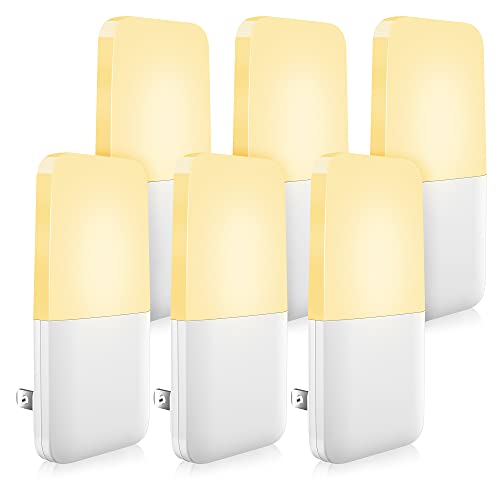
MAZ-TEK Plug in Night Light 6-Pack
Aputure Accent B7C Smart LED Bulb 7W RGBWW

Govee Lantern Floor Lamp Halo Gradient RGBIC

Electight LED Desk Lamp with Atmosphere Lighting
Philips Hue Smart 40W B39 Candle Bulb
The Picks, Examined More Closely
Most people dipping a toe into smart lighting want the same thing: real, recognizable color in lamps they already own. The Philips Hue A19 2-Pack slots straight into a standard E26 socket, meaning no rewiring, no electrician, and no adapter shells. Bluetooth gets a single room running inside ten minutes, and an Echo or Google Nest speaker can flip lights hands-free once you link the accounts.
The 800 lumen output matches a traditional 60W bulb, so dining rooms and home offices don’t end up dimmer after the swap. Compared to the nightlight-style MAZ-TEK up next, this is the pick for someone who actually wants tunable whites and full RGB color across an entire room rather than a soft glow along the baseboard.
Strong Points
- Standard E26 base fits existing lamps and ceiling fixtures with no rewiring
- Voice control through Alexa, Google Assistant, and Apple HomeKit right out of the box
- 800 lumen output reads close to a traditional 60W bulb in real rooms
- Bluetooth mode handles a single room without buying extra hardware
- Two-pack lowers the per-bulb cost when filling a living room
Things To Consider
- A Hue Bridge unlocks automations and away-from-home control, adding to the total spend
- Color accuracy is consumer-grade rather than cinema-grade, so filmmakers may want more
Key Specs
Who It Suits Best
Renters and homeowners who want app and voice control across a full room without rewiring.
Look Elsewhere When
Content creators who shoot video should consider the Aputure B7C, since its color accuracy sits in a different league.
Not every smart light needs an app. The MAZ-TEK plug-in nightlight has a built-in dusk-to-dawn sensor, which means it lights itself up at sundown and shuts off again at sunrise. For parents making the bathroom trip route safer, or anyone navigating a dark hallway in socks, that’s the whole job description done.
The warm white glow stays gentle rather than clinical, so a kid’s room doesn’t end up bright enough to wake anyone. Six units in the box means you can wire an entire hallway, staircase, and bathroom at once. While the Hue bulb above tackles whole-room color, this is the calmer sibling for the parts of the house you don’t entertain in.
The Value In It
- Built-in dusk-to-dawn sensor removes any need to flip a switch
- Warm color temperature avoids the harsh glare common in cheaper nightlights
- Six-pack covers hallway, stairs, and bathroom in one purchase
- Long LED lifespan reduces how often anyone climbs a step stool
Worth Noting
- Plug form blocks the lower outlet on standard wall receptacles
- No app control or dimming beyond the built-in sensor behavior
Made For
Families with young kids, plus anyone who wants a soft, automatic glow without managing another app.
Skip It When
Shoppers wanting full color and voice control will find the Philips Hue A19 2-Pack a better fit.
The Aputure B7C lives in a different category from the others on this list. CRI 95+ and TLCI 96+ ratings (color accuracy standards used by photographers and filmmakers to judge how faithfully a light renders skin tones) place it firmly in video and content studio territory. A YouTuber lighting a face for a tutorial, or a photographer building a small interview setup, gets results closer to dedicated film lighting than to a living room lamp.
CCT adjustable from 2,000K to 10,000K (color temperature measured in Kelvin, where lower numbers look warm like candlelight and higher numbers look cool like daylight) covers everything from candle glow to overcast sky. Nine built-in FX modes handle lightning, paparazzi, and fire effects straight from the app. The Philips Hue A19 above is fine for mood lighting, but anyone grading footage will notice the difference immediately.
Well-Handled Touches
- High CRI and TLCI ratings keep skin tones natural on camera
- Wide 2,000K–10,000K CCT range handles sunset through daylight scenes
- App control plus onboard buttons for fast tweaks on set
- FX modes save carrying extra gear for stylized shoots
Room For Improvement
- 7W output sits well below the Hue A19’s 800 lumens for general room lighting
- Premium positioning makes it a niche pick for non-creators
Feature Snapshot
Right Fit For
Filmmakers, photographers, and content creators who shoot interviews or stylized scenes at home.
A Better Fit Elsewhere
Anyone lighting a living room for everyday use should reach for the Philips Hue A19 instead.
Floor lamps tend to disappear into the corner or shout for attention. The Govee Lantern tries a third path, using a soft-touch silicone shade that glows from within, almost like a paper lantern. RGBIC (a chip that lets each LED segment show a different color at once) inside the LuminBlend+ strip paints multiple colors on the surface simultaneously, so the lamp transitions across gradients rather than locking to one hue.
The shape fits beside a reading chair without dominating the room. Compared to the Aputure B7C, this isn’t built for camera work; it’s built to make a bedroom or studio apartment feel warm at the end of the day.
Everyday Wins
- Soft silicone shade reads as decor rather than tech gear
- Multi-color gradient effects feel more dynamic than single-hue lamps
- Floor-lamp format lights a whole corner without table space
- App control supports scenes, music sync, and timers
Honest Caveats
- Gradient lamp format gives soft ambient light, not focused task reading
- Larger footprint than a basic bulb swap, important in small rentals
Built With In Mind
Bedrooms, reading corners, and dorm rooms where soft ambient light matters more than task brightness.
Swap It Out When
Photographers should consider the Aputure B7C for studio-grade color rendering.
Desk lamps usually do one thing, and that’s fine, until the work day ends and the lamp becomes a small sun you can’t turn off. The Electight pairs a tunable white task light (3,000K to 6,500K) with an RGB mood layer, so the same fixture handles spreadsheets and a relaxed evening read. Remote and Magic Lantern app control cover the basics.
Sixteen million colors and 99 scene modes sounds like overkill on paper, but in practice it means a kid doing homework gets bright cool light, then switches to a warm amber for bedtime reading. While the Govee Lantern up above fills a whole corner, this lives at arm’s reach on the desk.
A Favorable Mix
- Dual lighting combines task white with mood RGB in one fixture
- Stepless dimming from 3,000K to 6,500K covers most study and reading needs
- App and remote give control choices without forcing one path
- Compact desk footprint suits small apartments and dorm setups
Small Caveats
- Single desk-sized unit, so coverage is limited to one workspace
- App ecosystem is smaller than Hue or Govee’s mature apps
Whose Shelf It Belongs On
Students, remote workers, and crafters who want one lamp to handle work and unwinding.
Another Choice May Suit
Bedrooms craving ambient-only light suit the Govee Lantern better.
Decorative fixtures like chandeliers and wall sconces usually hide their bulbs, which means a standard A19 bulb sticks out and ruins the look. The Philips Hue B39 candle bulb solves that problem with a slim profile and an E12 candelabra base that fits the smaller socket common in those fixtures. Output lands around 450 lumens, closer to a 40W bulb, which suits accent lighting more than main room fills.
Voice and app control match the rest of the Hue line, so swapping from the A19 starter set above to this candle shape keeps the ecosystem consistent. Owners of older homes with vintage sconces will appreciate the fit most.
Useful Strengths
- E12 candelabra base fits chandeliers, sconces, and small decorative fixtures
- Full white and color tuning matches the larger Hue A19 ecosystem
- Bluetooth mode handles single-fixture control without a hub
- Slim candle profile keeps decorative fixtures looking original
Points To Keep In Mind
- 450 lumen output is lower than the A19, sized for accent rather than main lighting
- Single-pack means chandeliers with five or six bulbs add up fast
Quick Facts
Who Should Grab It
Homeowners with chandeliers, sconces, or candelabra fixtures wanting smart control without sacrificing style.
Where A Sibling Pick Shines
Larger living rooms needing main lighting fit the Philips Hue A19 2-Pack more naturally.
Picking Smart Lights That Match How You Live
Smart lights fall into a few honest categories, and pretending they don’t exist leads to buyer’s remorse. Whole-home color systems like the Hue A19 pair best with people who already use voice assistants daily. Plug-in nightlights cover safety, not ambiance. Studio bulbs serve people who shoot video. Floor and desk lamps suit renters who can’t hardwire anything new.
Lumen output deserves a hard look before anything else. A living room at 200 square feet wants roughly 1,500 to 3,000 lumens total, which usually means two to four 800-lumen bulbs. A bedroom reading corner can survive on a single floor lamp at around 800 lumens. Lower outputs like the candle bulb’s 450 lumens exist for accent use, not for filling a room.
Connectivity matters more than feature lists suggest. Bluetooth-only setups keep things simple but limit control to one room and one phone. A hub or bridge unlocks away-from-home control, automations, and stable connections across many bulbs. For renters or anyone starting small, Bluetooth is enough. For whole-home systems, a bridge tends to be worth the add-on.
Voice assistant compatibility should match what already lives in the home. Alexa, Google Assistant, and Apple HomeKit each have their own ecosystem quirks. Picking a bulb that works with what sits on the counter avoids surprises later.
Key Considerations Across These Picks
Wrong Turns To Avoid
The most common mistake is chasing color before nailing brightness. A 60W-equivalent bulb in a dark living room barely registers. People also over-buy hubs early; many fixtures work fine over Bluetooth until a real automation need shows up. Buying ten bulbs before testing one in the actual fixture leads to returns and frustration.
Where The Extra Money Goes
Premium pricing in this category usually buys color accuracy, build quality, and ecosystem depth. The Aputure B7C costs more because its color rendering reads correctly on camera, not because it shines brighter. Hue costs more because the app and integrations stay polished over years. Cheaper bulbs work, but they often lag in app polish, dimming smoothness, and long-term firmware support. Paying up makes sense when the fixture sees daily use; less so for an accent corner.
Frequently Asked Questions
Do smart lights work without Wi-Fi?
Many do, especially those with Bluetooth or a dedicated hub. The Philips Hue bulbs in this roundup run over Bluetooth without internet, and the MAZ-TEK nightlights have no connectivity at all. Wi-Fi only becomes necessary for away-from-home control and cloud-based voice assistants.
How many smart bulbs do I need for one room?
Most rooms read well with two to four bulbs at 800 lumens each, depending on ceiling height and lamp placement. Start with two bulbs in the fixtures you use most, then expand if corners stay dim.
Can I mix smart bulbs from different brands?
Yes, in the sense that the bulbs will turn on and off. App control stays siloed per brand, though, so mixing means managing two or three apps. Voice assistants like Alexa and Google Home can usually bridge them into one routine.
Are smart lights worth it for renters?
Plug-in and screw-in options like the ones in this roundup need no rewiring, so renters get full benefit. The only thing to avoid is hardwired fixtures that require electrical work.
Do smart bulbs use more electricity than regular LEDs?
No, the LED efficiency stays close to standard bulbs. The radio inside adds a tiny idle draw, often under a watt per bulb, which is negligible on a monthly bill.