

A dim garage turns a quick task into a frustrating one, and most homeowners eventually hit the moment where they realize the overhead bulb simply isn’t cutting it. I’ve been there, swapping in brighter bulbs that still left shadows pooling in the corners. The right fixture changes that experience entirely, and that’s why I went deep on five standout options worth your attention right now.
Your Options, Compared

BBOUNDER 10 Pack 4FT LED Shop Light

LZHOME Hexagon 5000K LED Garage Lights 25 Pack

SYDHTF LED Garage Lights 2 Pack Deformable
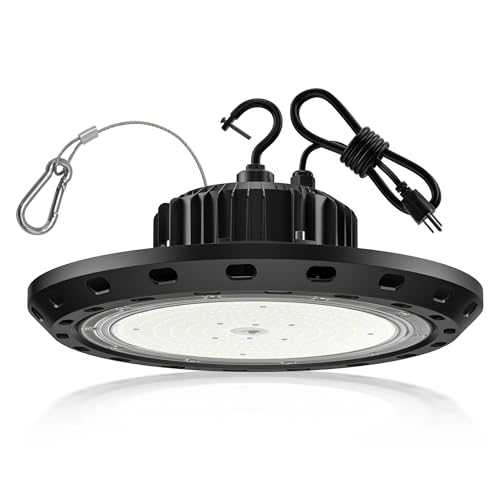
Yihuven 300W UFO LED High Bay Light

BBOUNDER 4Pack 4FT LED Shop Light
The Details Behind The Selections
Ten fixtures in one box is a lot of light, and this BBOUNDER bundle is built for people planning a complete garage overhaul rather than a quick swap. Each 4-foot tube uses just 40 watts while pushing out 4400 lumens at a 6500K color temperature, the cool daylight tone that makes paint colors and tool labels read accurately. The linkable design lets you daisy-chain up to four units off a single outlet, which keeps the wiring tidy in a long bay.
For a two-car garage with an eight-foot ceiling, ten of these covers overhead lighting plus the walls and rear bench without leaving dark corners. You may find the included hardware is generic, so budget a few extra minutes for mounting on exposed joists or drywall anchors.
Key Advantages
- Ten fixtures cover a full two-car garage with headroom for workbench zones and rear storage.
- Each tube draws 40 watts while delivering 4400 lumens, a strong efficiency ratio that keeps electric bills reasonable.
- Linkable design runs up to four units from one outlet, cutting down on extension cords and wall clutter.
- 6500K daylight color reveals true paint matches and small label text on hardware organizers.
Things To Consider
- Ten fixtures is overkill for a single-car garage or a small shed, and you’ll have spares sitting around.
- Mounting hardware is basic, so drywall or masonry installs may need upgraded anchors.
- Cool daylight reads harsh in a finished bonus room, so reserve these for true workspace ceilings.
Feature Snapshot
Made For
Homeowners finishing a full garage build-out who want even, shadow-free coverage across a two- or three-car bay.
Look Elsewhere When
You only need to light a small single-car space, in which case the BBOUNDER 4-pack gives you similar output without the extras.
Hexagonal grids have moved from car-studio social feeds into home garages, and this 25-pack from LZHOME leans hard into the aesthetic. The updated 1.31-inch wider profile spreads light more evenly across each panel, and the combined output lands around 26,300 lumens at a 5000K tone that feels closer to natural daylight than the cooler 6500K options above.
This setup fits a detailing shop, a content creator’s garage backdrop, or a workshop where the ceiling itself becomes part of the look. For most standard home garages, twenty-five panels may feel like visual overkill, and the install takes patience since each hexagon mounts individually.
A Strong Showing
- Hex pattern doubles as ceiling decor, transforming a plain garage into a styled space.
- 26,300-lumen combined output handles a large bay with comfortable, even brightness.
- 5000K tone reads as natural daylight, gentler on the eyes than cooler 6500K options during long sessions.
- Wider 1.31-inch frame reduces dark seams between panels.
Worth Noting
- Twenty-five pieces means a longer install with careful layout planning before drilling.
- Visual statement may clash with utility-first workspaces that just want bright, no-fuss lighting.
- Pattern shows every imperfection in the ceiling, so flat, clean drywall matters more here.
Whose Shelf It Belongs On
Detailing shops, content studios, and homeowners who want their garage to look as sharp as the cars inside it.
Swap It Out When
You’d rather spend ten minutes mounting than a full afternoon arranging, in which case the SYDHTF deformable garage light gets the job done with one socket twist.
No wiring, no electrician, no commitment. The SYDHTF deformable design screws into a standard E26 socket like a regular bulb, then unfolds into six adjustable side panels plus a center panel. Total output lands at 18,000 lumens across 180 watts, with a 6500K daylight tone that suits tasks like wrenching, painting touch-ups, and reading small part numbers.
Each panel tilts from zero to ninety degrees, so you can aim light toward a workbench, a wall of tools, or a parked car. Renters and anyone leasing a space tend to land here, since there’s nothing to uninstall when moving out, just unscrew the unit like a bulb.
Advantages To Know
- Twists into any standard E26 socket with zero wiring, perfect for quick retrofits.
- Six adjustable side panels plus one center panel aim light exactly where you need it.
- 18,000 lumens across two fixtures covers a single-car garage without supplemental lighting.
- No tools required at move-out, which matters for renters and lease holders.
Trade Offs
- Heavier than a standard bulb, so confirm the existing socket and fixture can handle the weight.
- Adjustable panels collect dust on the hinges, which means occasional wipe-downs to keep brightness even.
- Cool daylight can read sterile in a finished room, so it suits utility spaces more than living areas.
Best Suited To
Renters, retrofitters, and anyone who wants bright light without committing to a permanent ceiling install.
Consider Something Else When
Your ceiling is higher than twelve feet, where a UFO high bay like the Yihuven below throws light further from one mount.
Tall ceilings are a different lighting problem entirely, and that’s where UFO high bay fixtures earn their name. The Yihuven 300W uses 396 SMD3030 LED chips to push out 45,000 lumens at a 5000K tone, and the IP65 rating means it shrugs off dust and water spray, which matters in barns, workshops, and open garage bays.
This is the right call for ceilings from fifteen to thirty feet, where a standard shop light would scatter its output before reaching the floor. Installation requires hardwiring to a junction box, so plan on an electrician if you’re not comfortable working with line voltage.
Noteworthy Benefits
- 45,000-lumen output handles high ceilings from fifteen to thirty feet without losing floor brightness.
- IP65 rating protects against dust and water spray in barns, open bays, and damp basements.
- 5000K daylight tone reads as natural illumination across large floor areas.
- Die-cast aluminum housing manages heat well, supporting long daily run times.
Honest Caveats
- Hardwired install requires a junction box and basic electrical comfort, or an electrician visit.
- Overkill for standard eight-foot garage ceilings, where smaller fixtures work better.
- Single-fixture design means coverage depends heavily on placement, so layout planning matters.
Feature Snapshot
Right Fit For
Workshop owners, barn keepers, and small-warehouse operators with ceilings that swallow ordinary shop lights.
Reach For A Different Pick When
Your ceiling sits at standard residential height, since the BBOUNDER 4FT tubes deliver plenty of brightness without the install overhead.
Sometimes four fixtures are exactly right, and this BBOUNDER 4-pack hits the sweet spot for a single-car garage, a basement workshop, or a long shed. Each 4-foot tube uses 40 watts to deliver 4400 lumens at a 6500K daylight tone, and the linkable design connects multiple tubes from a single outlet to keep cable runs neat.
Compare that to the ten-pack earlier, and this bundle leaves less waste when a smaller space is the goal. For most single-bay layouts, four tubes overhead plus a task light at the bench is plenty.
Benefits That Matter
- Right-sized bundle for a single-car garage, basement shop, or storage shed without leftover spares.
- 40W per tube at 4400 lumens keeps running costs modest across years of daily use.
- Linkable connectors reduce outlet demand and clean up cable routing along the ceiling.
- 6500K cool tone supports detailed work like small-part sorting and color matching.
Points To Note
- Mounting hardware is basic, so drywall or masonry ceilings need upgraded anchors.
- 6500K reads harsh in finished spaces, so it suits utility rooms more than living areas.
- Four fixtures may not be enough for a deep two-car garage with separated work zones.
Who Should Grab It
Single-car garage owners and basement hobbyists who want bright, even coverage without buying more than they need.
A Better Fit Elsewhere
Anyone outfitting a larger two- or three-car bay, where the BBOUNDER 10-pack covers more ground without a second purchase.
What Matters Most Before Choosing Shop Lights
Color temperature drives how a space actually feels once the lights come on. Cooler 6500K tones sharpen detail work and make small labels readable, while 5000K reads more like natural daylight and tends to feel easier on the eyes during long sessions. Picking between them comes down to the kind of work happening in the room and how much time you spend there.
Lumens tell you how bright a fixture is, and most single-car garages feel comfortable somewhere between 8,000 and 20,000 lumens total. A two-car bay usually needs 20,000 to 40,000, and anything higher belongs on tall ceilings where light has farther to travel. The tradeoff is straightforward: more lumens means more watts drawn, though efficient LED designs keep that gap smaller than older fluorescent tubes ever did.
Mounting style shapes the install more than most people expect. Hardwired tubes give the cleanest look and the most secure mount, while screw-in deformable fixtures win on speed and reversibility. Renters almost always end up in the latter camp, and homeowners finishing out a dedicated workspace tend to prefer hardwiring that disappears into the ceiling.
Coverage layout matters as much as raw brightness. A single high-output fixture leaves shadows in the corners of an irregular space, while four or five lower-output tubes spaced evenly across the ceiling flatten the shadows out. For most garages, four to six fixtures across the ceiling beats one giant unit in the middle.
Key Considerations Across These Picks
Wrong Turns To Avoid
Picking purely by lumen count leads to bright but harsh rooms that feel uncomfortable after an hour. Color temperature, beam spread, and fixture count shape the actual experience far more than the headline number on the box. Another common slip is assuming any bulb socket will accept any fixture, since heavier shop lights sometimes exceed what a basic ceiling box was rated to hold.
Where The Extra Money Goes
Premium picks in this category tend to spend the difference on heat management, driver quality, and housing durability. Better heat dissipation keeps LEDs running at full brightness longer, which matters if the lights see daily multi-hour use. Higher-end fixtures also tend to offer cleaner color rendering, which means paint colors, wood grains, and small labels read more accurately under the light. The upgrade pays off most in shops where you spend real hours, day after day, doing close work.
Frequently Asked Questions
How many lumens do I need for a one-car garage?
Most one-car garages feel properly lit somewhere between 8,000 and 20,000 lumens, depending on ceiling height and wall colors. A darker ceiling or taller bay pushes you toward the higher end of that range.
What color temperature works best for garage work?
A 5000K tone reads as natural daylight and tends to feel comfortable across long sessions. A 6500K tone sharpens fine detail and makes small labels more readable, which suits mechanical and craft work.
Can I install shop lights without an electrician?
Screw-in deformable fixtures install into any standard E26 socket without tools. Hardwired tubes and UFO high bays require a junction box and line-voltage work, so an electrician is the safer call if you are not comfortable with that.
Are shop lights safe in damp basements?
Fixtures with an IP65 rating resist dust and water spray well enough for damp basements and open garage bays. Standard shop lights without that rating should stay in dry, climate-controlled spaces.
How long do LED shop lights typically last?
Most LED shop lights are rated for tens of thousands of hours, which translates to many years of typical home use. Heat management and driver quality influence how long they hold full brightness before any noticeable dimming shows up.