

A garage or workshop that fights back against every project with dim, yellow-tinted bulbs is a miserable place to spend a Saturday. I put together this roundup because choosing the right shop led lights changes how a space feels and how safely you can work in it, whether you’re detailing a car, finishing a woodworking bench, or just trying to find a dropped screw. The six picks below cover everything from quick screw-in upgrades to full ceiling overhauls, so you can match the fixture to the room rather than the other way around.
A Fast Comparison Of The Options

LZHOME Hexagon 5000K LED Garage Lights (25 Pack)

ONLYLUX 8ft LED Shop Light 90W 12000lm (10 Pack)
ONLYLUX 8FT LED Bulbs 48W 6500LM (12 Pack)

Super Bright 8 Foot LED Bulbs 90W 12150lm (8 Pack)

SYDHTF 18000LM Deformable LED Shop Light (2 Pack)
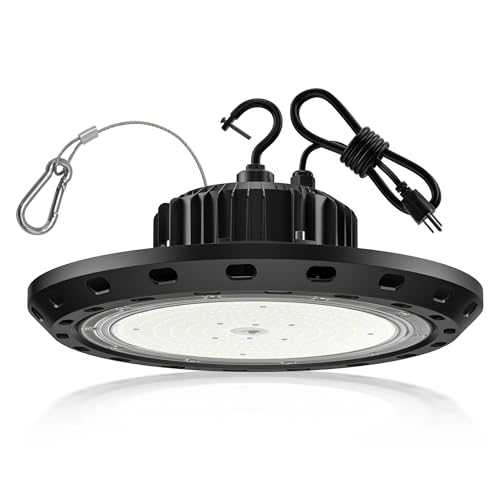
Yihuven 300W UFO LED High Bay Light 45000lm
A Breakdown Of The Leading Choices
The first thing to know about the LZHOME hexagon system is that it isn’t really a lamp, it’s a ceiling installation. Twenty-five interlocking panels tile together like a honeycomb to flood a two-car garage with a wide wash of 5000K light, the color temperature most people describe as “natural daylight.” For a hobbyist detailer or weekend car enthusiast, that matters because accurate color rendering (a metric called CRI, or Color Rendering Index, that measures how faithfully a light shows true hues) helps you spot swirl marks, polish haze, and uneven wax jobs that warm residential bulbs tend to hide.
Compared to the ONLYLUX tube fixtures below, which hang as long straight bars, the hexagon kit turns the ceiling into part of the showroom aesthetic. The updated 1.31-inch tube profile gives each panel more surface area for the LED chips inside, so light throws wider before falling off into shadow. You will want a clean ceiling and a few hours for layout planning, but the result feels closer to a professional studio than a home garage.
Positive Points
- Massive 26,300-lumen output covers a full two-car garage without hot spots
- Hexagon layout doubles as a visual upgrade for detailing studios
- 5000K color temperature is the sweet spot for paint and finish inspection
- 25-panel kit ships with hardware for a complete ceiling overhaul
Things To Consider
- Layout takes longer than a single screw-in bulb, so plan the pattern before mounting
- Hardwired install, so renters may need landlord approval
- Ceiling must be flat and accessible; vaulted rooms are a poor match
Who It Suits Best
Serious car detailing enthusiasts and small studios who want both showroom looks and accurate color for paint correction work.
Where Another Pick Suits Better
Homeowners wanting a simpler weekend project should reach for the SYDHTF deformable ceiling light, which screws into a standard socket.
The ONLYLUX 8-foot shop light is the workhorse of this list. Each fixture pulls 90 watts and pushes roughly 12,000 lumens, so a ten-pack is enough to light a long, narrow garage or a pole-barn workspace with even coverage from front to back. The 5000K tone keeps things crisp without veering into the bluish hospital look that some cheaper LEDs produce.
These are complete fixtures, not bare bulbs, and they ship with the hanging hardware and a simple wiring harness. For most homeowners, that means a weekend project rather than an electrician visit, though anyone uncomfortable pairing wires should still call one in. The slim aluminum housing keeps weight low, so standard ceiling hooks or chain links are enough to hold them in place.
Practical Advantages
- Linkable design lets you daisy-chain fixtures for fewer wall outlets
- High lumen-per-watt ratio keeps energy use modest for the brightness
- Slim profile drops only a few inches, preserving headroom in low ceilings
- Ten-pack covers a full multi-bay garage in one purchase
Worth Noting
- Each fixture requires its own power feed or link cable, so plan your outlet placement first
- Long housings can flex slightly during shipping; inspect before mounting
Made For
DIYers and small-business owners outfitting a full garage, workshop, or auto bay with bright, even overhead coverage.
Not Your Match When
Anyone needing a single-room quick fix should consider the ONLYLUX 8FT LED Bulbs twelve-pack, which drops straight into existing fixtures.
If your garage already has old F96T12 or T8 fluorescent fixtures humming away, the cheapest path to better light is often a bulb swap, not a fixture replacement. The ONLYLUX 8-foot LED tubes slot into those existing housings once you bypass the ballast (the small metal box inside fluorescent fixtures that regulates current to the tube, and a common failure point as fixtures age).
Each tube runs at 48 watts and produces 6,500 lumens of 5000K light, which is enough to replace a flickering, buzzing fluorescent without the warm-up delay. The twelve-pack assumes you have a lot of sockets to fill, which fits a warehouse or large shop better than a one-car garage. For most homeowners with two or three fixtures, buying fewer at retail and saving the rest for spares may be the smarter play.
Why It Works Well
- Drop-in replacement eliminates rewiring the entire fixture
- Removes ballast hum and flicker common in aging fluorescent setups
- 5000K output reads as clean daylight, easier on the eyes than warm bulbs
- Lower energy draw than the tubes they replace
Trade Offs
- Bypassing the ballast requires basic wiring comfort or a hired electrician
- Single-sided power design means installing them backward won’t light up
- Only fits 8-foot fixtures, not standard 4-foot residential fluorescent housings
Feature Snapshot
Best Suited To
Owners of older 8-foot fluorescent shops who want a fast retrofit without ripping out fixtures.
A Better Fit Elsewhere
Anyone building a new garage from scratch should consider the ONLYLUX 8ft LED Shop Light fixtures instead, since complete units skip the ballast step entirely.
Compared to the 48W tubes in the previous pick, these 90W V-shaped LEDs push about double the brightness per tube, which is the difference between a garage and a warehouse. The V-shaped four-row layout spreads light at a 270-degree beam angle, meaning the illumination spills sideways instead of pooling straight down. That wide throw is what makes them useful in spaces with ceilings over 16 feet high.
The clear cover, rather than a frosted diffuser, lets more of the raw light through, which trades a softer glow for higher output. Owners commonly report this matters most in pole barns, riding arenas, and warehouses where the floor sits far below the fixture. They install the same way as the previous pick: bypass the ballast, wire the sockets directly to line voltage, and you’re done.
Standout Benefits
- Wide 270-degree beam reaches walls and corners, not just the floor
- Thicker aluminum housing helps dissipate heat, extending LED life
- High lumen count tackles spaces with ceilings above 16 feet
- Eight-pack scales to multi-bay industrial setups
Honest Caveats
- Higher wattage means more heat, so leave clearance above the fixture for airflow
- Clear cover shows individual LED chips, which some users find visually busy
Quick Facts
Who Should Grab It
Barn owners, warehouse managers, and anyone lighting a tall commercial ceiling who needs raw output over soft diffusion.
Look Elsewhere When
Anyone working in a low-ceiling residential garage should consider the Yihuven UFO High Bay instead, since it concentrates output for a more focused hot zone.
The appeal of the SYDHTF deformable ceiling light is simple: it screws into a standard E26 socket, the same base as a regular household bulb, and immediately delivers 18,000 lumens across six adjustable side panels plus one center panel. There is no wiring, no ballast, no fixture to mount, just a five-minute install that works in any lamp holder already in the ceiling.
Each side panel pivots from 0 to 90 degrees, so you can angle light toward a workbench, a parked car, or a corner that the old bulb left dim. For most homeowners, two of these cover a single-car garage, and you can add more as needed. The 6500K color is a touch cooler than the 5000K tone used elsewhere on this list, leaning toward a bluish-white that some people prefer for task focus.
A Few Strong Suits
- No wiring required, since it uses an E26 screw base
- Adjustable panels direct light where the work is happening
- High lumen count from a single fixture point
- Two-pack handles a one-car garage without extra orders
Points To Keep In Mind
- Cooler 6500K tone reads harsher than the warmer 5000K used in other picks
- Adjustable panels can loosen over time, so periodic tightening helps
The Right Fit
Renters and homeowners who can’t hardwire fixtures but still want a major brightness boost from existing lamp sockets.
Swap It Out When
Anyone outfitting a multi-bay shop with very high ceilings should reach for the Yihuven UFO High Bay Light instead, since it covers more square footage per fixture.
The UFO shape of this high bay is a giveaway: it’s designed to hang from very tall ceilings, the kind found in warehouses, commercial shops, and large barns. A single fixture puts out 45,000 lumens from 396 LED chips, comparable to older metal-halide or high-pressure sodium fixtures that draw far more power. The IP65 rating (an ingress protection standard where 6 means dust-tight and 5 means protected against water jets) means the housing tolerates dust and low-pressure water spray, which matters in unconditioned spaces.
For most home users, one fixture is overkill, but for a commercial operator or anyone lighting a multi-thousand-square-foot shop, the math works out fast. A handful of UFO bays can replace a wall of fluorescent tubes, with less maintenance and lower energy draw over time. The hollow die-cast aluminum body sheds heat well, which is widely reported to extend LED lifespan in demanding environments.
The Helpful Details
- Industrial-scale 45,000-lumen output covers huge floor areas
- IP65 housing handles dust and water spray in tough environments
- 5000K daylight tone matches other fixtures in mixed installations
- Replaces older metal-halide or sodium bays at a fraction of the wattage
Where It Is Less Suited
- Overkill for a standard residential garage
- Requires a pendant mount or hook, which adds install steps beyond a screw-in bulb
Whose Shelf It Belongs On
Commercial shop owners, warehouse managers, and barn operators lighting very large spaces with high ceilings.
Consider Something Else When
Anyone working in a smaller residential garage should consider the LZHOME hexagon kit, which is easier to install and more decorative.
What Matters Most Before Choosing Shop Led Lights
Color Temperature and CRI
Color temperature, measured in Kelvin (K), tells you whether the light leans warm (yellowish, around 2700K to 3000K) or cool (bluish, above 5000K). Most shop tasks benefit from 4000K to 5000K, which reads as clean, neutral daylight without feeling sterile. CRI, or Color Rendering Index, scores how accurately a bulb shows true colors on a scale of 0 to 100. For paint matching, detailing, or any task where color accuracy matters, a CRI above 80 is the threshold most users want to clear.
Lumens, Not Watts
Older shoppers tend to think in watts, but watts only measure energy use. Lumens measure actual light output, which is what your eye sees. A 50W LED can outshine a 150W fluorescent because the LED converts more of that energy into visible light. For a typical two-car garage, plan on roughly 10,000 to 20,000 lumens total, scaled up for high ceilings or detail work.
Mounting Style and Wiring Comfort
Some shop led lights are screw-in bulbs, others are complete fixtures that hang from chains or mount to a junction box. The screw-in styles like the SYDHTF deformable unit are easiest for renters and beginners, while hardwired fixtures tend to look cleaner and last longer once installed. Honest self-assessment of your wiring comfort saves time and avoids a call to an electrician mid-project.
Coverage Area and Ceiling Height
A single bright bulb won’t do much in a 20-foot-tall pole barn. For ceilings above 16 feet, the V-shaped wide-beam tubes and UFO high bays on this list throw light far enough to reach the floor. For standard 8 to 10-foot garage ceilings, panel kits, tube lights, and deformable fixtures all work well, and the choice comes down to aesthetics and install effort.
Pitfalls Shoppers Hit and Where The Extra Money Goes
Mistakes Worth Dodging
The most common error is buying a fixture that throws too narrow a beam for the room, which leaves bright spots directly under the bulb and dim corners everywhere else. Another trap is skipping the ballast bypass step on fluorescent replacements, which can either short the new LED or leave the fixture dead. Finally, plenty of shoppers underestimate ceiling height and end up under-lighting their space, especially in pole barns and shops with vaulted ceilings. Measure twice, buy once.
What Separates Premium From Basic
The price gap between budget tubes and premium high bays usually shows up in three places: heat management (thicker aluminum bodies run cooler and last longer), driver quality (the internal component that converts AC to DC power, where cheaper units flicker or fail early), and CRI accuracy. Spending more tends to buy steadier light, longer lifespan, and a housing that tolerates dust or moisture, which matters in unconditioned spaces like barns and garages. For occasional use, budget picks are fine, but for daily workshop lighting, the upgrade pays off in fewer replacements and more comfortable working conditions.
Frequently Asked Questions
How many lumens do I need for a two-car garage? Most two-car garages need between 10,000 and 20,000 lumens total for general use, with more required for high ceilings or detailed task work.
Can I install shop led lights without an electrician? Screw-in styles like the SYDHTF deformable light work without any wiring, but hardwired fixtures and ballast bypass retrofits benefit from professional help if you’re not comfortable with electrical work.
What’s the difference between 5000K and 6500K? 5000K reads as neutral daylight, while 6500K leans cooler and bluish, which some people prefer for task focus but can feel harsh over long sessions.
Are LED shop lights worth the upgrade over fluorescent? For most users, yes. LEDs run cooler, last longer, and skip the ballast hum and flicker that plague aging fluorescent setups.
How long do shop led lights typically last? Quality LED fixtures are commonly rated for 30,000 to 50,000 hours of use, which translates to many years for a typical home workshop.