

A dark garage, a tripped breaker mid-repair, or a campsite that needs light until morning: these are the moments when a cordless work light earns its place. I put together this list for contractors, weekend wrenchers, and homeowners who want dependable task lighting without hunting for an outlet. Every option below runs on rechargeable power, mounts where you need it, and handles the kind of abuse a job site dishes out.
Your Options, Compared

DEWALT 20V MAX LED Work Lights (DCL050 and DCL043)

DEWALT DCL050 20V MAX LED Work Light

Anylight Magnetic Rechargeable Work Light

Anylight 1200LM Magnetic Rechargeable Work Light

Anylight 1200LM COB Magnetic Work Light
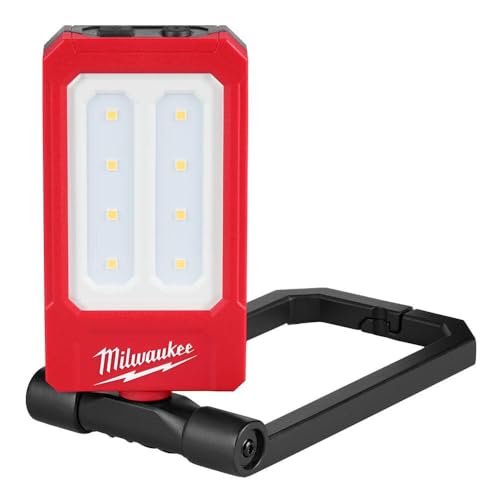
Milwaukee Low-Profile Magnetic Task Light
The Strengths Of Each Pick
Buying two lights in one bundle gives you a long-throw spotter and a close-range flooder for the same battery platform. The DCL043 throws a 1500-lumen beam out to roughly 508 yards, perfect for lighting up a whole room or the back of a truck bed. The DCL050 runs cooler with 500 or 250 lumen settings, which preserves battery life when you only need fill light under a sink or behind a panel.
Both heads pivot, the DCL050 between 90 and 140 degrees, so you can angle the beam exactly where it helps without propping the unit against a toolbox. The DCL050 also has a telescoping hook that wraps around 2-inch materials like pipe or stud, while the DCL043 stands on its own base for hands-free use. For crews already running DEWALT 20V MAX batteries, this bundle slots into an existing kit without buying a second charger.
Everyday Wins
- Two distinct beam profiles cover spot and flood tasks in one purchase
- Pivoting heads on both units reduce awkward repositioning mid-task
- DCL050’s telescoping hook frees both hands when working overhead
- DCL043’s self-standing base works well on flat shop surfaces
- Shared 20V MAX battery platform is a real cost saver for existing DEWALT owners
Things To Consider
- Battery and charger are sold separately, a real budget hit if you’re new to the platform
- Two full-size lights take up more room in a service van than a single compact unit
Who It Suits Best
Contractors and serious DIYers already invested in the DEWALT 20V MAX system who want matched lighting for varied tasks.
Where Another Pick Suits Better
Homeowners who only need one light for occasional garage projects will find the Anylight Anylight 1200LM Magnetic Rechargeable Work Light easier to justify.
Sometimes one well-built light is more useful than a bundle. The DCL050 handheld unit runs three bright LEDs at 1000 lumens on high or 300 lumens on low, giving you enough punch for crawlspaces and enough restraint for reading a wiring diagram at the bench. The pivoting head rotates 140 degrees so the beam tracks your work instead of forcing you to move the whole unit.
Compared to the two-light bundle above, this bare-tool option cuts weight and clutter for solo jobs. It’s a flashlight form factor that fits in a tool bag without dominating it, and the built-in hook reaches over door frames, pipe, or 2x material. The bare-tool listing assumes you already own compatible 20V batteries, which keeps the upfront cost down for anyone with a DEWALT kit.
Where It Excels
- Handheld form factor is easier to carry to a job than larger area lights
- High/low output gives real control over brightness versus runtime
- 140-degree pivot makes it simple to aim without lifting the whole light
- Bare-tool pricing is friendlier for shoppers who already own DEWALT batteries
Worth Noting
- No battery or charger included, a real barrier for first-time DEWALT shoppers
- Single beam pattern means no dedicated flood mode for close-up tasks
Feature Snapshot
Right Fit For
Solo contractors and homeowners who already use DEWALT 20V MAX tools and want a reliable single light for mixed tasks.
Swap It Out When
Anyone needing a magnetic hands-free setup for engine bays or metal framing should look at the Milwaukee Low-Profile Magnetic Task Light instead.
The Anylight magnetic unit leans into versatility at a wallet-friendly price. A 150-degree rotating head and a strong built-in magnet let you stick it to a breaker panel, vehicle fender, or steel stud and aim the beam wherever the work is happening. Four lighting modes, including a focused LED spot and a COB flood with three brightness levels, give you genuine task matching in a compact body.
Runtime scales with brightness, so the high spot mode runs shorter shifts while the lower flood settings stretch much longer. Unlike the DEWALT picks above, this one ships as a self-contained rechargeable unit, no platform batteries to buy. For homeowners who fix a sink once a month or run weekend projects, that simplicity is the real selling point.
Positive Points
- Magnetic base frees hands on metal surfaces like engine bays and breaker panels
- 150-degree rotation adjusts the beam without moving the magnet
- Four lighting modes cover both narrow spots and wide flood tasks
- Self-contained battery means no extra platform investment
Room For Improvement
- Magnet only helps on ferrous surfaces, so drywall and wood framing need a different mounting approach
- Build quality is lighter than professional-grade brands like Milwaukee
Made For
DIYers and homeowners who want a single flexible light for repairs around the house and occasional car work.
A Better Fit Elsewhere
Trade professionals logging daily hours on rough sites should consider the DEWALT 20V MAX LED Work Lights (DCL050 and DCL043) bundle instead.
The 1200-lumen output on this Anylight model gives you noticeably more headroom than the 4-mode entry above, while keeping the same magnetic base and rotating body. Four lighting modes, including high, medium, low, and a single spotlight, let you dial in the brightness for everything from plumbing under a sink to walking a dark driveway. The high-capacity cell charges quickly, so downtime between jobs is short.
For general household tasks, this is the sweet spot in the Anylight line. You get stronger flood output than the basic 4-mode light, without stepping into the heavier COB-specific design covered next. The combination of magnetic mounting, adjustable head, and four usable modes makes it the kind of light you toss in a drawer and reach for often.
Good Reasons To Consider
- 1200-lumen ceiling handles bigger spaces than entry-level magnetic lights
- Four modes include a dedicated spotlight for distance checks
- Magnetic base sticks to toolboxes, appliances, and vehicle panels
- Compact body stores in a kitchen drawer or glove box
Honest Caveats
- Higher lumen output drains the battery faster than lower-tier models
- Plastic housing shows wear faster than the Milwaukee unit below
Quick Facts
Best Suited To
Homeowners who want a versatile single light for household repairs, outdoor projects, and emergency use.
Not Your Match When
Daily trade professionals need the ruggedness of the Milwaukee Low-Profile Magnetic Task Light instead.
This Anylight model layers a COB flood panel on top of the standard four-mode setup. COB stands for Chip-on-Board, a tightly packed array of LEDs that produces a wide, even wash of light rather than a focused beam. Pair that with the rotating body and magnetic mount, and you get a light that works well for close-range inspection under a hood or behind a wall.
The 1200-lumen ceiling still covers larger jobs, and the fast three-hour recharge keeps it ready between tasks. Where the previous Anylight pick focuses on raw output levels, this one leans into beam quality. For anyone working on paint correction, detail work, or wiring where shadows hide mistakes, the flood-style COB pattern is a real upgrade.
Standout Benefits
- COB flood produces soft, even light that reduces harsh shadows during detail work
- 1200-lumen maximum handles wide work areas when needed
- Magnetic mounting and rotating head allow precise aiming on metal surfaces
- Three-hour full recharge minimizes downtime for repeat-use days
Points To Keep In Mind
- Flood pattern throws less distance than the spot-focused Anylight model above
- Plastic body is more vulnerable to drops than rubberized pro-grade lights
- Owners commonly report the magnetic base can slide on curved or painted metal if not positioned carefully
Who Will Love This
Detail-oriented DIYers and hobbyists who want smooth flood lighting for painting, auto detailing, or close-range electrical work.
Reach For A Different Pick When
Those needing long-throw lighting for outdoor job sites should consider the DEWALT 20V MAX LED Work Lights (DCL050 and DCL043) bundle instead.
Milwaukee’s low-profile magnetic task light is built for people who treat their tools roughly. The thin, modern shape slides into tight spots where a chunkier flood light won’t fit, like inside a cabinet cavity or under a dashboard. A magnetic back panel grips metal surfaces securely, and an alternative mounting feature handles non-metal setups.
Three output modes deliver 500 lumens for about four hours, 250 lumens for around eight hours, and 100 lumens stretching to roughly twelve hours. An IP54 rating means the light shrugs off dust and water spray, and the 6-foot drop rating tells you it can take a fall off a ladder. This is the unit to grab when the work is daily, dirty, and unpredictable.
Strong Points
- Low-profile body fits in tight cavities where bulkier lights can’t reach
- IP54 dust and water resistance handles messy job site conditions
- 6-foot drop rating gives real confidence on rough work
- Three-mode output stretches runtime when you need it most
Some Limits To Know
- 500-lumen maximum trails the 1200-lumen Anylight units in raw output
- Premium Milwaukee build typically commands a higher price than the Anylight options
Perfect Match For
Trade professionals and serious DIYers who work daily in harsh environments and need a light that survives the abuse.
Look Elsewhere When
Occasional household users who only need light a few times a year should consider the Anylight Magnetic Rechargeable Work Light for a friendlier price.
What Matters Most in a Cordless Task Light
Brightness and Output Modes
Lumens measure how much visible light a source puts out, and higher numbers mean a brighter beam. For most home tasks, 300 to 700 lumens covers close-range work comfortably. Job site lighting often benefits from 1000 to 1500 lumens, especially when you need to fill a whole room or throw a beam down a long hallway. Multiple output modes matter because they let you trade brightness for runtime, which is the real differentiator when a battery fades mid-task.
Mounting and Positioning
A pivoting head is one of those features you don’t appreciate until you work without it. Without pivoting, you’re moving the whole light every time the work shifts an inch. Magnetic bases add a layer of hands-free convenience on metal surfaces, while hooks, stands, and tripod mounts cover non-metal situations. The right pick depends on whether your work happens mostly on steel, wood, or mixed surfaces.
Runtime and Charging
A rechargeable work light is only as useful as its battery life. Look at the high-mode runtime first, since that’s where most shoppers overestimate how long a light will actually last. Charging speed matters too, because fast top-ups between tasks keep a light in rotation instead of parked on a charger. Lights with swappable batteries cost more upfront but pay off for anyone already running a platform like DEWALT or Milwaukee.
Durability and Build
Job site lighting earns its keep by surviving drops, dust, and weather. An IP rating, which classifies how well a sealed enclosure keeps out solids and liquids, tells you what a light can handle. Drop ratings give you a sense of how forgiving the housing is when the light slips off a ladder or tailgate. For occasional garage use, basic durability is fine, but daily work demands more robust construction.
Key Considerations Across These Picks
Where Shoppers Go Wrong
A common mistake is chasing the highest lumen count without checking how the light handles heat and runtime at that level. A 1500-lumen setting that drops to half after twenty minutes is less useful than a steadier 700-lumen output that runs all evening. Another trap is ignoring mounting, since a powerful light is awkward if it won’t stay where you point it. Always match the light’s mounting style to the surfaces where you actually work.
When Paying More Pays Off
Higher-tier models like the Milwaukee task light earn their premium through tougher housings, better ingress protection, and longer drop ratings. For a contractor logging daily hours, those features prevent downtime and replacement costs that quickly swallow the price difference. For a homeowner who pulls a light out twice a year, the budget Anylight models deliver most of the usable performance at a fraction of the cost.
Frequently Asked Questions
How many lumens do I really need in a rechargeable work light?
For close-up tasks like under-sink plumbing or wiring, 300 to 500 lumens is plenty, while room-filling work or outdoor use calls for 1000 lumens or more.
Can I use these lights while they’re charging?
Most rechargeable work lights support pass-through use, but check the listing details to confirm, since some models only operate off battery power.
What’s the difference between COB and standard LED work lights?
COB (Chip-on-Board) LEDs pack many diodes into a tight array, producing a wide, even flood beam, while standard LEDs usually create a more focused spot pattern.
Are magnetic bases strong enough to hold a work light vertically?
Strong neodymium magnets handle vertical mounting on clean steel, but the grip weakens on curved, painted, or thin-gauge metal, so always test the hold before letting go.
How long do rechargeable work light batteries typically last?
Expect two to four years of regular use before noticeable capacity loss, though runtime per charge depends entirely on which brightness mode you run most often.