

When the grid goes dark, what matters most is light that just works. I put together this list of rechargeable lights for power outage situations, from soft tabletop lanterns that warm up a living room during a storm to heavy-duty spotlights built for outdoor jobs. Each pick here suits a different kind of household, so the right one depends less on specs and more on how your family actually uses backup lighting.
The Choices Worth Comparing
Consciot CL1 Mini Dual Light LED Lantern

Consciot 1000LM LED Camping Lantern

Consciot 2 Pack Rechargeable Lantern Flashlight
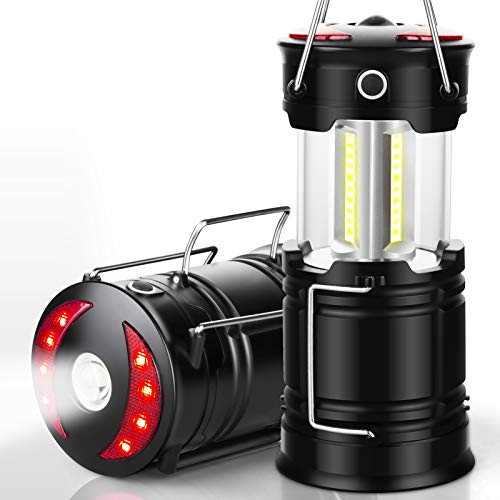
EZORKAS 2 Pack Collapsible Camping Lanterns

Makita DML812 18V LXT LED Flashlight/Spotlight

RYOBI PCL660B ONE+ 18V Cordless LED Light
What Each Pick Brings To The Table
The Consciot CL1 trades raw output for charm. It carries a vintage-inspired silhouette that doubles as décor on a bookshelf, so it doesn’t feel like emergency gear sitting around between outages. In a real power outage scenario, I’d rather see this on a side table than stacked in a closet.
Inside that compact shell sit two distinct light sources: an SMD (surface-mounted diode) LED panel for everyday glow and a separate source for focused tasks like reading a map by candlelight. The stepless dimming control, meaning brightness adjusts smoothly rather than in fixed steps, lets you dial from a soft nightlight to a useful reading beam. Compared with the brighter Consciot 1000LM further down the list, this lantern trades lumen count for portability and mood, so I treat it as an accent light, not the main room source.
A Favorable Mix
- Dual light sources cover both ambient and task lighting in one unit
- Stepless dimming gives precise control from nightlight to reading brightness
- Compact form fits a nightstand, picnic table, or tent shelf without dominating the space
- Vintage-inspired shell makes it pleasant to leave out between outages
Things To Consider
- Lower lumen output means it works best in small rooms or close-range tasks
- Battery-powered design means keeping spare cells on hand for long outages
Whose Shelf It Belongs On
Apartment dwellers and anyone who wants backup lighting that doesn’t look like survival gear will appreciate this little lantern most.
Look Elsewhere When
You need a brighter whole-room source, in which case the Consciot 1000LM LED Camping Lantern is a stronger fit.
When a storm knocks the grid out for hours, the Consciot 1000LM is the kind of lantern I’d want sitting in the middle of the living room. The translucent reflector cover throws light in a full 360-degree pattern, meaning illumination spreads evenly in every direction rather than pooling in one corner. For families, that means one unit can cover a kitchen-dining combo during an evening outage.
Four lighting modes give you meaningful flexibility: cool white for tasks like sorting through paperwork, warm white for a calmer feel during a long blackout, combined white for general use, and a strobe mode for signaling. The dimming function adjusts brightness by holding the button, so transitions feel smooth rather than stepped. This sits in a different category than the CL1 mini reviewed above, prioritizing room-filling brightness over compact charm.
The Practical Payoff
- 360-degree glow spreads light evenly across an entire room from one spot
- Four lighting modes handle task work, ambient comfort, and signaling in one unit
- Smooth dimming helps stretch battery life during multi-hour outages
Points To Keep In Mind
- Larger footprint than the CL1, so it needs a stable table or floor spot
- Battery-powered operation means rotating fresh cells in storm season
Who It Suits Best
Suburban households and small families who want a single bright source to anchor a living space during extended blackouts will find this the most reassuring option in the lineup.
Reach For A Different Pick When
You need task-focused throw light for outdoor jobs, where the Makita DML812 18V LXT LED Flashlight/Spotlight offers stronger reach.
Two units in one box changes how a household plans for blackouts. With the Consciot 2 Pack, I can leave one lantern in the kitchen and another in a hallway, so nobody is navigating by phone flashlight in the dark. Each piece pulls double duty as both a forward-facing flashlight and a side lantern.
Six lighting modes cover the bases: high and low flashlight settings, high and low lantern modes, plus a steady red light and a flashing red strobe for emergency signaling. The USB-C rechargeable battery (USB-C being the modern reversible charging port found on most current phones) means topping up from a laptop or car charger, and the same port can reverse-charge a phone in a pinch, essentially turning each unit into a small power bank. IPX4 water resistance (a rating meaning the unit withstands splashes from any direction but isn’t fully waterproof) handles rain and humid conditions. Coming from the single-unit Consciot 1000LM above, the difference here is coverage, since two lanterns placed at opposite ends of a home simply give better visibility than one bright source in the middle.
What It Does Well
- Two units let you scatter light across multiple rooms at once
- Red strobe mode offers an emergency beacon for roadside or storm signaling
- Reverse-charge function doubles each unit as a phone power bank
- IPX4 splash resistance holds up in humid bathrooms or covered porches
Honest Caveats
- Each unit’s output is lower than the single 1000LM lantern reviewed above
- Flashlight-and-lantern combo shape feels less elegant on a dining table
Made For
Multi-room households and families who want a unit in each common area during an outage, rather than passing one around.
Swap It Out When
Your priority is a single high-output room anchor, in which case the Consciot 1000LM LED Camping Lantern is the better pick.
The EZORKAS collapsible pair makes sense for anyone building a hurricane kit on a tight budget. Two lanterns ship together, so I can stage one in the car and one at home without doubling the cost. The collapsible design folds flat for storage in a drawer or emergency bin.
COB LEDs (chip-on-board, a style of LED packing many diodes tightly together for a wider, brighter spread) deliver 360-degree coverage from each unit, and four lighting modes adjust the output to fit the task. Owners commonly note that these lanterns punch above their weight for short-term outages, though runtime depends heavily on the batteries you pair with them. Compared with the Consciot 2 Pack above, the EZORKAS trades rechargeable convenience for a lower entry cost and a slacker footprint when collapsed.
What Works In Its Favor
- Two-pack format gives full coverage across rooms at a low entry cost
- Collapsible body shrinks down for drawer or go-bag storage
- COB LEDs spread bright, even light across a full circle
Trade-Offs To Consider
- Battery-powered operation means ongoing cell replacement costs
- Plastic construction feels lighter in the hand than metal-bodied work lights
Right Fit For
Storm-season preppers and anyone building a first emergency kit will appreciate the low-cost, two-unit format most.
A Better Fit Elsewhere
You want rechargeable convenience and phone power-bank capability, in which case the Consciot 2 Pack Rechargeable Lantern Flashlight makes more sense.
The Makita DML812 lives in a different category than the lanterns above. This is a flashlight first, not an ambient room filler, and it makes sense for households that already run Makita 18V batteries (the LXT platform, Makita’s interchangeable 18-volt battery system). During a power outage, I’d reach for this when the real task is checking a breaker panel, walking a dark yard, or signaling for help at distance.
Four operating modes deliver real versatility: a focused spotlight at 600 lumens (a unit measuring total visible light output), a wide floodlight at 1000 lumens, a combined spot-and-flood mode at 1250 lumens for max throw, and a strobe for emergencies. The beam reaches far enough to spot a tree across a yard or check a dark driveway. Note this listing is the light only, so you need an existing Makita 18V battery and charger. Coming from the more home-oriented Consciot lanterns reviewed above, this Makita trades cozy ambient light for serious reach.
What Makes Sense
- Spot, flood, and combined modes adapt to close-up tasks and long-distance checks
- 1250-lumen combined mode delivers real throw for outdoor visibility
- Strobe function helps signal for help during roadside or yard emergencies
- Tool-battery compatibility means no separate charging system to maintain
Worth Bearing In Mind
- Light-only listing requires owning a Makita 18V battery and charger separately
- Narrow beam profile is less useful for filling an indoor living space
Who Should Grab It
Existing Makita tool owners and anyone who needs a serious throw-light for outdoor or workshop use will get the most from this pick.
Consider Something Else When
You don’t already own Makita batteries, in which case the RYOBI PCL660B ONE+ 18V Cordless LED Light fits the same role for RYOBI households.
The RYOBI PCL660B rounds out the list for households already invested in the ONE+ system, RYOBI’s interchangeable 18V battery platform that spans dozens of tools. During a power outage, this light pulls a different job than the lanterns above: it’s a directional task light, useful for working under a sink, reading a fuse box, or lighting a hallway overnight.
The 130-degree pivoting head lets me angle the beam exactly where I need it without propping the light on a stack of books. RYOBI advertises a generous runtime figure that varies with the amp-hour battery you pair with it, and 280 lumens is enough for close-range tasks like sorting through a drawer or working on a breaker panel. The beam reaches a long distance for a light this size, though lumen output is modest compared with the Makita DML812 above, which prioritizes raw brightness over runtime.
The Case For It
- Pivoting head directs beam precisely for under-cabinet, panel, or workspace use
- Long runtime stretches across a full overnight blackout on a charged battery
- Long beam reach covers a dark yard or driveway for quick outdoor checks
- ONE+ compatibility means no separate charging setup for existing RYOBI households
Where It Is Less Suited
- Light-only listing requires an existing RYOBI 18V battery and charger
- Lower lumen output means a dimmer pool of light than the Makita DML812
Best Suited To
RYOBI tool households and workshop owners who want a pivoting task light for outages, automotive jobs, or garage work will find this a natural extension of an existing kit.
Not Your Match When
You don’t already own RYOBI batteries, since the Consciot 1000LM LED Camping Lantern gives broader room coverage without requiring a separate platform.
What To Weigh Before Choosing Rechargeable Lights For Power Outage
Brightness vs Battery Runtime
The brighter the output, the faster most lights drain their cells. Higher lumen ratings (lumens being the standard measure of total visible light output) help in big living spaces but cost you hours of runtime. Match brightness to room size: a 1000-lumen lantern covers an open kitchen, while a 280-lumen directional light fits hallway use.
Power Source And Recharge Behavior
Rechargeable units save money over time but require keeping a charging cable or spare battery ready. Battery-powered lanterns run on replaceable cells, which is handy when outlets are out too. Tool-battery lights like the Makita DML812 and RYOBI PCL660B make sense only if you already own the matching battery platform.
Form Factor And Placement
Tabletop lanterns stay put on counters; handheld flashlights travel room to room. Collapsible designs store flat in emergency bins. Pivoting heads help when the light needs to angle into a tight workspace like a breaker panel or under-sink cabinet.
Coverage Pattern
Lanterns with 360-degree output spread light evenly across a room from one spot, while spotlights and flashlights throw a tight beam at distance. Whole-room blackouts usually benefit from one or two lanterns, while focused tasks call for a directional light.
Comparing Specs Of The Top Picks
Key Specs
Feature Snapshot
Quick Facts
Feature Card
Feature Rundown
Feature Overview
Smart Choices Before You Add To Cart
Common Buying Mistakes Worth Avoiding
A common trap is choosing the highest lumen count without thinking about room size, since extra brightness in a small bedroom often just means glare and shorter runtime. Another mistake is grabbing a tool-battery light without checking that you already own the matching battery and charger. Battery-versus-rechargeable also matters: a rechargeable unit that sits uncharged for months won’t help during a sudden outage, so consider how you’ll actually keep it topped off.
When Paying More Actually Pays Off
Higher-tier models in this category typically add features like USB-C recharging, reverse-charging for phones, multi-mode beams, and water resistance. Those extras matter most for households that use backup lights regularly, not just once a year. A premium pick like the Consciot 2 Pack makes sense when phone charging during an outage is part of the plan, while a simpler lantern suffices for occasional storm nights.
Frequently Asked Questions
How Long Do Rechargeable Lights Typically Last On A Single Charge?
Most lanterns in this category run anywhere from a few hours on high output to roughly a day on a dimmed setting, depending on the battery capacity and brightness level. Tool-battery lights like the Makita and RYOBI often stretch longer because they pull from larger battery packs.
Can I Leave Rechargeable Lanterns Plugged In All The Time?
Many modern lanterns handle continuous charging, but it’s worth checking the manufacturer guidance for each unit to avoid long-term battery wear. A common routine is to top off before storm season rather than leaving them plugged in year-round.
Are Rechargeable Lights Safe To Use Indoors During A Long Outage?
LED lanterns produce minimal heat compared with fuel lanterns, making them a safer indoor choice during extended blackouts. Just keep ventilation in mind and avoid placing any light near flammable materials.
Do I Need A Light With A Red Mode For Emergencies?
A red light preserves night vision and signals for help without blinding nearby people, which is useful for roadside stops or storm signaling. The Consciot 2 Pack includes a steady red and a flashing red strobe specifically for that purpose.
Should I Pick A Lantern Or A Flashlight For Home Backup?
Lanterns fill a room with even ambient light, while flashlights give focused beams for specific tasks like reading a fuse box. Most households do well with at least one lantern for general use and a directional light for closer work.