

I picked these six recessed smart lights because the category has gotten crowded, and homeowners consistently want the same thing: clean ceiling lines, reliable app control, and color options that don’t feel like a gimmick. Whether you’re renovating a kitchen, finishing a basement, or just tired of the buzzing from old cans, there’s a fit here for different budgets and smart-home setups. I leaned into real installation scenarios and compared each pick against the others so you can see where one outshines another.
A Fast Comparison Of The Options

Philips Hue Smart Recessed 5/6 Inch LED Downlight (White Ambiance, 700LM)

SikSog Smart Recessed Lighting 4 Inch RGBCW 12W 12-Pack

Lumary Smart Recessed Lighting 6 Inch RGBWW Canless 13W

Lumary Smart Recessed Lighting Pro 6 Inch RGB/Night Ring 4-Pack

Lepro R2 AI Smart LED Recessed Lighting 6 Inch 1050LM
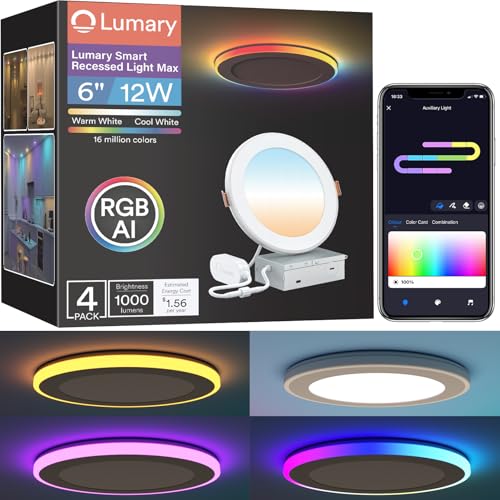
Lumary 6 Inch Smart Recessed Lighting RGBAI Gradient & Night Ring 12W
More Details On Our Top Picks
For households already invested in the Hue ecosystem, this retrofit downlight slots into a standard 5- or 6-inch E26 recessed can without rewiring. The 700-lumen output (a lumen is a measure of how much visible light a bulb produces) lands in comfortable range for kitchens and living rooms, and the warm-to-cool white range lets you shift from a 2700K morning glow to a crisp 5000K focus setting.
Compared with the value-first picks below, the Hue app is where the premium shows up. Routines, geofencing (the lights trigger automatically when your phone enters or leaves home), and syncing with Hue Bridge accessories feel polished rather than bolted on. For most people finishing a whole-home plan room by room, the per-unit cost stings less because the experience stays consistent.
Why It Works Well
- Mature Hue app with reliable scheduling and away-from-home control when paired with the Bridge
- Matter compatibility opens the door to Apple Home, Alexa, and Google Assistant in one setup
- Retrofit design fits existing E26 cans, ideal for replacing buzzing incandescent retrofits
- Tunable white range (warm-to-cool) handles morning, task, and evening moods
- Stable wireless performance that won’t crowd your home Wi-Fi once the Bridge handles routing
Things To Consider
- Full feature unlock means buying the Hue Bridge separately, which adds to total project cost
- 700LM is moderate; very large rooms may want more than one fixture per zone
- Single-pack count makes whole-room retrofits tedious versus the 12-pack further down this list
Who It Suits Best
Existing Hue households or anyone planning a whole-home smart lighting rollout who values app polish and cross-platform voice control.
Look Elsewhere When
Budget shoppers outfitting a basement on a tight schedule may find the SikSog Smart Recessed Lighting 4 Inch RGBCW 12-Pack a more practical fit.
The SikSog 4-inch kit arrives with its own junction boxes, which removes one of the biggest installation headaches: figuring out where to hide the driver. Twelve 12W units at 1080 lumens each cover a mid-size room with room to spare, and the RGBCW palette (red, green, blue, plus dedicated cool and dedicated warm white channels) means you’re not stuck with muddy pastels when you want real daylight.
Bluetooth-based control keeps the setup simple, and Alexa compatibility means voice commands work without extra hubs. For DIYers running a basement rec room or a bonus bedroom conversion, the per-unit cost lands well below retrofit-style alternatives. In our view, the smaller 4-inch aperture suits tighter ceilings better than the 6-inch picks below.
Real-World Strengths
- Twelve-pack format drops the per-fixture cost for whole-room installs
- Included junction boxes simplify new-construction and remodel wiring
- RGBCW spectrum delivers cleaner whites than typical RGB-only competitors
- Alexa pairing uses a “find the device” flow that avoids the deepest app menus
- 1080LM per fixture punches above the category average for the size
Points To Keep In Mind
- Bluetooth range means you may lose connectivity in larger homes without a repeater hub
- 4-inch aperture feels tight in rooms that already have 6-inch cans, so replacement projects need careful measuring
- App ecosystem is leaner than Hue, with fewer third-party integrations beyond Alexa
Made For
DIYers on a budget tackling a full basement, bonus room, or garage conversion in a single weekend.
Skip It When
Homeowners deep in the Hue ecosystem will get smoother routines from the Philips Hue Smart Recessed 5/6 Inch LED Downlight.
The Lumary 6-inch canless wafer eliminates the recessed housing entirely (a “canless” or “wafer” downlight is a thin LED unit that slides into a ceiling cutout without needing a separate metal housing behind it), which matters for tight ceiling joists, shallow attic conversions, or older homes where snaking a can into place isn’t realistic. At 13W with RGBWW output (red, green, blue, plus dedicated warm white and cool white), this unit blends accent color and usable everyday light in a single fixture.
Wi-Fi connectivity pulls the lights onto the same network as your other smart devices, and Alexa plus Google Assistant support covers the dominant voice platforms. Compared with the SikSog 12-pack above, you trade bulk savings for a sleeker 6-inch aperture and an app that handles both lighting and group routines. For remodels where you’re cutting fresh holes anyway, the wafer form factor is genuinely easier to mount.
Practical Advantages
- Canless wafer body fits shallow ceilings where traditional cans won’t install
- RGBWW spectrum handles task and accent duty without swapping fixtures
- Wi-Fi control avoids the Bluetooth range limits of cheaper kits
- Voice control through Alexa and Google Assistant covers the mainstream smart speakers
Honest Caveats
- Wi-Fi dependence can slow response times in congested router environments
- Single-unit format means whole-room projects add up versus the SikSog multi-pack
- Some owners prefer a physical remote for guests; here, the optional Lumary remote is sold separately
Quick Facts
Best Suited To
Homeowners mid-renovation who want wafer-thin installation and reliable app control without buying into a closed ecosystem.
Consider Something Else When
Anyone planning a multi-room budget install should weigh the SikSog Smart Recessed Lighting 4 Inch RGBCW 12-Pack for the per-unit savings.
The Pro model layers a separate night ring around the main downlight, giving you three distinct modes in a single fixture: bright downlight for daily use, a soft nightlight halo for hallways at 2 a.m., and RGB color for accent or party scenes. At 1100 lumens per fixture (slightly higher than the standard Lumary above), the daytime output competes with traditional 75W incandescent bulbs.
The 4-pack format lands well for bedrooms, hallways, or anywhere the night-ring feature solves a real problem. Parents often reach for these because the soft halo handles midnight nursery checks without waking anyone. Against the Lepro AI unit, this one leans on physical design rather than software smarts, and that tradeoff shows up in long-term reliability: fewer firmware quirks, more straightforward controls.
Reasons It Performs
- Three-mode design covers daytime, nightlight, and color accent without separate fixtures
- Night ring produces gentle ambient light that avoids harsh blue tones at low brightness
- 1100LM per fixture handles medium-sized rooms with fewer units
- 4-pack format suits typical bedroom and hallway layouts
Trade-Offs
- Night ring is decorative, so ceiling placement affects how much halo you actually see
- Two control layers (downlight + ring) add a small learning curve when grouping fixtures
Whose Shelf It Belongs On
Bedroom and nursery owners who want one fixture to handle bright mornings, midnight navigation, and weekend movie nights.
Reach For A Different Pick When
Buyers chasing segmented color effects for a media room should look at the Lumary 6 Inch RGBAI Gradient model instead.
Lepro’s R2 leans on LightGPM 4, an AI layer that learns which color and brightness combinations you reach for and starts suggesting them. At 1050 lumens in a 6-inch canless body, the hardware is competitive, but the differentiator is the software: telling the app “I’m watching a thriller” produces a tuned scene without scrolling through preset menus.
Voice control skips the manual setup dance; you describe what you want and the system interprets it. Compared with the Lumary Pro above, the Lepro trades physical features (no night ring) for an adaptive brain that gets smarter the longer you use it. Depending on how hands-on you want to be with your lighting, that tradeoff cuts different ways.
What Makes Sense
- AI scene generation removes the preset-scrolling that plagues most smart-light apps
- Conversational voice control accepts natural phrasing instead of rigid commands
- 6-inch canless form factor fits shallow ceiling installs
- 1050LM output handles typical living room spacing
Worth Bearing In Mind
- AI suggestions rely on usage history, so the first few weeks feel less personalized
- App experience is the main draw; third-party ecosystem support is narrower than Hue
The Right Fit
Tech-forward homeowners who prefer describing a mood over picking a preset, and don’t mind giving the app a few weeks to learn their habits.
A Better Fit Elsewhere
Households that want a visible night ring or segmented color should step up to the Lumary Smart Recessed Lighting Pro 6 Inch RGB/Night Ring model.
RGBAI adds an “AI” channel (Lumary’s term for an intelligent color-mixing layer that produces smoother transitions than basic RGB) and splits the auxiliary light into twelve independently controlled segments. The result: a single fixture can display multiple colors at once, chasing patterns, gradients, or static accent rings that change direction on command. The night ring underneath layers in the same soft halo the Pro model uses.
For entertainment spaces, accent walls, or anywhere you want the ceiling itself to feel designed, this is the most expressive pick on the list. Against the Lepro R2’s software-driven approach, this one puts the artistry in the hardware. The honest read: most buyers don’t need this level of color choreography, but the ones who do already know it.
Features That Help
- RGBAI technology with twelve segments creates multi-color effects from a single fixture
- Night ring layer matches the Pro model’s ambient halo for late-night use
- 12W output keeps energy draw modest given the visual range
- Independent segment control unlocks gradient and chase patterns through the app
Possible Compromises
- Segment effects shine in dimmer rooms; bright daylight washes them out
- Setup takes longer than single-mode fixtures because each segment needs grouping logic
Who Should Grab It
Homeowners designing media spaces, game rooms, or accent ceilings who want the fixture to behave like art, not just lighting.
Swap It Out When
Practical whole-room lighting on a tighter budget points back to the SikSog Smart Recessed Lighting 4 Inch RGBCW 12-Pack.
What To Weigh Before Choosing Recessed Smart Lights
The right fixture depends less on wattage than on how the light fits your ceiling, your smart-home platform, and how often you’ll actually fiddle with the app.
Ceiling Type and Housing
Canless wafer designs like the Lumary 6 Inch RGBWW Canless fit shallow ceilings where traditional cans won’t install. Retrofit styles like the Philips Hue downlight drop into existing E26 cans, which is what older homes usually have. Measure your ceiling depth and existing hole size before committing, because returns on installed lighting are a hassle.
Smart-Home Platform
Hue plays well with Matter, Apple Home, Alexa, and Google through the Bridge. Wi-Fi-native picks like Lumary and Lepro skip a hub but tie you to the manufacturer’s app. Voice-first households using Alexa exclusively get broader compatibility across every pick here.
Color Needs vs. Daily Use
RGBCW and RGBAI fixtures handle both accent color and clean whites. If you mainly want tunable white for kitchens and bathrooms, the Hue 700LM downlight covers that without paying for color channels you won’t use.
Installation Scope
Single-packs suit targeted room upgrades; multi-packs like the SikSog 12-pack drop the per-unit cost for whole-home projects but assume you want the same look in every room.
Smart Recessed Lighting, Sorted
Where Shoppers Go Wrong
Buying fixtures before checking your ceiling depth is the most frequent miss. Wafer units need clearance behind drywall, and standard cans need proper housing. Compatibility is the second trap: a “smart” light that doesn’t talk to your existing hub becomes a paperweight the day you swap ecosystems.
Where The Extra Money Goes
Premium-tier pricing usually reflects app maturity, wireless stability, and color accuracy. The Hue downlight costs more per unit, but the Bridge-routed signal stays responsive across larger homes where Wi-Fi-based picks sometimes lag. For accent-heavy projects, RGBAI segmentation costs more because each fixture carries more LEDs and onboard control hardware.