

Walking to the front door after dark gets old fast, especially when the porch light barely reaches the walkway. The right solar fixtures solve that quietly, no wiring, no electrician, and nothing to remember to switch on at night. I’ve sorted through five solid options that handle everything from gentle garden glow to serious motion-triggered security lighting.
A Quick View Of The Lineup

Vibrant Solar Garden Lights, Ultra Bright Solar Powered Firefly Lights Outdoor Waterproof, High Flexibility Starburst Swaying Light, 8 LED Landscape Lighting Decorative for Pathway Patio Yard
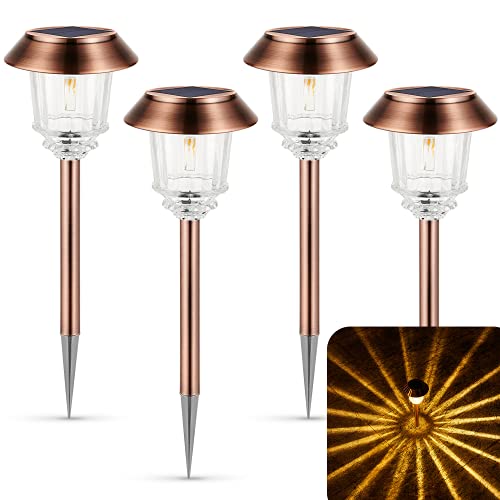
XMCOSY+ Solar Lights Outdoor Waterproof, 4 Pack Solar Lights for Outside

MIHANI Solar Flood Lights Outdoor, 2500LM Motion Sensor Security Lights with 270° Wide Angle, IP65 Waterproof, 3 Heads Solar Outdoor Lights for Patio, Yard, House, Garage (Non-Remote, 2 Pack)

MIHANI Solar Lights Outdoor, Quick Charge Solar Motion Deck Lights Outdoor for Deck with High Brightness, Larger Built-in Tempered Glass Panel, Sensitive PIR Motion Inductor (Remote,2 Pack)

Solar Pathway Lights Outdoor, IP65 Waterproof Solar Powered Garden Lights, Auto On/Off Outdoor Light for Yard Lawn Garden Patio Walkway Driveway Landscape Lighting (6 Pack)
What Each Pick Brings To The Table
Most path lights sit there and stay put. These don’t. The stalks are built flexibly enough that a passing breeze sends them swaying, and each head carries eight LEDs that read like little fireflies hovering above the mulch. For someone who wants the yard to feel alive after sundown rather than just lit, that movement does a lot of the heavy lifting.
Where this set earns its place is anywhere you’d hang a string light but don’t have the outlet to back it up. Tucked along a curved bed near the patio, framing a kid’s play area, or scattered through a pollinator garden, the soft sway softens the whole scene. Compared to the static stakes later in this list, the payoff is mood, not lumens.
Real Benefits
- Flexible stalks actually move with the wind, giving the impression of drifting fireflies
- Eight LEDs per fixture means individual lights punch brighter than typical one-LED decorative stakes
- Decorative-only purpose leaves nothing to program, set, or adjust after installation
- Landscape-style use works in curved beds and informal layouts where rigid path lights look awkward
Things To Consider
- The aesthetic is the entire point, so don’t expect functional task lighting for stairs or step edges
- Wider, swaying tops need clearance from low shrubs or they tangle during windy weeks
- Glass-free design keeps them light, which can mean stakes shift in soft soil after heavy rain
Who Will Love This
Garden decorators and casual entertainers who care more about atmosphere than raw brightness will get the most out of these.
Where Another Pick Suits Better
Households that need actual step-edge safety on a long walkway should look at the Berrtinfn six-pack path lights instead.
The XMCOSY+ set leans hard into old-world charm. The body is electroplated copper with a diamond-shaped glass diffuser, and on a stone walkway or a pergola edge, that finish reads as a thoughtful design choice instead of a plastic stake. For homeowners with a craftsman-style bungalow or a cottage garden, the styling carries weight.
Underneath the vintage skin, the actual solar hardware is competent. A laminated monocrystalline panel (a high-efficiency single-crystal silicon panel that converts more sunlight per square inch than older amorphous panels) sits beside a small rechargeable cell, and the dusk-to-dawn sensor handles itself without a switch. Four units is enough for a short entry walk but not a long driveway, so plan spacing accordingly.
The Case For It
- Copper-and-glass body ages into a real patina rather than fading to chalky plastic
- Diamond diffuser spreads light sideways, illuminating path edges rather than just throwing it upward
- Automatic dusk sensing means zero nightly routine after the first install
Honest Caveats
- Only four fixtures in the box, which can leave longer driveways feeling under-lit
- Real copper tops cost a touch more per light than all-plastic alternatives
- Glass diffusers, while beautiful, need an occasional wipe to keep output even
Quick Facts
Best Suited To
Homeowners with traditional or cottage-style architecture who want path lights that look intentional rather than utilitarian.
Consider Something Else When
Anyone lighting a long driveway or needing more than four fixtures should step up to the Berrtinfn six-pack pathway lights.
When the goal is to scare off whatever’s rooting through the trash, gentle garden lighting won’t cut it. The MIHANI flood is a different animal. Three adjustable heads wrap illumination across a 270° arc, the PIR (passive infrared) motion sensor reaches roughly 30 feet, and a single unit can light up half a driveway the moment someone steps into range.
For suburban homes, two of these positioned near garage doors and a back gate cover most of the perimeter without leaving blind pockets. The IP65 rating (a standard that certifies the fixture against low-pressure water jets from any direction) means rain and snowmelt are part of the design assumption, not a worry. Compared to the swaying fireflies above, this is purely a security play, no ambient glow intended.
Key Advantages
- Three pivot heads cover wide corners where a single fixed lamp would leave shadows
- Motion activation saves battery on nights with no activity, useful for shaded installs
- Wall or eave mounting works on wood, vinyl, and masonry with standard hardware
- The 2500-lumen output handles larger areas like driveways and side yards
Points To Keep In Mind
- Higher lumen output drains the battery faster, so heavily shaded north-facing walls can shorten nighttime coverage
- The flood beam is harsh rather than warm, which can feel industrial near a cozy seating area
- Mounting hardware and a ladder are part of the install, unlike simple stake-in-ground units
Right Fit For
Homeowners focused on perimeter security, especially where driveways, side gates, or garage doors meet dark open space.
Skip It When
Gardeners who want soft landscape ambience should reach for the Vibrant firefly lights instead.
Step-edge lighting matters more than most people realize until a guest misses a tread in the dark. These MIHANI deck lights address that with a PIR motion sensor and a panel covered in tempered glass, which holds up to foot scuffs and hail better than the plastic laminate on most budget lights. Two units is enough for a typical landing or short staircase.
The remote is a small but useful touch. Adjusting sensitivity, runtime, or brightness from inside the door is far easier than crawling back to the fixture with a stepladder, especially on cold mornings. The glass panel claims faster charging and noticeably higher output, which makes a real difference on a north-facing deck that only gets afternoon sun.
The Value In It
- Tempered glass top resists scratching and weather better than standard plastic-laminate solar faces
- Motion-triggered activation conserves battery for cloudy stretches
- Remote-controlled settings cut down on ladder trips for tweaking
- Deck-step mounting positions the light exactly where shadows collect
Where It May Fall Short
- Only two units per box, so larger wraparound decks need additional sets
- PIR sensor can misfire around small pets or swaying plants in tight stairwells
- Higher-output panels cost noticeably more than entry-level deck lights
Feature Snapshot
Built With In Mind
Anyone with multi-level decks, outdoor stairs, or a hot tub landing where step visibility matters at night.
Look Elsewhere When
Households covering long, flat walkways rather than steps should consider the Berrtinfn path lights for broader coverage.
Sometimes the job is just a clean, even line of light down both sides of a path. The Berrtinfn six-pack is built exactly for that. Six stake-in units, IP65 weatherproofing, and a dusk-to-dawn sensor that wakes them up without any input. For a front walk that runs from the curb to the porch, this is the kind of straightforward coverage that solves the whole problem.
The monocrystalline panel and a high-capacity cell help stretch runtimes into the longer evenings, which matters when the days start shrinking in fall. Spacing them roughly five to six feet apart tends to give the cleanest result without leaving obvious dark patches. Compared to the four-pack copper option earlier, the trade is plain utility and quantity over visual character.
Everyday Perks
- Six units cover most standard front walks without leaving gaps
- Monocrystalline panel supports longer overnight runtimes on partially cloudy days
- Stake installation takes minutes, with no wiring or tools beyond a soft push into the soil
- IP65 rating handles sprinkler overspray and storm runoff without complaint
Practical Considerations
- Basic stake design lacks the visual character of copper or decorative alternatives
- Plastic housings can fade slightly after a couple of full sun seasons
- Runtime claims assume solid daytime sun, so deeply shaded paths may dim earlier in the night
At A Glance
Whose Shelf It Belongs On
Homeowners who want reliable, even path lighting along a longer walkway or driveway and don’t need decorative styling.
Reach For A Different Pick When
Those prioritizing ambiance and architectural charm should consider the XMCOSY+ copper lights instead.
Choosing Solar Lights That Actually Fit Your Yard
Solar fixtures look similar on a product page, but the practical differences are large. Start with brightness needs: ambient garden lights can sit anywhere from subtle to decorative, while security lighting demands real lumens and motion triggers. Path lighting falls in between, needing enough output to define the walkway without bleaching the surrounding plants.
Build quality matters more than people expect. Tempered glass panels, copper or metal bodies, and IP65 ratings translate to years of service instead of one good season. Plastic-laminate panels and stamped metal stakes often work fine in mild climates, but anyone in snowy or coastal regions benefits from sturdier construction. Battery capacity determines how long lights last after sunset, which matters more in winter when charge windows shrink.
Style is the easiest part to overlook. A six-pack of plain white path lights suits a modern ranch home, while copper diamond diffusers look right at home on a craftsman bungalow. Decorative swaying lights work in informal beds but feel out of place along formal walkways. Match the fixture personality to the yard personality, and the result reads as intentional rather than random.
Where Shoppers Go Wrong
The most common slip is buying purely on style. A gorgeous copper stake light in deep shade never charges fully, then dies halfway through the night. Always check the actual sunlight the spot gets before choosing decorative over functional.
Another trap is undercounting fixtures. Four lights across a sixty-foot walkway create obvious dark pockets. Measure the path first and buy enough units to space them roughly five to six feet apart for even coverage.
When Paying More Pays Off
Higher-tier solar lights cost more for real reasons. Tempered glass panels charge faster and survive hail. Larger batteries stretch runtime into long winter nights. Better motion sensors cut down on false triggers and wasted battery.
For households using solar as the primary outdoor light source, that upgrade pays back in fewer replacements and more reliable coverage. For purely decorative accents that see light use, basic models tend to be plenty.
Frequently Asked Questions
How many hours of light do outdoor solar lights typically provide? Most quality units deliver between 8 and 12 hours per charge, depending on battery capacity and how much direct sun the panel received during the day.
Do solar lights work in winter or on cloudy days? Yes, but runtime drops noticeably. Shaded locations or northern exposures may only give half the usual hours in deep winter, so picking higher-capacity batteries helps.
How long do solar light batteries usually last? Rechargeable cells typically need replacement every 2 to 4 years, though some newer lithium packs stretch that further. Swapping batteries is usually cheaper than replacing the whole fixture.
Can solar lights stay out year-round? Most IP65-rated fixtures handle full seasons outside, including snow and rain. In areas with severe ice or flooding, occasional removal during the worst stretches extends lifespan.
Do solar lights need any maintenance? A quick wipe of the solar panel every few weeks keeps charging efficient, and clearing debris around the stake prevents shifting. Otherwise, they’re largely hands-off once installed.