

Picking the right fixture for a soffit, the underside of a roof overhang, can quietly transform how a home looks after dark. I think of soffit lighting as the difference between a house that vanishes at sunset and one that feels lived-in from the curb. The tricky part is choosing between recessed downlights built into the soffit and permanent LED strips that trace the roofline. I put together this roundup so homeowners and DIY installers can compare six solid options across both styles without drowning in jargon.
The Lineup, Simplified

Ensenior 12 Pack 4 Inch LED Recessed Ceiling Light, 750LM 9W

NUWATT Canless Recessed Lighting 6 Inch, Dimmable, 6 Pack
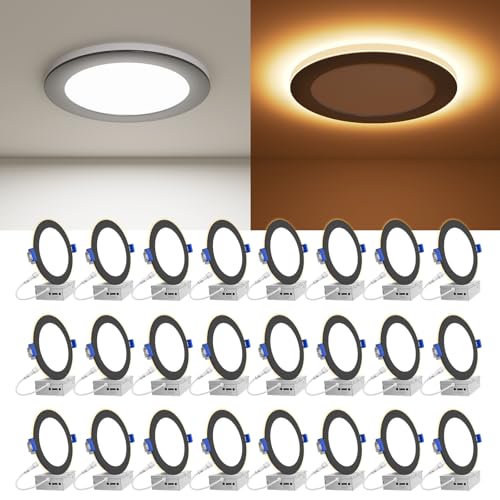
VOLISUN 24 Pack 6 Inch Black Recessed Light with Night Light

Govee Permanent Outdoor Lights Pro, 200ft with 120 RGBIC LEDs
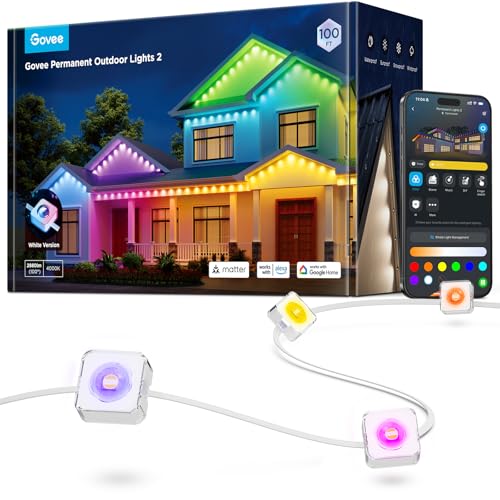
Govee Permanent Outdoor Lights 2, 100ft RGBIC, 100 Modes

Govee Permanent Outdoor Lights Prism 200ft
A Closer Look At Each Pick
The Ensenior 4-inch canless downlight (a fixture that mounts directly into the ceiling without a separate housing can) is the workhorse of this list, and I think it earns that label because of how forgiving it is in shallow soffits. The body sits at about a half inch tall, so it slips into roof overhangs where a traditional recessed can simply will not fit. It runs on standard 120V household current, which keeps the wiring path simple for anyone replacing old fixtures.
For homeowners lighting an entire eave, the 12-pack quantity means a typical single-story perimeter can be covered without juggling multiple orders. Compared with the 6-inch NUWATT unit further down, this Ensenior trades beam spread for a tighter, more focused pool of light, which tends to read better along narrow fascia boards.
Useful Strengths
- Ultra-thin housing opens up tight soffit cavities the bigger 6-inch units can’t reach.
- Twelve lights in a single carton keeps a full perimeter install under one order.
- Standard 120V wiring avoids low-voltage transformers in the ceiling.
- Bright 6000K daylight tone suits task-style security lighting over entry bays.
Things To Consider
- Cool daylight color reads clinical on warm-tone siding, so homeowners chasing a softer glow may want a tunable alternative.
- Hardwired installation means routing a switch leg through the soffit, which can be the slow part of a weekend project.
Feature Snapshot
Who It Suits Best
Homeowners lighting an entire roof perimeter with a clean, bright white look and standard household wiring.
Skip It When
The NUWATT Canless 6-inch fits better for anyone who wants to dial between warm and cool tones after the install.
NUWATT’s 6-inch canless downlight is what I reach for when someone wants flexibility after the holes are already cut. Color temperature refers to how warm or cool the light looks, measured in Kelvin (K), and this unit lets you pick between 2700K, 3000K, 3500K, 4000K, and 5000K right at the fixture with a small selector switch. That single feature saves many homeowners from the classic regret of ordering the wrong white tone.
It dims smoothly from about 10 percent up to full brightness with a standard triac dimmer (a common wall dimmer that chops the AC waveform to lower output), which gives real control during evening hours. The 6-inch aperture throws a wider pool than the Ensenior, so it works well on deeper overhangs where you want more spread.
Positive Takeaways
- Five selectable Kelvin levels cover everything from a candlelit feel to a midday white.
- Broad 10 to 100 percent dimming range gives meaningful low-end output at night.
- Wider 6-inch beam is well-matched to deeper fascia and wider eaves.
Worth Noting
- Triac dimmer compatibility means older non-dimming switches need a swap for smooth operation.
- Six-light pack suits smaller soffit runs; larger perimeters usually need a second order.
Quick Facts
Made For
Homeowners who want to fine-tune the color and brightness of their soffit lighting with a single wall dimmer.
Consider Something Else When
The VOLISUN 6-inch with night light fits better for households that want a soft amber glow to mark the front path without firing up the main beam.
VOLISUN’s 6-inch black-trim downlight adds a trick the other recessed picks skip: an amber night light ring built right into the trim. A soft 2000K amber glow (the color temperature of candlelight) traces the edge of the fixture, giving the entryway a gentle marker without flooding the whole yard. For me, that alone sets this pick apart on a soffit above a front path or garage.
The black finish also disappears into darker fascia boards, which matters on craftsman and modern homes where a bright white trim ring would feel out of place. Output runs about 1080 lumens at full power, so the main beam still pulls real duty when guests arrive.
The Practical Payoff
- Built-in amber night light is a useful add for households that come home late and want a quiet marker light.
- Black trim blends into dark soffits rather than calling attention to the fixture.
- 24-pack quantity tackles a full perimeter plus garage bay in one shipment.
- Higher 1080-lumen main beam covers a wider entry area at full brightness.
Honest Caveats
- The night light glow depends on the wall switch cycling off and back on, which can take a beat to learn.
- Larger 24-pack is overkill for a single small porch, leaving leftover fixtures.
Best Suited To
Households that want a low-output guide light along an entry path without adding a second set of fixtures.
Look Elsewhere When
The Ensenior 4-inch pack suits smaller, tighter soffits where the 6-inch body simply will not fit.
Govee’s Permanent Outdoor Lights Pro traces the roofline itself with 200 feet of RGBIC LEDs, where RGBIC means each segment can show its own color at the same time. The system mounts under the soffit and runs along the gutter line, replacing the yearly ladder climb with a one-time install. I think of these as the right answer for homes where the roof edge is the architectural feature, not the porch.
The 75 scene modes and 16 million color options cover everything from a quiet warm-white everyday wash to a holiday display that runs on its own timer. Anti-glare lenses keep the diodes from becoming harsh dots at night, which owners commonly report as a noticeable upgrade over earlier string-light generations.
What Helps Most
- 200-foot total reach covers larger homes and detached garage rooflines in one run.
- Anti-glare lens diffuses each diode into a softer wash along the eaves.
- 75 scene presets give a working look for every season without custom programming.
- Year-round permanent install removes the holiday ladder routine.
Points To Keep In Mind
- Mounting clips require a careful first pass; misaligned runs show daylight gaps that read at dusk.
- App-only control means a phone is required for full mode switching, which can frustrate less tech-oriented households.
Spec Overview
Who Will Love This
Homeowners with a long roof edge who want a set-and-forget decorative wash that handles holidays and everyday evenings.
Another Choice May Suit
The Govee Permanent Outdoor Lights 2 at 100 feet fits smaller starter homes where the full 200-foot run would overhang the eaves.
The second-generation Govee Permanent Outdoor Lights trim things down to 100 feet, and for many households that turns out to be exactly right. Smaller starter homes and single-story ranches rarely need the full 200-foot run, and the shorter strand simplifies mounting because you can work with a single continuous coil rather than splicing two pieces. It is a friendlier entry point for first-time permanent installers.
The 100 scene modes and app-based AI lighting effects cover the everyday-to-holiday range without overwhelming newcomers. You can also schedule timers through the app, which is handy for a soffit installation that should turn on at dusk without manual input each evening.
Where It Excels
- 100-foot single-strand length matches smaller roof perimeters without leftover length.
- App control with AI-generated scenes lowers the learning curve for new users.
- Schedule timers keep the eaves lit at dusk without manual switching.
Trade Offs
- Single-strand design means a longer home would need an extra strand and a second run of wiring.
- Wi-Fi reliance adds a small reset step after router or power outages.
Right Fit For
First-time permanent-install households with a modest roofline who want app control without committing to a full 200-foot run.
Swap It Out When
The Govee Permanent Outdoor Lights Pro fits better for larger homes that genuinely need the longer 200-foot strand and 75 scene modes.
The Prism sits at the top of Govee’s permanent outdoor line because each diode head carries three color zones instead of one. That single change moves the visual texture from a row of single dots to a smooth gradient that blends along the roofline. I think of it as the right pick for homeowners who want a designed look rather than a basic accent.
At 200 feet with a tri-zone head, the Prism covers the largest homes on this list while still allowing custom palettes through the Luminblend color control. The gradient effect also softens the visual edge of the eaves, which tends to look more architectural than a hard pixel line.
Strong Points
- Three-zone per-head color blending produces a smoother gradient effect along the eaves.
- 200-foot total length covers long roof perimeters in one continuous run.
- Luminblend color control supports custom palettes beyond the preset scenes.
Some Limits To Know
- Premium positioning means a higher entry cost for shoppers on tighter budgets.
- Tri-zone head design adds weight to each clip, sofas mounting alignment needs an extra careful pass.
Whose Shelf It Belongs On
Design-focused households and holiday hosts who want the most refined gradient look available in the permanent outdoor category.
Reach For A Different Pick When
The Govee Permanent Outdoor Lights 2 at 100 feet suits smaller budgets and shorter rooflines where the tri-zone head would be overbuilt.
What To Weigh Before Buying Outdoor Soffit Lights
Match The Fixture To The Soffit Depth
Soffit depth varies wildly between homes, and a recessed canless fixture needs enough vertical clearance to sit without crushing the driver box. Measure the depth between the fascia and the inside of the overhang before settling on a 4-inch or 6-inch body. A shallow overhang that tries to swallow a 6-inch fixture is one of the most common retrofit headaches, and it usually ends with a switch to a thinner model.
Pick The Right Color Tone For The Facade
Homes with warm-tone siding, brick, or stained wood look better with a softer 2700K to 3000K beam, while cooler gray and white facades carry a 4000K to 5000K wash more naturally. The NUWATT unit sidesteps the decision with five selectable Kelvin levels, which is a real benefit if the home’s palette mixes warm and cool materials. Choosing the wrong temperature tends to read as a flat or clinical glow that fights the architecture.
Choose Recessed Versus Roofline Based On Effect
Recessed downlights throw focused pools of light that feel like interior lighting extended outward, while roofline LED strips wash the entire eave with an even glow. Recessed picks on this list suit security and entryway work, while the Govee permanent strands lean toward decorative and holiday-style use. Mixing both styles on the same home can work, but they should be on separate switches to avoid overlighting.
Key Considerations Across These Picks
Where Shoppers Go Wrong
The biggest trap I see is buying a fixture before checking the wiring path. Soffit lighting almost always needs a switch leg pulled from inside the house, and that detail changes which fixture makes sense. Another common miss is ordering the wrong color temperature and only noticing after the trim rings go up, so it pays to tape a sample bulb to the fascia for one evening before committing. Finally, permanent LED strips need a clean mounting surface. Paint that is peeling or wood that has never been sealed will shorten the life of the adhesive clip.
What The Higher Tier Buys
The jump from a basic recessed downlight to a tunable or night-light model buys flexibility after install, not just brighter output. Premium picks in this roundup, like the Prism roofline strand, earn their position through features that change how the light looks over time rather than how many lumens it produces. For most households, that extra flexibility is worth paying for only when the fixture will be used year-round, not just during the holidays.
Frequently Asked Questions
Can recessed lights really go in an outdoor soffit?
Yes, as long as the fixture is rated for damp or wet locations and the housing fits inside the soffit cavity. The Ensenior and NUWATT units on this list are designed for shallow spaces where a traditional can would not fit.
What color temperature looks best on a soffit?
Most homeowners end up happiest with 2700K to 3000K on warm-tone siding and 3500K to 4000K on cooler modern facades. A tunable fixture like the NUWATT avoids the guesswork by letting you choose after install.
Do permanent outdoor LED strips survive bad weather?
The Govee permanent lines are built for year-round outdoor mounting and use weather-resistant housings around each diode. They handle rain and snow, though a quick visual check each season helps catch any clip loosening before wind pulls a strand out of line.
How many recessed lights do I need for a soffit?
A common spacing is one fixture every four to six feet, depending on how bright you want the wash. Twelve-light packs like the Ensenior cover most single-story perimeters without leftover units.
Are app-controlled roofline lights hard to use?
The Govee app uses simple on-screen scene tiles rather than complex programming, so most households pick it up in a single evening. The bigger learning curve is usually the mounting pass, not the software.