

I talk to a lot of people who treat outdoor lighting like a seasonal chore, dragging out ladder-rented strings each fall and stuffing them in a bin by January. The category has moved past that, though. Today’s outdoor smart lights clamp onto eaves once, sync to an app, and shift from amber Halloween tones to icy winter whites without you lifting a finger.
The trick is sorting hobby-grade gadgets from genuinely useful installs. I focused on five options that cover the common scenarios: a wired bundle with a camera and motion floodlight for security-minded homeowners, plus four permanent RGBIC eaves systems for people who want their roofline to do more than one job. The goal here is practical, not flashy, and I’ll point out where each pick earns its spot and where it falls short.
The Choices Worth Comparing

Ring Floodlight Cam Wired Plus with Doorbell Bundle

Govee Permanent Outdoor Lights Pro 200ft
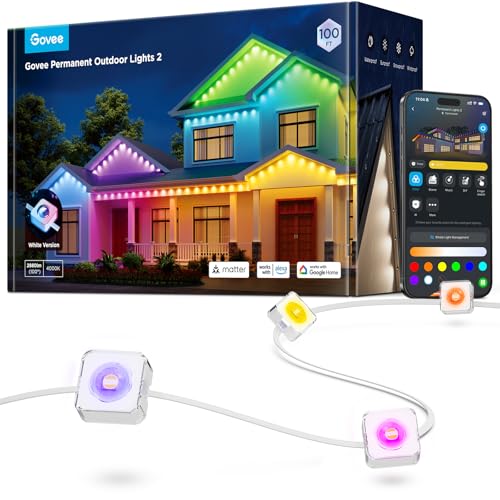
Govee Permanent Outdoor Lights 2 100ft

Govee Permanent Outdoor Lights Prism 200ft

JNUNUSE 200FT Permanent Outdoor Lights
Meet The Standout Selections
This pairing lands in a different lane than the rest of the list, and that’s the point. The Ring Floodlight Cam Wired Plus streams 1080p HD footage while motion-triggered LED panels throw 2000 lumens across a driveway or side yard, and a tap in the Ring app can fire an 85dB siren. It bundles with the Ring Video Doorbell in Satin Nickel, so the front door and the floodlight zone feed into one app workflow.
Unlike the eaves lighting systems I’ll cover next, this setup is hardwired. That’s a strength for anyone with existing outdoor electrical rough-in, but it also means planning a Saturday around mounting boxes, routing wires, and pairing devices. Homeowners replacing older non-smart floodlights will get the smoothest install here, and the customizable motion zones in the Ring app help cut down on false alerts from passing cars.
Everyday Perks
- 2000 lumen motion-activated floodlights brighten large driveways, so a dark path becomes a triggered scene rather than a manual switch.
- The 85dB siren is reachable from the app, giving homeowners a remote deterrent for unexpected visitors.
- Customizable motion zones let you focus on the walkway and skip the sidewalk, which tends to reduce unwanted pings.
- Bundling the doorbell means one ecosystem handles both the front stoop and the side yard.
Things To Consider
- Hardwired installation requires either a junction box or professional help, which raises the upfront effort versus a plug-in string of eaves lights.
- Several useful features typically sit behind a Ring subscription, so plan for ongoing costs beyond the hardware.
Who It Suits Best
Homeowners focused on entryway security who already have, or can install, a hardwired junction box.
Skip It When
Anyone wanting decorative eaves lighting should turn to the Govee Permanent Outdoor Lights Pro 200ft instead, since it handles ambiance rather than surveillance.
The Pro kit earns its name through lens design and white-light flexibility. The anti-glare lens produces a triangular wash that reads as architectural lighting rather than the spotlight dots of cheaper strings, and RGBWWIC LEDs handle both saturated colors and a tunable white range. RGBWWIC means each diode can mix red, green, blue, plus dedicated warm and cool white channels, so the system covers holiday color scenes and everyday accent duty on the same run.
For a two-story home with extended roofline, 200 feet of cable is enough to wrap most eaves without splicing. The system pairs with the Govee app for scene selection and scheduling, and the cut-and-extend modularity means you can trim sections to fit odd corners. Compared to the Ring bundle above, this pick doesn’t pretend to be a security product, so it’s a poor fit for shoppers who want cameras and motion alerts.
Key Advantages
- The triangular light effect washes the wall rather than pinpointing bright dots, which gives a more refined look from the street.
- Tunable warm and cool whites let the same hardware shift from Halloween orange to gallery-bright exterior illumination.
- Modular cut-and-extend segments handle irregular rooflines without leaving dark gaps.
- App-based scenes and timers mean most homeowners stop touching the lights after the first week.
Worth Noting
- The 200-foot run is generous, but larger homes may still need the second string, which adds cost and a second controller mount.
- Without a hub from another ecosystem, this kit depends entirely on the Govee app and Wi-Fi, so a flaky router shows up fast.
Feature Snapshot
Made For
Two-story homes where owners want one install to handle holiday color scenes and quiet everyday white tones.
Consider Something Else When
Shoppers who prioritize tri-color gradient layering should look at the Govee Permanent Outdoor Lights Prism 200ft, which dedicates each diode to multiple zones.
This is the entry point into permanent outdoor lighting, and it leans hard into app-driven simplicity. Govee’s second-generation kit ships 100 feet of RGBIC LEDs, and RGBIC means each diode can show its own color so the string produces chasing and gradient effects instead of one solid hue. There are 100 scene modes baked in, plus AI-generated lighting effects for shoppers who’d rather not program their own.
For a starter home, a single-story ranch, or a patio-only install, 100 feet is enough that you won’t immediately reach for a second string. The app handles timers and remote control, which removes the “did I leave the lights on” question from your evening. It’s a quieter choice than the Pro kit, and it doesn’t try to be a camera, so anyone expecting surveillance features will be shopping the wrong shelf.
Bright Spots
- 100 scene presets and AI-generated effects remove the trial-and-error from picking a daily look.
- Per-diode color control produces chasing gradients that flat RGB strings can’t replicate.
- App timers and remote control let a homeowner manage the lights from inside, which is handy during bad weather.
Trade Offs
- 100 feet covers a small roofline or patio, and adding a second kit means another controller and power brick.
- The bundled adhesive mounts generally work best on clean, painted surfaces, so older or porous soffits may need extra clips.
Best Suited To
First-time installers with a single-story roofline or a covered patio who want the easiest path into permanent smart lighting.
Look Elsewhere When
Larger two-story homes needing full-perimeter coverage should consider the JNUNUSE 200FT Permanent Outdoor Lights, which ships a longer single run.
The Prism is the kit for homeowners who treat the eaves like a canvas. Each lighting head carries three independent color zones, so a single diode can show a gradient within itself, and the Luminblend color control aims to keep transitions smooth rather than stepped. The result is layered, painterly effects across 200 feet of roofline.
Where the Pro kit focuses on clean wall-washing whites, the Prism leans into color depth and DIY palettes. For most people, the effect reads as more sophisticated than a single-color chase, and it works well for holidays that call for multiple tones layered at once. The trade-off is that the more complex per-head control takes longer to dial in through the app, so casual installers may spend a weekend on scenes.
Real Benefits
- Triple-zone LEDs per head allow layered gradients within a single diode, which gives depth that single-zone systems can’t match.
- 16 million-plus color choices with smooth blending help the roofline read as designed lighting, not just colored string lights.
- 200 feet covers most full-perimeter installs without the second-string jump in cost.
Points To Keep In Mind
- Triple-zone control adds setup time, and beginners may find the DIY palette workflow slow on first use.
- The Luminblend color tuning depends on the Govee app’s color picker, so accuracy can drift between phone screens.
Feature Snapshot
Who Will Love This
Design-minded homeowners who enjoy tuning palettes and want layered, gradient-rich looks from a single install.
Another Choice May Suit
Anyone prioritizing tunable white light for daily use will be happier with the Govee Permanent Outdoor Lights Pro 200ft, which leans harder into warm and cool white output.
JNUNUSE lands on the list as the budget-conscious long-run option. At 200 feet with RGB+IC control, RGB+IC being a variant of RGBIC that combines independent diode color and on-chip logic for chasing effects, the kit covers a full roofline without forcing a second purchase. App and remote control handle daily operation, and the waterproof housing targets year-round eaves duty.
This is the pick for homeowners who care more about coverage length than brand-name polish. For most larger homes, the 200-foot single run avoids the cost jump of buying two starter kits, and the chasing effects handle the standard holiday expectations. Compared to the Govee kits above, the app ecosystem is less mature, so scene variety may feel narrower out of the box.
Useful Highlights
- 200 feet of coverage in a single kit makes it well suited to larger rooflines on a tighter budget.
- RGB+IC chasing effects deliver animated patterns that flat RGB strings can’t reproduce.
- Waterproof housing is built for eaves exposure across seasons.
Room For Improvement
- The companion app is less polished than Govee’s, so scene discovery and customization take more patience.
- Mounting hardware quality varies in user reports, and porous soffits may need extra clips or screws to hold over time.
Right Fit For
Shoppers who want long perimeter coverage and chasing color scenes without paying a premium-brand tax.
Not Your Match When
Homeowners who want the smoothest app experience and refined white-light output should step up to the Govee Permanent Outdoor Lights Pro 200ft.
What To Weigh Before Buying Outdoor Smart Lights
Match The Format To The Job
Start by deciding whether you want lighting that reacts (cameras, motion floods, sirens) or lighting that decorates (permanent eaves strings). Security-first shoppers should anchor on hardwired camera-floodlight combos like the Ring bundle, where motion zones, siren output, and app alerts do the heavy lifting. Decorative shoppers should anchor on permanent RGBIC or RGB+IC strings that stay installed year-round and shift color for holidays.
Measure Before You Click Buy
Roofline length drives which kit makes sense. A small ranch or single patio cover fits a 100-foot string like the Govee Permanent Outdoor Lights 2, while a two-story colonial often needs 150 to 200 feet to wrap the perimeter. Add at least 10% to your measured total to account for corners, soffit returns, and the occasional mis-cut, because splicing two partial runs never looks clean.
Decide What White Light Must Do
Not every RGB string produces good everyday white. If you want the same install to light a Halloween scene and a quiet Tuesday, look for kits that explicitly cover warm and cool whites through dedicated diodes (often labeled RGBWW or RGBWWIC). The Govee Pro kit leans into this, while chasing-only systems may show green or purple tints when you try to dial in plain white.
Plan The Smart Side Before Mounting
Wi-Fi reach and app ecosystems matter more than the box suggests. A router at the back of the house will struggle to push a signal to a detached garage eaves run, and a kit tied to a single brand’s app can’t easily mix with other smart home gear. Map where the controller will live, confirm the install location has reliable signal, and decide whether you’re committing to one vendor’s ecosystem or want a more neutral path.
Key Considerations Across These Picks
Common Shopping Slip Ups
The biggest miss I see is buying a string by length without checking controller placement. A 200-foot kit still needs its control box within reach of a power outlet and a stable Wi-Fi signal, so plan that location before measuring the eaves. Another trap is assuming any RGB string handles plain white well: cheaper chasing-only kits often tint green or pink when you try to use them as everyday lighting.
Skipping a quick check of the mounting surface is the third common miss. Adhesive-backed clips hold well on clean, painted soffits, but they struggle on older wood, aluminum, or porous surfaces, so a small pack of screw-in clips tends to earn its keep during the first storm.
Where The Extra Money Goes
Premium kits buy better lenses, dedicated white diodes, and more refined app software. The anti-glare lens on the Pro kit, for instance, produces a smoother wall wash than a basic dome lens, and dedicated warm/cool white channels remove the color tint problem that plagues single-die RGB strings. App polish also costs money: scene libraries, AI-generated effects, and reliable scheduling tend to live on the higher-tier products.
For most shoppers, the upgrade pays off when the lights double as everyday accent lighting, not just holiday decoration. If you only run them six weeks a year, a chasing-only RGB+IC kit covers the need; if you want them on the house every evening, the white-light quality of a Pro or Prism kit justifies the higher spend.
Frequently Asked Questions
How long do permanent outdoor smart lights typically last?
Most LED-based permanent outdoor lights are rated for many years of regular use, since LEDs run cool and the housings are designed for year-round weather exposure. Lifespan still depends on the specific product line and how harsh the local climate is, so checking the manufacturer’s listed service life is the honest starting point.
Can permanent outdoor lights handle rain and snow year-round?
Yes, the kits in this category are built for outdoor eaves duty and ship with sealed connections and waterproof housing. That said, prolonged ice or wind-driven rain can test any seal, so a quick visual inspection each fall helps catch a loose gasket before water finds its way in.
Do I need a hub to use these outdoor smart lights?
Most newer kits, including the Govee and JNUNUSE options here, connect directly to Wi-Fi through their own app and don’t require a separate hub. The exception is ecosystems like Philips Hue, which rely on a bridge, so it’s worth confirming the connection method before committing to a kit.
How hard is it to install permanent eaves lights yourself?
For most single-story homes, installation is a weekend project with a ladder, a drill, and patience for measuring and clipping. Two-story rooflines, complex peaks, and hardwired security products like the Ring floodlight bundle usually call for professional installation, especially when new wiring is involved.
Are smart outdoor lights expensive to run?
LED-based outdoor lighting draws relatively little power, so daily evening use costs far less than older incandescent setups. Running costs depend on brightness, hours of use, and local electricity rates, so the honest move is to check the kit’s wattage and your own utility rate for a real estimate.