

Picking out outdoor post-lights sounds simple until you stand in the garden staring at a wall of wattage charts and beam angles. Most folks want a fixture that turns on by itself at dusk, shrugs off a rainstorm, and looks like it belongs with the house rather than bolted onto it. I pulled together six solid options that cover small decks, long driveways, and everything between, so you can match the light to the job instead of guessing.
The Leading Options At A Glance

KINSNG LED Post Top Light 60W Adjustable (9000LM, 3CCT)

KINSNG LED Post Top Light 150W Adjustable (22500LM, 3CCT)

APONUO Solar Post Cap Lights 12-Pack (4×4, IP65)
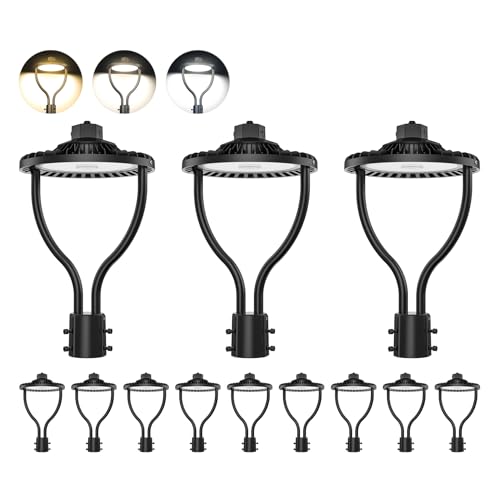
KINSNG LED Post Top Light 12-Pack 100W Adjustable (15000LM)
KINSNG LED Post Top Light 100W Adjustable (15000LM, 3CCT)
KINSNG LED Post Top Light 80W Adjustable (12000LM, 3CCT)
The Details Behind The Selections
This KINSNG fixture hits a sweet spot for a typical suburban backyard, where you want solid brightness without flooding the neighbor’s fence. The selectable wattage (36W, 48W, 60W) and three color temperatures (warm 3000K, neutral 4000K, daylight 5000K) let you tune the mood on a single post without rewiring anything.
It runs on a wide voltage range (AC100-277V) and carries an IP65 waterproof rating (meaning it’s sealed against dust and low-pressure water jets), so weather rarely enters the conversation. Compared to the larger KINSNG models further down this list, this one trades raw output for a more neighbor-friendly footprint.
Key Advantages
- Three wattage steps on one fixture, helpful when you’re unsure how bright you actually want it
- Switchable color temperature means you can shift from cozy to crisp without swapping bulbs
- Built-in photocell (a light sensor that turns the fixture on at dusk and off at dawn) means no separate timer or smart switch needed
- At 9000 lumens, it lights a mid-size yard without the glare of larger models
Things To Consider
- Installation on an existing pole still requires basic wiring comfort, since this is a hardwired unit rather than solar
- For very long driveways or open lots, the 9000-lumen ceiling may feel underpowered at night
- Owners commonly report that the IP65 rating holds up well, but the lens benefits from a quick wipe-down each season to keep light output steady
Key Specs
Who It Suits Best
Homeowners with a mid-size yard who want a single fixture flexible enough to handle mood lighting and security duty on the same pole.
Consider Something Else When
Anyone lighting a long driveway or commercial lot will get more usable coverage from the KINSNG LED Post Top Light 150W Adjustable, which sits further down this list.
This is the brightest unit in the KINSNG lineup, pushing 22500 lumens at full tilt for properties that need real reach. Big driveways, parking aprons, and barn-style yards are exactly where the 150W setting earns its keep, while the 90W and 120W steps let you dial back on quieter nights.
The same selectable 3000K, 4000K, and 5000K color temperatures show up here, plus the integrated dusk-to-dawn photocell and IP65 sealing. For shoppers comparing it to the 60W model reviewed earlier, the difference is mostly scale: more light, more pole space required, and a fixture that wants a sturdy mount.
The Upside
- 22500-lumen ceiling handles wide lots and long approaches without clustering multiple fixtures
- Three-step wattage trim keeps the fixture useful even if you overestimated brightness at first
- Color-temperature switch helps blend security light with landscaping when you want a softer evening tone
- Wide AC voltage range makes it easy to retrofit onto existing pole wiring
Worth Noting
- On a 150W setting, expect noticeable energy draw; not ideal for folks optimizing every watt
- At full brightness, glare can spill onto neighboring properties in tight suburban lots
- Heavier heat dissipation means a larger housing, which may look bulky on slim residential poles
Best Match For
Owners of large driveways, small commercial lots, or rural properties where one post needs to cover serious ground.
Look Elsewhere When
Suburban gardeners looking for a softer accent will find the KINSNG LED Post Top Light 80W Adjustable easier to live with day to day.
APONUO’s solar caps land in a completely different category from the hardwired KINSNG fixtures above. These sit on top of 4×4 deck or fence posts, soaking up sun by day and casting a soft 20-lumen glow after dark. The 12-pack is built for shoppers wrapping a full perimeter in light without hiring an electrician.
Because there’s no wiring involved, installation is essentially slide-on, and the IP65 rating handles the usual rain and snow load. Compared to the pole-mounted options earlier in this list, the tradeoff is straightforward: zero installation labor in exchange for much lower output per post.
Notable Gains
- No wiring means weekend-friendly installation for nearly any homeowner
- A 12-pack covers an entire deck railing or long fence run for one project
- Solar power keeps operating costs flat, which matters for folks running multiple fixtures nightly
- Three-sided lighting panels spread light across the post rather than only outward
Trade Offs
- At 20 lumens, these read as accent lighting rather than path safety lighting
- Performance depends on direct sunlight; shaded fences under tree cover often run dim or inconsistent
- Sized for standard 4×4 posts, so vinyl sleeves or metal railings may need an adapter or a different cap entirely
Feature Snapshot
Made For
Homeowners who want subtle deck and fence lighting without running a single wire or paying an electrician.
A Better Fit Elsewhere
Anyone needing real illumination for a long driveway should step up to the KINSNG LED Post Top Light 100W Adjustable instead.
This is the bulk version of the single 100W KINSNG fixture, sold as a 12-pack for properties, HOAs, or anyone outfitting multiple poles at once. At 15000 lumens per fixture with the same 60W/80W/100W selectable wattage and three color temperatures, you get uniform lighting across an entire property.
The 120° beam angle spreads light widely, which matters when poles are spaced out across a parking area or long drive. The IP65 seal and photocell match the rest of the KINSNG family, so maintenance routines stay consistent pole to pole.
What Works In Its Favor
- 12-pack format simplifies matching lighting across an estate or community setting
- 15000-lumen output covers wider spacing between poles without obvious dark gaps
- Selectable wattage per fixture means mixed-use areas can run brighter near parking and softer near gardens
- ETL listing (a North American safety certification from Intertek) adds confidence for commercial or shared installations
Honest Caveats
- Buying 12 fixtures upfront is overkill for a single-yard homeowner
- Hardwired units mean installation labor scales with the pack size, not just the unit count
- Replacement parts may be harder to source than for individual fixtures if one unit fails down the line
Feature Rundown
Right Fit For
Property managers, small communities, and homeowners with extensive grounds who want matched lighting across many poles.
Swap It Out When
A single-home buyer is better served by the KINSNG LED Post Top Light 60W Adjustable, which avoids over-buying and unnecessary installation.
The single-fixture 100W KINSNG sits comfortably between the modest 60W unit and the high-output 150W model earlier in this list. At 15000 lumens with 60W, 80W, and 100W selectable steps, it covers a full backyard, side yard, or medium driveway without feeling either underpowered or stadium-bright.
The familiar 3000K/4000K/5000K selector lets you shift from warm entertaining light to cooler security output. For shoppers who want one fixture that handles most residential situations, this often lands as the default choice before considering anything else.
A Favorable Mix
- 15000-lumen ceiling is enough for most backyard and driveway projects without overkill
- Three wattage steps keep energy use proportional to how bright you actually need each night
- Color-temperature selector adds real flexibility for entertaining versus security settings
- Integrated photocell removes the need for extra timers or smart controls
Points To Note
- Still a hardwired installation, so DIY-averse shoppers may want to budget for an electrician
- Beam throw is shorter than the 150W model, so very long driveways may need multiple poles
- The fixture housing runs larger than the 60W version, which matters on slim decorative poles
Who Should Grab It
Homeowners with a larger backyard or moderate driveway who want a single fixture flexible enough for both daily use and occasional security duty.
Reach For A Different Pick When
Decorative deck and fence projects will suit the APONUO Solar Post Cap Lights 12-Pack better, since hardwired pole lights are the wrong tool for that job.
The 80W KINSNG rounds out the family as a right-sized option for side yards, garden paths, and narrower spaces where the 100W and 150W models would be excessive. At 12000 lumens with 48W, 64W, and 80W selectable wattage, it stays useful across smaller footprints.
It carries the same IP65 seal, photocell, and three color temperatures as its siblings. For shoppers who read the 60W review earlier and worried about coverage, this unit offers a useful middle step without jumping to full commercial output.
The Value In It
- 12000-lumen output is comfortable for side yards and garden paths without spilling onto neighbors
- Three wattage steps make it forgiving if your initial brightness guess is off
- Color-temperature switch handles both decorative and functional lighting on the same pole
- Build shares parts and weatherproofing with the rest of the KINSNG lineup
Some Limits To Know
- Not enough reach for long driveways or open lots
- Still requires wiring and a pole mount, so installation effort matches the bigger KINSNG models
- For purely decorative fence and deck lighting, a solar cap like the APONUO set is simpler to deploy
Perfect Match For
Homeowners lighting side gardens, pathways, or smaller backyard zones where full-power pole lights would feel excessive.
Where A Sibling Pick Shines
Properties needing broad estate coverage will find the KINSNG LED Post Top Light 12-Pack 100W Adjustable a better scale match for the project.
Picking Outdoor Post-Lights That Fit Your Yard
Start with the actual space, not the spec sheet. Measure the distance between poles and think about what you’re trying to accomplish: a warm glow for evening dinners, a brighter wash for security, or a bit of both. Hardwired LED post lights handle serious output but require wiring and a proper mount, while solar post caps trade brightness for zero installation effort.
Color temperature matters more than most people expect. A 3000K warm white reads as cozy on a patio, while 5000K daylight feels safer along a driveway. Fixtures with selectable CCT (correlated color temperature, the technical name for light warmth) let you change your mind later without swapping hardware.
Wattage and lumen output are not the same thing. Lumens measure visible light, while watts measure energy use. A 60W fixture at 150 lm/W efficiency (a measure of how many lumens a fixture produces per watt) can outperform an older 100W metal-halide unit. For most homes, anything from 9,000 to 15,000 lumens covers a typical yard comfortably.
Look for IP65 or higher (the “6” means full dust protection; “5” means resistance to water jets), a built-in photocell, and an ETL or UL safety listing. These details signal a fixture built for years outdoors rather than a single season.
Key Considerations Across These Picks
Where Shoppers Go Wrong
Picking a fixture that’s far too bright for the space is the most common slip. A 22,500-lumen pole light on a small suburban lawn will have neighbors peeking over the fence. The opposite mistake is buying a soft solar cap expecting it to light a long driveway. Match the output to the actual square footage you need to cover.
Overlooking beam angle is another quiet trap. A narrow beam creates bright spots directly under the pole and dark gaps between fixtures, while a wide 120° spread keeps coverage even. Most of the KINSNG fixtures in this list use a wide beam for that reason.
What The Higher Tier Buys
Stepping up from a basic post light usually buys two things: more tunable settings and a more rugged housing. Selectable wattage and color temperature are genuinely useful because they let a single fixture adapt as your yard or needs change. The heavier-duty housings also tend to dissipate heat better, which generally extends LED lifespan.
The upgrade makes sense when you’re lighting a property you’ll live with for years, not when you’re setting up a temporary rental or a quick flip. For short-term projects, a simpler fixture often does the job without the extra spend.
Frequently Asked Questions
What is IP65, and why does it matter for outdoor post-lights? IP65 means the fixture is fully sealed against dust and resistant to water jets from any direction, which is the standard most homeowners want for rain and routine cleaning.
How does a built-in photocell save energy? A photocell is a small light sensor that turns the fixture on at dusk and off at dawn automatically, so the light runs only when it’s actually dark outside.
Can LED post lights replace older metal-halide fixtures? In most cases, yes. A 60W to 100W LED typically produces more useful light than a 150W to 250W metal-halide unit, while using far less energy.
Are solar post lights bright enough for driveways? Generally no. Solar caps are designed for accent and decorative use on decks and fences, while real driveway lighting usually requires a hardwired LED post light.
What does selectable wattage actually do? It lets you set the fixture to a lower or higher output after installation, so you can adjust brightness based on how the space actually performs at night rather than committing upfront.