

A dark driveway or side gate is the kind of space I never want to step into alone. Outdoor motion lights with camera fix that problem in two strokes: they flood the area with light the instant someone approaches and they record what happens, so I can check footage from my phone later. The five models below take different routes to that goal. Some lean into smart tracking, others into panoramic coverage, and one skips the camera entirely for raw brightness. Here’s what stood out to me after digging through specs and real-world fit.
The Choices Worth Comparing

Ring Floodlight Cam Plus with Spotlight Cam Plus Bundle
REOLINK TrackFlex Floodlight WiFi 4K PTZ Dual-Lens Camera
REOLINK Elite Pro Floodlight PoE 16MP Dual Lens 180°
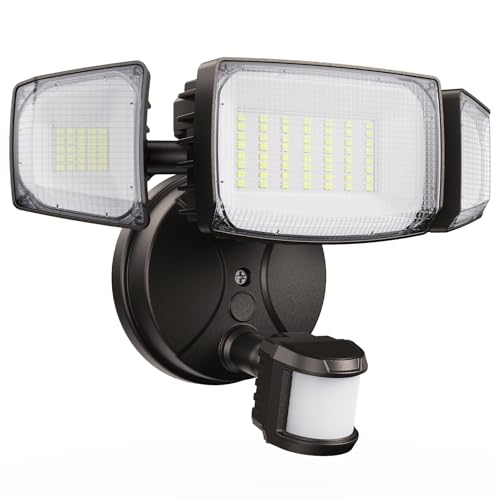
Olafus 80W Hardwired Motion Sensor Flood Light

REOLINK Elite Floodlight WiFi 4K 8MP 180° Panoramic Camera
What Each Pick Brings To The Table
Ring’s two-piece bundle covers the front and the side of a home in a single purchase. The Floodlight Cam Plus anchors the driveway or back patio with two thousand lumens of motion-triggered light, while the Spotlight Cam Plus handles narrower paths or gates. For most homeowners I think of as “non-technical but curious”, this pairing reads as a complete kit rather than a starting point.
The 85-decibel siren is loud enough to startle, and the customizable motion zones let me ignore the sidewalk and focus on the porch. Unlike the Olafus model below, this one does require Wi-Fi and the Ring app, so a flaky router will hurt the experience.
Useful Strengths
- Two cameras in one bundle covers wider property layout.
- 2000-lumen flood output is bright enough for most driveways.
- Customizable motion zones help cut sidewalk alerts.
- Built-in 85dB siren deters visitors without leaving the app.
- Plays nicely with Alexa-enabled speakers and displays.
Things To Consider
- Hardwired installation means routing wires through exterior walls.
- Reliant on stable Wi-Fi and the Ring app, so offline use is limited.
Right Fit For
Homeowners who want a turnkey, app-driven system covering more than one entry point without buying separate units.
Skip It When
Shoppers who don’t want monthly subscriptions should look at the Olafus 80W instead, since it has no camera and no recurring fees.
Where the Ring bundle stays still, the REOLINK TrackFlex moves. Pan-tilt-zoom (PTZ) cameras physically rotate to follow motion, which matters when a courier walks across a long driveway instead of straight at the lens. Combined with 4K resolution and a hybrid zoom, the close-up frames stay sharp enough to read a face plate.
Auto-tracking is the headline feature, and for anyone with a yard full of wildlife or kids cutting through the lawn, it ends the frustration of “did the camera even see that”. This is also the most tech-hungry pick here, so a stronger router and some patience with the Reolink app will be part of the deal.
What Pays Off
- 360-degree pan plus tilt tracks movement across the yard.
- 4K resolution with hybrid zoom preserves detail at a distance.
- Auto-tracking reduces the need to manually reposition the view.
- Good fit for wide driveways where static cameras miss action.
Trade Offs
- Moving parts mean more potential mechanical wear over years.
- Setup through the Reolink app can feel involved for first-timers.
- Higher drain on home Wi-Fi compared to simpler static cameras.
Built With In Mind
Tech-comfortable homeowners with large yards, long driveways, or anyone who wants the camera to follow rather than just watch.
Another Choice May Suit
People who want a wider but static view with less app fuss should consider the REOLINK Elite Floodlight WiFi instead, since it trades tracking for panoramic coverage.
PoE, short for Power over Ethernet, means a single cable delivers both power and data, and this camera leans into that simplicity. For anyone running Ethernet through attic or crawlspace already, the Elite Pro avoids the Wi-Fi flakiness that plagues wireless floodlight cameras in larger homes. The 16-megapixel dual-lens design stitches together a panoramic image with no obvious seam.
Compared to the TrackFlex above, there’s no auto-tracking, but the static 180-degree view captures everything in one frame. The wired-only nature rules out casual renters, and 2800-lumen lighting is bright without flooding the neighbor’s yard.
Practical Pluses
- Single PoE cable handles power and data, simplifying installs.
- 16MP resolution delivers sharp detail across a wide panoramic view.
- Stitched 180-degree coverage removes typical corner blind spots.
- No reliance on Wi-Fi signal strength or bandwidth.
Honest Caveats
- Requires running Ethernet cable, which is the main installation hurdle.
- No pan or tilt, so what you mount is what you see.
- Less ideal for renters who can’t drill into exterior walls.
Who It Suits Best
Homeowners comfortable with low-voltage wiring who want reliability over fancy tracking features.
Look Elsewhere When
Apartment dwellers and anyone wanting wireless flexibility should reach for the Ring Floodlight Cam Plus bundle instead.
The Olafus skips the camera entirely, and that’s the point. With 8000 lumens from a single 80-watt fixture, it throws more light than any other pick on this list, useful for barns, detached garages, or long driveways where illumination matters more than footage. The motion sensor reaches 72 feet and covers a 180-degree arc.
There’s no app, no Wi-Fi, no cloud, and that’s a feature, not a missing one. Anyone worried about subscription fatigue or data privacy gets full light coverage without any connected account. It’s also the only hardwired option here without a camera, so it’s the most set-and-forget.
What Stands Out
- 8000 lumens covers very large outdoor zones in one fixture.
- 72-foot motion range catches people approaching from the curb.
- No app or subscription required for full functionality.
- 180-degree sensor angle reduces blind corners along walls.
Points To Keep In Mind
- No camera means no video evidence if something does happen.
- Hardwired installation requires basic electrical comfort.
- Light-only design may feel redundant for households already owning a floodlight cam.
Best Suited To
Property owners who want pure floodlight coverage, especially for barns, garages, or back lots where video isn’t the priority.
Not Your Match When
Someone needing recorded footage should consider the REOLINK Elite Pro Floodlight PoE, which adds a camera with a similar install style.
This sits in a useful middle ground. The Elite Floodlight WiFi delivers 4K 8MP detail across a stitched 180-degree view without forcing buyers into PoE wiring. For most backyards, a 3000-lumen dimmable floodlight is plenty, and the dimming control means late-night wandering doesn’t blast the neighbors at full intensity.
Compared to the REOLINK TrackFlex above, this model loses the moving tracking and gains a quieter, simpler install. Wi-Fi is still required, but most households already have that.
Real-World Strengths
- 180-degree panoramic view covers wide yards with one camera.
- Dimmable floodlights adapt brightness to time of night.
- 4K 8MP resolution captures license plates at moderate distance.
- Wi-Fi install skips the Ethernet run needed for PoE models.
Minor Gripes
- Still requires a stable Wi-Fi signal at the mounting location.
- Wired power means running a cable to a junction box.
Whose Shelf It Belongs On
Homeowners who want strong panoramic coverage and clear 4K detail without managing PoE cabling or moving parts.
Reach For A Different Pick When
Buyers who need a moving, tracking camera should look at the REOLINK TrackFlex Floodlight WiFi instead.
Picking The Right Outdoor Motion Lights With Camera For Your Property
The first question is whether you actually need a camera at all. Pure floodlights like the Olafus 80W handle security through sheer brightness, and for some households that’s enough. Once video matters, the choice splits between wired reliability and wireless convenience.
Wired PoE systems earn their keep in larger homes where Wi-Fi struggles to reach exterior walls, and they typically deliver steadier streams at higher resolutions. Wireless floodlight cams are friendlier to install and re-mount, which matters for renters and first-time users.
Resolution and field of view come next. A 4K image with a 180-degree panoramic view beats a 1080p narrow lens for most yards, but only if the network can carry that much data without dropouts. Lumen output should match the space: driveways and barns want 3000+ lumens, while porch entries often look harsh above 2000.
Motion Detection That Actually Helps
Motion zones, also called activity zones, let users carve out a slice of the camera’s view and ignore the rest, like a sidewalk or street. Without them, every passing car generates an alert, and that trains people to ignore the real ones.
Sensitivity matters too. Crank it too high and wind-blown leaves trigger the floodlight. Too low and a slow-moving person slips past unnoticed. Most floodlight cams let users tune this in the app, and a quick evening test walk saves weeks of frustration.
Lighting Coverage And Brightness
Lumens describe total visible light output, and a floodlight’s effective range depends on how those lumens are focused. A wide-angle flood throws light across a broad area but with less reach, while a tighter beam reaches farther but leaves shadows on the sides. Matching the beam shape to the property prevents the common mistake of bright center, dark edges.
Power Source And Installation Reality
Hardwired cameras need a junction box or an existing floodlight wiring point, which is straightforward for owners replacing an old fixture but tougher for first-time installs. Battery-powered units trade constant power for recharging cycles, and none on this list use batteries. Wi-Fi cameras need a strong signal at the mount, so testing signal strength with a phone at the exact spot is worth a ten-minute walk up a ladder.
Key Considerations Across These Picks
Pitfalls Shoppers Hit
Many shoppers focus on resolution alone and forget that a 4K feed over a weak Wi-Fi connection streams poorly and misses the detail they paid for. Others underestimate installation, buying a hardwired PoE camera without planning the cable run from router to mount. A third common miss is ignoring motion zones, which leads to alert fatigue within a week.
Where The Extra Money Goes
Higher-tier outdoor motion lights with camera often buy three things: better low-light color sensors, wider panoramic optics, and brighter dimmable LEDs. The upgrade pays off when the camera sits more than 30 feet from a doorbell outlet or covers a yard wider than a single static lens can frame.
Frequently Asked Questions
Do outdoor motion lights with camera need Wi-Fi?
Most wireless models do, since the camera sends live and recorded footage through the home network. Wired PoE options like the REOLINK Elite Pro skip Wi-Fi entirely by using Ethernet. A pure floodlight like the Olafus 80W has no camera, so Wi-Fi isn’t part of its setup at all.
How bright should outdoor motion lights with camera be?
For a porch or small entry, 1000 to 2000 lumens reads as comfortable without overwhelming neighbors. Driveways and larger yards typically need 3000 to 8000 lumens to feel genuinely secure. Higher output also helps cameras capture clear color footage at night.
Can outdoor motion lights with camera work in cold weather?
Most models are rated for outdoor use across a wide temperature range, though extreme cold can dim battery performance in wireless units. Wired floodlight cameras handle winter more reliably since there’s no battery to drain. Checking the manufacturer’s listed operating temperature is the safest move before mounting.
Do these cameras record continuously?
Most outdoor motion lights with camera record only when motion is detected, which saves storage and avoids hours of empty footage. Some wired models support continuous recording to a network video recorder, but that adds storage costs. Cloud plans often gate continuous recording behind a subscription tier.
How long do outdoor motion lights with camera last?
LED floodlights typically last 25,000 to 50,000 hours, which translates to many years of normal nighttime use. Camera sensors and Wi-Fi radios age faster than the LEDs, so the camera half may feel dated before the lights give out. Hardwired installs tend to outlast battery-powered ones since there are no cells to replace.