

The best occupancy sensor light switch for 2026 depends on your room, wiring, and smart-home setup.
Lutron Caseta stands out for smart controls, while Leviton and Sensky offer solid choices for different setups.
Some models work better in busy spaces, and others fit simpler projects.
This guide covers seven strong picks so you can find the right one fast.
| Lutron Caseta Smart Motion Sensor (PD-OSENS-WH) | 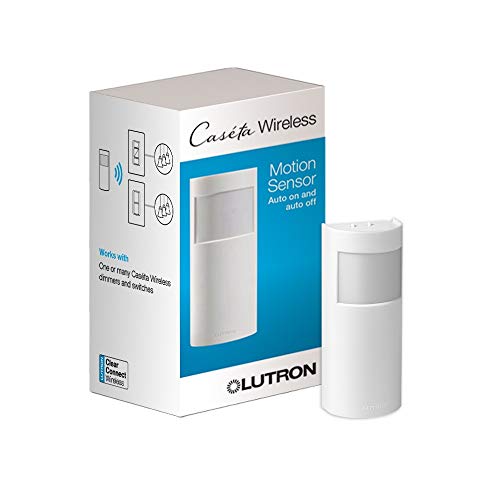 | Best Smart Pick | Sensor Type: Motion sensor | Mount Type: Wall mount/freestanding | Field of View: 180° | VIEW LATEST PRICE | Read Our Analysis |
| Sensky BS033C Motion Sensor Light Switch (Neutral Wire) |  | Best Budget Option | Sensor Type: Motion + light sensor | Mount Type: Embedded | Field of View: 180° | VIEW LATEST PRICE | Read Our Analysis |
| 4 Pack Motion Sensor Light Switch White |  | Best 4-Pack | Sensor Type: Motion sensor | Mount Type: Embedded | Field of View: 180° | VIEW LATEST PRICE | Read Our Analysis |
| 2 Pack 3-Way Motion Sensor Light Switch |  | Best 3-Way | Sensor Type: Motion sensor | Mount Type: Wall mount | Field of View: 180° | VIEW LATEST PRICE | Read Our Analysis |
| Leviton Motion Sensor Light Switch (DOS02-LW) |  | Best No-Neutral | Sensor Type: Motion sensor | Mount Type: Wall mount | Field of View: 180° | VIEW LATEST PRICE | Read Our Analysis |
| Leviton Motion Sensor Light Switch (DOS02-1LI) |  | Best Overall | Sensor Type: PIR motion sensor | Mount Type: Wall mount | Field of View: 180° | VIEW LATEST PRICE | Read Our Analysis |
| Leviton Ceiling Mount Occupancy Sensor (ODS10-IDE) |  | Best Ceiling Mount | Sensor Type: Occupancy sensor | Mount Type: Wall mount | Field of View: 180° | VIEW LATEST PRICE | Read Our Analysis |
More Details on Our Top Picks
Lutron Caseta Smart Motion Sensor (PD-OSENS-WH)
Should you want hands-free lighting control, this is a smart pick for busy rooms. You can use the Lutron Caseta Smart Motion Sensor (PD-OSENS-WH) to turn Caseta dimmers, switches, fan controls, and Serena shades on and off automatically. It detects fine motion well, covers 180 degrees, and works from up to 60 feet away. You can set occupancy or vacancy modes, choose light levels, and schedule trigger times in the app with a Caseta Smart Hub. Battery power keeps installation easy, and you can mount it or set it on a flat surface in bathrooms, halls, garages, or laundry rooms.
- Sensor Type:Motion sensor
- Mount Type:Wall mount/freestanding
- Field of View:180°
- Single Pole:Yes
- Auto On/Off:Yes
- White Color:White
- Additional Feature:Caseta Smart Hub required
- Additional Feature:Battery powered
- Additional Feature:10-year battery life
Sensky BS033C Motion Sensor Light Switch (Neutral Wire)
Provided you’ve got a neutral wire, the Sensky BS033C gives you a solid budget-friendly motion upgrade. You get PIR sensing with a built-in light sensor, so it turns your light on only while someone’s moving and the room’s dim enough. It covers about 180 degrees and detects motion up to 9 meters, which works well for halls, laundry rooms, and closets. You can set the delay from about 10 seconds to 7 minutes. Choose AUTO for hands-free control, or switch to ON or OFF while you want manual override.
- Sensor Type:Motion + light sensor
- Mount Type:Embedded
- Field of View:180°
- Single Pole:Yes
- Auto On/Off:Yes
- White Color:White
- Additional Feature:Neutral wire required
- Additional Feature:Light sensor included
- Additional Feature:Adjustable time delay
4 Pack Motion Sensor Light Switch White
Should you need a reliable 4-pack for multiple rooms, EverElectrix’s white motion sensor switches fit the bill. You get four indoor occupancy/vacancy switches with a single-pole, neutral-wire design, so they’re best for bathrooms, hallways, garages, and closets. Each unit senses motion across a 180° field, then turns lights off after you leave, helping you cut energy waste. You can choose manual or automatic-on modes, and adjust the timer and sensitivity. The switches include a wall plate, meet UL, FCC, and Title 24 standards, and deliver dependable 60-watt control.
- Sensor Type:Motion sensor
- Mount Type:Embedded
- Field of View:180°
- Single Pole:Yes
- Auto On/Off:Yes
- White Color:White
- Additional Feature:Four-pack value
- Additional Feature:UL certified
- Additional Feature:California Title 24
2 Pack 3-Way Motion Sensor Light Switch
Should you need a reliable 3-way upgrade, EverElectrix’s 2-pack motion sensor switch fits the job well. You get an indoor in-wall occupancy sensor that isn’t for single-pole setups, so you’ll want a 3-way circuit with a neutral wire. It connects all five wires, includes a wall plate, and runs on corded electric power. The sensor detects motion in 180 degrees up to 8 meters, with automatic on, manual on, and adjustable off timer options from 5 to 30 minutes. Use it in garages, bathrooms, closets, or hallways. It’s UL certified, FCC listed, and Title 24 compliant.
- Sensor Type:Motion sensor
- Mount Type:Wall mount
- Field of View:180°
- Single Pole:No
- Auto On/Off:Yes
- White Color:White
- Additional Feature:3-way application
- Additional Feature:Adjustable sensitivity
- Additional Feature:5 to 30 minutes
Leviton Motion Sensor Light Switch (DOS02-LW)
Leviton’s DOS02-LW suits you in the event that your switch box lacks a neutral wire. You get a single-pole, wall-mount motion sensor with a slim profile that fits most boxes. Its PIR sensor watches a 180° area and covers up to 900 square feet, so it’s handy for rooms, halls, and utility spaces. You can set it to auto-on/auto-off or manual-on vacancy mode. It works with lights, fans, and standard wall-switch devices, but it isn’t smart-home compatible. It supports 120V operation, needs a ground, and carries a 5-year limited warranty.
- Sensor Type:Motion sensor
- Mount Type:Wall mount
- Field of View:180°
- Single Pole:Yes
- Auto On/Off:Yes
- White Color:White
- Additional Feature:No neutral wire
- Additional Feature:900 sq. ft. coverage
- Additional Feature:5-year warranty
Leviton Motion Sensor Light Switch (DOS02-1LI)
With no neutral wire required, the DOS02-1LI is a strong all-around pick for quick upgrades. You can install it in a single-pole setup, and it works with or without a neutral, which cuts frustration. Its PIR sensor detects movement across a 180° view and covers up to 900 sq. ft., so it’s great for laundry rooms, basements, pantries, and garages. You can choose auto-on/auto-off or manual-on operation, and adjustable time-out, sensitivity, and ambient light settings let you fine-tune performance. It also supports many load types and meets Title 24 requirements.
- Sensor Type:PIR motion sensor
- Mount Type:Wall mount
- Field of View:180°
- Single Pole:Yes
- Auto On/Off:Yes
- White Color:Ivory
- Additional Feature:Works with neutral
- Additional Feature:Ambient light settings
- Additional Feature:IP54 protection rating
Leviton Ceiling Mount Occupancy Sensor (ODS10-IDE)
For large rooms, Leviton’s ODS10-IDE stands out as a ceiling mount occupancy sensor. You get multi-technology sensing with PIR detection and a segmented Fresnel lens, so it watches zones well and cuts false triggers. Its 180-degree field of view can cover about 2,100 square feet, and ambient light override keeps lights off when daylight’s enough. You can install it quickly in a standard wallbox, then use Auto-ON/Auto-OFF or Manual-ON control with push-button touch. It runs on 120/277 volts, handles 10 amps, and carries a five-year warranty.
- Sensor Type:Occupancy sensor
- Mount Type:Wall mount
- Field of View:180°
- Single Pole:1-way
- Auto On/Off:Yes
- White Color:Black
- Additional Feature:Ceiling mount sensor
- Additional Feature:Gangable with others
- Additional Feature:277-volt operation
Factors to Consider When Choosing an Occupancy Sensor Light Switch
Upon I help you choose an occupancy sensor light switch, I first look at sensor range and coverage so it matches the room size. I also check whether it needs a neutral wire, how sensitive the motion detection is, and whether you want auto-on/off modes. Upon you’re building a connected setup, I make sure it works with your smart home system too.
Sensor Range And Coverage
Sensor range and coverage are worth checking closely, because I want the switch to detect motion where it actually happens, not just straight ahead of the sensor. I look for a range that fits the room, whether that’s about 8–9 meters or as far as 50–60 feet. Coverage matters just as much: some models handle roughly 900 square feet, while others reach about 2,100 square feet. I also prefer a wider field of view, usually 180 degrees, so movement across the room triggers the light. When I’m covering a hallway, large room, or space with multiple entries, I choose a sensor with enough reach to avoid blind spots. Ceiling-mounted and multi-technology options often give me broader coverage than wall-mounted models.
Neutral Wire Requirement
Before I buy an occupancy sensor light switch, I always check whether it needs a neutral wire, because that choice can make or break compatibility with the box in the wall. Some models need a neutral to finish the circuit, while others work without one, so I match the switch to what’s already in my wallbox. Should the switch needs neutral, I expect to connect neutral, hot, load, and ground, which can be tougher in older homes. I find no-neutral models easier to fit in existing single-pole boxes because they use the line and load wires already there. I also confirm whether the switch supports single-pole, 3-way, or both, since wiring needs can change with the circuit type and affect installation.
Motion Detection Sensitivity
Once I’ve confirmed the wiring fits, I look at motion detection sensitivity, because that’s what determines how small a movement the switch can catch. I want a sensor that matches the room, not just one with a high spec sheet. Some models pick up fine motion better than standard switches, which helps in spaces where people sit still or move lightly. I also check the field of view; a 180° sensor can cover more of a room and cut blind spots. Range matters too, since designs can reach from about 8–9 meters to 50–60 feet. Provided the switch lets me adjust sensitivity, I can tune it for busy areas or quieter spots. Too much sensitivity, though, can trigger unwanted activation.
Auto-On Off Modes
When I’m choosing an occupancy sensor light switch, I pay close attention to the auto-on/off modes because they control how hands-free the switch really feels. I like models that turn lights on whenever they detect motion and switch them off after a set delay once the room is empty. That’s perfect for hallways, laundry rooms, and other spaces I enter often. I also check whether the switch offers occupancy mode and vacancy mode, since I might want automatic lighting or manual activation depending on the room. Adjustable timeout settings matter too, because I can match the shutoff speed to the space’s activity. Whenever a model includes ON or OFF override options, I get more control. In bright rooms, ambient-light blocking helps prevent needless daytime activations.
Smart Home Compatibility
Smart home compatibility matters to me because not every occupancy sensor light switch fits into the same setup. I always check whether a model connects to a smart hub or app, since some switches need a dedicated hub for customization, and others aren’t smart-home compatible at all. Should I want more than basic motion sensing, I look for scenes, schedules, remote control, and adjustable settings in a mobile app. I also confirm that the switch works with the rest of my system, including dimmers, fan controls, or shades, not just one light circuit. Clear support for my home setup matters, too, because some devices only work with standard wired switches and skip broader protocols. Before I buy, I verify the smart-home status and any required accessories so I won’t get stuck with missing features later.
Installation And Wiring Type
After I’ve confirmed smart-home compatibility, I turn to installation and wiring because a switch that fits my system still has to fit my walls. I check whether it needs a neutral wire, since some occupancy sensor switches need neutral, hot, and load connections, while others work without one. I also verify the circuit type: single-pole, 3-way, or 1-way. Not every model supports every setup. Before I buy, I confirm the conductor count, because some units use three wires and others need four or five, including ground. I then look at mounting style and box fit, whether it’s a wall switch, in-wall unit, or ceiling sensor. Finally, I make sure it suits standard wallboxes and consider hiring a licensed electrician for complex or high-voltage wiring.
Frequently Asked Questions
How Does an Occupancy Sensor Differ From a Vacancy Sensor?
An occupancy sensor turns the lights on when I enter and turns them off after I leave. A vacancy sensor only turns the lights off after I manually switch them on, so I keep control over when the lights start.
Can These Switches Work With LED and CFL Bulbs?
Yes. Many occupancy sensor switches do work with LED and CFL bulbs, but check the switch compatibility and wattage rating to prevent flickering or unwanted shutoffs.
Do Occupancy Sensor Switches Need a Neutral Wire?
Yes, I need to check the switch type because many occupancy sensor switches require a neutral wire, but some older two wire models do not. Verify the wiring in your box before buying.
Are Occupancy Sensor Switches Compatible With Three-Way Wiring?
Yes, about 30% of occupancy sensor switches support three way wiring, so I would check the model first. Many setups can use a compatible companion switch, but I would not assume every sensor works in that configuration.
Can Sensitivity and Timeout Settings Be Adjusted?
Yes, I can usually adjust sensitivity and timeout settings on these switches, so I’d set motion detection and shutdown delays to match your room. You’ll often find dials, buttons, or app controls for fine tuning.


