

Growing herbs through a wet winter, nursing seedlings until the last frost, or running a serious tent setup in the garage, the right lighting changes everything. I’ve pulled together seven LED options across different wattages and form factors, so whether you’re working with a small apartment shelf or a full 4×4 tent, there’s something here that fits your space and budget.
The Leading Options At A Glance

HLG 600 Rspec FR 600W LED Quantum Board Grow Light

VIPARSPECTRA 100W LED Grow Light for Seed Starting
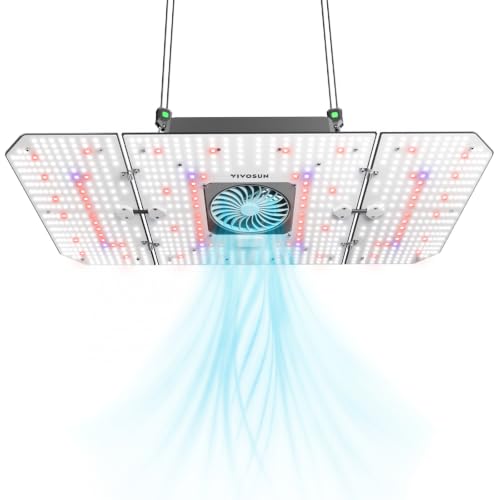
VIVOSUN AeroLight 240W LED Grow Light with Fan

Barrina T5 5000K Full Spectrum 2ft Grow Light 8-Pack
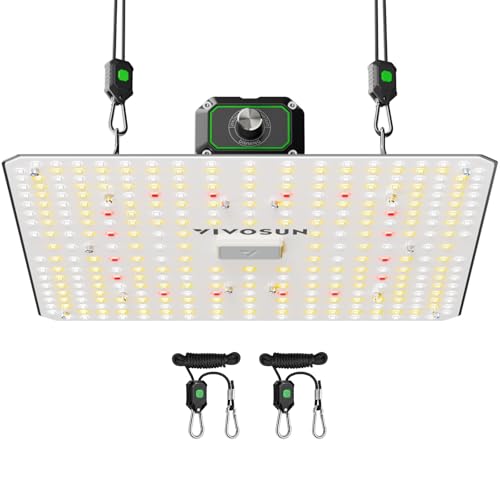
VIVOSUN LumaLight 100W LED Full Spectrum Grow Light

VIVOSUN LumaLight 320W LED Full Spectrum Grow Light

MUSELUCE Desk LED Grow Light with Adjustable Stand
A Breakdown Of The Leading Choices
This is the unit I’d point a serious hobbyist toward when they graduate from a starter lamp to something meant for full-cycle growing. HLG’s quantum board layout spreads the diodes across a wide panel, and the 600W rating is built for a 4×4 ft footprint. In my experience, that footprint coverage means fewer hot spots near the center and better bud development on the outer plants.
The dimmer knob on the side lets you tune output for seedlings versus flowering, which matters because blasting young plants with full intensity burns them. For growers running a dedicated veg and bloom schedule, having that flexibility on one fixture keeps the setup simple.
Everyday Perks
- Quantum board diode spread gives consistent canopy coverage in a 4×4 tent
- Built-in dimmer supports the full plant life cycle without swapping fixtures
- Full spectrum output supports both vegetative and flowering stages
- ETL/UL certification adds peace of mind for unattended operation
- Pairs well with standard 120V circuits found in most homes
Honest Caveats
- Requires mounting hardware and adequate hanging height, which adds setup time
- Generates meaningful heat, so tent ventilation should be planned alongside it
- Overkill for a single houseplant shelf
Who It Suits Best
Intermediate to advanced growers running a full 4×4 ft tent for vegetables, herbs, or flowering plants.
Where Another Pick Suits Better
Beginners with a small seed-starting tray will find the VIPARSPECTRA 100W LED Grow Light easier to manage.
Compared to the HLG quantum board, this VIPARSPECTRA P1000 is a much friendlier starting point for someone who just wants to get a few trays of seedlings off the windowsill. The 100W draw won’t spike an electricity bill, and the diode layout favors a small 2×2 ft area, which matches a basic seed-starting rack.
For someone trying herbs, lettuce, or early-stage tomatoes indoors, the output lands in a useful range without demanding a tent or exhaust system. You may find it underpowered for dense flowering later, but that’s not what it was built for.
Useful Strengths
- Low 100W draw works on a standard outlet without dedicated circuits
- Cooler operation means less spacing between lamp and canopy
- High PAR output in the small footprint sweetens early-stage growth
- Lightweight body hangs easily from a simple shelf mount
Things To Consider
- Coverage area shrinks fast once plants get taller and bushier
- Limited dimming control compared to higher-tier options
- For growers expecting to flower dense plants, the wattage may feel light
Made For
First-time indoor gardeners starting seeds, herbs, and leafy greens in a closet or small shelf.
Consider Something Else When
Growers wanting full-cycle flowering in a tent should look at the HLG 600 Rspec instead.
What caught my attention on the VIVOSUN AeroLight is the integrated fan in the center of the panel. Airflow is something most growers buy separately, so building it into the fixture simplifies the setup. The 240W rating puts it between the entry-level VIPARSPECTRA and the heavy-duty HLG, which makes it a reasonable mid-tier option.
The tunable spectrum supports full-cycle growing, and the fan helps move CO₂ across the canopy. For a 3×3 ft tent, this hits a useful middle ground for growers ready to step up from a starter light.
Key Advantages
- Built-in circulation fan reduces the need for separate tent equipment
- Tunable full spectrum covers seedling through flowering stages
- 240W output suits medium-sized 3×3 ft tents
- Central airflow design addresses stagnant zones many growers hit
Points To Note
- Fan adds a small amount of operational noise worth considering for living spaces
- More complex internal components than a passive panel
- Commonly reported as needing periodic dust cleaning around the fan intake
Who Should Grab It
Growers running a 3×3 tent who want airflow and lighting handled by a single fixture.
Not Your Match When
Anyone needing a silent, passive panel should consider the VIVOSUN LumaLight 100W instead.
The Barrina 8-pack takes a different approach from the panel-style fixtures above. You get eight individual 2ft T5 strips, which means you can spread them across a long shelf or wire multiple racks without buying separate lights. For someone propagating trays of seedlings or running a multi-tier setup, the flexibility is hard to beat.
The 5000K white output leans toward the vegetative side, so it works well for leafy greens, herbs, and early plant development. For dense flowering, growers typically pair it with a stronger dedicated bloom light.
Useful Highlights
- Eight strips let you light multiple shelves from a single purchase
- Linkable design simplifies cable management across a setup
- Low heat output allows close placement above delicate seedlings
- 5000K color temperature suits vegetative and houseplant growth
Trade Offs
- Strips need more wiring than a single panel fixture
- Light intensity per strip is lower than a concentrated quantum board
- Mounting hardware for eight units takes extra planning time
Right Fit For
Multi-tray propagators and shelf gardeners who need broad, distributed lighting.
Look Elsewhere When
Single-tent growers wanting one strong fixture should consider the VIVOSUN LumaLight 320W.
Sitting between a strip light and a high-watt quantum board, the LumaLight 100W is a tidy little panel for growers with limited space. The blend of white, blue, red, and far-red diodes (3000K, 5000K, 660nm, 730nm) supports photosynthesis through the full life cycle, which separates it from basic single-spectrum panels.
In most small tents and grow closets, this size hits a comfortable sweet spot. You get serious full-cycle capability without the heat and electrical load of a 600W panel.
Notable Gains
- Full-spectrum diode blend covers seedling to bloom in one unit
- Compact form fits 2×2 ft and small tent layouts
- Lower wattage keeps operating costs modest
- Far-red inclusion supports flowering initiation
Minor Gripes
- Coverage area caps out fast for larger plants
- Passive cooling means placement height matters more than with fanned fixtures
Best Suited To
Closet growers and small-tent gardeners running a mixed veg and bloom rotation.
A Better Fit Elsewhere
Growers needing integrated airflow should choose the VIVOSUN AeroLight 240W instead.
The 320W sibling to the LumaLight 100W steps up considerably with a multi-bar layout and a micro-lens optic system. PPFD (photosynthetic photon flux density) measures how much usable light actually reaches the plants, and the curved wave-shaped lenses redirect photons toward the canopy instead of letting them scatter. The result is a more even edge-to-edge light spread in larger tents.
For growers moving past hobby scale, that uniformity matters. Plants at the edges of the tent receive comparable light to those in the center, which translates to more consistent growth across the whole run.
Where It Excels
- Micro-lens optics focus light downward for better canopy penetration
- Multi-bar design improves heat dissipation and longevity
- Full-cycle spectrum supports veg and bloom on a single fixture
- Suited to larger 4×4 or rectangular tent footprints
A Few Limitations
- Higher wattage demands attention to circuit capacity
- Larger physical size requires adequate tent height for hanging clearance
Perfect Match For
Intermediate to advanced growers running a full-tent flowering rotation who value light uniformity.
Reach For A Different Pick When
Small-space growers will find the LumaLight 100W a better physical and financial fit.
Completely different category from the tent fixtures above, the MUSELUCE is a desktop grow light built for a succulent, a small herb pot, or a single houseplant on a counter. The metal base sits flat on a desk or shelf, and the height adjusts from 12 to 43 inches so you can raise it as the plant grows.
The built-in timer offers 3, 9, and 12-hour cycles, and ten dimming levels give you precise control without buying extra equipment. For an office or living room where aesthetics matter as much as function, the standalone design avoids the awkward clamp or hanging setup of most grow lights.
A Few Strong Suits
- Adjustable 12 to 43 inch height accommodates plants at different stages
- Auto timer (3/9/12H) keeps schedules consistent without manual switching
- Ten dimming levels let you match intensity to the plant’s needs
- Stable metal base avoids the tipping risk of soil-stake designs
Soft Spots
- Light output is meant for one or two plants, not a propagation tray
- Limited reach for tall or wide specimens beyond a single pot
Whose Shelf It Belongs On
Apartment dwellers and home office workers keeping a single succulent, herb, or foliage plant alive through darker months.
Swap It Out When
Anyone running a multi-plant grow should choose the Barrina T5 8-Pack for broader shelf coverage.
What Matters Most Before Choosing Led Horticulture Lights
Coverage area sits at the top of the list. A 100W panel that fills a 2×2 ft footprint becomes useless once plants spread wider, while a 600W quantum board wastes output in a single houseplant pot. Match the fixture’s rated footprint to your actual growing space before comparing wattage.
Spectrum comes next. Full-spectrum diodes (combining white, blue, red, and far-red wavelengths) support the full plant life cycle, which matters for anyone running both vegetative and flowering stages. Single-spectrum blue or red lights work for one phase only and force a swap later.
Heat and airflow deserve early attention too. High-wattage panels like the 600W HLG generate meaningful heat, so tent ventilation should be part of the plan from day one. Lower-wattage panels like the VIPARSPECTRA 100W stay cool enough for shelf mounting without additional cooling.
Finally, dimming and timer controls affect daily use more than most specs suggest. Seedlings need gentle intensity, and a built-in timer means no manual on-off routine. The MUSELUCE and the higher-end VIVOSUN models include these controls, which simplifies long-term ownership.
Key Considerations Across These Picks
Pitfalls Shoppers Hit
Chasing wattage alone is a common trap. A 600W fixture in a 2×2 ft closet burns plants and wastes electricity. Footprint coverage matters more than raw wattage for healthy growth.
Ignoring heat planning causes another round of frustration. Mid and high-wattage panels raise tent temperatures quickly, and without ventilation, plants struggle regardless of how good the spectrum looks on paper.
What The Higher Tier Buys
Stepping up to a quantum board or optical-lens panel brings more uniform light distribution across the canopy, which directly affects yield consistency. Premium fixtures also tend to include better dimming controls and longer-lasting diodes, which reduces replacement frequency over years of use.
Frequently Asked Questions
How far should LED grow lights hang above plants?
Seedlings and young plants need 18 to 24 inches of clearance to prevent light burn. Mature flowering plants can handle 12 to 18 inches once they’ve stretched and toughened up. Adjust based on how the leaves respond, since bleaching or curling signals the light is too close.
What does full spectrum actually mean for plant growth?
Full spectrum means the fixture combines multiple wavelengths (typically blue, red, and white) that mimic natural sunlight. Blue wavelengths drive vegetative growth, while red wavelengths support flowering and fruiting. A full-spectrum light covers both stages without swapping fixtures.
Can LED grow lights replace sunlight completely for indoor plants?
For most leafy greens, herbs, and houseplants, a strong full-spectrum LED replaces sunlight effectively. Flowering and fruiting plants can also complete their cycle under LED, though they need higher intensity and longer daily cycles than foliage plants typically require.
How many hours per day should grow lights stay on?
Vegetative plants thrive on 16 to 18 hours of light daily, while flowering plants switch to a 12-hour on, 12-hour off cycle to trigger bloom. Seedlings usually start around 14 to 16 hours. Timers like the one on the MUSELUCE automate this cleanly.
Do LED grow lights use a lot of electricity?
A 100W fixture running 16 hours daily uses roughly 1.6 kWh per day, which adds modest cost to a monthly bill. Higher-wattage panels scale proportionally, so a 600W quantum board draws significantly more and benefits from a dedicated circuit in the grow space.
Closing Remarks
Seven picks, seven different jobs. The right fixture depends on your tent size, your plant type, and how much control you want over the daily cycle. Start with the space you actually have, match the wattage to that footprint, and upgrade the spectrum and features as your indoor garden grows.