

Indoor gardening only works when the light is right, and I know how frustrating it feels to watch seedlings stretch thin toward a dim window. I put this list together for anyone growing herbs on a shelf, stocking a serious tent, or just trying to keep a fiddle leaf alive through winter. Every option below tackles a different need, from clip-on helpers to high-output panels, so the right match depends on the size of your space and the plants you want to push.
The Main Contenders

GLOWRIUM 48W Grow Lights for Indoor Plants

HLG 600 Rspec FR 600W LED Quantum Board
VIVOSUN AeroLight 240W LED Grow Light

VIIVUU Clip-On Plant Grow Light
VIVOSUN LumaLight 100W LED Grow Light

VIVOSUN LumaLight 320W LED Grow Light
Aspect Soltech Gen 2 Pendant Grow Light
More On The Choices That Made The List
The GLOWRIUM 48W stands out the moment you pull it from the box, because the four-section pole telescopes up to roughly 79 inches, which is tall enough to clear a fiddle leaf fig on the floor or stretch above a row of herbs on a side table. I like the stepless dimmer too; full-spectrum LED plant lights with continuous brightness control are far easier to fine-tune than fixed-mode strips, especially when moving a sensitive seedling closer to the lamp.
It works well as a floor lamp in a dim corner where natural light barely reaches. Compared with the VIIVUU clip-on later in this list, the GLOWRIUM trades portability for reach, so a stationary setup suits it better.
Real Benefits
- Tall, adjustable pole reaches plants on the floor or a low stand without a hanging kit.
- Stepless dimming lets you dial intensity from a soft glow to full output for hungry greens.
- Three mode presets simplify the switch from leafy growth to flowering without rewiring.
- Full-spectrum output supports seedlings through harvest on a single fixture.
Things To Consider
- The base footprint eats floor space in tight apartments, so measuring the corner first helps.
- No built-in timer means you pair it with an outlet timer for hands-off day cycles.
Feature Snapshot
Who It Suits Best
Apartment dwellers with tall floor plants and no shelf space for clip-ons will get the most from the GLOWRIUM’s reach and easy dimming.
Consider Something Else When
Shoppers running a dedicated 4×4 tent will find the HLG 600 Rspec FR 600W a more honest match for flowering crops.
The HLG 600 Rspec FR is a quantum board, which is a flat LED panel packed with small diodes spread across a wide board for even coverage and serious canopy penetration. It puts out 1529 PPF (photosynthetic photon flux, basically the count of light particles plants can use) at 2.60 micromoles per joule, a level of efficiency that matters because every wasted watt becomes heat under your tent.
Designed for a 4×4 grow tent, it covers that footprint without burning the corners or leaving dim patches in the middle. Where the GLOWRIUM earlier leans casual, this fixture leans pro.
Why It Works Well
- High PPF output drives strong flowering and dense canopies on fruiting plants.
- Quantum board diode layout reduces hot spots under the lamp.
- Dimmable driver lets you trim intensity for seedlings without changing fixtures.
- ETL and UL certifications signal solid electrical safety for a hardwired panel.
Worth Noting
- 600W draw needs a standard 120V circuit with headroom, so older wiring may struggle.
- Requires hanging hardware and ratchet kits, which adds setup time for first-time tent owners.
- Run cooler than HPS but still warm, so an inline fan becomes almost necessary in tight tents.
Right Fit For
Experienced growers running a single 4×4 tent for vegetables or flowering plants will appreciate the efficiency and the headroom to dim down for clones.
Where Another Pick Suits Better
Casual growers with just a couple of houseplants will do better with the AeroLight 240W, which is friendlier to a 2×4 space.
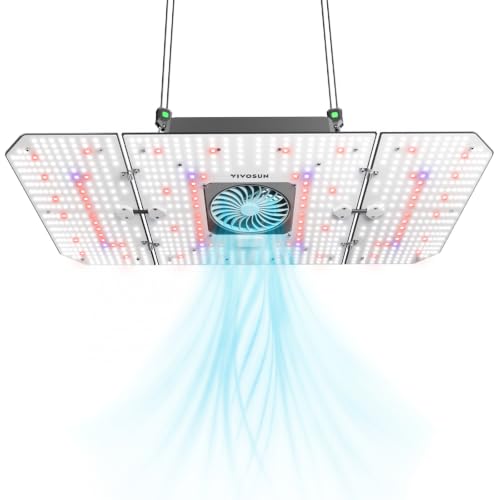
What catches my eye on the VIVOSUN AeroLight 240W is the integrated fan, which pulls air through the center of the panel and pushes it down across the canopy. Stagnant pockets of humid air are a real headache in tents, so combining the LED panel with a circulation fan simplifies the setup and helps control CO₂ exchange right where plants need it.
The full-cycle tunable spectrum is geared toward everything from propagation to late flowering, so a single fixture can stay with the gardener from clone to harvest. That blend of lighting and airflow is rare at this wattage.
A Strong Showing
- Built-in fan improves air movement without adding a second plug-in device to the tent.
- Tunable spectrum covers propagation through late bloom on one fixture.
- 240W sits in a sweet spot for a 3×3 or 2×4 tent without overdriving.
Trade Offs
- The fan adds moving parts that owners commonly report as a point to monitor over years of use.
- Higher price per watt than passive panels because of the integrated fan.
Quick Facts
Made For
Tent growers who want lighting and airflow in one footprint, especially in 3×3 or 2×4 setups where every inch counts.
Skip It When
Anyone running a larger 4×4 flowering room should consider the LumaLight 320W for its broader light-bar coverage.
The VIIVUU clip-on is small enough to disappear on a shelf edge, which is exactly why I keep one on my desk for a stubborn pothos. The clamp grips tightly on a pot rim, shelf, or table edge, and a soil-insertion stake option gives flexibility for taller stems without a stand.
The hollow ring lamp head keeps the weight low, so the clamp stays put on thinner shelves without sagging. It is a tiny piece of kit aimed at the single-plant crowd rather than a whole shelf of seedlings.
Where It Excels
- Compact clamp slips onto almost any shelf, pot rim, or small table.
- Soil stake included for direct planting, no extra hardware required.
- Light ring design spreads output across a small cluster of leaves.
Honest Caveats
- Single fixture covers one plant, so larger collections need multiple units.
- Plastic clamp hardware may loosen over years of repositioning.
Best Suited To
Anyone tending a single windowsill herb pot or a low-light desk plant will find this clip-on easier than rewiring a full panel setup.
Look Elsewhere When
Growers starting trays of seedlings should pick up the VIVOSUN LumaLight 100W for broader coverage per square inch.
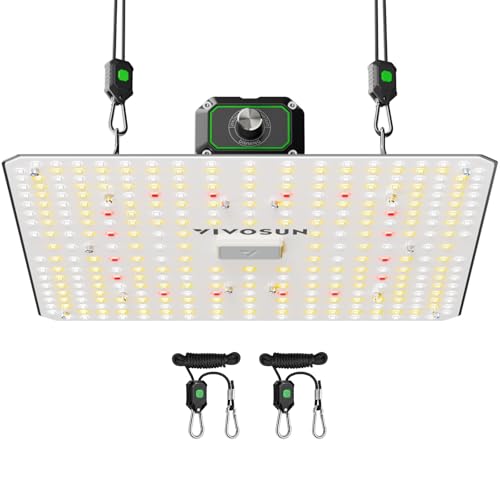
The VIVOSUN LumaLight 100W is the kind of panel I think of as a starter tent workhorse, small enough for a 2×2 closet but honest enough to push leafy greens and early flowers. Its diode blend (3000K, 5000K, 660nm, and 730nm) covers the warm and cool tones plants use at different stages, with the far-red 730nm helping trigger flowering responses in long-day crops.
The strategic diode layout aims for a uniform PPFD map, which is the measurement of useful light reaching each square foot of the canopy. Even coverage means no more leggy stretch toward one corner of the tent.
Where It Helps
- Compact 100W panel fits a 2×2 tent or closet build without crowding.
- Full-spectrum blend supports photosynthesis from seedling through early flower.
- Lower wattage keeps heat and energy use manageable in small spaces.
Points To Note
- Not enough output for full-flower light-hungry crops in a 3×3 or larger.
- Requires hanging hardware, sold separately in most cases.
Feature Card
Who Will Love This
Beginners building their first small tent for herbs, leafy greens, or early-stage veg will find the 100W approachable and easy to manage.
Another Choice May Suit
Growers pushing heavy flowering plants in a 4×4 space will want the heavier canopy penetration of the HLG 600 Rspec FR.
The VIVOSUN LumaLight 320W trades the 100W’s compact board for a multi-bar layout, and that change matters in flowering tents. The light bars spread the diodes across the canopy rather than concentrating them in one square, so plants at the edges get the same intensity as those in the middle. Reported uniformity sits around 0.89, which is the ratio between the dimmest and brightest spots; closer to 1.0 means fewer hot spots and slower stretching.
The Micro-Lens Optic System on each bar uses curved, wave-shaped lenses to redirect and concentrate light downward, reaching deeper into the canopy than a bare diode can. For dense flowers that need light hitting lower buds, that geometry is the whole point of the upgrade.
What Helps Most
- Light-bar matrix drives uniform coverage across the full tent footprint.
- Micro-lens optics push usable light deeper into the canopy for dense flower development.
- 320W hits a useful middle ground between starter panels and 600W prosumer boards.
Less Ideal Details
- Bar design takes more careful hanging setup than a single-board panel.
- Not the right call for a single herb pot on a kitchen counter.
Whose Shelf It Belongs On
Mid-stage growers running 4×4 or 5×5 tents with heavy flowering crops benefit from the better edge-to-edge uniformity.
Reach For A Different Pick When
Decorative setups in living rooms will suit the Aspect Soltech Gen 2 far better, since looks matter more than raw power there.
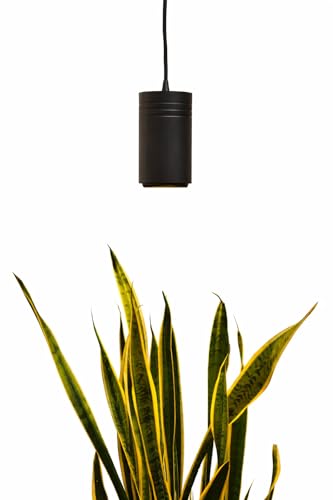
The Aspect Soltech Gen 2 is the pendant hanging over my reading chair, because it actually looks like a real light fixture rather than a piece of grow gear. Its warm white output is gentle on the eyes, and the dimming control slides smoothly, which is a far cry from the harsh purple glow of older LED grow lights.
Soltech rates this gen at 110% more plant-usable light than the original Small Aspect, so the upgrade is real, not just cosmetic. Compared with the GLOWRIUM I covered first, this one targets plant parents who care about the room as much as the leaves.
The Case For It
- Pendant design doubles as a real room fixture in living areas and bedrooms.
- Warm white spectrum is easy to live with day-to-day.
- Dimmable output lets you tune the room mood and the plant dose together.
Things To Weigh Up
- Coverage targets a single plant or a small cluster, so dense seedling trays are out of reach.
- Higher price per watt of usable plant light than utilitarian panels.
- Hardwired pendant installation may need an electrician depending on your ceiling box.
Spec Overview
Perfect Match For
Plant parents who want serious light output without a tent, and who care about how a fixture looks above a fiddle leaf or a monstera.
Swap It Out When
Vegetable growers building a tent should pick up the VIVOSUN LumaLight 320W, which treats output per square foot as the priority.
What Matters Most Before Choosing Led Grow Lights
Matching the light to the room is the single biggest decision, because the wrong fixture in a dark corner never catches up with dimmer diodes. Match the footprint first: a clip-on suits a single pothos, while a 4×4 tent demands a quantum board or bar-style panel that can reach every plant at once.
Spectrum matters more than most first-timers expect. Full-spectrum LEDs blend warm white, cool white, and targeted reds, which gives plants a balanced diet through every stage. Far-red diodes (around 730nm) help trigger flowering signals, and a high blue content keeps seedlings stocky rather than leggy. Look for panels that name their diode recipes; vague “full spectrum” labels with no detail rarely deliver.
Wattage tells you the energy budget, but it is the PPF or PPFD map that reveals actual plant-usable output. Two 200W panels can perform very differently if one wastes watts as heat. Dimmable drivers are worth the small premium, because seedlings need less intensity than flowering plants, and a single fixture can serve both with a twist of the dial.
Finally, think honestly about airflow. Tents trap heat, and panels without a fan or with no dedicated inline fan will cook a canopy fast. Integrated fans like the one on the AeroLight cut down on extra equipment, but a separate inline fan remains the most flexible path for bigger tents.
Key Considerations Across These Picks
Where Shoppers Go Wrong
Buying the brightest panel you can afford and cramming it into a 2×2 closet. Excess light without enough space turns into scorched leaves and high heat, and a 100W panel often outperforms a 600W board in that footprint. Measure your space, then buy the wattage that matches it.
When Paying More Pays Off
Premium panels earn their keep through better diodes, stronger heat sinks, and certified drivers that survive years of daily cycles. If a tent runs 12 hours a day for half the year, the extra up front usually comes back as longer diode life and steadier output.
Frequently Asked Questions
How Many Led Grow Lights Do I Need For One Plant?
A single small houseplant under a clip-on or pendant is enough, but fruiting or flowering plants want at least 30 to 40 watts per square foot of canopy. Match the wattage to the footprint you actually have.
How Far Should Led Grow Lights Hang Above Plants?
Seedlings want 24 to 30 inches of clearance, while established leafy plants can sit 12 to 18 inches under the panel. Flowering crops usually need the lamp lowered to 8 to 12 inches to push dense buds, though watch leaves for bleaching.
Can Led Grow Lights Replace Sunlight Entirely?
For most leafy greens, herbs, and houseplants, yes, as long as the spectrum and intensity match the stage. Full sun crops like tomatoes and peppers still benefit from a sunny window or supplemental daylight when possible.
Do Led Grow Lights Use A Lot Of Electricity?
A 100W panel running 16 hours a day adds roughly the same draw as a couple of bright lamps. Higher-watt boards consume more, but LEDs still beat older HID lamps on the same coverage.
How Long Should I Leave Led Grow Lights On Each Day?
Seedlings thrive on 16 to 18 hours, vegetative growth on 18 hours, and flowering plants on a strict 12-hour cycle. A simple outlet timer keeps that on-off rhythm consistent without daily attention.
Closing Thoughts
The right fixture is the one that fits the room and the plants you actually keep. Start with the smallest setup that handles your real needs, and grow into bigger panels only when the plants demand it.