

Anyone who’s tried keeping basil alive through a long, dim winter knows the frustration. Herbs stretch toward the window, grow leggy, and lose flavor fast. The right indoor lighting fixes that, and I’ve put together seven solid options across different setups, from clip-on desk lamps to full-room grow racks.
The Choices Worth Comparing

GLOWRIUM 48W Full Spectrum LED Plant Light with Stand
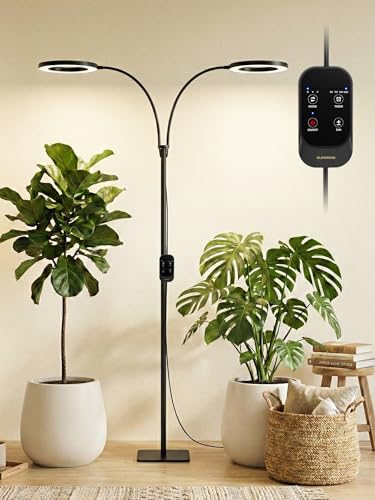
GLOWRIUM Tall Plant Grow Light Full Spectrum

HLG 600 Rspec FR 600W Quantum Board Grow Light

GLOWRIUM Puck Grow Light G7 Full Spectrum

Barrina Orbgrow OG11A2 Clip On Grow Light 5000K

Barrina OG11A2 Clip On Grow Light 4000K

Barrina OG11A2 Clip On Grow Light 4000K Black
More On The Choices That Made The List
For most people starting a small indoor herb garden, the GLOWRIUM 48W full spectrum model hits the sweet spot between capability and simplicity. It comes on a tall floor stand that adjusts in height, so basil on the bottom shelf and cilantro on a higher tier both get sensible coverage.
The full spectrum output (light spanning the wavelengths plants actually use for photosynthesis) supports leafy herbs from seedling through harvest, which means you don’t need to swap bulbs as your garden matures. Compared to the compact Barrina clip-ons later in this list, this GLOWRIUM frees you from finding a shelf edge to clamp onto.
What Works In Its Favor
- Adjustable stand height lets the light follow plants as they grow
- Full spectrum output supports herbs through every growth stage
- Freestanding design works in living rooms, kitchens, or corners
- Single unit covers a modest herb collection without extra hardware
- Quieter than clip-on alternatives that hum from cheap drivers
Things To Consider
- The pole and base take up a small footprint on the floor
- Less ideal for tight shelving where a clip-on would fit better
Feature Snapshot
Who It Suits Best
Beginners and intermediate growers tending a few pots of basil, parsley, or mint on the floor of a kitchen or dining nook.
Consider Something Else When
The Barrina Orbgrow OG11A2 is a better match for anyone whose herbs live on a narrow shelf and would rather clip a light to the edge.
The taller GLOWRIUM sibling steps up with a dual-head configuration, which matters when your herb collection has spread to six or eight pots and one lamp head can’t quite reach them all evenly. Two adjustable heads let you angle light to one side of the stand while keeping the other pot from getting burned by direct proximity.
At 70-plus inches of height, the pole clears most herb canopies, including taller dill or flowering oregano. Compared to the single-head 48W model reviewed above, this one trades a slimmer footprint for more even coverage across a wider grouping of pots.
Strengths Worth Knowing
- Dual lamp heads spread light across multiple pots
- Dedicated modes for seedlings, vegetative growth, and flowering
- Full spectrum coverage supports herbs at every stage
- Tall pole accommodates mature, bushy plants
- Angled heads reduce hot spots over single plants
Worth Noting
- The dual-head design costs more than the simpler 48W option
- Wider base footprint may not suit narrow hallways or galley kitchens
Made For
Home gardeners who want to light a row of herbs in a sunroom, dining corner, or open kitchen without committing to a tent setup.
A Better Fit Elsewhere
The HLG 600 Rspec is the more logical upgrade for hobbyists ready to run a dedicated 4×4 grow space for serious yield.
The HLG 600 Rspec is the heavyweight on this list, and I include it because some herb growers eventually want to push beyond kitchen-counter scale. A quantum board (a flat panel of densely packed LEDs spread across a wide surface) distributes light more evenly than older bar-style fixtures, and the 600-watt output is sized for a 4×4 foot grow tent.
This is overkill for a windowsill basil pot. Where it earns its keep is in a closet, basement corner, or garage where someone is running multiple herb varieties through every stage of growth. The dimmable driver lets you dial intensity down for seedlings and crank it up for leafy greens that want maximum photosynthesis.
A Few Strong Suits
- Quantum board layout spreads light evenly across a wide canopy
- Dimmable output adjusts for seedlings versus mature herbs
- Full spectrum designed for serious indoor cultivation
- Build quality holds up under daily long-hour cycles
Trade Offs
- Far more output than a casual herb gardener needs
- Requires a proper tent or enclosed space to focus the light
- Higher power draw means a heavier electric bill over time
- Mounting hardware typically sold separately
Feature Snapshot
Right Fit For
Experienced growers running a dedicated herb or greens operation inside a tent, closet, or basement setup.
Look Elsewhere When
The GLOWRIUM 48W is the smarter buy for anyone growing herbs in plain living space without a tent.
Sometimes the right herb light is the smallest one. The GLOWRIUM Puck G7 sits low-profile over a single pot, which is exactly what someone tending one stubborn basil on a kitchen counter needs. The puck form factor (round, flat, low to the soil) keeps things tidy compared to a clip-on arm that swings around.
What separates this from cheaper puck lights is the Bluetooth app and inline controller. You can set timers and dim brightness from your phone, which beats crawling under the shelf to tap a button. Compared to the GLOWRIUM 48W stand model above, this one trades coverage for footprint, perfect when one or two pots are the whole garden.
The Good Stuff
- Tiny footprint fits on a counter or narrow shelf
- Bluetooth app control removes daily manual adjustments
- Full spectrum output supports single-pot herbs well
- Inline controller offers a backup when the phone is not handy
Honest Caveats
- Covers only one or two pots at a time
- App-dependent scheduling can frustrate anyone who prefers physical timers
- Lower total output than the taller GLOWRIUM stand models
Best Suited To
Cooks keeping a single herb pot alive through winter in a small apartment or studio kitchen.
Swap It Out When
The GLOWRIUM Tall Plant Grow Light is a better fit for growers with three or more pots who want one fixture to cover them all.
The Barrina Orbgrow OG11A2 in the 5000K version is the daylight-leaning option of the three Barrina clip-ons on this list, and that’s the version to grab if your herbs want a crisper, more sunshine-like glow. Color temperature at 5000K (a measurement of how warm or cool the light appears, with higher numbers being cooler and bluer) mimics midday sun, which most culinary herbs respond to reliably.
Clip-on mounting means zero floor space, which is the whole point. You clamp it to a shelf edge, point it down at the pot, and forget about it. The stepless dimming and three timer settings handle most daily routines without much fuss. Compared to the puck-style GLOWRIUM above, this Barrina reaches a bit further and tilts more freely.
Useful Touches
- Clip-on clamp frees up counter and floor space entirely
- Stepless dimming lets you fine-tune intensity for delicate seedlings
- Three timer settings cover typical 4, 8, or 12-hour light cycles
- 5000K daylight tone reads natural to the eye
Points To Keep In Mind
- Clip mounting requires a shelf edge thick enough to grip
- Single bulb means limited coverage for herb groupings beyond two pots
Perfect Match For
Home cooks with a couple of herb pots on a kitchen shelf or windowsill who want daylight-toned light without floor clutter.
Another Choice May Suit
The Barrina OG11A2 in the 4000K version suits growers who prefer a warmer, softer tone over their herbs.
This 4000K variant of the OG11A2 leans warmer, which matters more than people expect. In a kitchen where you actually see the light at dinner prep time, a 4000K tone reads less harsh than the cooler 5000K version. For herbs, the slightly warmer output still delivers useful blue and red wavelengths for healthy leaf growth.
What I appreciate here is the dual-bulb arrangement at 22W combined. That extra wattage compared to a single-bulb clip-on lets you cover a small grouping of three pots rather than constantly rotating which one gets the light. Compared to the 5000K version above, the difference comes down to tone and the bundled dual-bulb setup.
Positive Takeaways
- Warmer 4000K tone suits kitchens and dining areas better than cooler daylight
- 22W total output covers a small cluster of herb pots
- Stepless dimming and three timer settings built into the bulb
- Clip-on design leaves counters completely clear
Minor Gripes
- Dual bulbs mean two clamp points, which may not suit every shelf
- Each bulb is configured independently, adding a small learning curve
Feature Snapshot
Whose Shelf It Belongs On
Home cooks with two to three herb pots clustered on a kitchen shelf who want warm, easy-on-the-eye light.
Where Another Pick Suits Better
The Barrina OG11A2 in Black suits anyone who wants the same clip-on function but with a sleeker finish.
The black-finish variant of the OG11A2 keeps the same warm 4000K output and 22W rating as the previous pick, but the matte black housing changes how it looks sitting on an open shelf. For design-conscious kitchens where the light itself is part of the room, that finish matters.
The honest read is that the lighting performance matches the standard 4000K model. What you pay extra for is the look. Compared to the GLOWRIUM Puck above, this Barrina still gives you a clamp-and-forget setup with no floor footprint, just with a different aesthetic on the shelf.
Why It Works Well
- Matte black finish blends with modern kitchen fixtures
- Same warm 4000K tone and 22W output as the standard version
- Clip-on mounting keeps the look clean and uncluttered
- Stepless dimming and built-in timers carry over from the line
Practical Considerations
- Premium finish adds cost without boosting light performance
- Shows fingerprints and dust more visibly than lighter finishes
Who Should Grab It
Apartment dwellers with curated kitchens who want functional grow lighting that doesn’t disrupt the room’s aesthetic.
Not Your Match When
The HLG 600 Rspec is the right swap for anyone whose priority is maximum output rather than shelf-friendly design.
Choosing Led Grow Lights For Herbs Without Overthinking It
The first thing to sort out is where the herbs actually live. Countertop pots on a kitchen shelf do well with clip-on lights like the Barrina OG11A2 line, because no floor space is consumed and the clamp keeps the fixture tidy. Floor-standing setups like the GLOWRIUM 48W make more sense when herbs sit on low tables or directly on the floor, since the tall pole keeps light above mature foliage.
Spectrum matters next. Full spectrum LEDs (bulbs that emit the full range of light wavelengths plants use, rather than just red or blue) cover everything leafy herbs need from seedling to harvest, and they save you from swapping bulbs as plants mature. Herbs like basil, parsley, and mint respond reliably to either daylight-leaning 5000K or warmer 4000K tones, so the choice often comes down to how the light looks in your living space rather than plant performance.
Coverage area is the practical anchor. A single small pot works fine under a puck light, but two or more pots usually need either a wider bar or a dual-head fixture. For dedicated growers running tents or closets, quantum board panels provide the even light spread that prevents hot spots.
Key Considerations Across These Picks
Pitfalls Shoppers Hit
The most common mistake I see is buying a light that’s too weak for the number of pots someone actually has. A single 22W clip-on can keep one basil alive, but trying to cover five pots with the same light usually leaves outer plants stretched and pale. Match the fixture’s coverage to your real herb count, not the number you hope to grow someday.
Another trap is ignoring color temperature until the light is already installed. A 5000K light in a cozy living room can feel clinical at night. Pick the tone that suits the room first, then confirm the spectrum still supports herbs.
Where The Extra Money Goes
Stepping up to premium grow lights usually means better LED drivers, more even thermal management, and wider spectral tuning. For casual herb growers, those gains rarely justify the jump. For hobbyists running multi-tier racks or tents, premium build quality pays back through longer diode life and quieter operation over thousands of hours of use.
Frequently Asked Questions
How many hours per day should herbs sit under a grow light?
Most culinary herbs do well with 12 to 16 hours of light daily, and a timer setting on the fixture handles that without any thought on your part.
Can a regular LED bulb work instead of a dedicated grow light?
A regular LED provides visible light but usually lacks the red and blue wavelengths that drive compact leaf growth, so herbs tend to stretch and weaken under one over time.
Do herbs need both red and blue light specifically?
Red wavelengths support flowering and stem growth while blue wavelengths drive leaf density, and full spectrum LEDs combine both in proper balance for edible herbs.
How close should the light sit to the herb leaves?
A few inches above the canopy works for most clip-on and puck setups, while higher-wattage panels should sit further away to prevent leaf burn on tender herbs.
Is dimming actually useful for herbs, or a gimmick?
Dimming helps during the seedling stage when young plants scorch easily, and it gives you a way to ease plants into stronger light as they mature.
Wrap Up
The right light depends on where your herbs live and how many pots you tend. Clip-ons handle shelves, floor stands handle collections, and quantum boards handle serious indoor gardens. Match the fixture to your real space and your herbs will reward you with steady harvests through every season.