

I remember the first time I stubbed my toe on a hallway door frame at 2 a.m. while carrying a sleepy child, and that small bruise is exactly why I started caring about plug-in night lights. The right motion sensor unit takes the stress out of nightly bathroom runs, midnight kitchen visits, and creeping down dark stairs to let a dog out. I’ve put together this roundup to help you find the right balance of brightness, sensor range, and dimming control for the way your home actually runs after dark.
Your Options, Compared

Lyridz LED Plug-in Night Light with 360° Motion Sensor, 1-150 Lumens, 2 Pack

Lyridz 120 Lumens Ultra Bright Motion Sensor Night Light, 6-Pack
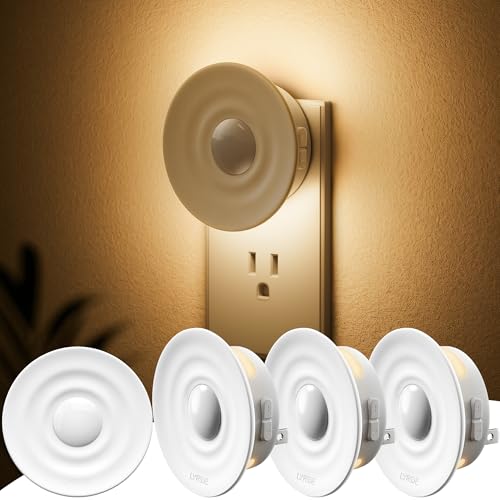
Plug-in LED Backlit Night Light with Motion & Dusk-to-Dawn Sensor, 4-Pack

Lyridz Plug-in LED Backlit Night Light, Dusk-to-Dawn, 1-50 LM, 4 Pack

Lyridz LED Night Light with Motion Sensor, 1-150 LM Dimmable, 2 Pack

Lyridz Plug-in LED Rotatable Night Light with Motion Sensor, 1-150 LM, 2 Pack
The Details Behind The Selections
The Lyridz 360° motion sensor night light feels like a sensible starting point for anyone outfitting a hallway or bedroom for the first time. The 360-degree sensing field is generous, which means I don’t have to angle the plug just right to catch someone walking out of a bathroom.
Brightness spans a 1 to 150 lumen range, so I can drop it to a barely-there glow for a nursery or push it brighter for an open stair landing. A short tap moves through five preset levels, and a long press lets me fine-tune somewhere between them.
Where It Delivers
- 360° PIR sensor covers side and front approaches without fiddly aiming.
- 1 to 150 lumen range handles both ambient hallways and reading-area brightness.
- Short-press for five quick steps, long-press for smooth stepless dimming.
- Two-pack covers a hallway or a bedroom-and-bathroom combo from a single order.
Things To Consider
- Wide sensing can mean it triggers from adjacent rooms in open floor plans.
- The compact face doesn’t rotate, so direct glare may be noticeable at eye level.
Who It Suits Best
Hallway runners, parents, and pet owners who want one plug-in that catches motion no matter which direction someone approaches from.
Where Another Pick Suits Better
Households worried about harsh direct beams should look at the Plug-in LED Backlit Night Light with Motion & Dusk-to-Dawn Sensor, 4-Pack instead.
Outfitting a whole home on a single order is where the 6-pack earns its keep. Six units make it realistic to cover every problem doorway, from a dark basement stair to the back hallway leading to a pet door, without splitting it into multiple purchases.
Compared to the previous 360° pick, this one leans on a more directional sensor approach and tops out near 120 lumens, which is plenty for most adult eyes in fully dark rooms. AUTO mode shuts the unit off roughly 90 seconds after motion stops, which keeps idle power use minimal.
What Stands Out
- Six units in one pack means coverage for an entire small home.
- Hold-to-dim control panel lets you tune brightness smoothly to your room.
- Auto shutoff around 90 seconds after motion ends keeps wasted power low.
- Always-on mode is available when you want it to behave like a regular night light.
Honest Caveats
- The 120 lumen ceiling is dimmer than the 150 lumen range in some sibling units.
- Without a backlit diffuser, the front face can read as harsh at close distance.
Key Specs
Right Fit For
First-time night light shoppers and families outfitting multiple rooms in one go.
A Better Fit Elsewhere
The Lyridz Plug-in LED Rotatable Night Light with Motion Sensor, 1-150 LM, 2 Pack is the stronger choice for tight corners where glare direction matters.
Where the previous two picks rely on a more direct glow, this 4-pack takes a softer route. Light bounces off the wall behind the unit rather than firing straight out, which keeps sleepy eyes from squinting during a 3 a.m. bathroom run.
The 150° PIR detector covers most doorways and hallway approaches, and the dusk-to-dawn sensor keeps the unit asleep during daylight hours. For households with light-sensitive kids or older family members, that gentler approach can be the difference between restful and restless nights.
What Works In Its Favor
- Indirect wall bounce avoids the harsh direct beam older kids often complain about.
- 150° detection angle covers a wide doorway or short hallway stretch.
- Dusk-to-dawn logic keeps the unit dormant in bright rooms, saving energy.
- Frosted diffuser spreads the glow evenly instead of pooling it in one spot.
Points To Note
- Wall-bounce design needs a clear patch of wall to reflect off, which limits placement.
- Brightness tuning is more limited than the 1 to 150 lumen stepless siblings offer.
Built With In Mind
Nursery walls, kids’ bedrooms, and homes where one harsh beam at the wrong moment sets off a full wake-up.
Look Elsewhere When
The Lyridz 120 Lumens Ultra Bright Motion Sensor Night Light, 6-Pack makes more sense for large basements where maximum coverage matters more than soft glow.
This is the dimmest pick in the roundup, and that is its main selling point. Capped at 50 lumens, it produces a soft warm-white wash that won’t shock a half-asleep dog or older cat navigating a hallway at night.
The same backlit concept from item 3 carries over here, bouncing light off the wall behind the plug. Owners commonly report the warm tone plays nicely in bedrooms where cool blue light tends to read as too clinical. For households where pets pace after dark, the gentle glow is a meaningful upgrade.
Standout Benefits
- Warm white tone reads as cozy rather than clinical in bedrooms.
- Capped 50 lumen output is comfortable for light-sensitive sleepers.
- Auto dusk-to-dawn logic means no manual on-off cycling.
- Four-pack covers a few rooms without ordering multiple sets.
Worth Bearing In Mind
- 50 lumen ceiling is too soft for large open areas like basements or kitchens.
- Wall-bounce design needs a few inches of clear wall behind the outlet.
- Dusk-to-dawn only, there’s no motion trigger for rooms that stay dark all day.
Feature Snapshot
Whose Shelf It Belongs On
Light-sensitive sleepers, pet households, and bedrooms where a soft always-on glow matters more than bright task light.
Swap It Out When
Anyone needing brighter output for a stairway should consider the Lyridz LED Night Light with Motion Sensor, 1-150 LM Dimmable, 2 Pack instead.
The headline feature on this 2-pack is the choice between two AUTO timeouts. A 60-second shutoff suits a quick bathroom visit, while a 120-second timeout is friendlier when someone is moving slowly through a longer hallway with a child in their arms.
Compared to the 360° pick earlier in the list, this unit uses a more standard forward-facing PIR sensor and stays under 10 lux activation threshold, meaning it ignores motion when the room already has any meaningful daylight. Brightness scales from 1 to 150 lumens with a similar short and long-press control scheme.
The Good Stuff
- Two AUTO timeout settings (60s and 120s) match different traffic patterns.
- Under-10-lux threshold keeps it dormant in any room with daylight.
- 1 to 150 lumen dimming handles both ambient and task-style needs.
- OFF mode gives full manual control when the sensor isn’t wanted.
Small Caveats
- Forward-facing sensor misses approaches outside its narrow arc.
- Two-pack size means covering a whole home requires multiple orders.
Best Suited To
Variable-traffic rooms like hallways where different family members move at different speeds throughout the night.
Reach For A Different Pick When
Anyone prioritizing glare control at eye level should pick the Lyridz Plug-in LED Rotatable Night Light with Motion Sensor, 1-150 LM, 2 Pack.
The aimable head is what separates this last entry from the rest of the field. A 300° horizontal rotation lets me push the bright face toward a dark stair tread when I need task visibility, then flip it toward the wall when I want a softer bounce for a midnight snack run.
Under the hood, a 16-foot detection range covers most residential approaches, and brightness still spans the same 1 to 150 lumen range that defines this generation. For homes with awkward outlet placements, the rotatable design takes the headache out of “where exactly does this face” decision.
Everyday Advantages
- 300° rotation lets you aim light away from eyes or toward task surfaces.
- 16-foot detection covers typical hallway approaches without false misses.
- 1 to 150 lumen range matches the most versatile picks in this roundup.
- Backlit mode softens output for sleepy households when needed.
Practical Considerations
- Rotating head introduces a moving mechanism that owners commonly report as slightly looser over years of use.
- Two-pack coverage still leaves larger homes needing multiple orders.
Quick Facts
Who Should Grab It
Anyone with awkward outlet placements, open stair landings, or bedrooms where the outlet sits at eye level.
Not Your Match When
Shoppers who want set-and-forget simplicity will find the Lyridz Plug-in LED Backlit Night Light, Dusk-to-Dawn, 1-50 LM, 4 Pack easier to live with.
What To Weigh Before Picking Indoor Motion Sensor Night Lights
Sensor range and angle are the first things to settle. A 360° PIR sensor catches motion from any direction, which works well in open hallways, while a forward-facing sensor suits a defined doorway where traffic flows predictably. PIR stands for passive infrared, meaning the unit detects body heat moving through its field of view rather than watching for visible movement.
Brightness range matters more than most shoppers expect. A 1 to 150 lumen spread covers both a barely-there nursery glow and a brighter stair landing, so picking a unit with a wide range protects you from needing a different light for each room. Stepless dimming, where brightness slides smoothly between high and low, is friendlier than fixed steps for light-sensitive sleepers.
Power behavior deserves a second look. Auto shutoff timers between 60 and 120 seconds match most nightly routines without wasting electricity. Dusk-to-dawn logic, which uses a small light sensor to tell the unit when ambient daylight is present, keeps the plug-in dormant in well-lit rooms, and an OFF mode gives full manual control during travel or guest visits.
Form factor finishes the decision. Indirect wall-bounce designs avoid eye glare but need a clear patch of wall to reflect off. Rotating heads trade simplicity for placement flexibility, and fixed-face units are the easiest to forget about once installed.
Key Considerations Across These Picks
Pitfalls Shoppers Hit
The most common mistake is choosing a unit without checking outlet orientation. A plug-in that points its bright face straight across a hallway will read as harsh when someone walks past, while the same unit flipped 180° becomes invisible. Always check whether the bright face points toward your typical traffic flow.
Another slip is ignoring the dusk-to-dawn threshold. Units that activate at very low lux levels can flicker on during overcast days or in shaded rooms. Looking for an under-10-lux activation threshold helps the unit stay dormant when ambient daylight is present.
What The Higher Tier Buys
The jump from a basic plug-in to a more capable unit usually buys three things: a wider brightness range, smoother dimming, and a smarter sensor that ignores motion in already-lit rooms. For most households, those upgrades show up as fewer midnight wake-ups and lower long-term power draw.
The case for spending up is strongest in homes with mixed traffic. A household with a toddler, a senior, and a cat will benefit more from a 1 to 150 lumen stepless dimmer than a household of two adults who only need a single brightness preset. Pay more when the unit needs to serve varied needs throughout the night.
Frequently Asked Questions
Do motion sensor night lights use a lot of electricity?
These plug-in LED units draw very little power when idle, and most shut off automatically between 60 and 120 seconds after motion stops, which keeps wasted energy low. LED efficiency means even an always-on setting costs less than an old incandescent bulb.
Can I use these lights in a bathroom or near water?
Plug-in night lights are designed for indoor dry locations like hallways, bedrooms, and bathrooms away from tubs or showers. Keep the unit a few feet away from any water source and avoid outlets directly above a sink for safety.
How far away does the motion sensor detect movement?
Detection range across this roundup runs roughly 16 to 23 feet, depending on the model. Wider angles like 360° catch motion from any direction, while forward-facing sensors work best when traffic approaches from straight ahead.
Will a night light disturb a light sleeper?
Backlit and warm-white models with a capped lumen output are designed for light-sensitive sleepers. Dimming to 1 lumen and using a wall-bounce design keeps the glow off direct eye lines and helps most people sleep through the night.
Are plug-in night lights safe to leave on every night?
Modern LED plug-in units run cool and are designed for continuous use, which is exactly how most shoppers use them. As with any plugged-in device, replace any unit that shows damage, discoloration, or a loose fit in the outlet.
Wrap Up
The right indoor motion sensor night light depends less on a single spec and more on the rooms you’re trying to help. A 360° sensor suits open hallways, a backlit design comforts light-sensitive sleepers, and a rotating head solves awkward outlet placements. Pick the room that’s been bothering you the most, match it to the design that fits, and start there.