

Setting up a thriving indoor garden shouldn’t feel like guesswork. I’ve pulled together seven solid picks that cover everything from a tiny herb corner to a serious flowering setup, so you can match the right light to your space, plants, and patience level. Whether you’re nursing seedlings through winter or keeping a monstera happy in a dim apartment, there’s something here that fits the way you actually grow.
The Main Contenders

GLOWRIUM 48W Full Spectrum LED Grow Light with Stand

HLG 600 Rspec FR 600W LED Quantum Board Grow Light

DOMMIA Under Shelf Grow Light Daylight White

DOMMIA Under Shelf Grow Light Pinkish White

DOMMIA Under Shelf Grow Light Full Spectrum

VIIVUU Clip-On Plant Grow Light White
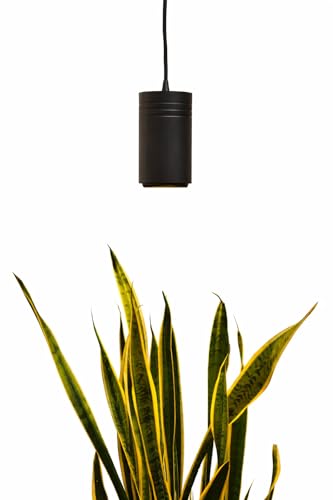
Soltech Aspect Gen 2 Black LED Pendant Grow Light
The Details Behind The Selections
The GLOWRIUM 48W lands in a sweet spot most casual growers actually need. It ships with a four-section pole that telescopes up to roughly 79 inches, so it slides behind a tall fiddle leaf fig just as easily as it tucks next to a row of seedlings. I like that the lamp head itself feels oversized for the category, which spreads light more evenly across a wider canopy instead of concentrating it in one hot spot.
Where this differs from the under-shelf DOMMIA units coming up later is mobility and reach. You set it on the floor, angle the head, and walk away. It suits a living room corner where shelving isn’t available, or a rental where drilling into walls feels like a bad idea.
Everyday Advantages
- Full-spectrum output supports seedlings through flowering without swapping bulbs.
- Stepless dimming lets you tune brightness from a soft fill light to a strong vegetative boost.
- Telescoping pole reaches roughly 79 inches, covering tall floor plants and short trays alike.
- Stand-mounted design means no shelf, no clamp, and no permanent install.
- Three lighting modes give flexibility as plants move through growth stages.
Things To Consider
- The floor stand takes up floor space that small apartments may not have to spare.
- At 48W, it covers a single plant or a small cluster rather than a full garden bench.
Who It Suits Best
Renters and casual plant parents who want one light they can move between rooms without drilling or rewiring.
Consider Something Else When
Tight shelving calls for the DOMMIA Under Shelf Grow Light Daylight White, which mounts directly under a cabinet and disappears.
The HLG 600 Rspec FR is a different animal from anything else on this list. Quantum boards spread diodes across a wide panel, which throws a more even blanket of light than the tighter spotlight-style fixtures. This one runs at 600W on a 120V circuit and is built for serious canopy penetration, so it shines in a flowering room rather than a windowsill herb garden.
Compare that to the GLOWRIUM I just covered, which is portable and casual. The HLG wants a permanent spot in a grow tent, ideally a 4×4 layout, and it rewards growers who care about PPFD (photosynthetic photon flux density, the measurable light intensity that plants actually use for photosynthesis) numbers and dimming curves.
Strengths Worth Knowing
- High-output quantum board design delivers even canopy coverage without hot spots.
- Dimmable driver lets growers dial intensity through every growth stage.
- Wide panel footprint suits a standard 4×4 grow tent.
- Strong penetration supports dense flowering canopies.
Honest Caveats
- 600W draw means a dedicated circuit and meaningful heat output in a small tent.
- No stand, no timer, no mounting hardware included, so setup costs extra time and parts.
- Overkill for a casual houseplant setup.
Made For
Experienced growers running a flowering tent who care about measurable intensity and even coverage across the canopy.
Look Elsewhere When
A living room with a single tall plant fits the GLOWRIUM 48W better than this heavy-duty quantum board.
DOMMIA’s under-shelf panel is built for people who don’t want their grow light to look like one. The panel is just 0.28 inches thick and roughly 4 by 4 inches, so it slides under a cabinet, a bookshelf, or a floating shelf without protruding or shouting for attention. The daylight white tone reads as a regular task light rather than a purple blur.
Where this differs from the larger GLOWRIUM stand is integration. Instead of a free-standing fixture in the room, the DOMMIA essentially becomes part of the shelf. For renters who can’t drill, the included hardware usually sticks or clamps to standard shelf bottoms.
Well-Handled Touches
- Built-in auto timer with 6, 12, and 16-hour cycles removes the need for a separate outlet timer.
- Four-level dimmer (25 to 100%) covers propagation through vegetative growth.
- Power-loss memory resumes the last setting after an outage.
- USB-powered controller simplifies cable management.
Trade Offs
- Small panel footprint covers a limited footprint, so larger collections need multiple units.
- Under-shelf mounting limits how far the light can sit from the canopy.
Feature Snapshot
Best Suited To
Apartment growers running a countertop herb shelf or a propagation station who want the light to vanish into the furniture.
A Better Fit Elsewhere
Anyone wanting a decorative pendant glow in a living space should look at the Soltech Aspect Gen 2 instead.
The pinkish-white DOMMIA is the sibling most people pick for shared living spaces. The same slim 0.28-inch panel hides under a shelf, but the warmer, slightly pink output looks more like accent lighting than the harsher purple-pink you’d expect from older blurple LEDs. In a bedroom or open studio, that visual difference matters more than the spec sheet suggests.
Same controller as the daylight version above, including the 6/12/16-hour timer, the four brightness steps, and the power-loss memory. So the choice here is really about the look of the light in your room, not the feature set.
What Makes Sense
- Pinkish-white output reads as warm accent lighting rather than grow-room purple.
- Same slim 0.28-inch panel fits tight under-shelf spots.
- Built-in timer and dimmer keep the controller simple.
- Power-loss memory avoids resetting after a brownout.
Points To Note
- Tinted output may render plant colors unusually, which some growers dislike for photography.
- Covers a small footprint, so larger shelves call for multiples.
Whose Shelf It Belongs On
Bedroom and living-room growers who want a light that disappears visually and still feeds their plants reliably.
Skip It When
You want the cleanest, most neutral plant color rendition, which is where the DOMMIA Daylight White panel pulls ahead.
The full-spectrum DOMMIA rounds out the trio, and it’s the one I’d pick for starting seeds or rooting cuttings. Full spectrum covers the wavelengths a plant uses from leafy vegetative push through early flowering, so you don’t have to swap lights as the season changes. The slim 4×4 panel still tucks under a shelf, but the broader spectral output gives seedlings a stronger start than the daylight or pinkish-white versions alone.
If you’re building a propagation shelf with multiple DOMMIA panels, mixing this full-spectrum version with one of the tinted siblings lets you tailor each row to the plants above it without juggling multiple brands.
Useful Touches
- Full-spectrum output covers vegetative through early flowering stages.
- Same compact 0.28-inch panel as the rest of the DOMMIA line.
- Built-in 6/12/16-hour timer keeps a consistent day length.
- Four brightness levels from 25% to full power.
- USB-powered controller simplifies placement near any outlet.
Softer Spots
- Single panel covers a small footprint, so larger seed starts need a row of them.
Quick Technical Notes
Right Fit For
Seed starters and cutting propagators who want one slim panel that handles the full early growth arc.
Reach For A Different Pick When
A single tall floor plant fits the GLOWRIUM 48W stand better than an under-shelf panel mounted at canopy height.
The VIIVUU clip-on is the simplest setup on this list. The clamp grips a pot rim, a desk edge, or a small shelf, and an included soil-stake option lets you anchor it directly into the pot. No shelf, no stand, no tent, just clamp and go. For a single pothos on a dorm room desk or a sickly succulent on a kitchen counter, that’s the entire job.
Compare that to the under-shelf DOMMIA panels above, which assume you have a cabinet or shelf to mount under. The VIIVUU works in places where nothing else on this list really fits, which is its quiet superpower.
What Pays Off
- Strong clamp grips pot rims, desks, and narrow shelves without slipping.
- Includes a soil-insertion stake for direct mounting into the planter.
- Compact head suits single-plant setups in tight spots.
- No shelf or tent required to operate.
Minor Gripes
- Single-plant coverage, so multi-pot setups need several units.
- Clamp footprint may not fit unusually thick surfaces.
Who Should Grab It
Beginners and small-space growers nursing a single plant on a desk, counter, or windowsill with no install fuss.
Another Choice May Suit
A whole propagation shelf calls for the DOMMIA full-spectrum panel, which spreads light across a wider tray.
The Soltech Aspect Gen 2 is the only pendant on this list, and it’s the one I’d hang in a room where guests actually see it. It looks like a designer ceiling fixture, runs a warm natural white instead of grow-room purple, and hangs from a cord like a regular hanging lamp. The light output is meaningfully stronger than the original Aspect, so it covers more than a token plant or two.
Compared to the under-shelf DOMMIA units, the Soltech isn’t trying to hide. It announces itself as a light fixture, which is the point. For an open-concept living room or a bedroom where the fixture itself is part of the design, that visibility is the feature, not a flaw.
Useful Strengths
- Pendant form factor doubles as visible decor in living spaces.
- Warm natural white output avoids the harsh purple of traditional grow lights.
- Higher output than the original Aspect covers a larger plant footprint.
- Dimmable for evening ambient use.
Practical Considerations
- Requires ceiling or hardwire installation in most homes, which may need an electrician.
- Pendant placement dictates plant position, so rearranging furniture is harder than swapping a clip-on.
Feature Card
Built With In Mind
Design-conscious plant owners with open living spaces who want their grow light to look like intentional lighting.
Swap It Out When
Renters without ceiling access should pick the GLOWRIUM 48W floor stand or the DOMMIA under-shelf panel instead.
What Matters Most Before Choosing Indoor Led Grow Lights
Match The Light To The Footprint, Not The Wattage. Wattage alone tells you very little. A 48W panel focused on a single shelf can outperform a 600W quantum board spread across a 4×4 tent if the smaller light is actually closer to the canopy. Measure the area you want to cover, then look at how evenly a fixture throws light across that area.
Spectrum Choice Affects More Than Plants. Full-spectrum white light looks neutral in a room and supports plants through every growth stage. Pinkish-white or purple blurple lights often grow plants just as well, but they tint the entire space and can read as “utility room” rather than “living space.” For a visible shelf, the visual tone matters as much as the photosynthetic output.
Built-In Timers Save Real Hassle. A timer is the single biggest quality-of-life upgrade for any indoor light. The DOMMIA line integrates a 6/12/16-hour timer into the controller, so you set it once and forget it. Without that, you’re plugging and unplugging daily, which is fine for a week and annoying for a year.
Heat, Noise, And Circuit Load Matter At The Higher End. A 600W quantum board like the HLG 600 pulls real current and puts out real heat. Smaller spaces may need extra ventilation, and a 15-amp household circuit may not love running a 600W fixture alongside a space heater. Lower-wattage options like the GLOWRIUM 48W or the DOMMIA panels sidestep the issue entirely.
Key Considerations Across These Picks
Where Shoppers Go Wrong
The most common slip is buying the brightest light they can afford and then cramming it into a tiny shelf. Burnt leaves and leggy stretch both come from lights that are too strong at too close a range. Dimming controls, like the stepless dimmer on the GLOWRIUM or the four-step dimmer on the DOMMIA line, exist precisely so you can dial output to the plant in front of you. Start low, raise it slowly, and watch the leaves for signs of stress before assuming you need more power.
Where The Extra Money Goes
Higher-tier fixtures like the HLG 600 Rspec FR earn their cost through measurable output, even canopy spread, and dimming drivers that hold calibration over time. For a single windowsill herb garden, that upgrade is wasted. For a flowering tent running 12 hours a day, the extra cost pays back in even yields and fewer hot spots. The honest read is that the right tier depends entirely on how many hours a day the light will run and how much canopy you actually need to cover.
Frequently Asked Questions
How close should an indoor LED grow light hang above my plants?
Most LED panels work well somewhere between 6 and 18 inches above the canopy, depending on wattage and the plant’s tolerance. Leafy greens handle closer placement, while flowering plants usually want more distance to spread intensity. Adjust based on how the leaves respond rather than trusting a fixed number.
Do I really need a full-spectrum light, or is a daylight white enough?
Daylight white works fine for foliage plants and herbs, and many growers never need more. Full spectrum earns its keep when you push plants into flowering or fruiting, where broader wavelengths support the later growth stages. Match the spectrum to what you’re actually growing rather than buying the broadest option available.
Can I leave an indoor LED grow light on all day?
Plants need a dark cycle to respire and develop properly, so running a light 24 hours a day usually hurts more than it helps. Most edible plants and houseplants thrive on 12 to 16 hours of light, which is exactly why the DOMMIA timers offer 6/12/16-hour cycles out of the box.
Will a grow light raise my electric bill noticeably?
A small panel in the 20 to 50W range costs pennies per day to run, even at 16 hours. A 600W quantum board running a flowering tent pulls more meaningfully, especially across a full photoperiod. The honest read is that the smaller lights barely register on a utility bill, while the bigger ones deserve a quick calculation before you commit.
Is it safe to use a grow light in a bedroom?
It depends on the light color and intensity. Warm-white pendants like the Soltech Aspect Gen 2 read as ambient lighting and rarely bother sleepers. Pinkish or purple lights cast a stronger colored cast that some people find disruptive. Dimming controls help, since dropping output in the evening reduces both glare and the chance of sleep interference.
Wrap Up
The right indoor LED grow light really comes down to where you want plants to live and how visible the fixture will be. A floor stand handles tall plants in open corners, an under-shelf panel disappears into furniture, a clip-on rescues a single struggling pot, and a pendant doubles as decor. Match the form factor to your space first, then dial in the spectrum and intensity your plants actually need.