

Bringing the right light to indoor plants used to feel like guesswork, and my own seed-starting tray has leaned more than once on a cheap bulb that did almost nothing. Horticulture led lights have changed that conversation, giving serious growers a way to dial in spectrum and intensity. I’ve pulled together six solid options across price tiers, from pro-grade quantum boards to simple strip lights for a windowsill herb garden.
An Overview Of The Picks

HLG 600 Rspec FR 600W LED Quantum Board Grow Light

VIPARSPECTRA 100 Watt LED Grow Light for Seed Starting

Barrina Plant Grow Lights 4FT 5000K 6-Pack

RWNTAO LED Grow Light Strips 3000K with Timer
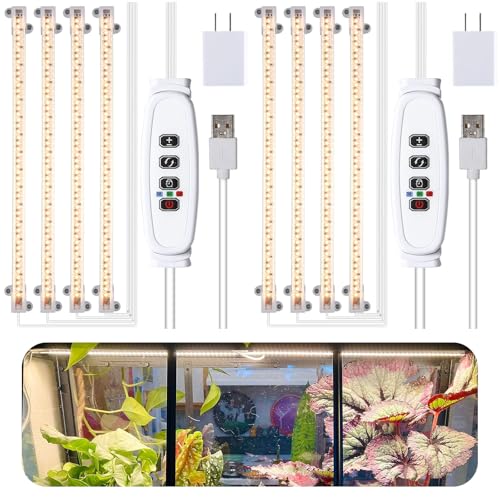
RWNTAO LED Plant Grow Lamp 3500K 2-Pack

Garpsen Grow Lights for Indoor Plants with Stand
More On The Choices That Made The List
Quantum board design spreads diodes across a broad panel, and the HLG 600 Rspec leans into that with a wide white-light spectrum suited to a 4×4 ft flowering footprint. Output lands around 1529 PPF at roughly 2.60 μmol/j, so it pushes meaningful canopy penetration while staying efficient. It carries ETL/UL certification, which matters for anyone running a tent in a finished room.
Full-spectrum diodes cover both vegetative blue and flowering red bands, and a dimmer lets growers scale intensity up or down as plants transition. For growers stepping up from hobby strips, the panel replaces several smaller fixtures under one power draw.
Notable Gains
- High PPF output gives serious light delivery across a 4×4 canopy
- Dimmer control lets growers match intensity to plant stage
- ETL/UL certification eases electrical safety concerns in home setups
- Quantum board layout spreads light evenly, reducing hot spots
- Designed for tight 4×4 ft grow tents where coverage matters
Things To Consider
- 600W draw means a dedicated outlet and some heat management
- Heavier than strip lights, so mounting needs solid hardware
- Overkill for a windowsill herb garden or single seedling tray
Who It Suits Best
Intermediate to advanced indoor growers running a 4×4 ft tent and serious about flowering yields.
Consider Something Else When
Casual windowsill growers should look at the Garpsen Grow Lights with Stand instead, since a 600W panel wastes money on a single houseplant.
The VIPARSPECTRA P1000 targets the seed-starting crowd with a 100W draw and a diode layout engineered for closer canopies. I like it for early vegetative growth, where high PAR (Photosynthetically Active Radiation, meaning the wavelengths plants actually use) at short distance pays off. The driver keeps heat low, so seedlings tucked underneath rarely cook.
It uses a more even diode distribution than older VIPARSPECTRA models, which means fewer burned spots and more uniform stretch on leggy tomatoes. Energy efficiency holds up, and most home growers won’t see a scary jump in their monthly bill.
Positive Points
- 100W draw suits small tents and countertop seed setups
- High PAR output supports dense vegetative growth in tight spaces
- Low heat driver keeps tender seedlings safe underneath
- Lower running cost compared to older HID (High-Intensity Discharge) lamps
Worth Noting
- Limited flowering footprint compared to the HLG 600 Rspec FR 600W
- No built-in timer, so an external outlet timer is helpful
- Coverage area drops sharply past about 2×2 ft
Made For
Home gardeners starting vegetable seedlings in late winter who want a quiet, low-heat panel under a shelf or small tent.
Look Elsewhere When
Anyone needing broader coverage for multiple shelves should reach for the Barrina Plant Grow Lights 4FT 5000K 6-Pack, since linkable bars stretch further.
Barrina built these T8-style bars for shelving and greenhouse racks, and the 5000K daylight color reads clean and natural to the eye. Six bars in the box cover a long shelf without leaving gaps, and the linkable design lets you daisy-chain them off one outlet. The second-generation design prevents the wrong connector from being plugged in, which is a small but appreciated safety touch.
For greenhouse benches or multi-tier seedling racks, the bar format makes more sense than a single panel. Each tube stays cool enough to mount close to leaves without bleaching them.
A Few Strong Suits
- Six-pack coverage lights an entire shelf or greenhouse bench
- 5000K daylight reads natural, which helps when spot-checking plant health
- Linkable design simplifies wiring for multi-tier setups
- Tube form factor fits standard shop-light brackets
Trade Offs
- 5000K leans vegetative, so fruiting plants may need a redder supplement
- Six bars mean more pieces to mount and dust over time
- Older Barrina cords require the updated male-female connector cable
Best Suited To
Greenhouse hobbyists and shelf growers lighting long rows of seedlings or greens who want clean, linkable fixtures.
Skip It When
Someone running a single 4×4 tent gets more concentrated output from the HLG 600 Rspec FR 600W Quantum Board Grow Light.
The RWNTAO strips lean into the 3000K warm-white spectrum, which sits closer to the reddish side and helps compact succulent growth. Each bar carries 26 LEDs at 3500K (slightly cooler than the listed 3000K), and the set includes three heads per pack. Built-in 3/9/12-hour timer plus ten dimming levels gives hobbyists more control than a basic on/off strip.
For plant shelves with limited space, the slim profile slips between books or under cabinetry without much fuss. I find the timer genuinely useful for keeping a steady photoperiod during short winter days.
The Case For It
- Ten dimming levels prevent bleaching on light-sensitive succulents
- 3/9/12-hour timer automates photoperiod without extra plugs
- Low heat output keeps leaves safe in tight shelving
- Slim bar form factor fits narrow shelves and corners
Honest Caveats
- Output is modest, so leafy greens in deep shelves may stretch
- 3000K spectrum favors flowering and compact growth over vegetative leafy stages
- Adhesive mounts may need replacement on textured shelves
Who Should Grab It
Apartment dwellers with a small succulent or herb shelf who want set-and-forget automation.
Not Your Match When
Greenhouses needing raw coverage should pick the Barrina Plant Grow Lights 4FT 5000K 6-Pack instead, since linkable tubes scale better.
This second RWNTAO entry targets hydroponic beginners with a 3500K full-spectrum output designed to mimic daylight. The included 3/9/12-hour timer means no outlet-timer accessory is needed, and ten dimming levels match the sibling strips above. Two packs per order let growers light a small hydroponic tray or a row of propagation cups.
The lower color temperature around 3500K stays gentle on seedlings while still hitting the wavelengths most plants need for early development. Setup is genuinely plug-and-go.
Practical Advantages
- Plug-in design skips the wall-timer accessory entirely
- 3500K full spectrum suits seedling and propagation stages
- Two-pack quantity covers a small hydroponic tray
- Ten dimming levels help avoid overlighting new transplants
A Few Limitations
- Limited output means flowering plants need stronger supplemental light
- Strips favor small hydroponic setups over larger tent grows
Perfect Match For
First-time hydroponic growers running a small propagation tray under a shelf or in a closet.
A Better Fit Elsewhere
A serious fruiting grower should consider the VIPARSPECTRA 100 Watt LED Grow Light, which delivers stronger PAR for flowering crops.
Garpsen ships an upgraded 6/12/16-hour timer aimed at a wide range of houseplants, plus 80 LEDs in a flexible gooseneck arm on a floor stand. The semi-transparent design blends into living rooms better than a black panel, and the height-adjustable stand reaches taller potted plants like fiddle leaf figs or small citrus trees. For renters without drilling options, the floor-stand approach avoids permanent mounting.
I appreciate the longer 16-hour timer option for plants that want extended daylight in dark apartments. The arm positions light above or beside the canopy depending on the species.
What It Does Well
- Floor-stand design avoids drilling into walls or ceilings
- Flexible gooseneck arm directs light to tall or oddly shaped plants
- 6/12/16-hour timer covers short-day and long-day plant schedules
- Semi-transparent housing looks more like decor than grow gear
- 80 LEDs output enough for medium-sized foliage plants
Potential Drawbacks
- Floor stand takes up living space compared to clip-on strips
- Not designed for full flowering cycles on heavy-fruiting crops
- Single arm limits coverage to one plant at a time
Whose Shelf It Belongs On
Renters and apartment dwellers with one or two large houseplants who want attractive, no-mount lighting.
Swap It Out When
Anyone running a full seedling rack gets more uniform coverage from the Barrina Plant Grow Lights 4FT 5000K 6-Pack.
How To Pick The Right Horticulture Led Lights For Your Setup
Choosing horticulture led lights starts with honest math about the space you have, not the wattage that looks impressive. A single shelf, a 4×4 tent, and a living-room fiddle leaf fig all need wildly different solutions, and overspending on a quantum board for a herb windowsill wastes both money and electricity. The right fixture matches your canopy size, growth stage, and how hands-on you want to be.
Spectrum comes next on the checklist. Full-spectrum white LEDs cover both vegetative blue and flowering red bands, while warmer 3000K strips lean toward flowering and compact growth. Cooler 5000K daylight bars favor leafy greens and seedlings, which is exactly why they dominate shelf setups. Picking the wrong color temperature usually shows up as leggy seedlings or stretched-out succulents.
Dimmable fixtures and built-in timers matter more than most first-timers expect. Plants rarely want the same intensity at every stage, and a 3/9/12-hour timer removes the daily ritual of flipping a switch. For growers who travel, that automation alone prevents crop-killing photoperiod gaps.
Heat and form factor should never be an afterthought. Strip lights run cool and slip under shelving, while quantum boards like the HLG 600 Rspec push serious heat and need stable hanging hardware. Match the fixture to the room, not the other way around.
What To Weigh Before Hitting Order
Common Shopping Slip Ups
The most frequent mistake is buying a quantum board for a one-plant shelf, which delivers too much light to a tiny footprint. The opposite error looks like cheap strips under a 4×4 tent, leaving corners dark and plants reaching unevenly. Match fixture output to canopy size, not to wishful thinking about future expansion. Forgetting about heat dissipation trips up plenty of closet growers too, since enclosed shelving traps warmth that damages tender leaves.
What Separates Premium From Basic
Premium horticulture led lights earn their higher price through stronger PAR output, more efficient μmol/j ratings (micromoles of photons per joule of electricity, the standard for grow-light efficiency), and cleaner white-light spectrums that read natural to the eye. Build quality shows up in heavier heatsinks, sealed drivers, and certifications like ETL/UL on the label. Higher-tier fixtures also tend to dim smoothly and run quieter, which matters in living spaces where the light stays on 12 to 16 hours a day.
Frequently Asked Questions
What color temperature works best for seedlings?
Cooler 5000K daylight bars support leafy vegetative growth, while warmer 3000K strips favor compact and flowering stages. Seedlings generally respond well to 5000K or balanced full-spectrum white light, since that mimics spring sunlight.
How far should led grow lights hang above plants?
Most horticulture led lights hang 12 to 24 inches above the canopy, depending on wattage. Stronger panels like quantum boards need more clearance to prevent bleaching, while slim strips can sit closer to leaf level without burning.
Do full-spectrum leds really replace sunlight?
For most foliage and flowering houseplants, full-spectrum LEDs deliver the wavelengths plants need for photosynthesis. Light-hungry fruiting crops still benefit from supplemental sunlight or greenhouse exposure when possible.
How many hours per day should grow lights stay on?
Most indoor plants thrive on 12 to 16 hours of light, with 6 to 8 hours of darkness for recovery. Short-day plants like some succulents prefer closer to 12 hours, while leafy greens tolerate longer photoperiods.
Can I mix different grow lights in the same space?
Yes, mixing spectrums works well for multi-tier shelves where seedlings sit under 5000K bars and flowering plants get warmer 3000K strips. Just watch total wattage and heat buildup in enclosed spaces.
The Takeaway
Horticulture led lights span everything from a $20 strip on a windowsill to a serious 600W quantum board in a flowering tent. The honest read is that the right fixture depends entirely on the canopy you’re lighting, the photoperiod your plants want, and how much automation you need. Pick the tool that fits the room, dim when plants are young, and watch the leaves for signs of stress. From there, indoor gardening gets a lot more rewarding.