

I spent weeks sorting through specs, coverage patterns, and spectrum claims to put together a shortlist that actually helps, whether someone’s nursing a windowsill herb garden or running a serious tent setup. Indoor grow lighting has matured fast, and the gap between a casual desk lamp and a pro-grade quantum board is bigger than most people expect. The seven picks below cover that whole range, from tiny clip-on helpers to full-tent powerhouses, so each type of grower can find the right match.
The Shortlist At A Glance

GLOWRIUM 48W Full Spectrum LED Plant Light with Stand

HLG 600 Rspec FR 600W Quantum Board Grow Light
VIVOSUN AeroLight 240W LED Grow Light with Fan

VIIVUU Clip-On Plant Light for Indoor Plants
VIVOSUN LumaLight 100W LED Grow Light

VIVOSUN LumaLight 320W LED Grow Light

Kullsinss 3.5in Small Grow Light with 48 LEDs
A Closer Look At Each Pick
For anyone keeping a few floor plants alive through winter, this GLOWRIUM stand is a refreshingly low-fuss solution. The four-section pole extends up to about 79 inches, so it clears tall fiddle leaf figs and snake plants without a fight. I like that there’s no mounting hardware or tent rigging to figure out, just a base and a lamp head on a stick.
Stepless dimming and three preset spectrum modes make it easy to match seedlings versus mature foliage. For most people, this is the kind of unit you set up once and forget about, which is exactly the point. It covers a generous footprint for a 48W fixture, and the wider lamp head throws a softer, more even blanket of light than older single-bulb styles.
Strengths Worth Knowing
- Telescoping stand reaches up to roughly 79 inches, so it works for floor plants and not just small shelves
- Stepless dimming (smooth, not stepped) plus three spectrum modes covers seedling through flowering stages
- Wider lamp head spreads light more evenly across a canopy than narrow single-strip designs
- No installation, no tent, no extra hardware to buy, so beginners can be running it within minutes of unboxing
- Lightweight base slides easily behind a couch or under a side table without scratching floors
Honest Caveats
- At 48W it isn’t going to drive a dense flower tent, so anyone chasing yield should look up the list
- Plastic pole sections can loosen after months of height adjustments, depending on use
Who It Suits Best
Houseplant owners with tall, light-hungry greenery in rooms where a window just doesn’t cut it, especially beginners who want zero assembly.
Where Another Pick Suits Better
The HLG 600 Rspec FR is the better match for anyone running a full 4×4 tent and chasing serious flowering output.
Step into a serious grow tent and the lights usually look like this, a flat panel covered in small white LEDs. The HLG 600 Rspec FR is built for that world, custom-tuned for a 4×4 foot footprint and packed with enough output to push through a dense canopy. Quantum boards like this are the workhorse format for hobbyist and commercial growers alike, and HLG has been in the game long enough that the design feels dialed-in rather than experimental.
What separates this fixture from the GLOWRIUM on the first pick is efficiency and depth. It pushes photons deeper into the canopy so lower bud sites and inner leaves don’t starve, and the dimmer lets growers scale output during early vegetative growth. For someone running a sealed tent, that’s the kind of headroom that pays off across an entire run.
Why It Works Well
- Quantum board design delivers strong canopy penetration, reaching lower growth that cheaper panels miss
- Tuned spectrum supports flowering stages, so the same fixture handles veg and bloom without swapping
- Built-in dimmer lets growers scale intensity, saving energy during early growth and reducing stress
- Independent driver keeps heat away from the diode board, extending LED lifespan
- Format matches a standard 4×4 tent, so no custom rigging or extra mounting brackets are required
Points To Keep In Mind
- 600W draw means growers need to plan for heat extraction and electrical load in a sealed room
- No built-in mounting hardware, so a hanging kit or ratchet hangers are typically a separate purchase
- Overkill for a windowsill herb garden, no question
Made For
Experienced indoor growers running a 4×4 tent or larger who care about photon efficiency and canopy depth more than convenience features.
Consider Something Else When
The VIVOSUN LumaLight 320W makes more sense for a mid-size setup where raw power isn’t the priority.
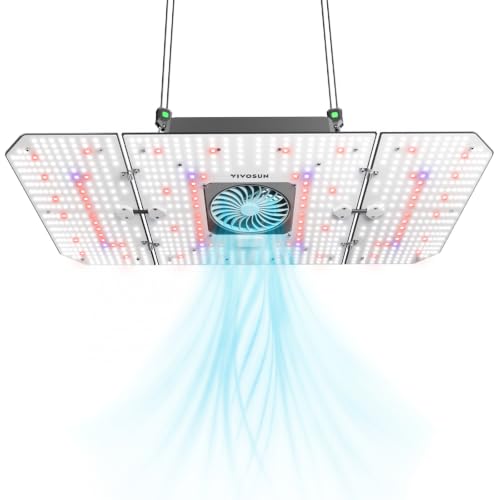
The AeroLight takes a swing at one of the most common gripes in tent growing, stagnant air, by tucking a circulation fan right into the fixture. The central fan pushes air through the canopy rather than just over it, which helps with CO₂ exchange and keeps humidity from pooling in tight spots. Compared to the HLG 600 Rspec FR, this is a smaller, smarter unit for a mid-size tent where the grower wants one less piece of hardware hanging around.
At 240W it sits in a comfortable middle zone: enough muscle for a healthy flowering cycle, not so much that the tent turns into a furnace. I like that the design consolidates airflow and lighting into a single fixture, so there’s one less clip fan to mount and aim.
Advantages To Know
- Built-in fan circulates air through the canopy, addressing stagnant zones that can breed mold
- 240W output suits mid-size tents, balancing coverage without the heat load of a 600W panel
- All-in-one design frees up tent space, so growers don’t need a separate oscillating clip fan
Trade Offs
- The integrated fan adds moving parts, meaning another component that could eventually need service
- Not enough reach for a 4×4 or larger tent, so growers scaling up will outgrow it
Key Product Details
Right Fit For
Mid-size tent growers who want a single fixture that handles both lighting and airflow without cluttering the canopy.
Look Elsewhere When
The VIVOSUN LumaLight 100W is a more sensible pick for a small tent or a single-shelf setup.
Sometimes the problem isn’t running a tent, it’s that one fiddle leaf in the corner that never gets enough light. The VIIVUU clip-on is built for that exact job. The clamp is the centerpiece here, with a strong bite that grips pots, shelves, and narrow table edges without sliding. It’s small enough to forget about once it’s in place, and that low profile is part of the appeal.
There’s also a soil-insert stake option, which gives growers a second way to position the lamp. The hollow ring lamp head keeps weight down so the clamp doesn’t droop. Compared to the GLOWRIUM stand, this is for someone targeting a single plant, not an entire living room of greenery.
Where It Helps
- Strong clamp grips uneven surfaces, like a thick pot rim or a shelf edge, without slipping
- Soil-insert stake offers a second mounting option for pots where a clamp won’t fit
- Lightweight ring head reduces arm fatigue on the clamp joint, so the angle holds over time
Worth Noting
- Output is limited to a small zone, so this isn’t going to cover a full shelf of plants
- Cord length can feel short on a tall plant stand, depending on the nearest outlet
Best Suited To
Plant owners who want to give one specific houseplant a light boost without committing to a full panel setup.
A Better Fit Elsewhere
The Kullsinss 3.5in Small Grow Light is a more polished option for a desk or shelf where a clamp won’t reach.
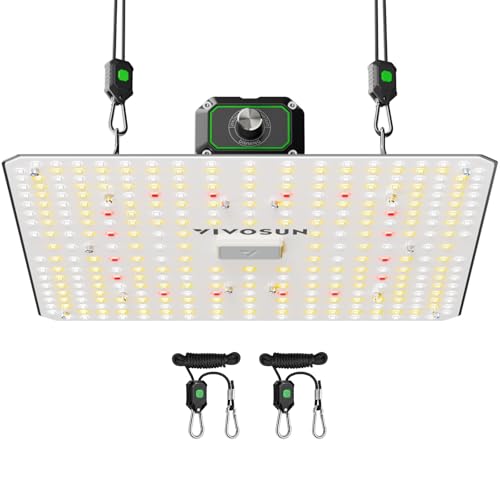
The LumaLight 100W hits a sweet spot that a lot of indoor gardeners don’t realize exists. It’s bigger than a clip-on, smaller than a tent-pumping quantum board, and built for the in-between crowd. The diode mix includes white, blue, red, and far-red wavelengths, so the spectrum supports growth from seedling through harvest without needing a swap-out.
For a small grow tent, a closet conversion, or a serious seedling rack, this is a comfortable all-rounder. The strategic diode layout is meant to keep coverage even, avoiding the hot spots that older single-source panels used to leave right under the bulb. Compared to the AeroLight, the LumaLight skips the fan and leans into simplicity, which is fine for growers who already run a separate circulation setup.
A Strong Showing
- Multi-wavelength diode mix covers seedling, vegetative, and flowering stages in one fixture
- 100W output is manageable on a standard household circuit, no special wiring required
- Strategic diode layout spreads PPFD (photosynthetic photon flux density, a measure of usable light) more evenly across the canopy
Some Limits To Know
- No built-in fan, so growers in warm rooms may want to add clip circulation
- Coverage drops off at the edges, so a 2×2 footprint is realistic but a 4×4 would stretch it
Feature Snapshot
Who Should Grab It
Small-space growers, seed-starting gardeners, and anyone running a 2×2 or 3×3 tent who wants a fuss-free full-spectrum panel.
Swap It Out When
The VIVOSUN LumaLight 320W is the better call for a larger tent where the LumaLight 100W would feel underpowered.
When a grower steps up from a starter tent to a real production setup, the 320W LumaLight is the kind of fixture that fills the gap. Instead of one big diode cluster, this model uses a light-bar matrix that spreads diodes across the fixture. The result is a more even throw, fewer hot spots in the middle, and more consistent light reaching the corners of the canopy.
The Micro-Lens Optic System, a set of curved lenses that focus and direct each diode’s beam, helps push usable light deeper into the plant instead of letting it scatter sideways. For a high-yield grow, that focus matters more than raw wattage. Compared to the 100W LumaLight, this is the same family scaled up for serious flowering runs.
Useful Strengths
- Light-bar matrix reduces hot spots, so the edges of the tent get the same intensity as the center
- Micro-lens optics focus each diode’s beam, driving light deeper into the canopy
- 320W suits a 4×4 tent without the heat punishment of a 600W quantum board
Factors To Consider
- Higher output means more heat, so growers in warm climates may still need exhaust ventilation
- The larger footprint requires a sturdy tent frame, especially at full hang height
Quick Facts
Built With In Mind
Intermediate to advanced growers running a 4×4 flowering tent who want balance between output, heat, and coverage.
Reach For A Different Pick When
The HLG 600 Rspec FR suits a commercial-grade setup where maximum photon output is the priority.
Desk growers, herb-kitchen counters, and tiny shelf gardens don’t need a quantum board. They need something the size of a coffee mug that won’t tip over. The Kullsinss fits that role, a 3.5-inch halo head with 48 diodes delivering full-spectrum light in a package that disappears into a room. The detachable base adds a second option, so it can sit on a flat surface or be pushed straight into the soil.
Output is modest, so this is for one or two small plants rather than a propagation tray. The wavelength range, 380 to 760 nanometers, covers the bands plants use for photosynthesis, which is the right baseline for this size class. Compared to the VIIVUU clip-on, this trades clamping for stability on a flat surface.
Useful Highlights
- Tiny 3.5-inch footprint fits on a desk, kitchen counter, or narrow plant shelf without crowding
- Detachable base doubles as a soil-insert stake, so growers pick the mounting style that fits the space
- 48 diodes cover the 380 to 760 nanometer range, the wavelengths plants use to drive photosynthesis
Things To Consider
- Small coverage area means it suits a single plant, not a row of seedlings
- Lightweight base can feel tippy with a tall, top-heavy plant, so heavier pots work better than small nursery containers
Feature Rundown
Whose Shelf It Belongs On
Anyone tending a small herb pot, a single houseplant, or a propagation cluster on a desk or kitchen counter.
Not Your Match When
The VIIVUU clip-on is the better call for a plant on a tall stand where a tabletop base won’t reach.
What To Weigh Before Picking Your Setup
The first call is footprint, not wattage. Measure the actual space the light needs to cover, then pick a fixture that matches. A quantum board like the HLG 600 Rspec FR can be wasted in a closet, while a 3.5-inch halo is meaningless in a 4×4 tent. Match the format to the room before chasing specs.
Spectrum matters, but full spectrum isn’t one thing. Look for fixtures that name their diode mix, including white, blue, red, and far-red wavelengths, and check whether the spectrum supports both vegetative and flowering stages. Cheap single-color panels might keep a plant alive, but they won’t carry it through a full cycle.
Heat and airflow are easy to underestimate. A 600W panel in a small sealed room can cook a canopy fast. Plan for ventilation, whether that’s an inline fan, the integrated fan in the VIVOSUN AeroLight, or a basic clip circulation. Plants transpire heavily under strong light, and stagnant air invites mold.
Mounting style changes daily life with the light. Stand-mounted units like the GLOWRIUM move with the plant, no hardware, no tent. Panel lights need rope hangers and a stable frame. Clip-on and halo designs are the easiest to reposition but cover the least ground.
Think about the electrical load, especially for 320W to 600W fixtures. Most household circuits handle 15 amps, and a single high-watt panel can take a meaningful chunk of that headroom. Run any big fixture on a dedicated circuit when possible.
Key Considerations Across These Picks
Pitfalls Shoppers Hit
The most common mistake is buying a quantum board for a plant that needs a windowsill helper, or a clip-on for a tent that demands a real panel. Wattage and coverage claims also get exaggerated in marketing, so a fixture that sounds strong on paper can underdeliver when hung too high. Match the unit to the actual grow space, not to the spec sheet dream. Glossing over ventilation is the next slip, because plants under strong lighting transpire fast, and stagnant humid air is a fast track to mildew. Finally, ignoring mounting requirements leaves people with a great panel and nowhere safe to hang it.
Where The Extra Money Goes
The jump from a 48W stand to a 600W quantum board isn’t just brighter light. The higher tier brings better diode efficiency, stronger canopy penetration, and thermal designs that keep the LEDs running cool across years of daily cycles. For a casual herb garden, the upgrade isn’t worth it, but for a flowering tent running daily light schedules, that extra spend shows up as bigger yields, longer diode life, and a spectrum that actually finishes a crop well.
Frequently Asked Questions
How many watts do I need per plant?
That depends on the plant type and growth stage. Leafy greens and herbs typically thrive around 20 to 30 watts per square foot, while flowering plants often want 30 to 40 watts per square foot. Match the wattage to the canopy area, not to a single plant.
What is full spectrum lighting?
Full spectrum means the light covers the wavelengths plants use across their life cycle, including blue for vegetative growth and red for flowering. A good full spectrum fixture also includes white and sometimes far-red diodes to mimic natural sunlight more closely.
How far should a grow light hang above my plants?
Most LED panels sit between 12 and 24 inches above the canopy, depending on wattage. Stronger fixtures like 320W or 600W models usually need the higher end of that range to avoid light burn, while smaller panels can sit closer.
Can I leave a grow light on all day?
Plants need a dark period as part of their cycle, so running a light 24/7 usually stresses them. Most growers use a timer to deliver 14 to 18 hours of light during vegetative growth and 12 hours during flowering.
Do grow lights use a lot of electricity?
Usage depends on wattage and daily schedule. A 100W panel running 16 hours a day draws noticeably more than a 48W stand, and a 600W quantum board running 12 hours a day is a real line item on a power bill.
Closing Remarks
The right growing light comes down to honest answers about space, plant type, and how much attention the setup will get. A casual houseplant caretaker has no business wrestling with a 600W quantum board, and a serious tent grower won’t get far with a 3.5-inch halo. Pick the format that matches the room, the spectrum that matches the plant, and the wattage that matches the circuit. The seven options above cover that range well, and the right one for any given shelf or tent is probably on this list.