

Starting a vegetable garden indoors means wrestling with one stubborn variable: light. Windows alone rarely deliver the intensity or duration that leafy greens and fruiting veg crave, so a purpose-built grow light becomes the single most important tool in the setup. The right fixture turns leggy seedlings into stocky transplants and keeps herbs productive through the darkest months. The wrong one wastes electricity and stalls growth, which is why I’ve narrowed the field to ten fixtures that genuinely serve the vegetative stage, from budget clip-ons to a serious tent-ready quantum board.
The Essentials At A Glance

GLOWRIUM 48W Full Spectrum LED Plant Light with Stand

HLG 600 Rspec FR 600W Quantum Board Grow Light

VIIVUU Clip-On Plant Light (White, 1 Pack)
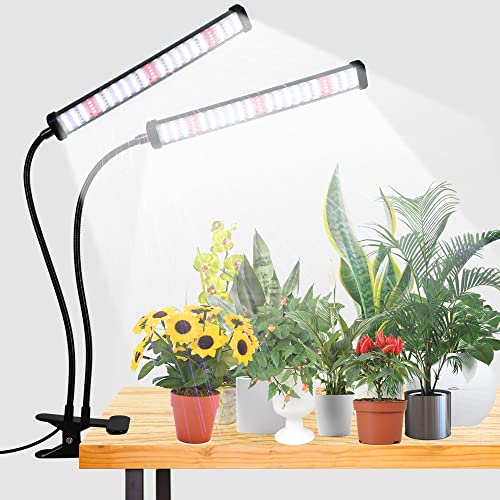
GooingTop 100W 6000K Desktop Clip Plant Lamp

Kullsinss 16in 2-Bar 120 LED Grow Light Strips

Kullsinss 16in 4-Bar 240 LED Grow Light Strips

Kullsinss 16in 3-Bar 180 LED Full Spectrum Grow Light

Kullsinss 8in 112 LED Grow Light Strips

GooingTop 6000K Full Spectrum Indoor Plant Lamp

GooingTop Halo LED Grow Light (Variable Spectrum)
Inside Each Recommended Option
The GLOWRIUM 48W is a freestanding unit built around an adjustable four-section pole, so it grows with the plant rather than forcing you to repot into a fixed geometry. The lamp head tilts and the pole telescopes up to roughly 79 inches, which gives leafy greens and dwarf tomatoes headroom as they stretch toward the canopy.
Stepless dimming (continuous brightness adjustment without fixed steps) lets you dial intensity for fragile seedlings versus hungry vegetative crops. Three spectral modes cover seedling, leafy growth, and flowering stages, so the same fixture carries a plant from germination through harvest.
Why It Works Well
- Full-spectrum output with three switchable modes covers the full life cycle of most vegetables
- Stepless dimming prevents the light-shock that fixed-brightness fixtures can cause on young transplants
- 79-inch maximum height accommodates tall pepper and tomato starts without a separate trellis
- Single stand-and-lamp design removes the need for shelving or hanging hardware
Things To Consider
- The base footprint is wider than clip-on alternatives, which matters in tight apartments
- A single head spreads light over a small circle, so dense seedling trays may need rotation under it
Feature Snapshot
Who Will Love This
First-time indoor growers who want one fixture to carry a small veg garden from seed to harvest without buying upgrades along the way.
Swap It Out When
Anyone outfitting a full multi-tier shelf should reach for the Kullsinss 16in 4-Bar 240 LED Grow Light Strips instead, since bar fixtures cover wider shelves far more evenly than a single overhead head.
The HLG 600 Rspec FR is a serious quantum board, which means it spreads light from a flat panel densely packed with mid-power diodes rather than from a few high-output bulbs. The result is even coverage that reaches deep into the canopy without hotspots, and a published 1529 PPF at 2.60 micromoles per joule puts the efficiency near the top of the consumer class.
It is engineered for a 4×4 foot footprint, so the fixture pairs naturally with a standard grow tent of the same size. The dimmer on the driver lets you throttle output for seedlings, then crank it up for hungry vegetative crops.
Bright Spots
- 2.60 micromoles per joule efficiency keeps operating cost low for the output delivered
- Flat-panel design drives light deeper into dense canopies than most bar fixtures
- Dimmable driver supports the full growth curve from clone to heavy flower
- Even coverage across the full 4×4 foot footprint suits serious fruiting crops
Trade Offs
- Requires a tent or dedicated room; the output is too intense for a living space
- The 600W draw demands a standard 120V dedicated circuit, and heat output warrants ventilation planning
Right Fit For
Experienced growers running a 4×4 foot tent who want proven efficiency and even canopy penetration for serious fruiting and flowering crops.
Look Elsewhere When
A casual windowsill herb gardener would do better with the GooingTop 100W 6000K Desktop Clip Plant Lamp, since it offers usable intensity without the dedicated tent setup the HLG demands.
The VIIVUU clip-on is the simplest fix for a single windowsill herb or a stubborn seedling tray. The clamp grips firmly on a pot rim or shelf edge, and the hollow ring lamp head keeps the whole unit light enough to perch on a thin glass shelf.
A bundled soil-insert stake adds a second mounting option, which lets you drop the light right into a deep planter rather than balancing it on the rim. For someone running one or two pots, that versatility matters more than raw wattage.
Real-World Strengths
- Strong clamp stays put on smooth or ridged pot rims, no drilling required
- Soil-insert stake opens up use in deep planters where a clamp won’t reach
- Hollow ring head keeps the fixture light enough for thin glass shelves
- Clip-on form factor disappears into a windowsill once installed
Points To Note
- Single fixture covers a small footprint, so multi-pot setups need several units
- Output is modest compared with the GLOWRIUM or HLG units, limiting it to herbs and leafy starts
Made For
Apartment dwellers tending a small herb cluster or a couple of propagation trays who need a discreet clip-on rather than a freestanding tower.
A Better Fit Elsewhere
Anyone running a full shelf of seedlings should look at the Kullsinss 16in 2-Bar 120 LED Grow Light Strips, which spread light evenly across a wider shelf without needing a clip per pot.
The GooingTop 100W brings real brightness to a desktop clip format, blending 144 white and 10 red LEDs into a midday-spectrum output. The clip secures to a desk, shelf, or pot edge, and the higher diode count pushes usable intensity into the vegetative range rather than just germination.
The built-in timer cycles the light on a daily schedule without manual resets, which is the kind of feature that quietly removes the biggest chore of an indoor garden. Owners commonly report the timer dial as the most-appreciated detail once the unit is mounted.
Positive Points
- 144 white plus 10 red LEDs push this well past typical clip-on brightness
- Integrated timer automates the on/off cycle for hands-off daily operation
- Sturdy clip holds the heavier head on thicker desk surfaces without drift
- Multiple spectral settings suit both propagation and steady vegetative growth
Honest Caveats
- The higher output produces more noticeable heat than smaller clip-ons, so spacing matters around seedlings
- Single-head coverage still suits a focused cluster rather than a wide shelf
Quick Facts
Best Suited To
Busy home cooks running a kitchen herb garden who want a single bright, automated clip-on rather than a rack of smaller lights.
Reach For A Different Pick When
Anyone lighting a full multi-tier shelf will get cleaner coverage from the Kullsinss 16in 4-Bar 240 LED Grow Light Strips, since bars distribute light more evenly across a wider surface than a single concentrated clip head.
The 2-bar Kullsinss strip kit targets narrow shelving, the kind of 18 to 24 inch deep bookcase that won’t accept a wide quantum board. Two 16-inch bars share a single controller, so the wiring stays tidy while you get full-spectrum coverage across the shelf width.
Five dimming levels and three spectral modes give meaningful control over a small footprint. For narrow veg shelves, that’s the right size of adjustment.
Points In Its Favor
- Two-bar layout fits narrow shelves that a single overhead fixture can’t reach evenly
- Full-spectrum output covers wavelengths from 380 to 800 nanometers for balanced vegetative growth
- Shared controller keeps cable clutter down to one wall adapter
- Lightweight aluminum bars mount with simple clips or screws
Softer Spots
- Two bars leave the middle of a wider shelf underlit, so deep shelves need the 4-bar upgrade
- Lower total diode count means gentler intensity than the 4-bar sibling
Feature Card
Who Should Grab It
Anyone with a single narrow bookshelf or windowsill rack growing herbs and lettuce starts who needs clean coverage without overbuilding the setup.
Not Your Match When
Growers running a deeper 24 to 36 inch shelf should reach for the Kullsinss 16in 4-Bar 240 LED Grow Light Strips, since four bars fill that wider footprint far more evenly than two.
Stepping up from the 2-bar to the 4-bar kit doubles the diode count and spreads coverage across a deeper shelf. Four parallel bars eliminate the dim center channel that two-bar layouts leave behind, which matters as soon as your trays push wider than 18 inches.
The timer offers 6, 12, and 16 hour presets that cover everything from short-day seedlings to long-day fruiting crops. The same fixture stays useful as the garden scales up.
A Few Strong Suits
- Four-bar geometry keeps light uniform across shelves up to roughly 36 inches deep
- 6/12/16 hour timer presets match the photoperiod needs of common veg crops
- 240 diodes deliver enough intensity for fruiting veg, not just leafy greens
- Single-controller wiring reduces the tangle that four separate bars would create
Worth Bearing In Mind
- Heavier heat output than the 2-bar kit, so enclosed shelves need some airflow
- Overkill for a single 12-inch windowsill herb pot
Perfect Match For
Multi-tier gardeners running deep shelving for tomatoes, peppers, and leafy greens who want even coverage across the full width.
Consider Something Else When
A first-timer with just one or two pots on a small desk would be better served by the GLOWRIUM 48W Full Spectrum LED Plant Light with Stand, which arrives ready to grow without the shelf build-out.
The 3-bar kit lands in the middle of the Kullsinss lineup, which is often the sweet spot for a standard 24-inch shelf. Three parallel bars cover the typical propagation tray footprint without the cost of the full 4-bar kit.
The same 6/12/16 hour timer and 5-step dimmer appear here, so the smaller kit doesn’t feel like a downgrade in daily operation.
Benefits That Matter
- Three bars handle a 24-inch shelf footprint without leaving a dim center band
- Shared controller simplifies on/off timing across the whole strip array
- Full-spectrum blend supports seedlings through to fruiting transitions
- Lower wattage than the 4-bar kit, easing the load on a household circuit
Small Caveats
- Coverage falls off on shelves deeper than 24 inches, so deeper builds still need the 4-bar option
- Mounting hardware is functional but minimal; deep shelves may need extra brackets
Spec Overview
Built With In Mind
Gardeners running a single mid-sized shelf who want balanced coverage and timer automation without the full 4-bar investment.
Where A Sibling Pick Shines
Anyone with a deeper, multi-tier setup gets fuller coverage from the Kullsinss 16in 4-Bar 240 LED Grow Light Strips, since four bars eliminate the edge falloff the 3-bar kit leaves behind.
The 8-inch Kullsinss strips are the shortest in the family, built to tuck under a single shelf or perch on the edge of a plant stand. They pack 26 balanced LEDs per strip, with cool white, warm white, and red diodes mixed for a natural-looking output that fits a living space.
Two short strips on a controller give you directional coverage aimed at a small cluster rather than a wide shelf. For tight corners, that focused approach beats overspreading a wider bar.
A Favorable Mix
- 8-inch length slips onto narrow shelves where 16-inch bars won’t fit
- Mixed white, warm white, and red diodes read as natural light in a living area
- Low wattage keeps heat and electricity use minimal in a small room
- Stackable design lets you add strips as the collection grows
Potential Drawbacks
- Short bars limit coverage to small clusters, not full trays
- Lower total diode count means lower intensity than the longer Kullsinss siblings
Whose Shelf It Belongs On
Apartment dwellers with a compact corner shelf or kitchen herb setup who want a discreet light that blends into the room.
Skip It When
Anyone filling a wide propagation shelf should look at the Kullsinss 16in 4-Bar 240 LED Grow Light Strips, since four long bars cover a 36-inch shelf far more evenly than multiple short strips.
The GooingTop 6000K lamp delivers a high color rendering index (CRI), which means the light reveals plant colors and surrounding room colors close to how natural daylight does. That quality matters when the fixture sits next to your desk, because a low-CRI purple or rosy grow light clashes badly with reading or video calls.
Built around 10 red and 74 white LEDs, it offers enough red support for vegetative veg without leaning hard into the bloom-only spectrum. The timer cycles through standard daily schedules.
Practical Pluses
- High CRI output reads as clean white light in shared living and work spaces
- Mixed red and white diodes support leafy veg and mild fruiting without harsh color cast
- Soft, flicker-free output suits long days next to the fixture
- Compact head fits a corner desk without dominating the surface
Things To Weigh
- Lower intensity than the 100W GooingTop sibling, so heavy fruiting crops may struggle
- Single-head design limits coverage to a focused cluster
The Right Fit
Home office and living-room growers who want a fixture that doubles as a usable task light without the aggressive purple cast of dedicated bloom LEDs.
Another Choice May Suit
Anyone needing stronger vegetative intensity for hungrier crops should pick the GooingTop 100W 6000K Desktop Clip Plant Lamp, which boosts diode count without sacrificing the clean white output.
The Halo is the smallest fixture in the GooingTop family, a low-light halo designed for succulents and mini pots that don’t need serious intensity. The pole extends from 7 to 18 inches and the light board flips 180 degrees, which lets you angle the beam at awkward clusters.
Four timer presets (4/8/12/18 hours) and a variable spectrum dial add flexibility that small lights rarely offer, useful for hobby growers juggling a few different plant types on one shelf.
Where It Excels
- Compact halo footprint disappears next to mini succulents and small pots
- 180-degree flip head directs the beam at off-center plant clusters
- Four timer presets handle short-day succulents through long-day veg
- Variable spectrum dial lets you match output to plant type without swapping fixtures
Less-Strong Areas
- Low output is intentional, so anything beyond succulents and small herbs will stretch
- Small base footprint means it tips over easily on crowded shelves
Key Specs
Perfect Match For
Hobby growers tending a small succulent collection or a few mini pots who want a tidy, low-output halo rather than a full veg powerhouse.
Where Another Pick Suits Better
Someone growing actual leafy veg or fruiting crops will find the GLOWRIUM 48W Full Spectrum LED Plant Light with Stand far more capable, since it offers the intensity and spectrum those crops demand.
Choosing the Right Setup for Your Indoor Veg
A grow light is essentially a substitute for the sun, so the right fixture depends on how much sun your plants would have had outdoors. A windowsill herb garden needs far less intensity than a fruiting tomato setup, and the gap between those two scenarios drives almost every buying decision in this category.
Light Intensity and Wattage
Wattage alone is misleading, since diode efficiency varies wildly across fixtures. A high-quality 100W panel can outperform a cheap 200W bulb by delivering more photosynthetically useful light per watt. For leafy greens like lettuce and spinach, moderate intensity in the 30 to 50W range per square foot of canopy usually suffices. Fruiting crops like tomatoes and peppers push that requirement higher, which is why serious growers chase published PPFD or PPF numbers rather than wattage alone. PPFD measures the light intensity actually reaching the plant surface in micromoles per square meter per second, while PPF measures the total light output of the fixture; both matter, but PPFD tells you what the plant actually receives.
Spectrum and Photoperiod
Full-spectrum white LEDs cover the wavelengths plants use most, and they blend into living spaces far better than purple-heavy “blurple” fixtures. For vegetative growth, the cool white and warm white blend delivers the blue and red light chlorophyll responds to, so a single fixture can carry most indoor veg through the leafy stage.
Photoperiod (the daily duration of light the plant receives) matters just as much as intensity. Leafy greens thrive on 14 to 16 hour days, while many fruiting crops prefer shorter nights during the vegetative stage. A built-in timer, which most of these fixtures include, takes the manual reset chore off the daily list.
Coverage Area and Form Factor
Match the fixture footprint to the shelf or tent you actually have. A clip-on works for one or two pots, a bar kit suits a single shelf, and a quantum board fills a full tent. Buying more fixture than you need wastes electricity, while buying less forces plants to stretch toward uneven light and become leggy.
Common Pitfalls and Premium Trade-Offs
Wrong Turns To Avoid
The most common mistake is buying by wattage rather than spectrum and coverage, ending up with a bright bulb that delivers the wrong wavelengths to the canopy. A close second is underestimating coverage area: a single clip-on can’t replace a bar kit on a 36-inch shelf, no matter how bright it looks. Always match the fixture footprint to the actual growing surface.
Where The Extra Money Goes
Higher-tier fixtures earn their keep with better diode efficiency (more plant-usable light per watt), more even coverage across the canopy, and longer published lifespans. For a single windowsill herb pot, the upgrade rarely pays back. For a full tent running 12 hours a day, the efficiency difference adds up to real electricity savings over a single growing season, which is where premium quantum boards like the HLG 600 earn their place.
Frequently Asked Questions
How close should a grow light sit above leafy veg?
Most full-spectrum LED panels perform best at 6 to 12 inches above the canopy for leafy greens. Closer placement boosts intensity but risks bleaching the leaves, so dimming or raising the fixture slightly protects the plant.
Do vegetative plants need red or blue light specifically?
Both. Blue wavelengths drive compact vegetative growth, while red wavelengths support leaf expansion and overall biomass. A balanced full-spectrum fixture delivers both without manual spectrum switching.
Can a regular lamp replace a dedicated grow light?
Standard household bulbs lack the intensity and spectral balance that vegetables require. A purpose-built grow light delivers the photosynthetically useful wavelengths at much higher output, which is why dedicated fixtures consistently outperform repurposed lamps.
How long should I run a grow light per day?
Leafy greens thrive on 14 to 16 hour photoperiods, while many fruiting veg prefer 12 to 14 hours during the vegetative stage. Built-in timers on most of these fixtures handle the daily cycle without manual reset.
Do I need a special tent for indoor vegetables?
A tent helps control light spread and contains the bright output in a living space, but it’s not strictly required. A reflective surface behind the plants and a dedicated timer-driven fixture cover most home setups without the tent investment.
Closing Remarks
The right grow light depends on the scale of the garden you actually want to keep. A single herb pot on a windowsill asks for a clip-on, while a full veg shelf wants a multi-bar kit, and the serious tent grower eventually graduates to a quantum board. Match the fixture to the footprint, the spectrum to the crop, and the timer to your daily rhythm, and the rest of the indoor garden tends to take care of itself.