

Starting seeds indoors used to mean a cramped corner and crossed fingers. Today, a good grow light turns a kitchen shelf into a nursery, giving tomatoes, peppers, and herbs the steady photons they crave before the garden wakes up. I’ve put together a lineup that covers everything from a single windowsill herb pot to a full seed-starting rack, so you can match the right fixture to the way you actually garden.
An Overview Of The Picks

Barrina TX-L84 4FT LED Grow Light, 84W, 4 Panels
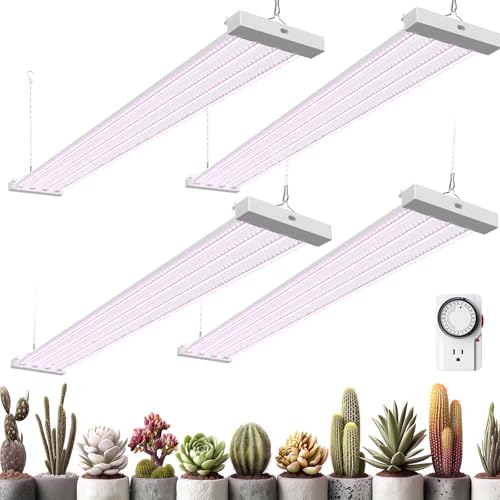
Barrina TX-L84 4FT LED Grow Light, 336W (4 x 84W)

HLG 600 Rspec FR 600W Quantum Board Grow Light

VIIVUU Clip-On Grow Light for Indoor Plants

Kullsinss 16in Grow Light Strips, 2-Bar 120 LEDs

Kullsinss 16in Grow Light Strips, 4-Bar 240 LEDs

Kullsinss 16in Grow Lights, 3-Bar 180 LEDs

Kullsinss 8in Grow Lights Strips, 112 LEDs

SpeePlant LED Grow Light Bulbs, 25W
A Deeper Look At The Lineup
Barrina’s TX-L84 panel spreads four LED wings across a 4-foot run, so seedlings on a wider shelf finally get even light from corner to corner. The 84W draw keeps electricity gentle on the meter while still feeding trays of tomatoes, peppers, and salad greens through their first true leaves.
You mount it about a foot above the canopy and the four-panel spread lights roughly 47 by 19 inches of flat, enough for two standard 1020 trays side by side. For most home gardeners starting a few dozen cells, that’s plenty of real estate.
The Helpful Details
- Four-panel layout spreads PPFD (photosynthetic photon flux density, the light intensity plants actually use) across the full shelf, not just the center.
- Full spectrum output supports both leafy greens and fruiting seedlings through veg and flower.
- Plug-and-play design with included hardware shortens setup to under 15 minutes.
- Lower wattage than the 336W sibling, so running it 14 to 16 hours a day costs less on the power bill.
Things To Consider
- For a 4-foot by 4-foot tent, you may find a single unit leaves the corners dim.
- The thin aluminum housing flexes slightly during installation, so handle gently when clipping the panels into place.
Quick Facts
Built With In Mind
Home gardeners running two or three seed trays on a single wide shelf who want balanced coverage without paying for the 336W upgrade.
Consider Something Else When
Seed starters filling a full 4×4 grow tent will get better corner coverage from the Barrina TX-L84 336W version.
Step the same Barrina four-panel design up to 336W and you get a propagation workhorse built for serious seed counts. Where the 84W version suits a hobbyist shelf, this unit lights a full flat of trays from edge to edge with photons to spare.
It still covers that 47 by 19 inch footprint at roughly 12 inches above the canopy, so your rack layout stays the same. The trade-off shows up at the outlet: four times the wattage means you’ll notice it on a long daily timer cycle.
Useful Touches
- 336W total output drives strong germination and stocky seedlings across a wide footprint.
- Same four-panel geometry as the 84W model, so shelf and tent mounting hardware stays consistent if you upgrade later.
- Full spectrum light supports cool-weather starts like lettuce alongside warm-weather crops like peppers.
Honest Caveats
- Heat output climbs with wattage, so depending on your room temperature, expect the fixture to feel warm to the touch after a 16-hour day.
- Overkill for someone running a single small tray on a kitchen counter.
Whose Shelf It Belongs On
Backyard growers running four or more seed trays at once, or hobbyists moving up to a 4×4 propagation tent.
Skip It When
A windowsill herb gardener will do better with the compact VIIVUU Clip-On Grow Light, which costs less and sips watts.
The HLG 600 Rspec sits at the serious end of the seed-starting conversation. A quantum board (a flat panel covered in small, spread-out diodes rather than clustered bulbs) spreads light across a wide canopy, and this one is sized to fill a 4×4 tent from corner to corner. The dimmer on the side lets you dial intensity down for fragile sprouts and up for hungry tomatoes.
Compared to the Barrina panels, this fixture pushes far more photons per watt and adds infrared wavelengths that some growers credit for tighter internodal spacing. The honest read is that it costs more up front and pays you back only if you really fill the space.
Benefits That Matter
- Quantum board diode layout pushes 1529 PPF (the total amount of usable light the fixture emits per second) for canopy-piercing intensity at the back of the tent.
- Built-in dimmer lets you run seedlings at low power, then ramp up as plants mature without changing fixtures.
- Full spectrum plus far-red wavelengths support stretching prevention and stockier early growth.
Worth Bearing In Mind
- 600W of draw means a dedicated outlet on a 15-amp circuit, and a noticeable line on the electric bill during heavy use.
- The unit runs hot, so plan ventilation or an open tent to keep ambient temperature in a seed-safe range.
At A Glance
The Right Fit
Experienced growers running a 4×4 tent or dedicated propagation room who want lab-grade spectrum control.
Look Elsewhere When
A casual starter with one shelf of trays will overpay for capacity they never use, so the Barrina TX-L84 84W is the smarter match.
The VIIVUU clip-on strips the seed-starting setup down to a single clamp and a goose-neck arm. No shelf, no架子, no timer module bolted to a power strip. You pinch the clamp onto a pot rim, bend the arm where the light should hit, and let it run.
For someone nursing a windowsill herb garden or a sick parlor palm back from yellow leaves, that simplicity is the whole appeal. Compared to the Barrina panels or HLG board, this is a focused single-plant tool, not a tray filler.
Notable Upsides
- Strong clamp grips pot rims up to roughly an inch thick, so it stays put on standard terracotta and ceramic.
- Flexible arm aims light exactly where leggy seedlings need it without rearranging the whole shelf.
- Soil-insert stake included for direct planting in a deeper pot.
- Lightweight ring head keeps the clamp from tipping smaller pots.
Practical Considerations
- One head covers one plant well, so a tray of seedlings will get patchy results without buying several units.
- Cord length runs short on some setups, depending on your nearest outlet.
Feature Snapshot
Best Suited To
Apartment dwellers keeping a few culinary herbs alive through winter or reviving one leggy houseplant at a time.
Reach For A Different Pick When
Starting full trays of vegetables calls for the wider spread of the Kullsinss 2-Bar Grow Light Strips.
Kullsinss’s two-bar starter kit covers the most common seed-starting setup in America: a single 16-inch shelf with one standard 1020 tray underneath. The smart controller sits on the cord and lets you tap through three spectrum modes and five brightness levels without app downloads or hub headaches.
It’s the entry point in this lineup, priced for someone trying indoor seed starting for the first time. The 120-LED count is modest, so don’t expect the punch of the four-bar sibling, but for lettuce, basil, and marigolds, it’s plenty.
Where It Helps
- Three spectrum modes (white, warm white, red mix) cover leafy starts and fruiting seedlings without buying extra bulbs.
- Built-in timer automates on-off cycles, so forgetful waterers won’t burn seedlings overnight.
- Five dimming levels let you drop intensity for newly sprouted seeds that scorch easily.
- 16-inch length fits a standard seed tray with minimal overhang.
Trade Offs
- Two bars leave a soft hot-spot in the center, so rotating trays every few days evens out growth.
- Mounting hardware is functional but basic, so depending on your shelf, you may want a small chain or zip tie.
Key Product Details
Perfect Match For
First-time seed starters running one tray of vegetables or herbs on a simple shelf or repurposed bookshelf.
Swap It Out When
Two or three stacked trays deserve the wider spread of the Kullsinss 4-Bar Grow Light Strips on the same shelf footprint.
Step up to the four-bar Kullsinss strip and the same 16-inch shelf now hosts a wall of light rather than two lonely rails. With 240 LEDs spanning the full tray width, hot spots soften and the outer cells get the same photons as the middle.
For anyone running a multi-tier wire shelf with trays on every level, this is the workhorse configuration. It’s also the most flexible kit in the Kullsinss family, with timer and spectrum controls already baked in.
What Works In Its Favor
- 240-LED density evens out coverage so seedlings at the edges don’t stretch toward the center.
- Upgraded timer runs 6, 12, or 16 hour cycles to mimic long-day or short-day crops.
- Full 380 to 800 nanometer spectrum covers seedlings, succulents, and flowering houseplants in one fixture.
- Same 16-inch footprint as the 2-bar model, so existing shelves and mounting clips still fit.
Where It Is Less Suited
- Four bars plus more LEDs mean slightly more heat under the canopy, so depending on ambient room temp, bottom leaves may need a small fan.
- Heavier than the 2-bar sibling, so flimsy wire shelves can sag without a center support.
Who Should Grab It
Garden hobbyists with a 3 or 4-tier wire rack who want every tray to germinate and grow at the same pace.
A Better Fit Elsewhere
A single windowsill herb pot is a poor match for the four-bar spread, so the VIIVUU Clip-On Grow Light makes more sense.
Three bars and 180 LEDs puts the middle Kullsinss model in the sweet spot for most shelf gardeners. It spreads more light than the two-bar starter, but keeps a lower profile and price than the four-bar upgrade.
Where the four-bar model can feel like overkill on a small wire shelf, this one fills out the middle. The 3000K warm, 6000K cool, and 660nm red diode mix covers everything from leafy greens to flower seedlings without swapping bulbs.
Practical Advantages
- Three spectrum presets cover vegetative, flowering, and mixed growth stages from one controller.
- 6, 12, or 16 hour timer cycles match day-length needs for lettuce versus tomatoes.
- Five-step dimming handles tender sprouts through stocky transplants without swapping fixtures.
Factors To Consider
- The middle bar can leave a faint stripe of brighter light down the tray center, so rotating trays weekly evens growth.
- Timer module sits on the cord, so depending on your shelf layout, the controller can dangle awkwardly behind a back rail.
Spec Overview
Made For
Shelf gardeners running two medium trays who want stronger coverage than the 2-bar but don’t need the 4-bar’s intensity.
Not Your Match When
Tight 8-inch cube shelves benefit more from the Kullsinss 8in Strips, which fit the smaller footprint cleanly.
The 8-inch Kullsinss strip solves a problem most grow lights ignore: the narrow shelf. Cube racks, small greenhouse corners, and tiered plant stands rarely have 16 inches of clearance, and a standard strip dangles uselessly past the edge.
Each 8-inch bar carries 26 diodes in cool white, warm white, and red. Two or three of them clipped across a small shelf light up an herb garden without the bulk of a full-size fixture.
Everyday Perks
- Short 8-inch length fits cube shelves and corner plant stands that 16-inch strips can’t.
- Full 380 to 800 nm spectrum covers herbs, succulents, and seed starts from one fixture.
- 112 total LEDs (across the multi-strip kit) spread light across a wide herb garden without hot spots.
Small Limitations
- Single 8-inch strip covers a small footprint, so depending on your shelf size, you may need to buy several strips to fill a wide tier.
- Lower diode count per strip means weaker penetration to lower leaves on tall houseplants.
Who It Suits Best
Apartment growers with cube shelves or narrow plant stands who keep fresh herbs and small succulents going year-round.
Where Another Pick Suits Better
Full propagation trays on a wide rack deserve the longer reach of the Kullsinss 4-Bar Grow Light Strips.
SpeePlant’s 25W bulb screws into any standard socket and turns a clamp lamp or pendant fixture into a grow light. The cycle memory timer remembers your last setting, so you set it once and forget it.
It’s a clever middle ground for renters who can’t mount strip lights or for anyone who already owns a directional lamp they like. Just screw, aim, and grow.
The Practical Payoff
- Standard E26 base fits existing lamps, so no rewiring or new fixtures needed.
- Cycle memory timer recalls your last on-off setting after a power interruption.
- 25W draw keeps the bulb cool enough to handle, even after a long daily cycle.
Some Limits To Know
- Coverage area is narrow compared to panel fixtures, so depending on your tray count, you may need multiple bulbs.
- Lamp socket orientation affects heat dissipation, so aim the bulb shade-down or sideways rather than straight up.
Feature Rundown
Right Fit For
Renters and apartment growers who already own a directional lamp and want to skip mounting hardware altogether.
A Better Fit Elsewhere
A multi-shelf seed operation calls for the wider footprint of the Barrina TX-L84 4FT LED Grow Light.
What Matters Most Before Choosing Grow Lights For Seed Starting
Light Spectrum And Intensity
Seedlings care less about wattage and more about spectrum. Full spectrum lights, which mix cool white, warm white, and red diodes to mimic natural sunlight, give leafy greens and fruiting starts the wavelengths they need at every stage. Look for fixtures that include 660nm red light, the wavelength plants use most during flowering and fruiting transitions, alongside blue-rich white for compact vegetative growth. Intensity matters at the seedling stage too, but most home growers need less than they think. For most seed trays, PPFD (photosynthetic photon flux density) between 200 and 400 μmol/s/㎡ at the leaf surface keeps seedlings stocky without scorching them.
Form Factor And Mounting
How the light mounts decides whether you’ll actually use it. Strip lights slide under shelves with included clips or zip ties. Panels hang from ropes or chains and ratchet up as plants grow. Clip-on lights clamp onto pots and bend where the photons need to go. Bulb-style lights screw into a lamp you already own. Match the mounting style to your space. A ratchet-hung panel feels natural over a 4×4 tent, while a clip-on feels right on a windowsill herb pot.
Timer And Dimming Features
Seedlings want 14 to 18 hours of light per day, every day, without someone flipping a switch. Built-in timers automate the cycle, and dimmers let you drop intensity for fragile sprouts and raise it as plants mature. Cycle memory timers, like the one on the SpeePlant bulb, recall your last setting after a power interruption so the rhythm stays unbroken.
Common Shopping Slip Ups
Buying Wattage You Won’t Use
The biggest trap is paying for light capacity that sits idle. A 600W quantum board sounds impressive, but if you’re germinating two trays of basil, you’ll run it at 10 percent output and waste money on hardware you never push. Right-size the fixture to your tray count. A 2-bar strip covers one tray. A 4-panel covers a rack. A quantum board earns its keep in a full tent.
Ignoring Heat And Ventilation
More wattage means more heat under the canopy. A 600W board in a small closet can cook seedlings in a closed room. Plan airflow: a small clip fan, a vented shelf, or an open garage all keep temperatures in the safe 65 to 75°F range. If your grow space runs warm already, choose a lower-wattage fixture or add ventilation before you plug in.
What Separates Premium From Basic
Diode Quality And Spectrum Tuning
Premium fixtures use higher-efficiency diodes with tighter spectrum tuning, meaning more usable light per watt and a closer match to natural sunlight. The HLG 600 Rspec, for instance, targets specific wavelengths for canopy penetration and adds far-red light that basic strip kits skip. That engineering shows up in stockier seedlings and faster growth, but only when you fill the footprint the fixture is built for.
Build Materials And Driver Quality
Basic kits often use thin aluminum housings and economy drivers that flicker or fail after a year or two. Premium fixtures use thicker heat sinks, name-brand drivers, and warranties that signal the maker expects a long service life. For a permanent seed-starting setup, the build quality pays off across many growing seasons.
Frequently Asked Questions
How Many Hours A Day Should Seedlings Get Under A Grow Light?
Run seedlings 14 to 18 hours per day, then give them 6 to 10 hours of darkness so they can process photosynthesis. Most seed-starting timers default to a 16-hour cycle, which works for tomatoes, peppers, lettuce, and herbs.
How Far Should A Grow Light Hang Above Seedlings?
Hang most LED panels and strips 6 to 12 inches above the seedling canopy, adjusting as plants grow. Closer placement boosts intensity but risks leaf scorch, especially under high-wattage quantum boards, so always check for stretching or bleaching and raise the light if you see either.
Do Grow Lights Use A Lot Of Electricity?
A typical seed-starting strip runs 20 to 50 watts for 16 hours a day, costing pennies per day on a residential rate. Higher-wattage panels and quantum boards use more, so running a 600W fixture for 16 hours adds up faster and warrants a glance at your utility bill.
Can I Use A Regular Lamp As A Grow Light?
A standard lamp bulb gives seedlings enough light to survive but rarely enough to thrive. Screw-in grow light bulbs like the SpeePlant 25W add the red and blue wavelengths plants need, so swapping a regular bulb for a grow bulb in your existing lamp is the simplest upgrade.
What Color Light Is Best For Starting Seeds?
Blue-rich white light in the 400 to 500 nanometer range keeps seedlings compact and stocky, while red light in the 600 to 700 nanometer range supports later flowering. A full spectrum fixture that mixes both covers the entire seed-to-transplant journey in one bulb.
Closing Thoughts
The right grow light depends on how much you’re growing and where. A single windowsill herb pot needs a clip-on or screw-in bulb, while a full seed-starting rack deserves a multi-bar strip or a four-panel LED. Match the form factor to your space, the spectrum to your crops, and the wattage to your tray count, and you’ll get stocky seedlings ready for the garden without overpaying for photons you’ll never use.