

A few trays on a kitchen counter, a corner shelf in the garage, or a closet converted into a vertical nursery. That is where most microgreens growers start, and the right light makes the difference between leggy sprouts and a thick, flavorful mat you actually want to snip. I put together this list for anyone who wants a setup that runs quietly, fits a small space, and keeps seedlings compact from day one.
The Lineup, Simplified

48W Grow Lights for Indoor Plants with Stand
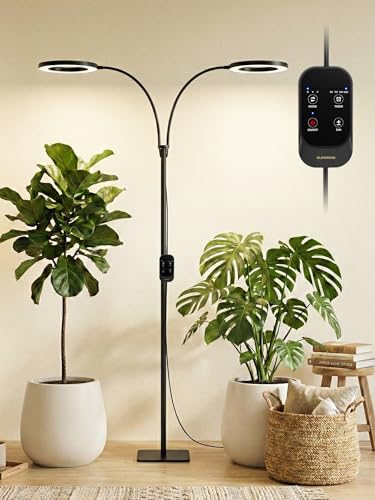
GLOWRIUM Tall Plant Grow Light, Full Spectrum

Barrina TX-L84 4FT LED Grow Light 84W
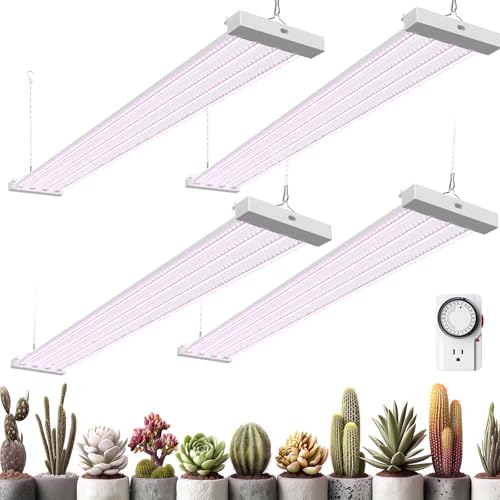
Barrina TX-L84 4FT LED Grow Light 336W

DOMMIA Under Shelf Grow Light with Timer

SpeePlant 25W LED Grow Light Bulb
A Deeper Look At The Lineup
A freestanding 48W panel on a four-section pole gives beginners the rarest thing in microgreens: vertical room. The lamp head rises to roughly 79 inches, so a tray on a low table or a stack of trays on a kitchen cart both sit comfortably under the canopy without clipping cotyledons.
PPFD is a measurement of usable light reaching the plant surface, and on microgreens that usually means keeping it moderate but consistent. Full-spectrum output with stepless dimming lets you dial intensity down for delicate sprouts, then push it up as true leaves form.
A Few Highlights
- Telescoping pole adapts to short trays or tall seedlings without rebalancing.
- Stepless dimmer replaces the awkward low/medium/high jump common in budget lights.
- Full-spectrum output covers both leafy and stemmy microgreens on a single setting.
- Freestanding base means no clamps, screws, or shelf mounting.
Things To Consider
- Single lamp head limits coverage for anyone running two or three trays side by side.
- The pole base takes a small floor footprint, which may crowd cramped corners.
Quick Facts
Made For
First-time growers running one or two trays on a countertop who want a no-mount, plug-and-play setup.
Consider Something Else When
The GLOWRIUM Tall Plant Grow Light suits anyone running mixed trays who wants two adjustable heads instead of one.
The dual-head layout is the selling point here. Two panels on flexible goosenecks mean I can angle one head straight down on a tray of broccoli sprouts while the second reaches a pot of basil nearby, which removes the most common beginner headache of uneven light.
Three named spectrum modes (seedling, vegetative, flowering) sound fancier than they need to be for microgreens, but the seedling setting keeps tender cotyledons from getting blasted during the first few days.
What Pays Off
- Dual heads double coverage compared with the single-head GLOWRIUM stand.
- 268 LEDs spread across both panels keep brightness even across a wide tray.
- Dedicated seedling spectrum protects tender sprouts from light shock.
- Gooseneck arms let me aim each panel at a different tray.
Honest Caveats
- Goosenecks can sag over time under the weight of the LED heads.
- Spectrum modes add a learning curve for anyone who just wants one on-off switch.
Right Fit For
Growers raising microgreens alongside herbs or small houseplants who want one fixture covering both.
A Better Fit Elsewhere
The DOMMIA Under Shelf Grow Light suits anyone who needs a fixture hidden beneath a shelf rather than standing on the floor.
Four-foot shop lights were the original microgreens workhorse, and this Barrina keeps that format while folding in modern LED efficiency. Four panels inside a single 4-foot frame spread the beam wide enough to cover a standard nursery flat plus a couple of side trays.
Mounted roughly 12 inches above the canopy, it blankets a 47-by-20 inch footprint with even light, which matters when you want the middle of a tray to look as crisp as the edges.
Everyday Perks
- Wide footprint handles a full nursery flat with room to spare.
- Four-panel layout keeps edges and corners from going dim.
- 4-foot form factor drops cleanly into standard wire shelving.
Points To Keep In Mind
- Requires shelf mounting hardware, which adds setup time.
- Single 84W unit may not be enough for very dense, fast-stacking crops.
- No built-in timer means pairing with an outlet timer for hands-off cycles.
Key Product Details
Best Suited To
Anyone scaling up to multiple trays on a wire shelf who wants one fixture per level.
Look Elsewhere When
The Barrina TX-L84 336W version suits growers running dense racks where one light per shelf is not enough.
Where the 84W model covers a single shelf, this 336W setup stacks four of those fixtures into one grow zone. The result reads more like a commercial rack than a hobby shelf, and it handles dense canopies of pea shoots or sunflower without dropping intensity across the back rows.
For growers selling microgreens or running family-sized harvest cycles, the jump in PPFD (photosynthetic photon flux density, a measure of light usable for plant growth) translates to faster, more uniform cuts.
A Few Strong Suits
- Quad-panel layout floods the full shelf with high-output light.
- Same 4-foot frame as the smaller Barrina, so it drops into the same shelving.
- Strong choice for thick-stemmed crops that need real photon density.
Practical Considerations
- Heat output rises with wattage, so spacing above the canopy matters more.
- Overkill for a single hobby tray or two.
Who Will Love This
Small commercial growers or family setups running multiple tray levels who need uniform, dense coverage on every shelf.
Skip It When
The Barrina TX-L84 84W model fits anyone running one shelf at a time on a tighter footprint.
At roughly 0.28 inches thick, this panel disappears under a shelf and turns existing furniture into a grow rack. Built-in timer cycles of 6, 12, or 16 hours remove the need for an external plug-in timer or app, which is the most common friction point for first-timers.
The slim profile also makes it easy to mount two or three panels side by side on a longer shelf for wider tray runs.
What Makes Sense
- Built-in auto timer cycles through 6/12/16-hour presets without extra hardware.
- Four dimmer levels let me tune intensity up or down by crop.
- Power-loss memory returns to the last setting after an outage.
Worth Bearing In Mind
- Single 4-by-4-inch panel is best for small trays or seed-starting cells.
Feature Snapshot
Whose Shelf It Belongs On
Apartment growers or renters who want a low-profile setup that hides under an existing bookshelf.
Another Choice May Suit
The SpeePlant 25W LED Grow Light Bulb suits anyone who already owns a clamp lamp and wants a bulb swap instead of a new fixture.
A bare bulb feels almost retro in a category full of panel lights, but that is exactly the appeal. Anyone with a clamp lamp, a pendant socket, or a desk fixture can screw this in and call it done. No shelves to mount, no stands to balance.
A built-in cycle memory timer means the bulb remembers its last on-off schedule after a power interruption, which sidesteps one of the small annoyances of plug-in timers.
Real-World Strengths
- Drops into any standard E26 socket, so no new hardware to buy.
- 25W draw keeps electricity use modest for daily photoperiods.
- Cycle memory timer keeps schedules intact through outages.
Small Caveats
- Coverage is narrower than a panel, so it suits one tray at a time.
- Beam angle is fixed, leaving uneven edges on wider trays.
Who Should Grab It
Anyone who already owns a clamp lamp and wants to test microgreens without buying a full lighting setup.
Reach For A Different Pick When
The DOMMIA Under Shelf Grow Light is a better fit for growers who want a hidden fixture instead of a hanging bulb.
What Matters Most Before Choosing Grow Lights For Microgreens
Spectrum choice sits at the top of the list. Microgreens only need the light for 7 to 14 days, but full-spectrum output (light covering the wavelengths plants use for photosynthesis) still helps true leaves develop chlorophyll properly rather than going pale. Blue-leaning light keeps stems short and stocky, while a touch of red supports later-stage leaf growth.
Coverage matters more than raw wattage. A 25W bulb centered over a single 10×20 tray often outperforms a powerful shop light mounted too high, because the closer fixture delivers more usable photons per square inch. PPFD is the standard way to measure that usable light, and most microgreens thrive somewhere in the 150 to 300 µmol/m²/s range at canopy level.
Light Distance And Photoperiod
Mount height changes everything. Start seedlings a few inches below the lamp, then raise the fixture as the canopy grows to avoid leaf burn. A 14 to 16 hour photoperiod is common for microgreens, and any timer that automates that cycle removes a daily chore.
Fixture Style And Footprint
Floor stands, panel bars, under-shelf mounts, and bare bulbs each suit a different space. A studio apartment might prefer a hideaway panel, a basement rack benefits from shop-light bars, and a countertop experiment runs fine on a single bulb.
Key Considerations Across These Picks
Pitfalls Shoppers Hit
Choosing the brightest fixture available, then wondering why seedlings bleach. Microgreens want moderate PPFD at close range, not stadium lighting from two feet away. The bigger mistake I see is ignoring mounting height, because most lights perform very differently at 6 inches versus 18 inches.
Where The Extra Money Goes
Higher-tier fixtures tend to add wider coverage, more even beam spread, and timers or dimmers baked into the unit. For a hobby grower with one tray, those extras feel like overkill. For anyone running three or more shelves on a timer, the built-in automation alone is worth the step up.
Frequently Asked Questions
How Far Should Grow Lights Hang Over Microgreens?
Start with the lamp 4 to 6 inches above the soil for the first three days, then raise it to 8 to 12 inches as the canopy fills in. Watch for any bleaching or curling, which signals the light is too close.
Do Microgreens Need Full-Spectrum Light?
Full-spectrum output supports both early cotyledon (the first pair of leaves a seedling produces) and true-leaf stages, so it is the safest pick. Blue-heavy light also works for the short grow cycle and keeps stems compact.
How Many Hours Per Day Should I Run Grow Lights?
A 14 to 16 hour daily photoperiod is common. Some growers run 18 hours, but results plateau, and the extra hours add to electricity use without much visible payoff.
Can I Use A Regular Lamp For Microgreens?
A regular lamp bulb lacks the spectrum and intensity microgreens need. A dedicated grow bulb, like the SpeePlant 25W option, is the easiest way to repurpose an existing clamp fixture.
Do Microgreens Need Darkness?
Yes. A dark period each day lets seedlings process the light they absorbed and avoids exhausting the plant. Any timer with an off-cycle covers this automatically.
Closing Remarks
Pick a fixture that matches the number of trays you actually run today, not the rack you might build next year. The right light at the right height turns a handful of seeds into a steady harvest, and most growers get the best results from a simple setup they actually use every day.