

A 2×4 grow tent is one of the most popular footprints for hobbyist indoor cultivation, and lighting choice shapes everything from stretch to yield density. I’ve spent time around these tents long enough to know that the “right” fixture depends on what you’re growing, how tall the canopy runs, and whether you want app control or a simple on-off panel.
This list covers full-size bar fixtures for serious 2×4 coverage, mid-power panels for mixed veg-and-flower runs, and compact halo lights for small houseplants and seed-starting setups. Each pick includes honest trade-offs, so you can match a fixture to your actual grow rather than chasing specs on paper.
A Quick View Of The Lineup

RDJ Bouns 240W LED Grow Light with UV IR, Adjustable Panel Angle
VIVOSUN AeroLight 240W LED Grow Light with Fan

AC Infinity IONFRAME EVO3 280W Samsung EVO Bar LED Grow Light

Spider Farmer G4500 LED Grow Light 320W, App-Controlled
VIVOSUN LumaLight 100W LED Grow Light

Spider Farmer SF1000 2 Pack LED Grow Lights

VIVOSUN LumaLight 320W LED Grow Light
Kullsinss 3.5in Halo Plant Light, 48 LEDs

Kullsinss 3.5in Small Grow Light, 48 LEDs

Kullsinss Grow Lights for Indoor Plants, 80 LEDs, Timer and Adjustable Height
What Each Pick Brings To The Table
The RDJ Bouns 240W panel takes a different approach than the bar-style fixtures later in this list. Instead of one wide rectangle, the panels pivot independently, so you can angle output toward corners of a 2×4 or split light across two smaller tents. For growers running mixed crops or scrog-style canopies, that articulation is genuinely useful.
Aim it above a flowering canopy and the SANAN 3030 diodes push a high-PPFD beam (photosynthetic photon flux density, the measure of usable light reaching the plant) across the footprint, with a full-spectrum blend that includes UV and IR diodes (ultraviolet and infrared, often added to nudge resin and stretch responses). The dimmer runs from 0 to 100 percent, which I appreciate when moving seedlings up under the same fixture later in the run.
The Upside
- Adjustable panel angles let you target corners where bar fixtures sometimes leave dim edges.
- Full 0 to 100 percent dimming helps when transitioning young plants without raising and lowering the whole unit.
- Daisy-chain support means running two or three panels from one timer without rewiring each run.
- UV and IR additions can support more natural-spectrum responses during flower.
- Listed coverage handles both 2×4 and 4×4 tents, so you won’t outgrow it after one cycle.
Things To Consider
- Two hinged panels add a bit of mounting complexity versus a single rigid bar.
- Built-in cooling relies on passive heatsinks, so in a hot room you may still want clip-on circulation.
Who It Suits Best
Multi-tent growers and intermediate cultivators who want one fixture they can re-aim as crops change.
Where Another Pick Suits Better
If you want quieter thermal management with a built-in fan, the VIVOSUN AeroLight 240W is a stronger match.
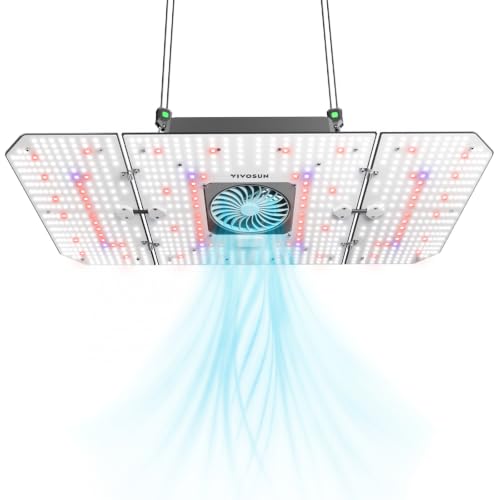
The VIVOSUN AeroLight 240W isn’t just a light, it’s a light with a built-in circulation fan mounted behind the diode panel. The idea is simple: instead of just dumping photons onto the canopy, it also moves air through the leaves so CO₂ (carbon dioxide, the gas plants consume during photosynthesis) stays fresh and humidity pockets don’t form under the canopy.
In practice, that means slightly less reliance on a separate clip fan in a 2×4, which is helpful in tight tents where floor space is precious. The full-spectrum output runs through a tunable diode blend for both vegetative and flowering recipes, and the fixture sits at the same 240W class as the RDJ Bouns panel above.
Key Advantages
- Integrated fan reduces stagnant air pockets, supporting steadier transpiration in dense canopies.
- Tunable spectrum supports both veg and flower stages from one fixture.
- Lower-profile body fits tents where headroom is tight.
Worth Noting
- The fan adds a slight hum that some growers notice in closets or shared spaces.
- Replacing the fan after years of use can be more involved than swapping a passive panel.
Made For
Growers in warm rooms or sealed tents where air movement matters as much as photon delivery.
Look Elsewhere When
Noise-sensitive setups may prefer the passive AC Infinity IONFRAME EVO3 covered next.
The AC Infinity IONFRAME EVO3 is the most refined bar fixture in this roundup. It runs Samsung LM301H EVO diodes (high-efficiency white LEDs used in premium horticultural fixtures) at a 3.14 µmol/J PPE rating (photosynthetic photon efficacy, the micromoles of usable light produced per joule of electricity), which is meaningfully higher than the generic 3030 chips used in many entry-level panels.
Translated into ownership: more usable light per watt, less waste heat dumped into the tent. The bar-style spread with algorithmically spaced diodes is built to flatten hotspots, which matters in a 2×4 where edges tend to fade under cheaper fixtures. The UIS-compatible controller (AC Infinity’s unified controller platform) handles scheduling, sunrise/sunset dimming, and ten brightness levels through the WiFi app.
Good Reasons To Consider
- Top-tier diode PPE means more growth per watt over a flowering cycle.
- Even bar-style distribution cuts down on edge fade in narrow 2×4 footprints.
- Programmed schedule and sunrise/sunset dimming reduce transplant shock on photo-period changes.
- App control removes trips into the tent for routine adjustments.
Points To Note
- Higher entry cost than the panel-style picks earlier in this list.
- Full smart features require the UIS controller ecosystem, which adds another piece of gear.
Feature Snapshot
Perfect Match For
Yield-focused growers running dense flowering cycles who want one premium fixture to anchor the tent.
Swap It Out When
A tighter budget points toward the Spider Farmer SF1000 2 Pack for a modular setup.
The Spider Farmer G4500 sits in the middle of this list because it threads a real needle: more wattage than the 240W panels earlier, simpler ecosystem than the AC Infinity UIS platform, and an elongated bar shape that suits 2×4 and 3×5 footprints. The Bridgelux diode array pushes 320W at a 2.85 µmol/J PPE, which lands just behind the AC Infinity on efficiency but ahead of most generic panels.
Compared to the IONFRAME EVO3 above, this one trades a small amount of diode efficiency for app-based control through Spider Farmer’s controller and a friendlier learning curve. Coverage stays even at the edges, which is the main thing a 2×4 owner cares about.
Useful Strengths
- Elongated bar shape spreads light evenly across a 2×4 without harsh center hotspots.
- App-based dimming and scheduling simplify day-to-day adjustments.
- 320W output handles full-flower loads in a 2×4 without supplementation.
- Solid efficiency at 2.85 µmol/J keeps operating costs in line.
Honest Caveats
- Slightly lower PPE than the AC Infinity IONFRAME EVO3.
- Bar fixture is longer than compact panels, so closet doors need to clear it during install.
Quick Facts
Right Fit For
Growers who want app control and full 2×4 coverage without paying the top-tier AC Infinity premium.
Reach For A Different Pick When
Maximum diode efficiency matters more than app polish, and that’s where the IONFRAME EVO3 earns its keep.
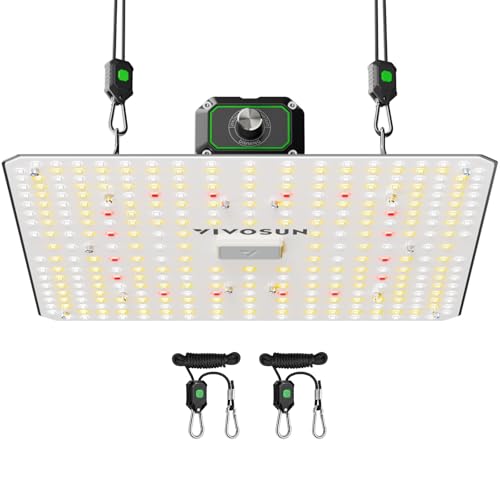
The VIVOSUN LumaLight 100W is the gentle end of this list, a compact full-spectrum panel tuned for seedlings, vegetative growth, and light-feeding houseplants. Compared to the 240W and 280W fixtures earlier, it gives up a lot of raw output, but that’s the point: it covers small footprints without overpowering delicate starts.
For someone running a 2×4 propagation chamber or a veg-only tent before flip, the diode blend (3000K warm white, 5000K cool white, 660nm red, and 730nm far-red) supports healthy chlorophyll development (chlorophyll is the pigment plants use to convert light into energy) without blasting young plants. Pair it with the VIVOSUN AeroLight in flower, and you’ve got a matched two-stage system.
Where It Helps
- Lower 100W output keeps heat low in propagation and veg tents.
- Full-spectrum blend includes red and far-red for stronger root development.
- Compact size drops easily into small tents and shelving racks.
Things To Consider
- Not enough photon density for a full flowering 2×4 on its own.
- Lower output means longer veg times to reach the same transplant size.
Who It Suits Best
Beginner growers focused on seedlings, herbs, and vegetative growth who don’t need full bloom wattage yet.
Not Your Match When
A flowering 2×4 tent is the goal, in which case the VIVOSUN LumaLight 320W below is a smarter step up.
The Spider Farmer SF1000 2 Pack flips the usual logic. Instead of one big fixture, you run two smaller panels spread across the 2×4 footprint. Each panel draws around 100W, and together they cover the tent evenly without a single center hotspot.
The fanless silent design matters in apartments or shared spaces where compressor noise carries. PPE lands around 2.5 µmol/J, which trails the bar fixtures above, but two units with even spacing can match their canopy coverage in a narrow 2×4. Owners commonly report the diodes running cool enough that no extra fan is needed at canopy level.
Bright Spots
- Two-panel spread flattens hotspots better than a single center-mounted light.
- Fanless operation keeps the tent genuinely quiet.
- Modular layout lets you raise or lower each side independently for uneven canopies.
Softer Spots
- Two power cords and two mounts mean a slightly more involved install.
- Lower PPE per panel than the single-fixture picks at the top of this list.
Feature Rundown
Best Suited To
Growers who value silence and even coverage over top-of-class diode efficiency.
Skip It When
A single-fixture setup is the priority, which points back to the Spider Farmer G4500 above.
The VIVOSUN LumaLight 320W is the bigger sibling of the 100W panel earlier, but it earns the upgrade label through its Micro-Lens Optic System. Those curved, wave-shaped lenses redirect and concentrate light downward, which boosts useful PPFD at the canopy without raising the wattage.
Compared to the AC Infinity IONFRAME EVO3, this fixture trades some smart-platform integration for a more focused optical approach. The scientifically arranged bar matrix claims 0.89 uniformity (meaning the dimmest spot in the tent receives 89 percent of the brightest spot’s intensity), which is meaningful in a 2×4 where edge plants usually lag a quarter-turn behind the center.
Where It Excels
- Micro-lens optics concentrate output onto the canopy, raising effective PPFD.
- Bar-matrix layout delivers strong edge-to-edge uniformity for a 2×4.
- Full-spectrum blend supports both vegetative and flowering stages.
Trade Offs
- Lens design adds slight weight over plain panel fixtures.
- Warranty and ecosystem support don’t match AC Infinity’s UIS platform.
At A Glance
Whose Shelf It Belongs On
Growers who want strong optical performance in a bar-style fixture without committing to a smart-controller ecosystem.
A Better Fit Elsewhere
Owners who want integrated smart controls should consider the AC Infinity IONFRAME EVO3 instead.
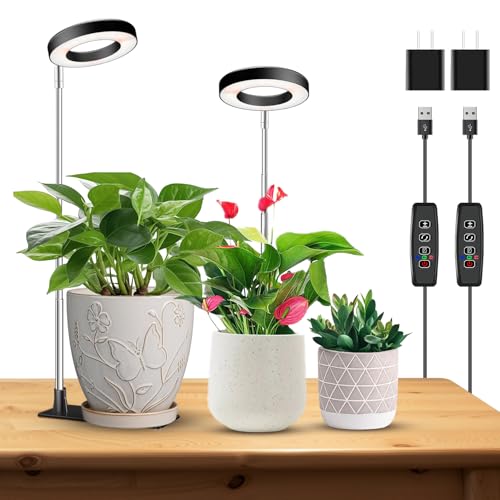
The Kullsinss Halo isn’t really a 2×4 tent light, and that’s worth saying out loud. It’s a 3.5-inch halo-style puck with 48 LEDs, designed to sit above a single desk plant or potted herb. I’m including it because readers searching for tent lights often also tend houseplants, and the form factor solves a different problem well.
The detachable base gives you two install options: set the pot on the base for stability, or push the spike into soil. Owners commonly find this useful for shelves and corners that need a gentle photon nudge without running a full tent fixture.
Points In Its Favor
- Two mounting modes (base or soil spike) adapt to different shelves and pots.
- Full-spectrum 380 to 760nm range covers the wavelengths small plants use.
- Tiny 3.5-inch footprint fits anywhere a tent fixture cannot.
Potential Drawbacks
- Output is far too low for any meaningful 2×4 flowering coverage.
- Best limited to single-plant supplementation or herb propagation.
Built With In Mind
Apartment growers with a handful of low-light houseplants who want a tidy, almost invisible grow light.
Where A Sibling Pick Shines
Anything larger than a single herb calls for the Kullsinss 80 LED unit covered last in this list.
The Kullsinss Small Grow Light is the smaller cousin of the halo above, with the same 48-LED count but a slightly different housing. It’s pitched at the same use case: a single low-power unit for pots, small herbs, and shelves where full tent lighting is overkill.
What it shares with the 3.5-inch halo is the dual-install base. What it gives up is some of the visual polish, which keeps the price accessible for someone just starting with houseplants or seed trays.
What It Does Well
- Simple on/off operation makes it approachable for first-time growers.
- Full-spectrum output covers 380 to 760nm for balanced plant support.
- Detachable base allows soil spike or stable tabletop use.
Where It Is Less Suited
- Coverage area stays limited to a single small plant or cluster.
- No dimming or timer on this model, unlike the larger Kullsinss unit at the end of this list.
Who Should Grab It
Casual plant parents who want a low-effort supplement for one or two houseplants without learning controls.
Consider Something Else When
You want timer modes or height adjustability, both of which the Kullsinss 80 LED unit handles.
The Kullsinss 80 LED desk lamp closes this list with a different shape entirely. It’s a height-adjustable stand (9.8 to 37.4 inches) with two mounting options: a metal base or plastic ground stakes. The 80 LEDs cover 380 to 780nm, and a built-in timer offers 6, 12, or 16-hour cycles.
This is the right pick when the “tent” in your search is really a tall shelf of leafy plants or a seed-starting rack, not a flowering closet. Compared to the two halo models above, it adds dimming, spectrum modes, and a timer that you can actually set and forget.
Positive Takeaways
- Adjustable height from under 10 inches up to nearly 40 inches fits seedlings through small houseplants.
- Three timer modes handle common day-length schedules without manual switching.
- Two install methods adapt to tabletops, counters, or floor placement.
- Three spectrum modes let you tune the blend for veg-leaning or bloom-leaning plants.
Some Limits To Know
- Stand design takes up floor or desk space that a hanging fixture would not.
- Total photon output is well below any of the 2×4 tent fixtures above.
Key Specs
The Right Fit
Houseplant and seed-starting growers who want timer-driven lighting without a full tent setup.
Another Choice May Suit
Full flowering in a real 2×4 tent points back to the AC Infinity IONFRAME EVO3 covered earlier.
Picking The Right Light For Your 2×4 Setup
A 2×4 tent rewards fixtures that throw light evenly across the narrow footprint rather than dumping it in the center. Bar-style fixtures have largely taken over this format because their spread matches the tent shape, but panel designs with adjustable angles still have a place.
Wattage And Coverage
For a full flowering 2×4, plan on roughly 30 to 40 watts per square foot of canopy. That’s the range where the 240W to 320W fixtures earlier in this list land. Going lower works for veg and propagation, while heavy bloom loads in dense SCROGs (a “screen of green” training method where plants grow through a horizontal net) want the higher end.
Spectrum Considerations
Full-spectrum diodes cover the wavelengths plants use across both veg and flower. If a fixture adds dedicated red or far-red diodes, it can support stretch responses and flowering transitions more naturally, though the practical difference for hobbyist growers is smaller than marketing suggests.
Form Factor And Mounting
Bar fixtures hang cleanly and stay out of the way. Panels with adjustable angles take more setup but let you target corners. Halo and stand lights aren’t tent fixtures at all, so be honest about whether you’re buying supplemental plant lighting or actual grow coverage.
Key Considerations Across These Picks
Pitfalls Shoppers Hit
The most common mistake is buying a single high-wattage panel for a 2×4 and ending up with a hot center and dim edges. Bar-style fixtures or two-panel layouts solve that. Another trap is matching a flowering-rated wattage to a propagation tent, which can bleach seedlings and force unnecessary dimming.
Where The Extra Money Goes
Premium picks like the AC Infinity IONFRAME EVO3 charge more for higher diode efficiency, which pays back over years of electrical use. They also tend to bring better thermal management and longer diode lifespans. The upgrade makes sense for full-flower tents running daily cycles, less so for the occasional seed-starting project.
Frequently Asked Questions
How Many Watts Do I Need For A 2×4 Grow Tent?
For flowering, plan on roughly 30 to 40 watts per square foot, which lands between 240W and 320W for a 2×4 footprint. Veg-only setups can run lower, around 100W to 200W.
Are Bar Lights Better Than Panels For 2×4 Tents?
Bar-style fixtures tend to spread light more evenly across a 2×4 because their shape matches the tent. Panels can still work, especially with adjustable angles, but bars usually reduce edge fade.
Do I Need UV And IR Diodes?
UV and IR additions support more natural-spectrum responses but aren’t essential for hobbyist grows. Fixtures with strong full-spectrum white diodes handle most growth stages without dedicated UV or IR chips.
Can I Daisy Chain Multiple Lights?
Several fixtures in this list support daisy chaining, which lets you run multiple panels from one timer and dimmer. Always confirm the total wattage stays within your timer’s rated load before chaining.
How Far Should The Light Hang Above The Canopy?
Seedlings need the light farther away, often 24 to 30 inches, while flowering canopies in a 2×4 typically run 12 to 18 inches. Watch leaves for bleaching or stretching and adjust from there.
Closing Remarks
A 2×4 tent is one of the friendliest footprints to light well, and the right fixture depends more on what you grow and how you grow it than on chasing the highest wattage. Match the light to the stage, keep an eye on edge coverage, and let the tent tell you when the output is right.