

Indoor gardening gets tricky when sunlight falls short, and choosing the wrong fixture quietly sabotages months of work. I wrote this roundup for hobbyists and serious home growers who want honest guidance on which lights actually fit their space, plants, and budget. You’ll find a mix of compact clip-ons for a single pothos, decor-friendly pendants for living rooms, and heavy-duty panels for full 4×4 tents. I’ll walk you through what each pick does well, where it stumbles, and who should realistically reach for it.
A Fast Comparison Of The Options

Spider Farmer SE1500 LED Grow Light 150W (App-Controlled)
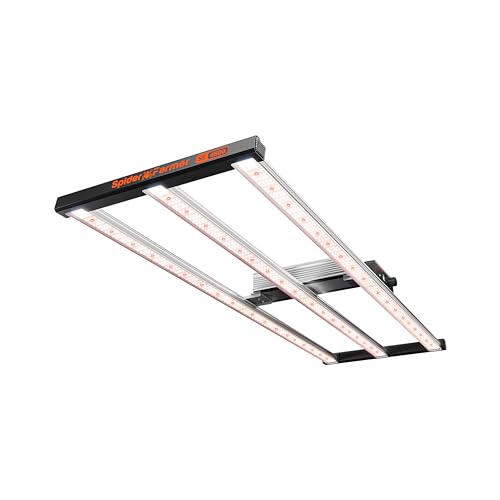
Spider Farmer SE4500 LED Grow Light 320W (2×4 Tents)

HLG 600 Rspec FR 600W Quantum Board Grow Light

VIIVUU Clip-On Grow Light (White, 1 Pack)

Aspect Soltech Gen 2 Pendant Grow Light (White)

Spider Farmer SE3000 LED Grow Light 300W (App-Controlled)
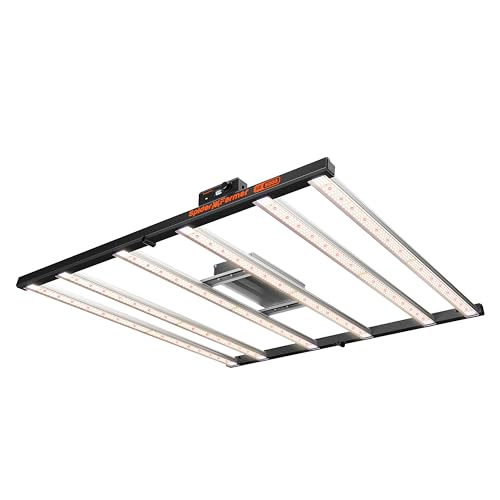
Spider Farmer SE5000 LED Grow Light 480W (4×4 Tents)

Garpsen Grow Light with Stand (80 LEDs)

Garpsen Halo Dual-Head Floor Plant Light

Spider Farmer SE7000 Commercial LED Grow Light
What Each Pick Brings To The Table
The Spider Farmer SE1500 is the kind of light I keep recommending to friends starting their first real indoor garden. It’s a 150W bar-style fixture built around premium Bridgelux diodes, which produce roughly 428 µmol/s of PPF (photosynthetic photon flux, the measure of light energy plants can actually use). For a hobbyist running a 2×2 grow tent or a small closet, that output lands in the sweet spot without driving up the power bill.
Compared to the VIIVUU clip-on I’ll cover later, this is a serious step up: full-spectrum output across a meaningful footprint, plus app control for sunrise and sunset simulation. Bar-style light distribution spreads PPFD (photosynthetic photon flux density, or how much usable light hits a given area) more evenly across the canopy, so edge plants don’t lag behind the center.
The Practical Payoff
- Even bar-style distribution eliminates the dead spots common with single-panel lights.
- App-controlled scheduling frees me from manual on/off routines during a busy week.
- Runs cool enough for a 2×2 tent without aggressive ventilation, simplifying setup.
- Bridgelux diodes are widely considered a benchmark for efficiency at this wattage.
- Lightweight frame makes hanging height adjustments easy as plants stretch.
Things To Consider
- The app ecosystem requires a stable home network and a small comfort curve with the interface.
- Owners commonly note that the included hanging hardware feels basic and may need upgrading for taller tents.
Key Specs
Who It Suits Best
First-time indoor growers working with a 2×2 tent who want app-driven control without overspending on wattage.
Skip It When
The HLG 600 Rspec FR is a better match for growers running a full 4×4 tent who need deeper canopy penetration.
Stepping up from the SE1500, the SE4500 lands right in the middle of Spider Farmer’s 2026 lineup. The 320W draw pushes about 913 µmol/s of photon output, and the three-bar extended design is built specifically for a 2×4 ft footprint. For growers who outgrew a 2×2 tent but don’t need a full 4×4 yet, this is the size class that tends to feel “just right.”
Efficacy sits around 3.14 µmol/J (micromoles of usable light per joule of electricity, a measure of how efficiently a fixture converts watts into plant-usable photons), which is genuinely competitive in this category. I’ve seen growers praise the way it blankets a 2×4 without leaving the corners behind, and that even coverage matters more than peak wattage once you start flowering.
What Stands Out
- 3.14 µmol/J efficacy keeps electricity costs manageable over full-cycle grows.
- Three-bar layout spreads photons evenly to tent corners where single-fixture setups usually fail.
- App control supports dimming and scheduling without manual rewiring.
- Strong photon density supports heavy flowering without hotspots on the canopy.
Honest Caveats
- Heavier than the SE1500, so ceiling hanging hardware needs to be properly rated.
- Requires a dedicated circuit in older homes where 15-amp kitchen outlets are already loaded.
Made For
Intermediate growers running a 2×4 tent who want full-cycle coverage without the cost or heat of a 4×4 fixture.
Where Another Pick Suits Better
The Spider Farmer SE3000 is a smarter buy if you only need a 3×3 footprint and want a lighter panel that mounts easily.
HLG’s 600 Rspec FR is one of those lights that shows up in serious growers’ tents for a reason. The quantum board design spreads Samsung-derived diodes across a wide board, and the 600W draw produces 1529 PPF at 2.60 µmol/J efficiency. That’s real canopy-level photon delivery, and it shows in fruiting and flowering performance.
Compared to the SE4500’s bar-style spread, this quantum board delivers a different kind of footprint: a broad, even glow that’s hard to match for a 4×4 tent. Dimming is built in, which makes it easier to run seedlings and veg at lower intensity before cranking up for bloom. The build leans commercial, and it shows in the weight and the included driver.
Reasons It Performs
- 1529 PPF output delivers pro-level canopy penetration for dense flowering runs.
- Quantum board layout throws even light edge-to-edge inside a 4×4.
- Built-in dimmer lets me tune intensity through every growth stage.
- ETL certification adds peace of mind for indoor electrical safety.
- Far-red inclusion supports the Emerson effect, a plant response where adding far-red light to red wavelengths boosts photosynthetic efficiency.
Worth Noting
- At 600W, heat output demands solid ventilation, especially in sealed tents.
- Lacks app control, so scheduling means an external timer.
- Heavier than bar-style fixtures and needs sturdy ratchet hangers.
Feature Snapshot
Right Fit For
Experienced growers running a 4×4 tent who prioritize raw photon delivery and don’t need app integration.
Look Elsewhere When
The Spider Farmer SE5000 is a smarter choice if you want app control and slightly lower weight in a similar 4×4 class.
Most of the picks in this roundup are tent-scale fixtures, but the VIIVUU clip-on lives in a different world. This is the light I’d grab for a single struggling pothos on a bookshelf or a windowsill herb pot that doesn’t get enough winter sun. The clamp base grips pot rims or thin shelves, and a hollow ring lamp head keeps the whole thing light enough not to topple small plants.
It’s not going to flower a tomato indoors. But for the person who’s lost a fiddle-leaf fig two winters in a row and wants something cheap and simple, this is the kind of low-stakes tool that actually solves a problem. Compared to the Aspect Soltech pendant coming up next, it’s far less decor-forward, but it costs a fraction of the price.
Everyday Wins
- Clamp design fits on pots, shelves, and narrow surfaces without a stand.
- Compact form factor disappears into a living room corner.
- Simple on-cord controls mean no apps or timers to figure out.
Trade Offs
- Limited photon output won’t sustain heavy flowering or fruiting plants.
- The clamp grip can mark delicate wood finishes if the rubber pad shifts.
Best Suited To
Apartment dwellers with a few low-light houseplants who want an inexpensive supplemental boost during dark months.
Consider Something Else When
The Garpsen Halo floor light is a better match if you need to cover a large floor-standing species like a tall bird of paradise.
The Aspect Gen 2 from Soltech is the pick I point to when someone asks, “Is there a grow light that doesn’t look like a grow light?” It’s a warm-white pendant designed to hang like a regular hanging lamp, with a high-output LED engine tucked inside a decor-friendly shade. Soltech claims 110% more plant-usable light than the original Aspect, and the Gen 2 noticeably tightens that gap between form and function.
Compared to the Spider Farmer SE1500, this is a completely different buying decision. The Aspect isn’t going to flower a 2×2 tent, but it will hang over a dining-room fiddle-leaf without ruining the mood. The dimming control and clean white light make it genuinely livable as a primary fixture in a finished room.
The Upside
- Pendant styling blends into living rooms and bedrooms without screaming “grow tent.”
- Warm-white output is easy on the eyes in shared spaces.
- Built-in dimmer lets me match ambient light levels.
Soft Spots
- Lower photon delivery than panel fixtures, so heavy bloomers won’t thrive.
- Hardwired install may require an electrician if no ceiling junction exists nearby.
Who Should Grab It
Plant collectors who want a stylish light source for a feature plant in a finished living area rather than a dedicated grow space.
Not Your Match When
The Spider Farmer SE4500 suits you better if you actually need tent-grade output for vegetables or flowers.
The SE3000 occupies a comfortable middle ground in Spider Farmer’s 2026 family. At 300W with about 826 µmol/s of output, it’s substantial enough for a 3×3 area but doesn’t carry the weight or heat of the 480W SE5000. Bridgelux diodes provide solid full-spectrum coverage, and the bar-style spread keeps edge plants in the light.
App control ties it back to the same ecosystem as the smaller SE1500, which is convenient for growers running multiple Spider Farmer fixtures on one schedule. For someone stepping up from a clip-on or single-panel light, this is a sensible first “real” grow light.
Everyday Advantages
- 300W is a manageable jump in power for a standard 15-amp circuit in most homes.
- Bar-style design reduces hot spots that plague cheaper single-panel fixtures.
- Lower heat signature than the SE5000 simplifies tent climate control.
- App scheduling works the same way as other Spider Farmer units.
Minor Gripes
- Doesn’t cover a full 4×4, so larger tents need multiple units.
- App updates occasionally lag behind new phone OS releases.
Quick Facts
Perfect Match For
Intermediate growers scaling up from a starter light who want app-driven control in a 3×3 tent or large closet.
A Better Fit Elsewhere
The Spider Farmer SE5000 makes more sense if your tent is a full 4×4 and you want a single-fixture solution.
The SE5000 is where Spider Farmer steps firmly into serious home-grow territory. At 480W and around 1420 µmol/s, the Bridgelux-driven fixture is engineered specifically for full-cycle, high-yield runs in a 4×4 tent. The bar-style design aims to keep PPFD consistent wall to wall, which is the kind of detail that matters when you start pushing dense canopies during late flower.
The on-board digital display and dimming knob add a precision touch that the SE3000 skips. App integration sits on top of that for offsite control. Compared to the HLG 600 Rspec FR, the SE5000 trades raw wattage for a slightly more refined control experience and a more even bar-style spread.
What Makes Sense
- 1420 µmol/s output drives vigorous flowering in a full 4×4 canopy.
- Built-in digital display makes manual dimming easier than blind knob guesswork.
- App control ties into the broader Spider Farmer ecosystem.
- Bar geometry reduces the edge lag that frustrates growers using single-panel lights.
Worth Bearing In Mind
- At 480W, this is a real load on a household circuit and may need a dedicated line.
- Heavier than the SE3000, so a robust ratchet hanger kit is essential.
Whose Shelf It Belongs On
Committed home growers running a 4×4 flowering tent who want a single fixture that handles the full cycle.
Swap It Out When
The HLG 600 Rspec FR is worth a look if you prefer a quantum board layout and don’t need app-based scheduling.
The Garpsen floor-stand light is the pick I’d hand to a friend setting up herbs or leafy greens on a small apartment shelf. It comes with 80 LEDs, a freestanding tripod base, and a built-in timer with 6, 12, and 16-hour presets. For most casual growers, that timer alone removes the daily hassle of remembering to switch the light on and off.
It won’t compete with the Spider Farmer SE1500 on raw photon density, but it’s not trying to. The semi-translucent ring shade softens the output for eye-friendly ambient lighting, which matters when the unit lives next to a kitchen counter or desk. Compared to the Garpsen Halo coming next, this one sits lower and works better for tabletop setups.
What Pays Off
- Built-in timer presets remove the manual on/off routine for busy weekdays.
- Freestanding tripod base means no drilling or hanging hardware.
- Soft ring shade makes it pleasant to share space with.
Points To Note
- Lower photon output means slower growth on light-hungry vegetables.
- Tripod base takes up floor space and can tip on uneven rugs.
Built With In Mind
First-time growers starting a small kitchen herb garden who want a no-installation setup with a timer.
Reach For A Different Pick When
The Garpsen Halo floor light fits better if you need a tall, adjustable fixture for a large floor plant.
Garpsen’s Halo is the floor-stand option to reach for when your plant isn’t a tabletop herb, it’s a tall monstera or a fiddle-leaf fig with serious height. The dual-head design runs 168 LEDs across two lamp rings, and the telescoping pole adjusts from roughly 23 to 60 inches, which means it can grow up with the plant. Gooseneck tubes on each head let me aim light exactly where new growth is happening.
Compared to the cheaper Garpsen tripod, this one is taller, heavier, and built for bigger specimens. The 6000K color temperature leans cool and white rather than the warm pink many grow lights emit, which is easier to live with in shared spaces. The metal base with cotton pads keeps it planted firmly on hardwood or low-pile rugs.
Bright Spots
- Adjustable height from 23 to 60 inches covers most floor plants.
- Gooseneck heads let me target new growth without moving the whole stand.
- 168 LEDs deliver broader coverage than single-head floor lights.
Honest Caveats
- Tall footprint can feel intrusive in tight living rooms.
- Cord length may require an extension in rooms with limited outlets.
The Right Fit
Plant parents with tall floor specimens who want adjustable, targeted light without mounting anything to the ceiling.
Another Choice May Suit
The Garpsen grow light with stand is friendlier for small tabletop herb gardens where height isn’t needed.
The SE7000 is the big one. At 730W with 2146 µmol/s of output and a six-bar layout, this is a commercial-grade fixture built to cover a 5×5 ft canopy evenly. Bridgelux diodes and Osram red emitters push a full-spectrum blend aimed at high-yield cultivators who treat their indoor garden like a serious operation.
Compared to the SE5000, the SE7000 is the same family turned up significantly. It needs a dedicated 240V circuit in most homes, and frankly it’s overkill for a casual herb shelf. But for growers running a 5×5 flowering room, it’s one of the more approachable ways to step into commercial-scale output without going fully custom.
Notable Gains
- 2146 µmol/s at 730W handles a 5×5 canopy wall to wall.
- Six-bar geometry maintains even PPFD across large footprints.
- Osram red diodes enhance flowering-phase light quality.
- App control scales across multiple fixtures in commercial rooms.
Factors To Consider
- Power draw typically requires a dedicated 240V circuit, not a standard wall outlet.
- Size and weight demand serious mounting hardware and ceiling clearance.
Feature Rundown
Who Will Love This
Experienced growers running a 5×5 tent or a small commercial room who need a single fixture to do the heavy lifting.
Not Your Match When
The Spider Farmer SE5000 is the better call for anyone running a 4×4 tent at home without 240V wiring.
What Matters Most Before Choosing Full Spectrum Grow Lights
Match The Fixture To Your Footprint
Before chasing wattage, measure the actual grow space. A 2×2 closet needs far less light than a 4×4 tent, and overlighting a small space wastes electricity while running up heat. I always recommend matching the fixture’s recommended coverage to your measured area before comparing brands.
Read Photon Output, Not Just Watts
Wattage tells you how much electricity the light uses, but PPF (photosynthetic photon flux) and PPFD maps tell you what the plants actually receive. Two 300W fixtures can deliver very different results depending on diode efficiency and beam spread. Look for µmol/J efficacy ratings above 2.5 for serious home growing.
Decide On Spectrum And Controls
Full-spectrum LEDs cover both blue wavelengths for vegetative growth and red wavelengths for flowering, so they handle full-cycle grows without swapping bulbs. App control, dimming, and timers each simplify daily routines, but they add cost. Decide whether you want manual simplicity or scheduling automation before comparing price tiers.
Plan For Heat And Ventilation
Higher-wattage fixtures produce real heat that needs to be managed, especially in sealed tents. Plan for inline fans, ducting, and tent climate control before buying a heavy-duty panel. Underestimating heat is one of the fastest ways to stunt a healthy garden.
Key Considerations Across These Picks
Where Shoppers Go Wrong
The most common slip-up is choosing a fixture based on advertised wattage instead of photon output. A 600W panel with poor diode efficiency can underperform a well-engineered 320W bar-style unit. Another trap is buying a tent-scale light for a one-plant shelf, which wastes power and overwhelms small houseplants. Match the fixture to the actual growing space and read the µmol/J rating before committing.
Where The Extra Money Goes
Higher-priced fixtures earn their cost through better diode brands, more uniform bar-style or quantum board layouts, and refined thermal management. They also tend to include app control and dimming features that pay off across long grows. The upgrade is worth it for growers running full-cycle flower tents, but casual herb gardeners rarely need that level of investment.