

Fumbling for a key at a dark front door is a small frustration, but a real one. A solar wall light fixes it the moment the sun goes down, no electrician, no extension cords, no switch to remember. I put this roundup together for homeowners who want dependable exterior lighting that handles weather, looks intentional, and pays for itself by skipping batteries and trenching.
An Overview Of The Picks

Solar Porch Lights Outdoor: Solar Wall Sconce with Motion Sensor
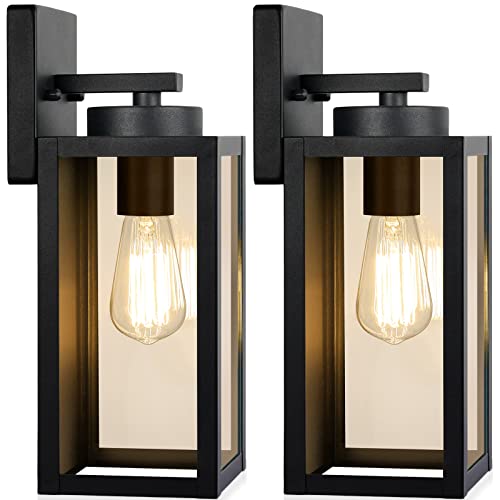
BesLowe Modern Black Exterior Wall Lanterns
GBEAST 2Pack Solar Wall Sconce RGB Up/Down

GBEAST 4Pack Solar Wall Sconce Up/Down

GBEAST 8pcs Solar Wall Lights Up/Down

GBEAST 6Pack Solar Wall Sconce White

MYHXQ 11″ Solar Porch Lights 2-Pack
What Each Pick Brings To The Table
A motion-sensing sconce earns its keep the night someone walks up your driveway. The Moodyfei fixture wakes up at dusk, stays in a low standby mode, then brightens the moment movement crosses its beam. For homes without an existing porch circuit, that convenience is the whole point.
Compared to the GBEAST color-changing models reviewed later, this one is purpose-driven rather than decorative. A built-in photocell (a small eye that detects daylight) handles the on-and-off timing, so you never flip a switch. Most homeowners mount it beside a door or over a garage, where three-mode flexibility covers both ambient glow and a brighter welcome beam.
What Stands Out
- Motion-activated mode brightens only when needed, preserving battery life on cloudy stretches.
- Three-mode operation (motion trigger, dim-to-bright, constant low) adapts to late arrivals versus quiet evenings.
- Wire-free install means no electrician visit, which most DIYers handle in under an hour with a drill and basic anchors.
- Automatic dusk activation removes a step from your nightly routine.
Worth Noting
- Battery run time depends on direct sun; shaded porches may see shorter overnight performance.
- Style leans utility, so it may feel understated next to the BesLowe lantern’s classic silhouette.
- Motion range is best for entry points rather than wide driveways, depending on mount height.
Key Specs
Who Will Love This
Homeowners with a dark entryway, garage, or side path who want hands-free security lighting without hiring an electrician.
Reach For A Different Pick When
Buyers after a decorative fixture with traditional detailing should look at the BesLowe Modern Black Exterior Wall Lanterns instead.
Some homes want a fixture that looks like it has been there for a hundred years. The BesLowe lantern delivers that impression with a matte black metal frame and a thickened glass panel that softens the bulb into a warm glow. It suits colonial, craftsman, and farmhouse facades without clashing.
Unlike the Moodyfei solar sconce, this fixture is built around a wired bulb socket and a heavier housing. That extra weight pays off in wind resistance and a sturdier feel on brick or stone. Homeowners swapping out old lanterns often choose it as a direct dimensional match for standard junction boxes.
What Helps Most
- Weather-resistant metal frame stands up to sun, rain, and snow without obvious rust in the first few seasons.
- Thickened glass diffuses light evenly, avoiding the harsh spotlight effect that thin plastic panels tend to produce.
- Matte black finish hides dust and minor weathering between cleanings.
- Classic silhouette pairs with brick, stone, and wood exteriors.
Points To Keep In Mind
- Wired install requires an existing junction box or a licensed electrician for new wiring.
- Larger footprint than compact solar sconces, so it overpowers small porch columns.
Made For
Owners of traditional or transitional homes who want a statement lantern above a garage, doorway, or entry column.
Swap It Out When
Homeowners needing wire-free mounting in a remote spot should pick the MYHXQ 11″ Solar Porch Lights 2-Pack for the same classic look without the wiring step.
Up-and-down wall sconces throw light both ways, washing the wall above and the walkway below at the same time. The GBEAST 2-pack adds a twist: thirteen lighting modes that swing from cozy warm white to a slow RGB fade. Hosts who entertain outside use the color modes on weekends and switch back to a steady white the rest of the week.
Compare this to the Moodyfei motion sconce reviewed first. The Moodyfei prioritizes security on a single front door, while this fixture leans decorative across a patio wall. Two fixtures cover a standard outdoor dining zone, and the up/down beam highlights textured stone or wood siding nicely.
Everyday Wins
- Three color temperatures (warm, neutral, and cool white) plus RGB colors cover quiet nights and party nights from the same fixture.
- Up/down beam highlights architectural texture, which most single-direction sconces miss.
- Dusk-to-dawn sensor removes manual switching and adapts to shifting seasons.
- Two-pack hits a smaller patio at a reasonable entry cost.
Honest Caveats
- Color modes use more battery, so cloudy weeks may shorten run time noticeably.
- RGB glow reads playful rather than architectural, so it may clash with minimalist facades.
Feature Snapshot
Right Fit For
Entertainers and patio enthusiasts who want one fixture that handles a quiet Tuesday dinner and a louder Saturday gathering.
A Better Fit Elsewhere
Homeowners lighting a long fence line will find better per-fixture value in the GBEAST 4Pack Solar Wall Sconce Up/Down.
Fence lighting is one of those jobs where four fixtures at once costs less than two separate purchases. The GBEAST 4-pack stretches coverage across a long side yard or wraparound porch without leaving a dark gap halfway down. The same thirteen-mode suite from the 2-pack returns, so no one loses options for the bigger count.
Where the Moodyfei reviewed earlier excels at a single entry door, the 4-pack is built for repetition. Up/down beams repeat along a fence for a consistent wash, and dusk-to-dawn automation fires every fixture at the same moment.
Where It Helps
- Four-pack delivers better per-fixture cost than the 2-pack for larger projects.
- Thirteen-mode selection (eleven solid + two RGB) lets homeowners tune color for seasons or events.
- Dusk-to-dawn sensor fires all units in unison for an even look.
- Wire-free install makes a fence line feasible in an afternoon.
Practical Considerations
- Spacing matters; gaps larger than roughly six feet between fixtures read as patchy.
- RGB modes shorten battery life, especially during winter with shorter charging windows.
Built With In Mind
Homeowners with long fence runs or wraparound porches who want consistent lighting without running cable.
Not Your Match When
Shoppers who only need one or two fixtures for a small entry will overspend here; the GBEAST 2Pack Solar Wall Sconce RGB Up/Down is the leaner choice.
Big properties ask more of a solar lighting plan. The GBEAST 8-pack outfits an estate-sized fence, a long driveway wall, or a wraparound porch in one pass. Same thirteen-mode suite, same dusk-to-dawn automation, just more fixtures to space evenly along a run.
Stepping back to the Moodyfei, that single-fixture pick handles one door. Stepping back further, the BesLowe lantern brings wired weight to a single column. This 8-pack instead spreads a coherent look across a much wider footprint, and that scale saves real time during install.
The Practical Payoff
- Eight fixtures cover large perimeters in a single purchase, which avoids mixed-batch color drift.
- Thirteen lighting modes keep the same flexibility as the smaller GBEAST sets.
- Dusk-to-dawn sensor synchronizes every unit on the same timer.
- Bulk pack suits properties planning additional mounting points in the future.
Some Limits To Know
- Charge time matters more at scale; partial-shade mounts will underperform compared with full-sun spots.
- Replacing one unit later may mean sourcing from the same batch for color consistency.
Whose Shelf It Belongs On
Owners of larger properties, long driveways, or estate fencing who want a uniform look across many mounting points.
Consider Something Else When
Suburban homes with shorter fence lines will save by choosing the GBEAST 6Pack Solar Wall Sconce White reviewed next.
A six-pack lands in the sweet spot for many suburban homes: enough fixtures to cover front, back, and side walls without leftover units in the garage. The white finish keeps the look clean against light siding, and the same up/down beam profile from the other GBEAST sets keeps the lighting signature consistent.
Earlier in this roundup, the Moodyfei handled a single entry with motion. Here the conversation shifts to whole-home coverage, where repeat fixtures read as a deliberate design choice rather than a security afterthought. For families with multiple outside doors, six fixtures is often the right count.
A Strong Showing
- Six-pack fits typical suburban front-and-side coverage without surplus.
- White finish reads cleanly against light siding and trim.
- Thirteen lighting modes (nine solid + two RGB) include warm white for everyday use.
- Even up/down wash keeps fence and wall illumination balanced.
A Few Limitations
- White housing shows dirt and weathering sooner than darker finishes, depending on overhangs.
- RGB color modes shorten battery life in shoulder seasons with weaker sun.
Core Details
Best Suited To
Suburban households wanting whole-home coverage without committing to the eight-pack scale.
Look Elsewhere When
Buyers planning a long driveway wall or acreage should step up to the GBEAST 8pcs Solar Wall Lights Up/Down instead.
An eleven-inch sconce with a square silhouette and clean lines fits modern homes better than most curved lanterns do. The MYHXQ uses four high-efficiency solar panels on the housing to extend charging in partial sun, then runs the clear-glass shade at dusk for a defined light pattern on the wall.
Compared with the GBEAST color-changing sets reviewed earlier, this fixture is the minimalist counterpoint: no RGB cycling, no animated modes, just a steady warm beam. For owners who want a clean look next to a glass-panel door or contemporary stone veneer, that simplicity is the whole appeal.
Features That Help
- Minimalist square silhouette pairs with modern and transitional facades.
- Clear glass shade creates a defined light pattern rather than a soft blur.
- Four solar panels on the housing improve charging in partial sun.
- Two-pack outfits a front door with a matching garage or side entry.
Trade-Offs To Consider
- Glass shade requires occasional wipe-down to keep the light pattern crisp.
- Larger 11-inch body may overpower small porch columns.
Perfect Match For
Homeowners with modern or minimalist exteriors who want a clean sconce silhouette with reliable solar charging.
Skip It When
Entertainers wanting color-shifting patio lighting will be happier with the GBEAST 2Pack Solar Wall Sconce RGB Up/Down.
Picking The Right Solar Wall Lights for Your Home
Solar lighting looks simple from the curb, but a few specs decide whether a fixture performs well or fades after a season. Three attributes matter more than the rest: panel placement, battery capacity, and the sensor’s behavior at dusk. Panels angled toward the path of the sun charge faster; bigger batteries hold a charge through cloudy stretches; and a well-tuned photocell (a daylight sensor that toggles the light on and off) avoids that annoying flicker at twilight when shadows shift across the sensor.
Match the Fixture to the Mounting Spot
A wall that catches afternoon sun charges a solar fixture reliably. A wall tucked under deep eaves or shaded by an overhang charges poorly, and runtime suffers in winter. For shaded entries, favor fixtures with multiple panels on different faces of the housing, like the MYHXQ 11″ Solar Porch Lights, which spread capture across four sides.
For long fence runs, multi-packs pay off because spacing determines whether a walkway reads as evenly lit or patchy. Two fixtures placed twelve feet apart leave a darker midpoint. For most home fences, four to six feet between fixtures keeps the wash continuous.
Decide Between Security and Ambiance
Motion sensors (as on the Moodyfei) extend battery life because the fixture spends most of the night in standby. That makes them ideal for entries and driveways where bright light only matters during arrivals. Up/down sconces (the GBEAST family) throw a softer, decorative wash that suits patios and entertainment zones. Some homeowners mix both styles across the same property, using motion at the door and accent lighting along the patio wall.
Plan for Weather and Maintenance
Outdoor fixtures face rain, dust, and UV (ultraviolet) rays that age plastic housings over time. Metal frames resist UV better, while plastic units stay light and easy to mount but may yellow after a couple of summers. Glass shades wipe clean easily; frosted or textured plastic shades diffuse light well but collect dust in the crevices. Either way, a quick seasonal wipe keeps the light output consistent.
Key Considerations Across These Picks
Where Shoppers Go Wrong
The single biggest mistake is mounting a solar panel in shade and expecting full-night performance. If the wall never sees direct sun, runtime will disappoint. Another common slip is mixing pack sizes across the same wall: a 2-pack beside an 8-pack from the same brand can have subtle color drift in white tones, depending on batch. Stick to one pack per wall when possible.
What The Higher Tier Buys
Multi-pack tiers cost more per fixture than single units, but they buy something important: a uniform look across an entire property and consistent sensor behavior from the same production batch. That uniformity matters when fixtures share a fence line or flank a symmetrical facade. For larger homes or full-perimeter lighting, the per-fixture savings and matched output are worth stepping up.
Frequently Asked Questions
How long do exterior solar wall lights typically last at night?
Most modern solar wall lights run six to ten hours on a full charge, depending on the mode used. RGB color modes and motion-triggered beams draw less power than a constant full-brightness wash, so runtime varies with usage.
Can solar wall lights handle heavy rain and snow?
Yes, the fixtures in this roundup are designed for outdoor exposure. Metal frames and sealed solar panels handle weather reliably, though clearing snow off the panel surface after a storm keeps charging efficient.
Do solar lights work in shaded or partly covered spots?
They work, but runtime drops noticeably. Walls under deep eaves or behind tree cover charge slower, so picking a fixture with multiple solar panels on different faces helps in partial shade.
How are solar wall lights mounted and removed?
Most come with two or three screws and wall anchors. Installation is a DIY-friendly job for anyone comfortable with a drill. Removal is the reverse: unscrew, patch the anchor holes, and the wall is clean for a future fixture.
What’s the difference between warm white and RGB modes?
Warm white (around 3000K) reads as a soft, yellowish glow suited to most homes, while RGB modes cycle through colors for parties and accent lighting. Most homeowners use warm white daily and switch to RGB only when entertaining.
Wrap Up
The right solar wall light depends on where it lives and what you want it to do. Motion-sensing sconces cover a single entry with confidence, decorative up/down fixtures set the mood across a patio wall, and multi-packs spread a coherent look across a long property. Match the fixture to the sun exposure, the spacing, and the look you want at night, and the rest tends to take care of itself.