

Picking a dimmer for LED recessed lighting isn’t as simple as grabbing any old switch off the shelf. LEDs draw a fraction of the wattage incandescents did, and many older dimmers weren’t designed to handle that, which is where the infamous flicker, buzz, and limited dim range comes from. A compatible modern dimmer keeps the lights smooth from full brightness down to a low, warm glow without humming.
I put this list together for homeowners renovating a kitchen, a renter replacing one stubborn switch, or a DIYer wiring a new build. You’ll find plain-English notes on what each option actually does, who it suits, and where it falls short.
A Side-By-Side Look

HitLights EZDim 60W LED Driver and Dimmer Switch

Lutron Caseta ELV Smart Dimmer Switch

EMITEVER 60W 24V 5-in-1 Dimmable LED Driver

EMITEVER 60W 24V Triac Dimmable LED Driver

EMITEVER 60W 12V Dimmable LED Driver
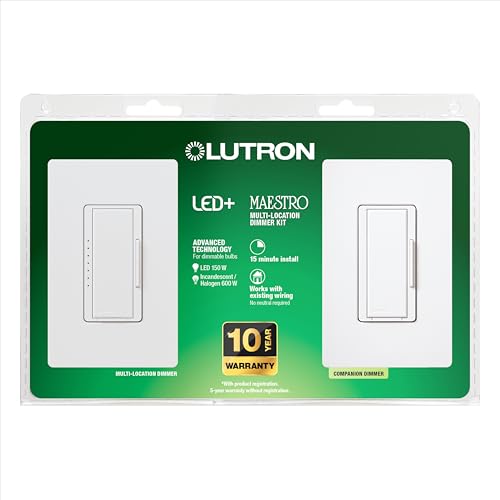
Lutron Maestro LED+ Dimmer Kit (150W)

ELEGRP LEDPro Multi-Location Dimmer (Matte White)
EMITEVER 60W 24V Dimmable LED Driver

ELEGRP Digital Toggle Dimmer (White)
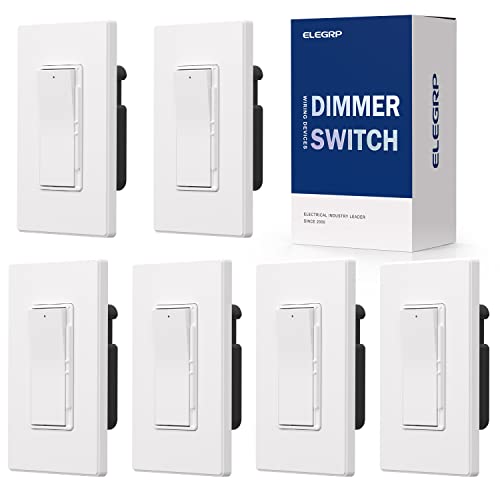
ELEGRP 6-Pack Digital Slide Dimmer (Matte White)
More On The Choices That Made The List
The HitLights EZDim is one of the few products on the market that crams both a low-voltage driver and a wall-mount dimmer into a single unit. It accepts standard 120V AC from your home wiring and spits out 24V DC for tape lights or low-voltage fixtures, so you don’t have to mount a separate driver brick somewhere behind a couch.
For a single-room kitchen retrofit or a cove lighting run, that single-box approach is genuinely convenient. The sliding lever dims smoothly down to roughly 1% of full output, which gives you a much wider range than you’d see with a basic on/off transformer.
The Practical Payoff
- Combines power supply and switch in one wall box, eliminating extra hardware clutter.
- Sliding dimmer reaches very low output without the typical LED drop-out zone.
- Output voltage stays within a tight regulation range, so lights stay steady at any level.
- Listed for safety, a meaningful factor when wires sit inside a wall cavity.
- Great fit for tape-light retrofits where running a separate driver is awkward.
Things To Consider
- Only handles up to 60W, which limits very large or multi-room runs.
- Designed for 24V DC fixtures, so it won’t replace a standard 120V dimmer directly.
- Some users may find the lack of smart features limiting for whole-home automation.
Quick Facts
Made For
Homeowners adding 24V tape lighting under cabinets or along a cove who want one tidy unit instead of a separate driver.
Consider Something Else When
The Lutron Maestro LED+ Dimmer Kit suits anyone wiring a standard 120V recessed LED ceiling setup rather than a low-voltage tape run.
The Caseta ELV+ sits on the higher end of the lineup and exists for one job: clean, silent dimming on electronic low-voltage (ELV) loads. Unlike the entry-level Maestro I’ll cover later, this model talks to a smart hub so lights can be scheduled, grouped, and triggered from a phone.
It fits a standard wall box without requiring a neutral wire, which is genuinely handy in older homes where the wiring just isn’t there. For someone already invested in a Caseta ecosystem, the ELV+ plugs right in.
What Earns Its Place
- Handles ELV loads without buzzing, a common issue with cheaper dimmers.
- No neutral wire required, opening it up to older homes and remodels.
- Schedules and scenes through the Caseta app, useful for whole-home routines.
- Compatible with Pico remotes for three-way setups without pulling extra wire.
Points To Keep In Mind
- Requires the Caseta Smart Hub, which adds to the total cost of ownership.
- Geared specifically toward ELV fixtures, so it’s overkill for plain 120V LEDs.
- Smart features add setup complexity versus a basic slider switch.
Best Suited To
Smart-home enthusiasts running ELV recessed lighting who want app control, voice integration, and reliable flicker-free behavior.
Skip It When
The Lutron Maestro LED+ Dimmer Kit is a simpler, hub-free option for a hallway or stairway that doesn’t need automation.
This EMITEVER driver accepts a wide 110V-277V AC input, which makes it a strong pick for commercial spaces, basements with mixed wiring, or anyone planning to repurpose the same unit later. The “5-in-1” label refers to its compatibility with multiple dimming protocols: forward-phase, reverse-phase, 0-10V, 1-10V, and 10V PWM.
Where the EMITEVER Triac driver later in this article handles the basics, this one is for installations where the dimmer protocol isn’t yet decided.
Real-World Strengths
- Plays nicely with most dimmer types, removing the guesswork during install.
- Wide input voltage suits both residential and light-commercial projects.
- Adaptive design lets one driver handle many low-voltage LED configurations.
- Useful as a backup to keep on the shelf for future lighting changes.
Honest Caveats
- Protocol setup can confuse first-timers since several wiring paths exist.
- 60W ceiling still caps very long tape runs.
- Documentation assumes basic electrical familiarity.
Feature Snapshot
Right Fit For
Installers and ambitious DIYers wiring mixed-protocol systems who want one flexible driver rather than a stack of single-purpose models.
A Better Fit Elsewhere
The HitLights EZDim covers homeowners who want a built-in wall dimmer rather than a separate driver tucked above the ceiling.
The Triac-only EMITEVER driver is the simpler cousin of the 5-in-1 above. It uses forward-phase (Triac, MLV, ELV) dimming, which covers the bulk of residential wall dimmers from Lutron, Leviton, Legrand, and Cooper.
If you just want to dim a basic 24V LED tape run under cabinets or in a closet and you already have a forward-phase wall dimmer in mind, this driver avoids overpaying for protocols you’ll never touch.
Everyday Perks
- Plays well with common forward-phase dimmers found in most homes.
- Plastic housing keeps the unit light and easy to mount.
- Stable output keeps lights from flickering across most of the dim range.
- Pairs naturally with any standard Triac wall dimmer from major brands.
Trade Offs
- Doesn’t speak 0-10V, so it’s not the right pick for commercial 0-10V systems.
- Plastic enclosure offers less heat dissipation than metal-cased drivers.
- 60W cap means larger projects will need multiple drivers.
Who It Suits Best
Homeowners running a basic 24V LED tape setup with a standard forward-phase wall dimmer and no smart-control ambitions.
Not Your Match When
The EMITEVER 5-in-1 driver fits better when the dimmer protocol hasn’t been chosen yet, especially for mixed residential and commercial work.
This is the 12V version of EMITEVER’s standard dimmable driver, made for the many under-cabinet, puck, and accent fixtures that still run on 12V DC. Output is regulated and the metal-surrounded housing is approved for dry and damp locations.
The 12V version tends to come up in kitchen and bar projects where short runs, hidden power supplies, and steady light matter more than long wire distances.
Reasons It Performs
- 12V output matches most puck lights and older LED accent fixtures.
- Metal housing helps dissipate heat during long-on kitchen sessions.
- Listed for damp locations, which matters behind a sink or bar area.
- Pairs with Lutron and Leviton LED dimmers for familiar wall-switch control.
Some Limits To Know
- Voltage drop becomes noticeable on runs longer than about 15 feet of 12V tape.
- Not designed for outdoor wet environments.
- Output voltage isn’t user-adjustable like some higher-end drivers.
Best Suited To
Homeowners wiring under-cabinet, toe-kick, or display-case lighting where 12V fixtures are already specified.
Look Elsewhere When
The 5-in-1 EMITEVER driver is a smarter fit when the project calls for 24V tape or when future dimming-protocol flexibility matters.
The Maestro LED+ is the workhorse option that keeps showing up in renovation lists for good reason. It’s a 150W dimmer rated for dimmable LEDs, halogen, and incandescent bulbs, and the kit includes the companion switch for a 3-way circuit.
Where the Caseta ELV+ earlier in this list leans into app control, this one focuses on rock-solid analog behavior. The fade-on function ramps the lights up gently, which doubles as a soft morning wake-up.
Benefits That Matter
- Multi-location kit lets you dim from two switches in a hallway or stairway.
- Fade-on ramps lights gradually, which feels intentional rather than abrupt.
- 150W LED capacity handles several recessed cans without strain.
- Universal compatibility across common dimmable bulb types reduces matching headaches.
Worth Noting
- No app or voice control built in.
- Companion switch must be wired in for the 3-way function to work.
- Some low-end LEDs may still flicker at the very bottom of the dim range.
Who Will Love This
Renovators running standard 120V recessed LED cans on a 3-way circuit who value reliability over smart features.
Reach For A Different Pick When
The Lutron Caseta ELV+ Dimmer Switch is a better match when app and voice control are part of the plan.
ELEGRP’s LEDPro takes the same multi-location concept the Maestro pioneered and adds an MCU-driven digital dimming circuit, the small chip-based controller that adjusts brightness in finely tuned steps instead of coarse chunks. The result is smoother low-end dimming, especially on LEDs that historically misbehave with analog switches.
This model is a strong alternative for someone who likes the Maestro idea but prefers a matte white finish or a more recent platform.
The Good Stuff
- Digital circuit delivers smooth low-end dimming that older analog switches struggle with.
- Fade-on reduces the inrush current that wears out bulbs and dimmers alike.
- Multi-location control useful in open-plan homes and long hallways.
- Matte white finish blends with most contemporary wall plates.
Possible Compromises
- Doesn’t integrate with smart-home platforms out of the box.
- Some low-cost LEDs may still need their minimum brightness dialed in manually.
- Master dimmer needs companion units for full multi-location function.
Perfect Match For
Homeowners with long hallways, open living areas, or large bedrooms who want smooth dimming from more than one entry point.
Where Another Pick Suits Better
The Lutron Caseta ELV+ suits anyone whose priority is voice and app control rather than analog multi-location convenience.
This is the compact electronic transformer version of the EMITEVER 24V line. It’s the one I tend to suggest when the install space is genuinely tight, like a shallow junction box above a cabinet or behind a small valence.
The class-2 designation means it outputs at safe low-voltage levels, so it can sit behind drywall in many code jurisdictions without requiring a separate enclosure.
Where It Delivers
- Compact form factor fits where bulkier drivers physically won’t.
- Class-2 rating makes it easier to place in enclosed or hidden spots.
- Plays well with most forward-phase and reverse-phase wall dimmers.
- Stable output suited to 24V tape, modules, and puck lights.
Potential Drawbacks
- Output can flicker at very low loads below about 5% capacity.
- 60W ceiling rules out larger multi-room tape runs.
- May need a separate trim adjustment if flickering shows up at low brightness.
Built With In Mind
Installers working in shallow or constrained spaces where a standard brick-style driver simply won’t fit.
Swap It Out When
The HitLights EZDim handles the same role with a built-in wall dimmer, which removes the need to mount the driver separately.
Not everyone wants a slider or a paddle. The ELEGRP Digital Toggle keeps the classic on/off toggle look on the outside while packing a digital dimming circuit inside. You flip the toggle on like a normal switch and then nudge it left or right to adjust brightness.
For older homes where the rest of the switches are toggles, this dimmer lets you keep the visual rhythm of the wall without resorting to mismatched paddles.
Practical Pluses
- Toggle exterior preserves the visual style of traditional switch banks.
- Initial brightness controller dials in the dim floor for stubborn bulbs.
- Handles LED, CFL, and incandescent loads on the same switch.
- Wall plate included, which trims a small extra step off the install.
Details To Watch
- Toggle action takes a little practice compared to a slider or rocker.
- No smart-home integration without an extra bridge.
- Higher upfront cost per switch than basic toggle replacements.
Whose Shelf It Belongs On
Owners of traditional or transitional-style homes who want to keep a consistent toggle look without giving up smooth LED dimming.
Not Your Match When
The ELEGRP Digital Dimmer Light Switch 6-Pack fits better when the whole home is being upgraded and a slide dimmer is acceptable.
The ELEGRP six-pack is the bulk option for anyone redoing switches across an entire house. Each switch handles up to 300W of dimmable LED or CFL and up to 600W of incandescent or halogen, with single-pole or 3-way wiring supported.
The 6-pack format makes this the most cost-efficient per-switch option on the list, assuming a standard matte white wall plate matches the rest of the home.
What Makes Sense
- Buying six at once drops the per-switch cost noticeably.
- 300W LED capacity covers most rooms with multiple recessed cans.
- Wall plates included for every switch in the box.
- Single-pole and 3-way wiring supported on every unit.
Less Ideal Details
- Buying six becomes wasteful for one-room projects.
- No smart-home integration built in.
- All matte white, so a mixed-finish home needs to order separately.
Feature Rundown
Best Suited To
Whole-home renovators replacing a dozen switches who prefer the value of buying in bulk and don’t need app control.
Another Choice May Suit
The Lutron Caseta ELV+ suits smart-home households who want app and voice control for every switch in the house.
Picking A Dimmer That Actually Plays Nice With Recessed LEDs
The single biggest mistake I see is matching by wattage alone. A 150W dimmer on a circuit pulling 12W of LEDs can still buzz, drop out early, or strobe at the bottom of the dim range because the driver inside the dimmer wasn’t designed for such a low minimum load. Modern LED-rated dimmers advertise a specific minimum load, often around 5W-10W, and that number matters more than the maximum.
The second factor is wiring. Smart dimmers like the Caseta ELV+ avoid the neutral-wire problem that trips up older homes, while traditional dimmers like the Maestro and ELEGRP units usually want a neutral in the box. If your switch box only has line, load, and ground, that’s a real constraint, not a suggestion.
Third, decide whether the dimmer will feed line-voltage recessed cans directly or feed a low-voltage LED tape run through a separate driver. The list above covers both paths, and confusing them is the root cause of most install frustrations. Match the dimmer’s output type to what the fixtures actually need before you worry about bells and whistles.
Finally, think about how the dimmer will be controlled. A slider in the wall works for most people. An ELV+ in a smart-home setup trades a slightly higher cost for app, voice, and remote access. A toggle dimmer in a traditional home preserves style without much sacrifice. The right choice is the one that matches both the wiring on the wall and the habits of the people flipping the switch.
Key Considerations Across These Picks
Where Shoppers Go Wrong
The most common slip is grabbing a dimmer rated for incandescent loads only and hoping it handles a low-wattage LED bank. The result is usually a flicker at half-brightness or a sudden drop-off where the LEDs cut out completely. Look for a dimmer that explicitly lists LED compatibility on the spec sheet, like the Maestro LED+ or the ELEGRP Digital series.
Another trap is pairing a low-voltage LED tape with a 120V wall dimmer directly without a driver in between. The dimmer expects line-voltage current; the tape wants 12V or 24V DC. The drivers in this list (HitLights, EMITEVER) sit between the two and translate accordingly.
The Case For Spending Up
Premium dimmers typically justify their higher price through smarter dimming circuits that reduce flicker, smoother fade-on and fade-off transitions, and broader bulb compatibility. In practice, a higher-tier model saves a lot of troubleshooting time on stubborn low-wattage LED loads.
That said, paying more makes sense only when the install actually needs those benefits. A single closet dimmer doesn’t need smart-home features, and a kitchen with twenty recessed cans does need a robust per-switch load rating. Match the upgrade to the size of the job, not to the size of the marketing copy.
Frequently Asked Questions
Do LED recessed lights need a special dimmer?
Yes. LEDs draw a fraction of the wattage incandescents did, so older dimmers often misbehave with low loads, causing flicker, buzz, or drop-out. A dimmer specifically rated for dimmable LEDs, like the Lutron Maestro LED+ or the ELEGRP digital models, handles those low loads much more gracefully.
What’s the difference between ELV and standard dimmers?
ELV stands for electronic low-voltage, a dimming technology designed for transformers that drive low-voltage fixtures. Standard forward-phase Triac dimmers work with most line-voltage recessed LEDs, but ELV dimmers are usually quieter and dim more smoothly on compatible loads.
Why does my LED dimmer flicker at the bottom of the dim range?
Flicker at low brightness usually means the LED load is below the dimmer’s minimum rating, or the dimmer wasn’t tuned to the bulb’s specific dim curve. Many digital dimmers include a low-end trim adjustment to dial in the lowest stable brightness.
Can I use one dimmer for multiple recessed cans?
Yes, as long as the total wattage stays below the dimmer’s maximum and above its minimum rating. A 150W dimmer can typically handle ten to fifteen modern LED cans, but always check both numbers before installing.
Are smart dimmers worth it for recessed LEDs?
For most households, smart dimmers like the Caseta ELV+ are worth it for the convenience and scheduling, especially in living areas used daily. For seldom-used rooms, the extra cost and hub setup are harder to justify.