

Smart connected light bulbs let you control brightness, color, and scheduling from your phone or voice assistant.
They can make a room feel brighter, warmer, or more colorful with a quick tap.
Many of the best models work with popular smart-home systems like Alexa, Google Assistant, and Apple Home.
Some are great for everyday lighting, while others are built for bold color and special scenes.




More Details on Our Top Picks
SYLVANIA WiFi Smart LED Bulb 4-Pack (75674)
If you want an easy entry into smart lighting without buying a hub, the SYLVANIA WiFi Smart LED Bulb 4-pack is a strong pick. You get four A19, E26 bulbs that replace 60W incandescent lamps while delivering 800 lumens, 16 million colors, and tunable white from 2700K to 6500K. The SYLVANIA Smart WiFi app lets you set timers, routines, and scenes, and you can also use Alexa, Google Assistant, or Siri Shortcuts. You’ll need a 2.4 GHz Wi-Fi network, and you can’t use them in fully enclosed fixtures.
- Bulb Shape:A19
- Base Type:E26
- LED Type:Smart LED
- Dimmable:Yes
- Wi‑Fi:Yes
- Indoor Use:Yes
- Additional Feature:16 million colors
- Additional Feature:2700K-6500K tunable white
- Additional Feature:Alexa Google Siri
Sylvania LED A19 Light Bulb 60W Equivalent 2700K
The Sylvania LED A19 Light Bulb, 60W Equivalent, 2700K is a strong pick if you want a simple, reliable soft-white bulb for everyday spaces like ceiling lights, floor lamps, kitchens, laundry rooms, or home offices. You get 800 lumens from just 8.5 watts, plus instant-on performance and a stable 2700K glow. It isn’t dimmable or smart-home compatible, but it works indoors or outdoors and handles rough service well. You’ll also save up to 85% energy and enjoy an 11,000-hour life, with shatter-resistant, mercury-free construction.
- Bulb Shape:A19
- Base Type:E26
- LED Type:LED
- Dimmable:No
- Wi‑Fi:No
- Indoor Use:Yes
- Additional Feature:800 lumens output
- Additional Feature:11,000 hour lifespan
- Additional Feature:Shatter resistant
Linkind Matter Smart Light Bulb 2 Pack
With Matter compatibility across Apple Home, Alexa, Google Home, SmartThings, and the AiDot app, the Linkind Matter Smart Light Bulb 2 Pack is a smart pick for anyone who wants flexible control without juggling extra hubs. You can use voice, app, or group control on a 2.4 GHz Wi-Fi network, and the bulbs work with 800 lumens, millions of colors, and 1800K–6500K white light. You’ll also get dimming, scenes, music sync, schedules, and a 25,000-hour life. Use a Matter-certified hub for platform access.
- Bulb Shape:A19
- Base Type:E26
- LED Type:Smart LED
- Dimmable:Yes
- Wi‑Fi:Yes
- Indoor Use:Yes
- Additional Feature:Matter certified
- Additional Feature:1800K-6500K color range
- Additional Feature:Music sync mode
Govee E12 Smart Color Changing Bulbs (4 Pack)
Govee’s E12 Smart Color Changing Bulbs are a strong pick for anyone who wants a simple way to add smart, customizable lighting to chandeliers or other candelabra fixtures, since this 4-pack supports Matter, Alexa, Google Assistant, and Siri while delivering millions of colors and 2700–6500K white light. You can control them in the Govee Home app or by voice over Bluetooth or 2.4GHz Wi‑Fi. You’ll get 450 lumens, 50+ scenes, music sync, timers, and schedules. They’re indoor-only, won’t work with dimmer switches, and should last up to 25,000 hours.
- Bulb Shape:B11 / candle
- Base Type:E12
- LED Type:Smart LED
- Dimmable:Yes
- Wi‑Fi:Yes
- Indoor Use:Yes
- Additional Feature:50+ preset scenes
- Additional Feature:Sunrise and sunset
- Additional Feature:Matter compatible
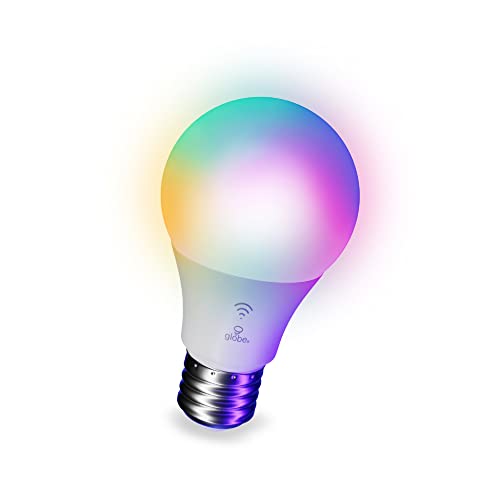
Globe Electric Color-Changing A19 LED Smart Bulb
If you already rely on Amazon Alexa, the Globe Electric 50589 Color-Changing A19 LED Smart Bulb is a strong fit because it works exclusively with Alexa and sets up fast right from the Alexa app. You install it, watch for the first-bulb-found alert, and control it without hubs, extra apps, or skills. It uses 2.4GHz Wi-Fi only. With Alexa voice commands, you can turn it on, dim it, or create mood scenes. Use routines to schedule lighting, group bulbs, or simulate presence when you’re away. Its 60W-equivalent, 800-lumen output suits energize, read, relax, and party modes.
- Bulb Shape:A19
- Base Type:E26
- LED Type:Smart LED
- Dimmable:Yes
- Wi‑Fi:Yes
- Indoor Use:Yes
- Additional Feature:Alexa exclusive
- Additional Feature:Frustration-free setup
- Additional Feature:Presence simulation routines
Droiee Dimmable RGBW LED Light Bulb 2 Pack
The Droiee Dimmable RGBW LED Light Bulb, 2 Pack is a strong pick if you want an affordable, remote-controlled bulb that can switch from warm white to multicolor lighting without needing smart home compatibility. You get a 6W, 500-lumen A19 bulb with an E26 base, plus 16 color modes, four effects, and five speed settings. It runs quietly, won’t flicker, and works well for mood, party, or decorative lighting indoors or outdoors. With a 25,000-hour life and a 4.6-star rating, it’s a practical, versatile choice.
- Bulb Shape:A19
- Base Type:E26
- LED Type:LED
- Dimmable:Yes
- Wi‑Fi:No
- Indoor Use:Yes
- Additional Feature:16 color modes
- Additional Feature:5 speed levels
- Additional Feature:Remote control
SANSI 300W Equivalent 5000 Lumens LED Bulb (2-Pack)
For anyone who needs a seriously bright, dependable bulb for indoor spaces, the SANSI 300W Equivalent 5000 Lumens LED Bulb 2-pack stands out with 5000 lumens of daylight-white output from just 35 watts. You get a 300W incandescent equivalent, a wide 270° beam, and an 80 CRI for crisp everyday lighting. Its ceramic body, non-conductive heat sink, and flame-retardant insulation improve safety and durability. It’s flicker-free, silent, ETL listed, and built for E26 fixtures in 120V setups. With 25,000 hours of life, it’s a strong choice for rooms, workshops, and task areas.
- Bulb Shape:A19
- Base Type:E26
- LED Type:LED
- Dimmable:No
- Wi‑Fi:No
- Indoor Use:Yes
- Additional Feature:5000 lumens output
- Additional Feature:Ceramic heat sink
- Additional Feature:270 degree beam angle
Factors to Consider When Choosing Connected Light Bulbs
When you choose connected light bulbs, check the connectivity options first so they’ll work with your Wi-Fi or Bluetooth setup. You’ll also want to confirm voice assistant support, color and temperature range, brightness and wattage, and whether the bulbs need a hub. These details help you pick bulbs that fit your home and the way you use light.
Connectivity Options
Connectivity starts with checking how a bulb talks to your network, and most connected light bulbs rely on Wi‑Fi, usually on 2.4 GHz bands, so you’ll want to confirm your router supports that before setup. Wi‑Fi matters most because it usually gives you remote control, scheduling, and app access from anywhere. Some bulbs also add Bluetooth, which can make pairing quicker or let you control them nearby, but it rarely replaces Wi‑Fi for full smart features. You should also check whether the bulb works with a hub, a bridge, or directly through an app. Matter-certified options can widen compatibility with Apple Home, Alexa, Google Home, or SmartThings. If you want fewer headaches, pick the connection method that fits your network and ecosystem.
Voice Assistant Support
Voice assistant support can make a connected bulb far more convenient, but you should check compatibility before you buy. First, see which assistants it works with, because some bulbs respond to Alexa, Google Assistant, and Siri Shortcuts, while others only support one platform. If you want Apple Home control, confirm whether you’ll need a Matter-certified hub or controller, since voice features may depend on it. Also, verify that the bulb uses 2.4 GHz Wi‑Fi, as many models don’t work on 5 GHz networks. Then check what voice commands you can use. Some bulbs only handle on and off, while others let you dim, trigger scenes, or run routines through your assistant. Always match the bulb to your preferred smart-home ecosystem before you buy.
Color And Temperature
Color and temperature matter because they shape both the look and feel of a room. If you want flexibility, choose bulbs with a wide white range, since tunable models can move from warm 1800K–2700K tones to cool 6500K daylight. You’ll usually prefer warmer light around 2700K for a cozy, everyday atmosphere, while cooler settings near 5000K–6500K work better when you need sharper focus or a more alert vibe. For more visual variety, pick bulbs with multicolor output instead of fixed white only. Also check the color rendering index; a 90 CRI bulb helps colors and whites look more natural and accurate. Some bulbs combine color-changing effects with adjustable white temperature, so you can fine-tune ambience without swapping anything out.
Brightness And Wattage
Brightness is one of the easiest specs to compare once you know to look at lumens, not wattage. You’ll see connected bulbs from about 500 lumens for soft accent light to 5,000 lumens for serious task lighting. Wattage only tells you how much power a bulb uses, so a 6W LED might give you about 500 lumens, while an 8.5W LED can reach around 800 lumens. Many smart bulbs list 40W to 60W incandescent equivalents, which usually means roughly 450 to 800 lumens. Higher-wattage LEDs often shine brighter, but efficiency matters too. Match lower lumens to mood lighting and higher lumens to desks, kitchens, or larger rooms. Choose the output that fits your space, and you’ll get better light without wasting energy.
Hub Requirements
The biggest question is whether a connected bulb needs a hub or can work on its own. Some bulbs connect straight to 2.4 GHz Wi‑Fi, so you can install them without extra gear. Others need a Matter-certified hub or controller before they’ll join your smart-home setup. If you choose a hub-free model, you’ll usually pair it in a dedicated app or with a voice assistant. If you buy a hub-based bulb, confirm that your smart speaker, display, or bridge is compatible. The hub often decides whether you can use Apple Home, Alexa, Google Home, or SmartThings. No-hub options are easier to manage, but hub systems can improve cross-platform compatibility and make grouping or automation more reliable. Always check that your network supports 2.4 GHz Wi‑Fi, too.
App Control Features
What should a connected bulb’s app actually do for you? It should let you dim lights, shift color temperature, and choose from millions of colors without getting up. You’ll also want scheduling, timers, scenes, and routines so your lighting changes on its own during the day. Group control helps when you manage several bulbs at once, since you can adjust them from a single screen. Make sure the app offers remote access wherever you are, not only on your home Wi‑Fi. Also check whether the bulb uses a dedicated app or a platform app, because that affects convenience. Easy setup and reliable updates matter too, since they keep the app simple to use and the lights working smoothly over time.
Fixture Compatibility
Before you buy a connected bulb, make sure it fits the fixture in every sense: check the base, shape, and size so you get the right match, like an E26 A19 for a standard socket or an E12 candelabra bulb for a chandelier. You should also verify that the bulb is safe for the fixture itself. Some connected bulbs aren’t rated for fully enclosed housings, so they need open or ventilated fixtures to avoid problems. Check the fixture’s voltage and power requirements too; many household bulbs use 120V. Finally, confirm the bulb’s physical dimensions will clear the shade, trim, or housing, especially in tight lamps, small sconces, or decorative fixtures. If you use a wall dimmer or specialty control, make sure the bulb works with it, since some only support app-based control.
Energy And Lifespan
Once you’ve confirmed the bulb fits the fixture, look at how much power it uses and how long it’ll last. You can get strong brightness from efficient connected LED bulbs without wasting energy; many 6W to 9W models still deliver about 800 lumens, which matches a 60W incandescent. Some designs use as little as 5.8W and still give 450 lumens, so check both wattage and output. Efficient LEDs can cut electricity use by up to 80% compared with incandescent bulbs, which helps lower bills over time. Lifespan matters too: look for ratings around 15,000 hours, 25,000 hours, or more. A longer-rated bulb means fewer replacements, better long-term value, and less hassle. Choose one that balances efficiency, brightness, and durable construction.
Frequently Asked Questions
Are Connected Light Bulbs Compatible With Every Smart Home Platform?
No. Some connected bulbs work with Alexa, Google, and Apple, while others only support one platform. Check compatibility first, because smart convenience often comes with platform limits.
Can Smart Bulbs Still Work if Wi-Fi Goes Offline?
Yes, some smart bulbs still work without Wi Fi if they use Bluetooth, Zigbee, or a local hub. You will lose cloud features, remote access, and voice control until your internet connection is restored.
Do Connected Bulbs Use More Electricity Than Regular Bulbs?
Not much. Connected bulbs use only a little more power than regular LEDs, and the extra draw is very small. You will hardly notice it in everyday use.
How Secure Are App-Controlled Light Bulbs From Hacking?
App controlled bulbs can be vulnerable if you leave default settings unchanged, reuse weak passwords, or install untrusted apps. You can lower the risk by changing factory credentials, turning on two factor authentication, and choosing brands that release security patches quickly.
Can Multiple Smart Bulbs Be Controlled Together in One Room?
Yes, you can group multiple smart bulbs in one room and control them with a single tap or voice command. You can change brightness, color, or schedules at the same time, which makes the room simpler to manage.