

A dim garage turns simple jobs into guesswork, and most ceiling fixtures ship with tired fluorescents that buzz and flicker. I’ve put together a focused roundup of LED garage lighting that handles everything from tight workbench corners to tall warehouse bays. Each pick below covers a different need, so you’ll know exactly which format fits your space.
The Lineup, Simplified

ELEKICO 350W UFO LED High Bay Light 56000LM 5000K

ELEKICO V Shape 4ft LED Shop Light 50W 7200LM

Super Bright 60W 4ft LED Shop Lights 10 Pack Linkable

ELEKICO 4 Pack 2ft LED Shop Lights 40W 5600LM

Super Bright 120W 8FT LED Shop Light 20000LM 5000K

Super Bright 60W 4ft LED Shop Lights 6 Pack 9000LM
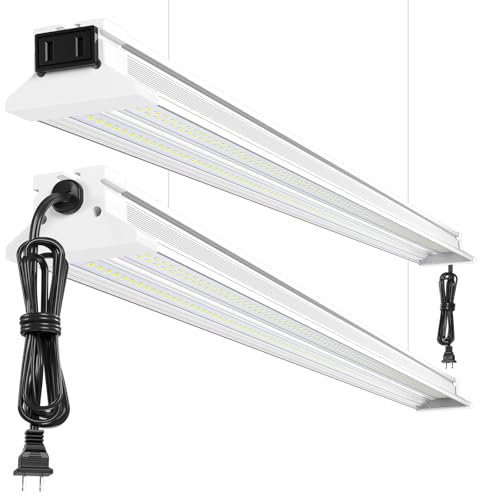
60W 4 Foot LED Shop Lights 2Pack Linkable
The Strengths Of Each Pick
This UFO-style fixture is built for ceilings that swallow ordinary light whole. At 350W and a daylight 5000K color temperature (a cool, blue-white tone that mimics midday sun), it’s the kind of output you reach for in a workshop, auto bay, or warehouse where shadows over a workbench mean real mistakes.
Compared to the smaller shop lights later in this list, the UFO form factor is purpose-built for hanging heights of 15 to 25 feet. For anyone converting a barn, pole building, or a commercial space, this single fixture can replace several fluorescent high bays.
Strengths Worth Knowing
- Massive 56,000-lumen output that fills large, tall spaces without clusters of fixtures.
- 5000K daylight color temperature helps with color accuracy when matching paint or wiring.
- UFO die-cast housing is common in commercial settings, so replacement parts are easy to source.
- Single-fixture approach simplifies wiring and reduces the number of mounting points overhead.
Trade Offs
- 350W draw is overkill for standard 8-foot residential garage ceilings.
- Requires a proper hanging hook or pendant mount and a suitable driver setup.
Quick Facts
Made For
Owners of pole barns, auto shops, and warehouse-style garages who need true high-bay output.
Look Elsewhere When
Homeowners with a standard 8-foot garage ceiling will find a 4-foot LED shop light from this list a saner match.
This 4-foot V-shape tube is the closest thing in this roundup to a “swap and forget” upgrade. It ships with snap joints and a built-in power cord, so even someone who has never touched a fixture can hang it and plug it in within an afternoon.
Where the UFO option above handles warehouse scale, this one targets the homeowner replacing a single tired fluorescent. The V-shape design spreads light at a wider angle than a flat panel, which matters when a garage ceiling is lower than 9 feet.
Bright Spots
- Plug-and-play install with included snap joints cuts out hardwiring for renters.
- 7200 lumens from 50W punches well above old fluorescent tubes.
- Linkable end lets you daisy-chain multiple fixtures off one outlet.
- Onboard switch means no rewiring into a wall switch required.
Things To Consider
- Single-fixture coverage, so larger garages need multiple units.
- Corded design isn’t ideal for ceilings where outlets are scarce.
Best Suited To
First-time LED shoppers with a single-car garage who want zero wiring fuss.
Skip It When
A two-car garage needing balanced coverage may be better served by the 6-pack 60W option later in this list.
Ten fixtures in one box is a different kind of shopping decision. Rather than slowly replacing tubes one at a time, this pack lets you map out a full ceiling layout in a single weekend and get even, consistent brightness end to end.
The 60W output per fixture is a noticeable jump over the 50W V-shape unit above, and the included 59-inch cord keeps layout flexible. For bigger detached garages or hobby spaces that double as workshop, gym, and storage, this is a cleaner long-term answer than mixing random fixtures over the years.
What Makes Sense
- Uniform 9000-lumen output across ten units avoids the patchwork look of mismatched lights.
- Linkable design means fewer outlets and less cord clutter.
- Generous cord length simplifies mounting around ceiling joists or odd outlet placements.
Points To Note
- Ten units is more than some single-bay owners need, so check ceiling space first.
- Owners commonly report the install takes longer than expected when ceiling heights vary.
Feature Snapshot
Whose Shelf It Belongs On
Workshop owners, hobbyists, and serious DIYers planning a full ceiling overhaul rather than a single-fixture swap.
Consider Something Else When
One-car garage owners with modest needs will find the 2-pack option later in this roundup a more sensible scale.
Not every garage needs 4-foot tubes. The 2-foot format solves a problem most longer fixtures can’t: tight ceilings, low-clearance areas above a workbench, and the cramped spaces above attic hatches or storage lofts.
At 40W and 5600 lumens per unit, the trade-off is clear. You get less reach per fixture than the 4-foot options elsewhere in this list, but in exchange the units tuck into corners and under shelving where longer tubes just won’t fit.
What Works In Its Favor
- 2-foot size fits above workbenches, attic openings, and storage shelving.
- 6000K cooler tone creates a sharper, alert light for detail work.
- Built-in on/off switch simplifies daily use in a workshop.
Worth Bearing In Mind
- Four units may still leave dark zones in a full two-car layout.
- Each unit delivers less total light than the 4-foot fixtures above.
Who Should Grab It
Anyone outfitting a tight workbench area, attic workshop, or storage room where 4-foot tubes physically won’t fit.
Where A Sibling Pick Shines
For whole-room garage coverage, the 4-foot 6-pack option later in this roundup will outperform four of these units.
Eight-foot fixtures are the underused middle ground between residential 4-foot tubes and full warehouse high bays. This single unit throws 20,000 lumens from a 120W draw, which is enough light for one bay on its own.
Versus the multi-pack 4-foot options, an 8-foot fixture means fewer mounting points, less wiring, and a cleaner ceiling line. For long, narrow workshops and detached garages where two fixtures would do, one of these can often replace them both.
Benefits That Matter
- 20,000-lumen single-fixture reach covers one bay from one mount point.
- Linkable up to three units lets you scale up without re-running circuits.
- Both hanging and surface-mount options accommodate different ceiling types.
Honest Caveats
- 8-foot length is unwieldy for standard 8-foot ceiling joist bays.
Right Fit For
Long, narrow workshops and hobby barns where a single powerful fixture beats a row of smaller tubes.
Reach For A Different Pick When
Standard residential ceilings fit the 4-foot format better, and the 60W 6-pack later in this list will feel less awkward to mount.
Six fixtures hits a sweet spot that the 10-pack overshoots. For most two-car garages, six 60W units spaced evenly deliver full coverage without leaving spare tubes in the box.
Output per fixture matches the 10-pack option earlier in this list, so there’s no compromise on brightness. The real difference is pack sizing, which translates directly into fewer leftover fixtures and easier ceiling planning.
Advantages To Know
- Six units map cleanly onto most two-car garage layouts without waste.
- Same 9000-lumen output as the 10-pack option, so brightness stays consistent.
Room For Improvement
- Less flexible than smaller packs if your ceiling layout shifts mid-project.
- Six fixtures is still more than a single-bay garage requires.
Core Details
Who Will Love This
Two-car garage owners who want full coverage without the cost or excess of a ten-pack.
Not Your Match When
Single-bay owners may find the 2-pack option later in this roundup is all the lighting they actually need.
Sometimes two fixtures is all a garage actually needs. This 2-pack keeps things simple and avoids the sticker shock of larger bundles while still delivering a serious upgrade over a single fluorescent tube.
The linkable design gives you an exit ramp for expansion. Start with two, and if the back half of the garage still feels dim, daisy-chain a third or fourth unit later without adding new outlets.
What It Does Well
- Compact 2-pack keeps the initial project small and approachable.
- Ceiling or hanging mount works for finished or exposed-joist ceilings.
- Linkable design supports up to four units for future expansion.
Trade-Offs To Consider
- Two fixtures may fall short for deeper two-car layouts.
Perfect Match For
One-car garage owners and renters who want a noticeable upgrade without overcommitting to a large pack.
A Better Fit Elsewhere
Anyone planning a full-garage overhaul will get better coverage per dollar from the 6-pack option earlier in this list.
Picking The Right LED Layout For Your Garage
Match The Fixture To The Ceiling Height
Ceiling height changes everything about which fixture makes sense. For standard 8-foot residential ceilings, 4-foot LED tubes and 2-foot compact units are the easy winners. Anything taller than 12 feet starts to favor UFO high bays or 8-foot fixtures. Picking the wrong size for the ceiling means either wasted light bouncing off the floor or dark zones you can’t reach without a ladder.
Wattage And Lumens Tell Different Stories
Wattage measures how much electricity a fixture draws, while lumens measure how much visible light it puts out. The trick is finding fixtures with strong lumen output at modest wattage, since that combination keeps energy bills in check. A 60W fixture pushing 9000 lumens is a far better value than a 100W fixture pushing the same brightness.
Color Temperature Affects How The Space Feels
5000K lands close to midday sun, which keeps you alert and helps with detail work like wiring or reading small labels. 6000K leans cooler and crisper, which works for photography or fine-detail hobbies. Lower color temperatures around 4000K feel warmer but can muddy detail visibility. Match the temperature to how you actually use the garage.
Decide Between Packs And Single Fixtures
Single fixtures make sense for renters, small garages, or quick upgrades. Multi-packs reward homeowners planning a complete overhaul with consistent output and fewer mismatched fixtures over time. Before committing, sketch a rough ceiling layout so you know how many fixtures you genuinely need, not how many come in the box.
What To Watch Out For Before You Buy
Pitfalls Shoppers Hit
The most common mistake is buying fixtures by count instead of by lumen output. Six weak 40W fixtures won’t outperform two strong 60W units, and the layout can leave frustrating dark corners. Another trap is overlooking ceiling outlet placement, which forces awkward extension runs. Always check where power lives on the ceiling before settling on a pack size.
Where The Extra Money Goes
Higher-tier LED fixtures tend to use better driver electronics, which translates to more consistent output over years of daily use and less chance of flicker. They also tend to include features like linkable connectors and better mounting hardware that save real install time. For a garage used daily, paying slightly more up front for those upgrades usually pays off in fewer replacements down the road.
Frequently Asked Questions
How Many LED Fixtures Do I Need For A One-Car Garage?
For a standard single-car garage, two to four 4-foot fixtures spaced evenly across the ceiling usually deliver even coverage. The exact count depends on ceiling height and whether you use the space for detailed work or just parking.
What Color Temperature Works Best In A Garage?
Most people land on 5000K, which mimics midday sun and keeps detail work sharp. If the garage doubles as a hangout space, a slightly warmer 4000K can feel less harsh on the eyes.
Can LED Shop Lights Run Continuously?
Yes, most LED shop lights are rated for long runtimes and stay relatively cool. Leaving them on all day costs far less in electricity than older fluorescent setups, though turning them off when not in use still extends lifespan.
Do I Need An Electrician To Install LED Garage Lights?
Plug-and-play fixtures with included cords need no electrician at all. Hardwired units, especially UFO high bays, may require an electrician depending on local code and existing wiring.
How Long Do LED Garage Lights Typically Last?
Most LED shop lights are rated for tens of thousands of hours of use, which translates to many years of typical garage use. The actual lifespan depends on daily runtime and the quality of the driver electronics inside the fixture.
Closing Thoughts
The right LED garage lighting comes down to honest measurements of your space rather than chasing maximum lumen counts. A small garage, a tall workshop, and a tight workbench corner each call for a different fixture format. Match the form to the room, and the rest of the decision falls into place.