

Hunting after sundown, securing a dark driveway, or monitoring a property with night-vision cameras all come down to the same problem: you can’t see what matters. Infrared lights solve that by projecting wavelengths your eyes can’t detect but your gear can, and the right one turns pitch-black terrain or a shadowy yard into a usable scene. I put together this shortlist for folks who need IR coverage for predator hunting, home defense, or 24/7 camera surveillance, and I’ll walk through what each pick does best.
The Choices Worth Comparing

Odepro KL41Plus Predator Hunting Light Kit

SureFire M640U-TN-PRO Scout Light Pro (Tan)

LUMENSHOOTER A8Plus Zoomable Predator Hunting Light Kit

Odepro KL52Plus Zoomable Hunting Flashlight Kit

Tendelux DI10 IR Illuminator (Medium Range)

Tendelux DI20B IR Illuminator (Black, Long Range)
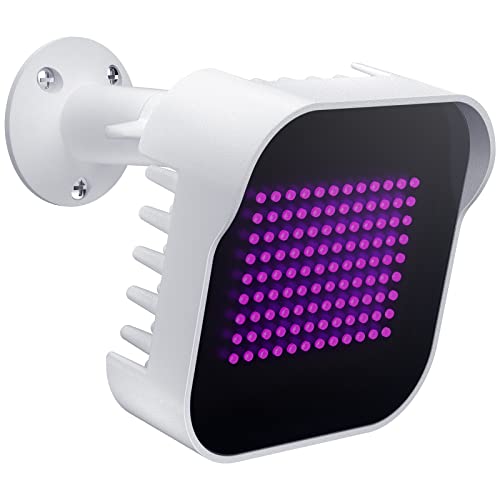
Tendelux DI20 IR Illuminator (Long Range)
Meet The Standout Selections
The Odepro KL41Plus leans into the practical side of predator hunting, packing three color outputs into one kit so you can match the beam to the conditions. White light tops out around 860 lumens with a reach near 420 yards, while red and green give you the lower-visibility options hog and coyote hunters prefer for scanning without spooking game. The interchangeable head design means swapping colors is a quick twist rather than a fumbling session in the dark.
You get five white-light modes covering low, medium, high, strobe, and SOS, which adds flexibility for signaling or conserving battery on long sits. For most ridge-line predator hunting, the green beam tends to do the heavy lifting, since it reaches farther than red and preserves night vision better than white.
The Good Stuff
- Three colors in one kit keep you covered across changing conditions
- Quick-swap heads save fumbling in the dark
- White mode reaches roughly 420 yards for general scanning
- Strobe and SOS modes add a safety layer in emergencies
Things To Consider
- Standalone batteries aren’t included, so budget for cells before the hunt
- Heavier than a standard handheld, depending on the cell size
Feature Snapshot
Who Should Grab It
Predator hunters working open fields who want one kit that covers white, red, and green without juggling multiple lights.
Look Elsewhere When
You’d rather have a zoomable beam for tighter brush, in which case the Odepro KL52Plus Zoomable Hunting Flashlight Kit offers more beam control.
SureFire’s Scout Light Pro is a different beast than the hunting kits above. It mounts directly to a rifle, pumps out 1,000 lumens of white light, and pushes 11,300 candela through a Total Internal Reflection (TIR) lens, which means the beam reaches far downrange while still lighting up close surroundings for threat identification. For home-defense rifle builds, that combination of reach and spill tends to matter more than raw lumen count.
The tan housing fits rifles set up for arid or desert environments and helps the light blend with FDE furniture. Built for hard recoil and weather exposure, the Scout Light Pro is the kind of weaponlight you mount once and mostly forget about. It doesn’t have the colored beams of the Odepro or LUMENSHOOTER kits, but it doesn’t try to be a hunter’s light either.
Notable Gains
- TIR lens focuses the beam without losing useful peripheral light
- High candela rating helps reach distant targets clearly
- Rifle-ready mount built to handle recoil
Worth Noting
- White light only; no red, green, or IR options in the same unit
- Priced above the hunting kits, depending on configuration
Made For
Home-defense and patrol rifle users who want a rugged, dedicated weaponlight and don’t need color modes.
A Better Fit Elsewhere
Predator hunters chasing hogs at night should reach for the Odepro KL41Plus Predator Hunting Light Kit, which has the green and red beams SureFire skips.
Where the Odepro kits lock you into a fixed beam, the LUMENSHOOTER A8Plus lets you twist the head and slide between a wide flood and a tight spot. That single feature makes a real difference when you’re scanning a clearing, then need to pick out something at the tree line. The kit ships with four interchangeable LED modules: green, red, white, and infrared, all using direct LED modules rather than colored filters, which keeps output strong.
Reach figures land at roughly 350 yards for green, 250 for red, and 450 for white. The infrared module pairs naturally with a digital night-vision scope or handheld monocular, and tool-free swapping means you can change modules in the field without losing your place. Dual control switches let you pick how you want to operate the light depending on your grip.
The Case For It
- Zoomable beam shifts from flood to spot without swapping lights
- Includes an IR module for use with night-vision optics
- Four colors cover hunting, scouting, and night-vision work
- Direct LED modules keep brightness up across colors
Honest Caveats
- More pieces to keep track of in the field than fixed-beam kits
- Module swapping in cold weather can be slower than expected
Quick Facts
Best Suited To
Hunters and night-vision users who want maximum flexibility between beam shape and color in one package.
Reach For A Different Pick When
You mainly need a long-range white weaponlight for a rifle, where the SureFire M640U-TN-PRO Scout Light Pro is the more focused tool.
The Odepro KL52Plus takes the same four-module approach as the LUMENSHOOTER but trims the price for budget-conscious hunters. You still get red, green, white, and an IR850nm module with quick-swap heads, plus a zoomable beam that adjusts from flood to spot. Maximum reach lands around 452 yards for green, which edges out the LUMENSHOOTER in that color.
The kit runs on standard hunting batteries, and the IR module opens it up to night-vision scopes for users who already own one. Compared to the fixed-beam KL41Plus earlier in this list, the zoom function makes the KL52Plus more flexible in dense cover where a tight spot matters as much as a wide scan.
Everyday Perks
- Zoom control adapts the beam to brush or open ground
- IR module included for night-vision pairing
- Green beam reaches farther than most hunting lights in this range
Points To Note
- Bulkier than single-purpose lights due to the modular head
- Module contacts can pick up dust over time, so periodic cleaning helps
Whose Shelf It Belongs On
Varmint and coyote hunters running mixed terrain who want zoom plus color options at a friendlier price.
Swap It Out When
You’re setting up a fixed CCTV night-vision camera and need IR flooding instead of a handheld beam, where the Tendelux DI10 IR Illuminator fits better.
Stepping away from handheld hunting lights, the Tendelux DI10 is purpose-built for security cameras. IR illuminators (infrared light sources invisible to the eye but visible to night-vision cameras) flood an area with 850nm or 940nm light so CCTV cameras can capture crisp black-and-white footage in darkness. The DI10 is roughly half the size of older 8W models while pushing more usable light, which makes it easy to tuck under an eave or mount near a camera.
The tailored integrated lens spreads the beam evenly across the camera’s field of view, which helps avoid the bright “hot spot” in the middle and washed-out edges that plague cheaper flooders. It ships with a power adapter and works best at medium range, where most home cameras operate.
Useful Touches
- Compact size fits tight mounting spots under eaves
- Even illumination prevents washed-out video edges
- Power adapter included for quick setup
Where It Is Less Suited
- Limited to medium range; long driveways need a bigger unit
- Requires a nearby power outlet for the adapter
Feature Rundown
Right Fit For
Homeowners running CCTV cameras within a moderate range who need clean IR coverage without a bulky housing.
Consider Something Else When
Your property spans a long driveway or large yard, in which case the Tendelux DI20 IR Illuminator delivers more reach.
The DI20B is the long-range sibling to the DI10 above, and it shows up in black housing that blends with most outdoor mounting brackets. Like the DI10, it uses a tailored integrated lens to spread IR evenly across the camera’s frame, but the bigger LED array pushes usable light much farther downrange. For longer driveways, fenced perimeters, or open yards, that extra reach makes the difference between a recognizable face on camera and a dark blob.
The unit is roughly half the size of older 18W illuminators, which sounds modest until you realize how much hardware used to be required for this kind of coverage. Owners commonly report that the smaller form factor opens up placement options that larger housings couldn’t fit.
The Helpful Details
- Long-range coverage suits driveways and open lots
- Black housing blends with dark mounting surfaces
- Smaller than legacy high-wattage illuminators
Small Caveats
- Needs a clear line of sight to the target area
- Power adapter placement matters for clean installation
Built With In Mind
Property owners covering longer distances from a single mounting point who want strong, even IR coverage.
Where Another Pick Suits Better
Tight porches or short entryways where the Tendelux DI10 already covers the area.
The Tendelux DI20 is essentially the same long-range IR engine as the DI20B above, just in the standard light-colored housing rather than black. For homes with white or beige eaves, that finish tends to blend better and look less like a piece of tactical gear bolted to the roofline. Functionally, you get the same tailored integrated lens and the same half-size form factor compared to older 18W illuminators.
Setup is straightforward since the power adapter comes in the box, and the smaller housing opens up mounting options on trim, soffits, or fence posts where bigger units simply won’t fit. You may find the beam pattern slightly tight if your camera has a very wide field of view, so matching the illuminator’s angle to the lens matters.
Real Benefits
- Light-colored housing suits most home exteriors
- Long-range IR for larger properties
- Compact body fits where older units can’t
Factors To Consider
- Beam angle should be matched to camera lens to avoid hot spots
- Requires a power outlet or low-voltage run nearby
The Right Fit
Homeowners with larger lots who need long-range IR and prefer a light-toned housing for curb appeal.
Not Your Match When
You want a handheld hunting beam rather than a fixed CCTV illuminator, where the Odepro KL41Plus Predator Hunting Light Kit is the better tool.
What Matters Most Before Choosing Ir Lights For Night Vision
Match The Light To The Job
The biggest fork in the road is whether you need a handheld beam (for hunting or scouting) or a fixed IR flood (for security cameras). Handheld kits like the Odepro and LUMENSHOOTER options give you colored beams and zoom control, while the Tendelux illuminators stay bolted in place and feed light to cameras around the clock. Choosing wrong here usually means owning two lights when one would have done the job.
Wavelength And Range Considerations
Most IR illuminators and hunting lights operate around 850nm, which gives a faint red glow some users notice at close range. Longer wavelengths near 940nm are fully covert but typically produce less usable light. For CCTV, range matters most; pick an illuminator rated beyond your longest camera distance. For hunting, reach figures in the 300 to 450-yard range cover most field scenarios.
Modularity And Beam Control
Interchangeable LED heads and zoomable beams cost more upfront, but they save you from buying a second light when conditions change. Tool-free swapping is a real plus on cold nights, and a zoom function lets one light behave like two. If your use case stays consistent (always open fields, always close quarters), a fixed beam keeps things simpler.
Power And Mounting Reality
Handheld hunting lights run on user-supplied batteries, which means planning ahead. Fixed CCTV illuminators need a power outlet or low-voltage run nearby, and the housing has to fit your chosen mounting spot. Measure twice before you mount, since returns get harder once holes are drilled.
Things To Watch Across The Category
Pitfalls Shoppers Hit
A common misstep is buying a hunting light expecting it to feed a security camera. Handheld beams don’t have the even flood pattern cameras need, and fixed illuminators lack the throw for hunting. Matching the form factor to the actual job saves money and frustration.
Where The Extra Money Goes
Premium options like the SureFire Scout Light Pro charge more for ruggedness, recoil tolerance, and tight beam control rather than extra features. That extra build quality tends to pay off for users who mount lights on rifles or in exposed outdoor spots where cheaper housings wear out faster. For stationary CCTV use, paying up usually means more even illumination rather than raw reach.