

Hunting after dusk or watching a dark driveway after midnight asks the same core question: how do I see without being seen, or how do I record what is happening without lighting up the neighborhood? Infrared lights answer that in two very different ways, from handheld predator-hunting kits with zoomable beams to compact CCTV illuminators that wash a security camera’s field of view in invisible 850nm light. I pulled together seven options that cover both worlds, so anyone outfitting a coyote rifle scope or a backyard camera setup can find a fit without overspending on the wrong tool.
A Snapshot Of The Selections

LUMENSHOOTER A10 Ultimate Green Hunting Light Kit

Guardian Angel Elite Safety Light IR-Hybrid

LUMENSHOOTER A8Plus Zoomable Predator Hunting Light Kit

Odepro KL52Plus Zoomable Hunting Flashlight Kit

Tendelux DI10 IR Illuminator Medium Range

Tendelux DI20B IR Illuminator Long Range Black
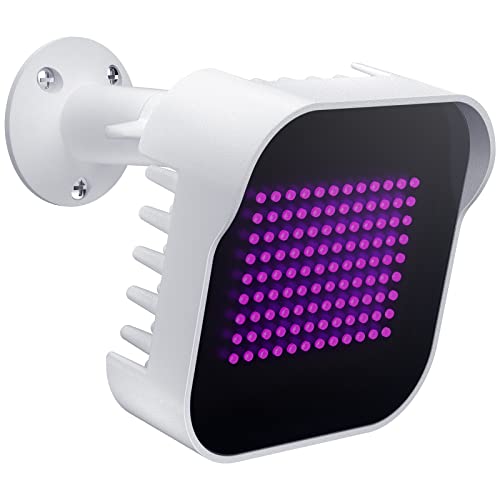
Tendelux DI20 IR Illuminator Long Range
The Details Behind The Selections
The A10 kit sits in a sweet spot for hunters who chase different predators across the same season. It bundles white, green, red, and 850nm infrared (a near-infrared wavelength most animals cannot see) into one zoomable host body, so swapping from a coyote field scan to a hog setup does not require a second rifle light. Compared with the A8Plus below, this kit stretches the visible beam farther while keeping the same modular feel.
Anyone running a night vision monocular, NV scope, or digital IR scope will appreciate the dedicated 850nm module paired with a smooth flood-to-spot zoom.
A Few Strong Suits
- Four light sources share one housing, so the kit travels light without leaving a useful color behind.
- Zoom adjustment works across every wavelength, meaning the throw distance stays useful from scanning to still-hunting.
- Green throws roughly 390 yards, useful for open-field predator calling.
- 850nm infrared pairs naturally with most Gen 1, digital, and clip-on night vision rigs.
Things To Consider
- Bezel-rotated zoom can drift slightly if the light is mounted on a hard-recoiling magnum rifle.
- Owners commonly report that the included battery is fine for one stand but worth upgrading for all-night hunts.
Built With In Mind
Predator hunters who need four colors in one host body and want the longest visible throw in the LUMENSHOOTER line.
A Better Fit Elsewhere
Hunters chasing varmints over long fields may prefer the Odepro KL52Plus, which stretches the 850nm beam even farther.
This wearable shifts the conversation away from spotting animals and toward staying visible to teammates in low light. The IR-hybrid front combines white and blue output with a blue rear, and 360-degree illumination means coworkers, dispatch, or spotters see you from any angle. Where the A10 above is a spotting tool, this is a personal safety marker.
For officers, EMS, and industrial crews, the magnetic mount and clip ecosystem is the real draw, freeing both hands on scene.
Why It Works Well
- Hybrid front and contrasting rear make direction-of-travel easy to read at a glance.
- Multiple mounting options (magnetic, clip, strap) cover uniforms, helmets, and turnout gear.
- Professional-grade construction takes bumps on duty belts without drama.
- Doubles as a hands-free area light when clipped to a visor or chest pocket.
Worth Noting
- It is not designed for distance illumination, so anyone expecting a long-throw beam should pair it with a dedicated flashlight.
- The price tier reflects the duty-rated build and may feel steep for casual recreational use.
Feature Snapshot
Whose Shelf It Belongs On
Law enforcement, EMS, and industrial crews needing 360-degree wearable visibility for low-light operations.
Reach For A Different Pick When
Predator hunters should skip this and go straight to the LUMENSHOOTER A10 for actual spotting performance.
The A8Plus builds on a long-running LUMENSHOOTER design with one improvement that matters in the dark: tool-free module swapping. Each LED ships as its own dedicated module rather than a colored filter (a simple plastic disc that changes the hue of the light), so output stays high in every color. Compared with the A10 above, the white beam actually throws slightly farther.
The kit lands well for hunters who plan their night around quick transitions between calling and scanning.
Well-Handled Touches
- Direct LED modules preserve brightness across green, red, white, and IR.
- Dual-control switch design lets me run momentary or constant-on without fumbling.
- Glass convex lens focuses cleanly from flood to spot.
- White reaches roughly 450 yards, the longest visible throw in this lineup.
Points To Note
- More pieces to keep track of in the truck cab means swapping modules mid-hunt benefits from a small magnetic tray.
- Green and red throw shorter than white, so hunters chasing distant hogs in heavy cover may need to lean on the IR module and a scope.
Made For
Predator hunters who want maximum output per color and the convenience of swapping modules without tools.
Look Elsewhere When
Anyone focused on long-throw infrared alone should consider the Odepro KL52Plus, which pushes 850nm distance further.
The KL52Plus earns its heavy-duty badge by stretching the 850nm beam deeper than most zoomable kits, which matters for coyote, hog, and varmint fields where the quarry often pops up at 350-plus yards. Compared with the LUMENSHOOTER kits above, the visible throw is slightly shorter, but the IR reach is the headline. Four interchangeable LED modules cover red, green, white, and 850nm with quick-swap convenience.
For most night hunters running digital NV or clip-on scopes, the KL52Plus is the more capable IR partner.
A Favorable Mix
- 850nm module reaches roughly 375 yards, a strong showing for a zoomable handheld.
- Quick-swap modules let a single host body cover every common hunting wavelength.
- Adjustable focus balances spot and flood without losing center brightness.
- Sturdy host body handles cold-weather stand sits and rough terrain.
Minor Gripes
- Reaching maximum IR throw usually means staying on the spot side of the zoom, so scanning wide fields takes a moment to readjust.
- Owners commonly report that the included battery works but a higher-capacity 18650 cell (a rechargeable lithium-ion battery format popular in tactical lights) extends sessions noticeably.
Quick Facts
Who Should Grab It
Coyote, hog, and varmint hunters who lean on 850nm infrared and want the deepest throw in a zoomable kit.
Not Your Match When
Hunters prioritizing visible-light range over IR reach may find the LUMENSHOOTER A8Plus a better balance.
Switching gears from hunting lights to surveillance, the DI10 is a tiny 850nm flood light designed specifically to feed a CCTV camera (a closed-circuit television security camera that records continuously) clean, even infrared coverage at night. The integrated lens spreads the light across the field of view without the hotspot (a bright concentrated circle of light that overexposes the center of an image) you see from cheaper LED bars. Compared with the larger DI20 below, it covers shorter distances but does it from a much smaller housing.
For porches, side gates, and small yards, this compact illuminator is a tidy solution.
Useful Touches
- Housing is roughly half the size of Tendelux’s older 8W unit, useful in tight soffit and eave mounts.
- Tailored lens design spreads IR evenly across the camera’s field of view.
- 850nm wavelength stays invisible to the human eye while keeping most security cameras responsive.
- Power adapter included, so installation does not require sourcing a separate supply.
A Few Limitations
- Medium-range distance means long driveways and big lots will need the bigger DI20 or DI20B instead.
- Outdoor mounting benefits from sealing the cable entry with a small bead of silicone to keep moisture out over time.
Key Product Details
Best Suited To
Homeowners installing a single security camera over a porch, side gate, or short driveway run.
Swap It Out When
Longer driveways or commercial perimeters should step up to the Tendelux DI20 or DI20B for proper throw.
The DI20B is the black-housing sibling in Tendelux’s long-range line, and the change in color is more than cosmetic: it disappears against dark soffits and gutters. It shares the integrated lens design with the DI10, just in a larger package that pushes IR much farther down a driveway. Compared with the DI20 below, the output and form factor are similar; the black finish simply offers a different visual profile.
For dark exteriors where a white housing would stand out, the DI20B is a thoughtful match.
Points In Its Favor
- Long-range throw feeds cameras down a 100-foot-plus stretch of driveway or fence line.
- Black housing blends into dark eaves, soffits, and trim.
- Even flood pattern keeps facial features legible at distance, useful for identification.
- Compact body for the throw distance, smaller than older 18W units from the brand.
Room For Improvement
- Mounting hardware and angle adjustment are basic, so aiming across uneven ground benefits from a small swivel bracket.
- Like other outdoor IR units, occasional lens wipe-downs keep dust from degrading the image at distance.
Right Fit For
Homeowners with dark trim who want a low-profile long-throw illuminator covering a sizable stretch of camera footage.
Consider Something Else When
Anyone preferring a white finish that matches bright trim may find the standard Tendelux DI20 a better visual fit.
The DI20 wraps the same long-range lens design as the DI20B in a white housing, making it a natural fit for bright trim and gutter systems. It is roughly half the size of the older 18W model from the same brand, yet pushes IR farther for cameras that need to read plates or faces at distance. Among the three Tendelux units in this list, it sits as the most balanced choice for typical residential installs.
For a two-camera setup covering a side yard and driveway, this is the dependable starting point.
What Makes Sense
- White housing pairs cleanly with typical soffit, gutter, and trim colors.
- Long throw with even flood keeps subjects readable across the camera’s full frame.
- Compact housing simplifies mounting on eaves and outbuildings.
- Power adapter included for straightforward installation.
Honest Caveats
- White finish stands out on dark exteriors, so the DI20B is the better pick for stealthier installs.
- Like all outdoor IR units, ensuring a clear line of sight to the camera lens prevents IR bounce-back from nearby walls.
Who It Suits Best
Homeowners with light-colored trim who want a straightforward long-range illuminator paired with one or two security cameras.
Skip It When
Tight porch or side-gate installs are better served by the smaller Tendelux DI10, which trades throw for footprint.
Picking The Right Ir Light For Your Setup
The first fork in the road is purpose. Handheld hunting kits like the LUMENSHOOTER A10, A8Plus, and Odepro KL52Plus mount to a rifle or sit on a tripod and rely on throw, zoom, and interchangeable wavelengths. CCTV illuminators like the Tendelux DI10, DI20, and DI20B are stationary, weather-resistant units designed to feed a fixed security camera invisible 850nm light evenly across its field of view.
Next, weigh wavelength. Visible green and red beams help hunters who do not use night vision, while 850nm infrared is the standard pair-up for digital and Gen 1 NV setups. For CCTV use, 850nm is the sweet spot because most security camera sensors see it well, and it stays invisible to the human eye.
Beam shape matters too. Zoomable hunting lights let the shooter adjust from flood to spot on the fly, useful for scanning then committing to a target. CCTV illuminators use a fixed flood with a tailored lens that spreads light evenly, avoiding the bright hotspot that washes out the center of a camera image. Matching beam shape to task prevents wasted money on a hunting zoom when a stationary flood is what the camera actually needs.
Finally, distance and mounting environment drive the size of the unit. A 30-foot driveway is a job for a compact DI10, while a 150-foot rural lane benefits from the larger DI20 or DI20B. For hunting, longer fields favor the KL52Plus, while multi-species setups favor the A10 or A8Plus.
Key Considerations Across These Picks
Pitfalls Shoppers Hit
The most common mistake is assuming any 850nm light pairs with any night vision device, when in reality some cheaper digital scopes are tuned to 940nm and respond poorly to 850nm. Always confirm what wavelength your NV rig expects. A second trap is matching a hunting light to a security camera or vice versa, because handheld zoomable beams produce uneven coverage that CCTV lenses cannot use, and stationary floods lack the throw a hunter needs.
When Paying More Pays Off
Higher-tier IR lights tend to buy better lens design, which shows up as more even coverage and longer useful throw at the same wattage. They also bring sturdier housings, weather sealing, and accessory ecosystems like the module-swapping found on the LUMENSHOOTER kits. For CCTV use, the upgrade usually pays off in image clarity, which matters more than peak output numbers.
Frequently Asked Questions
What wavelength is best for night vision hunting lights?
Most digital and Gen 1 night vision scopes respond well to 850nm infrared, while some digital scopes are tuned to 940nm for even less visible glow. Match the illuminator wavelength to what your NV device actually expects.
Can I use a hunting IR light for a security camera?
Not effectively. Hunting lights are handheld zoomable beams meant for a moving shooter, while CCTV illuminators are stationary floods with even lens spreads designed to feed a fixed camera’s field of view.
How far will a typical 850nm IR illuminator reach?
Handheld hunting kits with 850nm modules often reach 300 to 400 yards under ideal conditions, while CCTV illuminators are rated for much shorter distances, typically 30 to 150 feet depending on the model.
Is 850nm infrared visible to the human eye?
A faint red glow is sometimes visible up close, but at any meaningful distance it is effectively invisible, which is why it works for stealthy observation and nighttime security recording.
Do IR illuminators work through windows?
Most do not work well through glass because the glass reflects the IR light back into the lens and creates a washed-out image. Mounting outside the window gives clean results.
Closing Thoughts
The right IR light depends entirely on whether you are trying to spot a coyote at 350 yards or feed a porch camera clean footage after midnight. Hunting kits reward hunters who want zoom, color options, and module swapping, while CCTV illuminators reward homeowners who want even, invisible coverage and weatherproof mounting. Pick the tool that matches the task, and the rest of the decision tends to fall into place.