

Winter windowsills rarely deliver enough daylight, and a shaded corner can leave a fiddle-leaf fig sulking by February. I’ve pulled together six indoor plant lights that cover very different needs, from a serious quantum-board setup for a 4×4 tent down to a clip-on ring light for a single herb pot on a kitchen shelf. The goal is to help you match the right output, mounting style, and control level to the plants you actually keep.
The Choices Worth Comparing

HLG 600 Rspec FR 600W Quantum Board Grow Light

VIIVUU Clip-On Plant Light (White, 1 Pack)

DOMMIA Under Shelf Grow Light with Auto Timer

Aokrean Full Spectrum Plant Light with Base

Aokrean Full Spectrum Grow Light with Wood-Grain Base
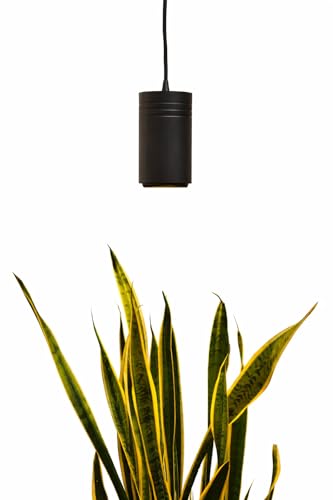
Soltech Aspect Gen 2 Black Pendant Grow Light
The Details Behind The Selections
Quantum-board fixtures like this one spread a dense grid of diodes across a flat panel, which sends a more even wash of light down onto the canopy than older spotlight-style lamps. The HLG 600 Rspec runs at 600W on a standard 120V outlet and is built around a full-spectrum white plus deep-red diode mix, so foliage looks natural to the eye instead of an unnatural purple.
It’s aimed squarely at growers running a sealed 4×4 tent, where the panel’s footprint is sized to blanket that space from a hanging height of roughly 18 to 24 inches. You also get a built-in dimmer knob on the driver, which matters because young seedlings and leafy herbs want far less intensity than flowering plants do. Compared to the smaller Aokrean stake lights further down this list, this is a different category of gear entirely, more workshop than windowsill.
What Works In Its Favor
- Quantum-board diode layout spreads light evenly across a 4×4 footprint, reducing hot spots under the center.
- Full-spectrum output (white plus deep red) supports both vegetative leafy growth and flowering stages.
- Onboard dimmer lets you reduce intensity for seedlings without raising the fixture closer to the canopy.
- Designed for passive cooling, so most setups run without the extra noise of a fan.
Things To Consider
- At 600W it pulls real current, so older garage circuits may struggle without a dedicated line.
- You’ll need rope ratchet hangers and a timer outlet separately, since neither ships in the box.
Key Specs
Made For
Intermediate to advanced growers running a 4×4 tent who want serious output and full-spectrum coverage from a single fixture.
Swap It Out When
The VIIVUU Clip-On Plant Light is a better match for someone tending a single herb pot on a kitchen counter rather than a full tent.
Clip-on grow lights solve a very specific problem: a single plant on a tall shelf or a leggy pothos that needs a top-down boost without rewiring the room. The VIIVUU light is a small ring-style head with a strong clamp that grips onto pots, desk edges, or narrow shelves, and it ships with a soil-insert stake so you can reposition it without a flat surface nearby.
The hollow ring design keeps the head light in your hand, which matters when you’re clipping above a hanging planter. Output is modest, so realistic expectations help, this is enough to keep a small succulent or herb from stretching in a dim corner, not enough to flower a full tray of seedlings. Where the HLG 600 above is a serious growing tool, this is closer to a plant-life-support gadget for a forgotten windowsill.
Reasons It Performs
- Strong clamp attaches to pots, desk edges, and narrow shelves without extra hardware.
- Lightweight hollow ring head is easy to reposition one-handed above hanging baskets.
- Includes a soil-insert stake for setups where there is no edge to clamp onto.
- Tiny footprint fits on a single shelf without crowding nearby decor.
Points To Note
- Output is enough for one or two small plants, not a tray of seedlings.
- Owners commonly report the cord length runs short for tall shelving units.
Who It Suits Best
Apartment dwellers tending one or two small plants on a shelf or windowsill who need an easy clamp-on setup.
Look Elsewhere When
The DOMMIA Under Shelf Grow Light suits someone who wants a built-in timer and dimmer rather than a basic clip-on ring.
Under-shelf panel lights hide in plain sight, mounted just below a bookcase or floating shelf to wash the plants below with daylight-white light. The DOMMIA fixture is a 4-inch square panel only about 0.28 inches thick, so it slips under most standard shelving without forcing you to raise the shelf above it.
Its real trick is the built-in controller. A 6, 12, or 16-hour auto cycle timer sits alongside a four-step dimmer (25 to 100 percent), and a power-loss memory resumes your last setting after an outage. That combination matters for anyone who’s ever forgotten to turn a basic lamp back on after a weekend away. Compared to the VIIVUU clip-on above, this trades portability for a smarter, hands-off daily routine.
What Helps Most
- Auto cycle timer (6/12/16H) eliminates the daily on-off chore.
- Four brightness levels let you tune intensity for ferns versus succulents.
- Power-loss memory restores your last setting after an outage.
- Ultra-slim 0.28-inch profile fits under standard shelving without raising the shelf.
Honest Caveats
- A single small panel won’t cover a wide shelf, so larger collections may need two units.
- USB-powered design means you’ll give up a nearby outlet or use a wall adapter separately.
Feature Snapshot
Right Fit For
Forgetful plant parents who want a hands-off schedule and consistent daily cycles for low-light foliage plants.
Consider Something Else When
The Aokrean Full Spectrum Plant Light with Base is a better match if you’d rather a freestanding stake light with adjustable modes and no wiring to a USB brick.
Stake-style grow lights sit among the most popular options for casual houseplant owners, because they slip directly into the soil of an existing pot. The Aokrean light ships with both a soil-insertion stake and a weighted base, so the same unit can be repositioned between a tall floor plant and a tabletop succulent without buying extras.
The control strip offers three lighting modes and ten dimming steps, giving finer granularity than most clip-on rivals. The honest read is that you’ll want to test a few brightness levels before settling, because sun-loving herbs usually want max output while a peace lily prefers a mid-tier setting. It’s a step up from the VIIVUU ring in capability but a step down from the HLG 600 in raw intensity.
Useful Touches
- Two mounting options (soil stake and freestanding base) in one package.
- Ten brightness steps allow precise tuning for shade-tolerant and sun-loving plants alike.
- Three lighting modes cover warm, mixed, and full-spectrum output for different growth stages.
Worth Noting
- The base needs the weight of the flower pot on top to stay stable on smooth surfaces.
- Corded design limits placement to wherever an outlet sits nearby.
Best Suited To
Houseplant owners juggling pots of different sizes who want one light that switches between stake and freestanding modes.
A Better Fit Elsewhere
The Aokrean Wood-Grain Grow Light is worth a look if you want the same flexibility wrapped in a decor-friendly finish for open shelving.
Most grow lights announce themselves as utilitarian hardware, which is fine for a basement but awkward in a styled living room. This Aokrean variant dresses that same hardware in a faux wood-grain finish, so the base and shaft look closer to a piece of mid-century furniture than a piece of gardening equipment.
It keeps the dual mounting setup of its sibling above (soil stake plus freestanding base) and the same multi-mode, multi-level control strip, so capability doesn’t take a back seat to aesthetics. The trade-off shows up in maximum output: this is still a stake light, not a quantum board, so a wide fiddle-leaf fig canopy will need several units. For a single pothos on a side table, though, it’s the most decor-friendly choice on this list.
Features That Help
- Wood-grain finish blends into living rooms, bedrooms, and offices better than typical black plastic.
- Same dual mounting system as the standard Aokrean, with both stake and base options.
- Multi-mode controls offer flexibility across different growth stages.
Small Caveats
- Output is calibrated for single plants, not larger canopies or seedling trays.
- Faux-wood finish can scratch if knocked against furniture during repositioning.
Who Should Grab It
Renters and design-conscious plant owners who want a grow light that doubles as visible decor in a living space.
Reach For A Different Pick When
The Soltech Aspect Gen 2 is a stronger fit for someone who wants a hanging pendant with higher output and a similar design-forward vibe.
Pendant grow lights treat plants the way a designer would, hanging above a monstera the same way a kitchen island pendant hangs above a counter. The Soltech Aspect Gen 2 is a slim black bar with warm-white and natural-light output, so it reads as a piece of home lighting rather than horticultural gear.
Despite the refined look, it’s no slouch: the Gen 2 reportedly puts out 110 percent more plant-usable light than the original Small Aspect, with dimming control to scale output down for lower-light species. That makes it a meaningful step up from the wood-grain Aokrean above if you want real intensity wrapped in a designer shell. Most homes will need to plan for a ceiling outlet or a swag-style install.
Good Reasons To Consider
- Pendant styling lets the fixture double as a visible design element above a plant grouping.
- Warm-white plus natural-light spectrum keeps the room looking like a living space, not a greenhouse.
- Higher output than typical decorative grow lights supports larger foliage plants.
- Built-in dimmer lets you tune intensity for ferns or succulents without changing fixtures.
Trade-Offs To Consider
- Pendant installation may require a ceiling outlet or a swag hook plus routed cord.
- Higher-end positioning makes it overkill for a single small herb on a kitchen shelf.
Built With In Mind
Design-minded plant parents who want serious light output above a statement plant in an open living space.
Where Another Pick Suits Better
The HLG 600 Rspec suits a dedicated 4×4 grow tent far better if your priority is yield-focused intensity rather than visible decor.
Picking The Right Setup For Your Space
The single most important spec on any grow light is its spectrum. Full-spectrum white output is friendly to both leafy houseplants and seedlings because it contains the blue and red wavelengths plants use most. Warm-white and narrow-spectrum lights work for foliage but often underperform for fruiting or flowering plants, so a wide-draw tomato plant on a windowsill will want a broader spectrum than a snake plant.
Mounting style matters more than most people expect. Clip-on and stake lights are forgiving for renters and small collections, but they top out at one or two plants each. Under-shelf panels stretch across wider areas but need a lip or bracket to hang from. Quantum boards and pendant fixtures deliver the strongest output but require either a tent, a ceiling outlet, or a dedicated hanging setup.
The “dimmer” feature is worth more than its price premium suggests. Seedlings burn under full power, and shade-loving species like ferns and pothos want roughly 25 to 50 percent of a sun-rated fixture. A built-in dimmer also extends diode life, which matters for any unit you’ll leave running six to sixteen hours a day.
Common Shopping Slip Ups and Where The Extra Money Goes
Mistakes Worth Dodging
Buying a light by wattage alone is the most common trap. A 30W LED panel can outperform a 60W fluorescent strip when the diode efficiency is higher, so always check the actual light output if it’s listed, not just the wattage. Another mistake is matching fixture size to the widest single leaf rather than to the full canopy footprint, which leaves the outer branches stretching toward the center.
The Upgrade Payoff
Higher-tier fixtures like the HLG 600 Rspec and Soltech Aspect Gen 2 cost more because they ship with better diode bins, passive cooling housings, and ETL or UL safety certifications. That extra build quality matters when a fixture runs ten to sixteen hours a day for years. For casual windowsill use, the savings on a basic Aokrean stake light are real, but the upgrade becomes worthwhile once you keep more than three or four plants under one fixture.
Frequently Asked Questions
How many hours a day should indoor plant lights run?
Most foliage houseplants thrive under 12 to 16 hours of light per day, with a dark period to let them rest. Seedlings often want the upper end of that range, while mature low-light plants like snake plants and ZZ plants do fine closer to 10 to 12 hours.
Do full-spectrum lights really work for houseplants?
Yes. Full-spectrum white LEDs cover the blue and red wavelengths that drive photosynthesis, while also rendering natural-looking colors to the human eye. They outperform purple-only “blurple” lights for mixed foliage collections, though dedicated flowering or fruiting plants may still benefit from added red diodes.
Can I leave a grow light on all night?
Leaving a grow light on around the clock is a bad idea. Plants use the dark cycle to process sugars and set their growth rhythm, and constant light often leads to stressed, pale foliage. A built-in timer on units like the DOMMIA panel makes a consistent schedule effortless.
How far should a grow light sit above my plants?
Leafy houseplants under typical LED panels want the light roughly 6 to 12 inches above the canopy, while flowering or fruiting plants often prefer 12 to 18 inches for stronger penetration. Quantum boards run hotter and usually sit higher than that, so always check the manufacturer’s recommended hanging height before powering on.
Do LED grow lights add much to my electricity bill?
A single 10W stake light running 14 hours a day costs only a few dollars per year in electricity. A 600W quantum board running the same schedule costs considerably more, which is one reason serious growers move to a dedicated tent or garage circuit.
Final Verdict
If you’re running a single herb on a kitchen shelf, the VIIVUU clip-on is a quick, low-fuss solution. Tending a row of foliage plants on a bookshelf calls for the DOMMIA under-shelf panel and its hands-off timer. For a serious 4×4 tent or a statement pendant in an open living space, the HLG 600 Rspec and Soltech Aspect Gen 2 deliver the output and build quality to match the ambition. Match the fixture to your space, your plant count, and your tolerance for wiring, and the rest tends to fall into place.