

I keep a row of herbs on my kitchen windowsill, and every winter I watch them stretch toward the glass and sulk. A good grow light fixes that in a week. The right one gives leafy greens, tomatoes, and peppers the steady photons they crave, even when the sky is grey for days.
This list rounds up seven solid options for indoor vegetable gardeners, from tall standing units for floor plants to slim under-shelf panels for seed-starting trays. I focus on real usability, spectrum quality, and how each light fits into a home setup, not lab benchmarks.
Your Options, Compared

48W Grow Lights Full Spectrum LED Plant Light
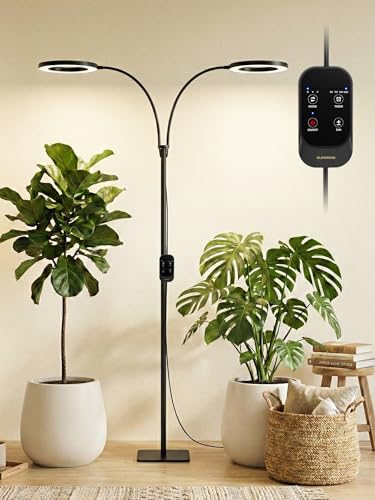
GLOWRIUM Tall Plant Grow Light Full Spectrum

DOMMIA Under Shelf Grow Light Daylight White

DOMMIA Under Shelf Grow Light Pinkish White

DOMMIA Under Shelf Grow Light Full Spectrum

VIIVUU Clip-On Plant Light White

Shyineyou 4-Head Clip-On Grow Light 80 LEDs
More On The Choices That Made The List
The GLOWRIUM 48W starts this list because it handles the most common indoor vegetable scenarios without fuss. A 4-section pole telescopes up to about 79 inches, so the lamp head can sit well above a leggy tomato plant or hover low over a tray of lettuce starts.
Full-spectrum output mimics natural sunlight, and a stepless dimmer lets the grower drop intensity for shade-tolerant greens or push it higher for fruiting crops. For most home gardeners juggling seedlings, herbs, and a few dwarf peppers on the same stand, this is the kind of flexibility that pays off season after season.
The Helpful Details
- Full-spectrum output that covers seedling, vegetative, and flowering stages, so one lamp handles a plant through its whole life.
- Stepless dimming from a soft glow to full output, useful for acclimating delicate seedlings without bleaching them.
- 79-inch adjustable pole gives clearance for tall floor plants like dwarf tomatoes.
- Enlarged lamp head spreads light across a wider footprint than many single-head standing units.
- Three preset spectrum modes for quick swaps when moving between growth phases.
Things To Consider
- Single head may not blanket a wide multi-plant setup evenly without repositioning.
- Floor stand takes up dedicated corner space, so it is less suited to very tight apartments.
Key Specs
Who It Suits Best
Vegetable gardeners running a mix of seedlings and mature plants on a single floor stand, especially those growing dwarf tomatoes or peppers in a spare corner.
Consider Something Else When
The GLOWRIUM Tall Plant Grow Light reviewed next suits a wider plant cluster better, since its dual heads cover more canopy at once.
Where the first GLOWRIUM uses one lamp head, this model doubles up with a dual-head design running about 70.9 inches tall. Two independently adjustable heads mean a grower can angle one toward a tall pepper plant and the other across a tray of basil, covering more plants without moving the stand.
The setup is well suited to a busy indoor vegetable garden where multiple species share the same footprint. Dedicated seedling, vegetative, and flowering spectrum modes keep the light matched to whatever stage the plants are in, which matters for fruiting crops like cherry tomatoes that need stronger flowering wavelengths.
Positive Points
- Dual lamp heads spread light across a wider canopy in a single setup.
- Three spectrum modes (seedling, vegetative, flowering) align light with each growth phase.
- Stands around 70.9 inches tall, giving clearance for floor-level vegetable plants.
- Gooseneck or swivel heads make it easy to target specific plants from different angles.
Trade Offs
- Heavier base footprint than a single-head stand, harder to shuffle around a small room.
- Dual-head output may be overkill for someone with just a few herb pots.
Built With In Mind
Vegetable gardeners tending a multi-plant indoor setup, especially those running a small indoor greenhouse corner with fruiting crops alongside leafy greens.
Look Elsewhere When
The DOMMIA Under Shelf Grow Light with full spectrum suits a shelf-based seed-starting operation more naturally, since it mounts out of the way.
DOMMIA flips the form factor entirely with a 4-inch by 4-inch panel barely a quarter-inch thick, built to slide under a cabinet or shelf. A daylight white tone keeps the light looking natural in a kitchen, which matters when the grow light shares counter space with everyday items.
The smart controller handles the timer and dimming in one unit, so there is no separate brick or wall adapter to hide. For a tight apartment kitchen where leafy greens start on a shelf above the sink, this kind of slim profile is the difference between a workable setup and a cluttered one.
Strengths Worth Knowing
- Ultra-slim 0.28-inch panel fits under most standard shelves and cabinets.
- Built-in auto timer (6/12/16 hour cycles) removes the need for a separate plug-in timer.
- Four brightness levels (25 to 100%) help match intensity to each plant stage.
- Daylight white tone blends into a kitchen without screaming “grow room.”
- USB-powered controller keeps wiring simple in small spaces.
Points To Note
- Single small panel covers a limited footprint, so larger trays may need multiple units.
- Mounting hardware may require creative placement on unusual shelf thicknesses.
Right Fit For
Apartment dwellers running a small seedling tray or herb shelf in a kitchen, where a daylight tone is less visually intrusive than a pink or purple grow light.
Skip It When
The VIIVUU Clip-On Plant Light makes more sense for a single countertop herb pot, since its clamp adapts to uneven surfaces without needing a shelf.
Same slim panel as the previous DOMMIA, but in a pinkish-white tone that leans warmer on the eyes. The added red wavelengths give fruiting and flowering vegetables an extra push, which is why many growers prefer a slightly pinker blend for tomatoes or peppers during bloom.
The form factor stays the same: a 4-inch panel that vanishes under a shelf, with a built-in controller handling 6/12/16-hour timers and dimming. This version is the right call when the grow light sits in a living area where a pure white daylight look feels too clinical.
The Good Stuff
- Pinkish-white tone adds red wavelengths that support flowering and fruiting stages.
- Same slim 0.28-inch profile as the daylight model, easy to hide under shelving.
- Power-loss memory resumes the last setting after an outage, no re-programming needed.
- Auto timer and four-step dimmer built into the controller, no extra hardware.
Worth Noting
- Warmer pinkish cast reads as decorative, which may not suit minimalist interiors.
- Single panel still limits coverage for wider seedling trays.
Best Suited To
Growers running fruiting vegetables like peppers or micro-tomatoes on a shelf, who want a light that supports blooming without lighting up the room in harsh white.
Not Your Match When
Those growing mostly lettuce and herbs should consider the DOMMIA full-spectrum version reviewed below, which balances both leafy and flowering needs.
The third DOMMIA in the lineup uses a true full-spectrum blend, which gives the broadest coverage across seedling, leafy, and fruiting stages. For a mixed shelf of lettuce starts, basil cuttings, and one or two pepper plants, the spectrum versatility is a real advantage over single-purpose lights.
The 4-inch panel and built-in timer carry over from the other DOMMIA models, so the ownership experience feels familiar. This is the safest pick for a hobbyist who wants one light that can handle whatever they decide to start next season without buying a second panel.
Noteworthy Benefits
- Full-spectrum output covers every growth stage in one panel, no swapping lights.
- 4 brightness levels (25 to 100%) match intensity to seedling or mature plant needs.
- Built-in 6/12/16-hour auto timer keeps a consistent photoperiod without daily resets.
- Power-loss memory holds the last setting through brief outages.
Honest Caveats
- Coverage is still tied to a single 4-inch panel, so larger racks need multiple units.
- Full-spectrum LEDs can run warmer than targeted blends, so spacing matters in enclosed shelves.
- USB-powered setup may limit output compared with a directly plugged panel.
Key Specs
Who Should Grab It
Mixed-shelf vegetable gardeners who want one panel that adapts across seasons and crop types without buying dedicated lights for each stage.
Another Choice May Suit
The GLOWRIUM 48W standing light is a stronger pick when plants sit on the floor rather than a shelf, and the grower wants a tall adjustable pole instead of a fixed under-shelf mount.
VIIVUU’s clip-on design solves a different problem: a single herb pot on a desk or a windowsill where a full standing unit would feel ridiculous. The clamp grips the rim of a pot or the edge of a shelf, and a hollow ring lamp head keeps the weight light enough to stay put.
It also ships with a soil-insertion stake, so the light can stand directly in the soil of a larger pot rather than clamp to a surface. For someone with a single basil plant or a couple of lettuce starters, the flexibility is more useful than extra wattage.
Everyday Perks
- Strong clamp works on pot rims, shelves, and narrow edges alike.
- Soil-insertion stake adds a second mounting option for deeper pots.
- Compact size fits on crowded desks or windowsills without dominating the space.
- Lightweight ring head reduces clamp sag over time.
Minor Gripes
- Single-head coverage suits one or two small plants, not a multi-pot setup.
- Clip base may scuff delicate shelf finishes if not padded.
Feature Snapshot
Perfect Match For
Casual indoor growers with a single herb pot or a couple of microgreens on a desk, where a clamp-on light fits the space better than a stand.
Reach For A Different Pick When
The Shyineyou 4-Head Grow Light handles multi-plant tabletops far better, since four heads can cover a small cluster of pots from one clamp point.
Shyineyou’s four-head design solves a problem single clip-on lights cannot: covering a cluster of pots from one mount. Each head aims independently, so a small tabletop of herbs, lettuce, and microgreens can each get a dedicated angle of light without three separate lamps.
Eighty LEDs split across red, blue, and white output give the panel a full-spectrum feel that handles seedlings through fruiting stages. A 3/9/12-hour timer and nine brightness levels add fine control that few clip-on lights in this form factor can match, making it a strong pick for hobbyists scaling up from one pot to a small indoor garden.
Advantages To Know
- Four independently adjustable heads cover a small cluster of plants from a single clamp.
- 80 LEDs in red, blue, and white support every growth stage.
- 3/9/12-hour timer offers flexible photoperiods for different vegetables.
- Nine brightness levels give granular control from seedling to mature plant.
- Three color modes let the grower lean into vegetative or flowering wavelengths as needed.
Room For Improvement
- Four-head clamp puts more stress on a shelf edge, so a sturdy mounting surface matters.
- Cable management on four arms can get tangled in tight setups.
Quick Facts
Whose Shelf It Belongs On
Hobbyist indoor gardeners running a small tabletop cluster of mixed vegetables, who want full-spectrum coverage and timer control without setting up a standing light.
A Better Fit Elsewhere
The DOMMIA full-spectrum under-shelf panel suits a true shelving setup better, since it mounts overhead and stays out of the way rather than clamping to a shelf edge.
Matching The Right Light To Your Vegetable Garden
A grow light only helps if it matches the plants and the space. For seedlings and leafy greens, look for full-spectrum output with dimming, since seedlings scorch easily under fixed high output. Fruiting crops like tomatoes and peppers want a warmer spectrum with more red light during flowering, which is where the pinkish-white or full-spectrum DOMMIA options earn their place.
Consider the form factor honestly. Floor-standing units like the GLOWRIUM models serve taller plants on the ground, while slim under-shelf panels work best for seed-starting trays tucked above a counter. Clip-on lights fill the gap for one or two herb pots where a full setup would feel oversized.
Wattage and coverage area matter more than the number on the box. A 48W panel focused on a small tray can outperform a higher-wattage unit spread across a wide canopy. Match the lamp’s spread to the footprint of the plants, not to the wattage alone.
Finally, built-in timers are worth prioritizing. A consistent photoperiod, meaning the number of light hours per day, matters as much as spectrum quality, and an auto cycle removes the daily chore of switching lights on and off. For most home growers, that built-in convenience is what separates a setup that lasts from one that gets abandoned by week three.
Key Considerations Across These Picks
Pitfalls Shoppers Hit
The most common mistake is choosing wattage over spectrum. A bright white light without the right wavelengths can keep plants alive without driving real growth, especially for fruiting crops that need red-heavy output. Equally common is underestimating coverage: a single panel aimed at a wide tray leaves the outer plants leggy and pale. Measure the footprint, not just the wattage.
Another slip is ignoring heat and spacing. Even LED panels throw some warmth, and a light pressed against tender seedlings will bleach them. Always leave a few inches of clearance and watch the leaves for any sign of curling or discoloration in the first week.
Where The Extra Money Goes
Higher-tier lights in this category typically add independent head control, longer timers, and more brightness steps. The Shyineyou 4-head design costs more because four independently aimed heads replace what cheaper models force the grower to solve with multiple separate lamps. Built-in controllers with power-loss memory, like the DOMMIA panels, also add cost, but they save the hassle of buying and programming a separate plug-in timer.
The upgrade is worth it for anyone running more than two or three plants on a set schedule. For a single herb pot, a basic clip-on handles the job without the extra features.
Frequently Asked Questions
How Many Hours A Day Should Vegetables Get Under A Grow Light?
Most leafy greens thrive on 12 to 16 hours of light per day, while fruiting vegetables like tomatoes and peppers prefer 14 to 18 hours. Built-in timers on the DOMMIA and Shyineyou models make it easy to lock in a consistent cycle.
How Close Should A Grow Light Sit To The Plants?
For seedlings, keep the light 4 to 6 inches above the canopy to prevent stretching without scorching. For mature plants, 8 to 12 inches is a safer working distance, and dimming helps fine-tune intensity.
Is Full Spectrum Really Necessary For Indoor Vegetables?
Full spectrum covers both the blue wavelengths that drive leafy growth and the red wavelengths that trigger flowering. For mixed vegetable gardens, full spectrum removes the guesswork of switching lights between growth stages.
Can One Grow Light Handle Multiple Plants At Once?
Dual-head and four-head designs like the GLOWRIUM Tall or Shyineyou 4-Head models cover small clusters from a single mount. Single panels work for one or two plants, but a multi-plant setup usually needs wider coverage.
Do Indoor Grow Lights Use A Lot Of Electricity?
LED grow lights in this list run between roughly 20W and 50W, which costs very little to run for 12 to 16 hours a day. Compared with older HID or fluorescent setups, modern LED panels draw a fraction of the power.
Closing Remarks
Indoor grow lights turn a windowsill into a four-season garden, and the right one depends on the space and the crops. A slim under-shelf panel works for seedlings and herbs, a tall standing unit suits floor plants, and a multi-head clip-on handles a small cluster on a tabletop. Match the form factor to the room, the spectrum to the vegetables, and let a built-in timer carry the daily routine.