

Window light has its limits, and most kitchen sills simply cannot give a tomato or basil plant the hours of strong light it craves, especially through a long winter. I put together this roundup after digging into the specs, light spectrums, and build details of seven popular indoor options. The goal is simple: help you match the right lamp to your space, your plants, and how hands-on you want to be with the daily routine.
The Lineup, Simplified

GLOWRIUM 48W Full Spectrum LED Grow Light with Stand
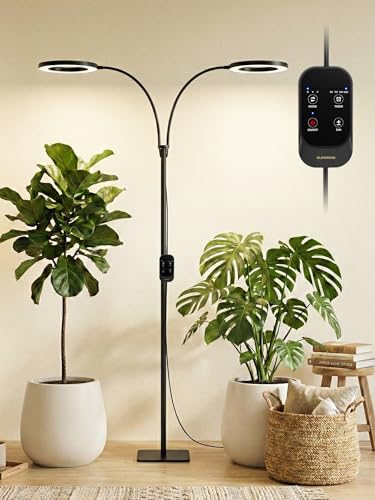
GLOWRIUM Tall Full Spectrum Plant Grow Light

Barrina TX-L84 4FT LED Grow Light 84W

DOMMIA Under Shelf Grow Light Daylight White

DOMMIA Under Shelf Grow Light Pinkish White

DOMMIA Under Shelf Grow Light Full Spectrum

VIIVUU Clip-On Indoor Plant Grow Light
A Breakdown Of The Leading Choices
This 48W floor unit sits at the center of the GLOWRIUM lineup, and its telescoping pole makes it useful across a wide range of plant heights. The full-spectrum output (a balanced blend of light wavelengths aimed at supporting every growth stage, from leafy vegetative growth through flowering) covers seedling herbs and fruiting plants alike.
Compared to the compact VIIVUU clip-on we’ll cover later, this stand-up model offers real overhead coverage without forcing you to mount anything to a ceiling or shelf. For a small apartment corner where leafy greens and a couple of pepper plants share space, the height range keeps the light where leaves need it as the plants stretch upward.
Everyday Perks
- Stepless dimming lets you dial intensity down for seedlings and up for hungry leaf crops without swapping bulbs.
- Three preset spectrum modes (one each for seedlings, vegetative growth, and flowering) keep adjustments quick and visual.
- Telescoping pole reaches roughly 79 inches, so the same fixture can light a low tray and a tall pepper plant across the seasons.
- Floor-stand form factor avoids the drilling and shelf-removal some rigid-mount lights demand.
Things To Consider
- The pole and base footprint eat floor space; tight apartments will feel the squeeze.
- Repositioning across the room is a bit of a chore, so most folks leave it parked in one growing zone.
Key Specs
Made For
Growers tending a mix of seedlings, herbs, and taller fruiting plants in a corner or spare room.
Consider Something Else When
Pick the VIIVUU clip-on light if you only want to supplement a single houseplant on a desk or windowsill.
The dual-head design is what separates this GLOWRIUM from its sibling above. Two lamp heads on gooseneck arms let you angle light onto two separate pots or one wide tray at the same time, while the dedicated S/V/F (Seedling/Vegetative/Flowering) spectrum presets keep the color mix stage-appropriate.
For a grower whose collection has outgrown a single clip light, this tall floor unit offers more reach and more flexibility than the compact DOMMIA shelf panels we’ll look at later. The 268-LED count pushes total output higher than the basic 48W stand, which matters when light-hungry plants like basil or tomatoes are involved.
Where It Excels
- Dual heads plus flexible arms cover more than one plant without moving the base.
- Three stage-specific spectrum modes remove guesswork about which color mix to use.
- Tall floor stand handles leggy plants without forcing them to be constantly rotated.
Honest Caveats
- More moving parts than a single-head unit, so cleaning around the goosenecks takes a bit more time.
- Heavier than a clip-on, meaning you want a stable corner rather than a wobbly side table.
Right Fit For
Vegetable gardeners juggling several mid-size plants who want stronger output and aim control in one package.
Look Elsewhere When
The Barrina TX-L84 4FT LED Grow Light is a smarter buy for anyone running a long shelf or rack of seedlings side by side.
This is the heavy hitter in the lineup. The Barrina TX-L84 spreads four LED panels across a 4-foot bar, which translates into a wide, even coverage area rather than a single bright hot spot. PPFD (photosynthetic photon flux density, the measure of usable light photons actually reaching the leaves) is the figure to watch here: higher PPFD means stronger growth-driving light per square inch.
Where the GLOWRIUM units serve a single corner, the Barrina is built to span a shelf, a rack, or a small grow tent. Vegetable gardeners running multiple trays at once will appreciate not having to reposition the light every few days. The trade-off is that this is a mounted fixture, not a portable floor stand.
What Makes Sense
- Four-panel layout delivers even coverage across long trays without dark corners.
- Full-spectrum output includes IR wavelengths, which some growers credit for stronger stem and flowering responses.
- High PPFD output means seedlings and fruiting crops both stay compact and vigorous under it.
Points To Keep In Mind
- Installation typically calls for clips or hanging hardware, which adds setup time on day one.
- Overkill for anyone who only wants to keep a single herb pot alive.
Feature Snapshot
Best Suited To
Vegetable growers running a dedicated seedling rack or a multi-tray indoor garden where even coverage matters.
Skip It When
The GLOWRIUM 48W stand is a more natural fit for one or two plants in a casual corner setup.
DOMMIA’s under-shelf panel is built for stealth. At just under a third of an inch thick, it slips under a kitchen shelf and disappears, leaving nothing but light falling on the herbs below. The built-in controller handles timer cycles (6, 12, or 16 hours) and four brightness levels, so there is no extra brick to hide.
Compared to the floor-standing GLOWRIUM models, this panel is purely a counter or shelf solution. The daylight white tone keeps the look neutral in a visible kitchen, which is where most people mount it. For most setups, that tradeoff feels fair.
Standout Benefits
- Power-loss memory holds your timer setting through an outage, sparing you a reset chore.
- Slim profile hides neatly under cabinets and shelves without crowding the working surface.
- USB power keeps the install tidy and portable between spots.
Some Limits To Know
- Coverage is limited to the area directly beneath the panel, so wider shelves need multiple units.
Quick Facts
Who It Suits Best
Apartment cooks who want herbs thriving on the counter without a stand or clamp taking up room.
Reach For A Different Pick When
The DOMMIA Full Spectrum version makes more sense for growers starting seedlings rather than maintaining established herbs.
This is the same DOMMIA panel in a warmer color mix. The pinkish-white tone leans gentler on the eyes, which matters when a grow light lives in an open living area rather than a closed utility room. Everything else, the slim housing, the controller, the timer, stays identical to the daylight version above.
For renters and shared-space dwellers, that visible tone shift is often the deciding factor. Functionally, the warm cast still delivers usable light for leafy herbs, though it may feel slightly less intense to the eye than the cooler white variant.
Where It Delivers
- Warm tone blends into living areas without the harsh purple glow of older grow bulbs.
- Same timer and dimmer system as the rest of the DOMMIA shelf family, no learning curve.
Practical Considerations
- Warm output works best for greens and herbs; light-hungry fruiting crops may want more punch.
- Single-panel coverage is fine for a narrow shelf, but wider setups call for extras.
Perfect Match For
Herbs kept on open shelving in a kitchen or living room where the light needs to look at home.
A Better Fit Elsewhere
The Barrina TX-L84 4FT LED Grow Light suits anyone building out a serious vegetable seedling rack.
The third DOMMIA in the shelf family delivers a full-spectrum output aimed at every growth stage. If the daylight-white version feels too cool and the pinkish-white feels too soft for your eyes, this panel threads the middle. Same controller, same slim housing, same USB power.
For seedling propagation under a shelf, full spectrum tends to be the safer bet than a single-tone panel, since the wavelengths cover both the blue (compact leaf growth) and red (flowering and fruiting) ends of the spectrum that drive plant development.
Noteworthy Benefits
- Balanced full spectrum supports seedlings through to fruiting crops under one fixture.
- Built-in timer and dimmer remove the need for an external controller on the counter.
- Power-loss memory holds the timer setting through brief outages.
- USB power keeps the install portable.
Where It Is Less Suited
- Limited coverage area per panel means larger setups need multiple units linked or arranged together.
Feature Rundown
Who Will Love This
Indoor gardeners starting seedlings and growing herbs under a shelf who want balanced wavelengths in a slim package.
Swap It Out When
The GLOWRIUM 48W stand is the better call for taller plants that need overhead light from above.
VIIVUU’s clip-on keeps things simple. The clamp grips onto a pot rim, shelf edge, or desk, and a hollow-ring lamp head (a lightweight ring-shaped housing that drops overall weight on the clamp joint) keeps the fixture from tipping smaller pots. It also ships with a soil-stake insert for direct insertion into a planter, which is a thoughtful touch for renters who can’t clamp anything.
Compared to the larger GLOWRIUM and Barrina units, this is purely a single-plant helper. For someone keeping a basil pot alive on a kitchen counter or reviving a leggy houseplant, the simplicity is the point. None of the multi-mode tuning of the bigger lights is on offer here, which is fair at this scale.
Strong Points
- Strong clamp and included soil stake cover nearly any mounting situation a small setup throws at you.
- Lightweight ring head keeps the clamp from dragging down smaller pots.
- Plug-and-play setup is friendly for first-time growers.
Worth Noting
- Single-head output means coverage is limited to one pot at a time.
- No dimmer or spectrum modes, so all tuning happens through distance and daily hours.
Built With In Mind
New indoor gardeners keeping a single herb pot or small houseplant going in a low-light spot.
Where Another Pick Suits Better
The DOMMIA Full Spectrum panel is a smarter upgrade once the plant collection grows beyond one pot.
What Matters Most When Picking Grow Lights For Vegetables
Spectrum And Light Quality
Full-spectrum LEDs (bulbs that emit a broad range of light wavelengths similar to natural sunlight) tend to cover the two ranges vegetables care about most: blue for compact leafy growth and red for flowering and fruiting. Some panels also add infrared wavelengths (IR), the longer-wavelength light beyond visible red, which some growers credit with stronger stem response. For herbs and leafy greens, a balanced full-spectrum panel does the job. For fruiting crops like tomatoes or peppers, stronger red-heavy output helps during the bloom stage.
Wattage And Coverage
Wattage tells you how much power the light draws, but the more useful number is coverage area at a useful hanging height. A 48W floor unit works for one or two plants; an 84W four-panel bar covers a whole seedling rack. Always match coverage to the footprint of your trays, not just the wattage on the box.
Height And Mounting Style
Floor stands offer flexibility without installation but eat floor space. Under-shelf panels keep counters clear but limit you to flat layouts. Clip-on lights travel anywhere but cover one plant at a time. The honest read is that the right mounting style depends on where your plants live today and where they’ll likely move next season.
Timer And Dimming
Built-in timers (6, 12, or 16-hour cycles are common) save the daily chore of remembering to switch lights on and off. Dimmers let you cut intensity for seedlings and ramp it up for hungry crops. These small features tend to matter more than raw wattage once a setup is established.
Key Considerations Across These Picks
Where Shoppers Go Wrong
The most common slip is buying a single bright lamp and expecting it to cover a whole shelf. Light drops off sharply with distance (the inverse-square law, meaning intensity falls off fast as you move away from the source), so a focused hot spot leaves the edges of a tray stretching. Plan coverage by tray width first, wattage second. Another trap is ignoring color tone: a purple-heavy blurple light (an older-style LED mixing red and blue diodes for a purplish glow) can look harsh in a kitchen, so consider warm or full-spectrum panels for shared spaces.
What The Higher Tier Buys
Stepping up to a premium panel typically gets you wider coverage, higher PPFD, and sturdier mounting hardware. For casual herb keepers, the middle tier is plenty. For growers running seedlings year-round or pushing fruiting crops indoors through winter, the higher output pays back in sturdier stems and faster growth. It is a real upgrade, but only if your setup actually uses it.
Frequently Asked Questions
How Many Hours A Day Should I Run Grow Lights For Vegetables?
Most vegetables do well with 12 to 16 hours of light per day. Leafy greens sit happily at the lower end, while fruiting crops like tomatoes prefer closer to 16 hours during their active growth phase.
What Color Light Is Best For Growing Vegetables?
Blue light encourages compact, leafy growth, while red light supports flowering and fruiting. A full-spectrum panel covers both, which is why it is the practical default for most indoor vegetable setups.
Can I Leave A Grow Light On All Night?
Leaving a grow light on 24/7 is generally not recommended. Plants need a dark rest period to process energy and grow properly. A timer, like the ones built into the DOMMIA panels, prevents accidental all-night runs.
Do Grow Lights Use A Lot Of Electricity?
Modern LED grow lights are quite efficient. A 48W panel running 14 hours a day adds only a modest amount to a monthly electric bill compared to older incandescent or HID (high-intensity discharge) grow lamps.
How Far Should A Grow Light Be From Vegetable Seedlings?
A safe starting distance is roughly 6 to 12 inches above seedlings, then adjust based on how the plants respond. Stretching stems signal the light is too far; leaf curl or bleaching signals it is too close.
Closing Thoughts
The right grow light for you depends less on chasing the highest wattage and more on matching the fixture to where your vegetables actually live. A clip-on for a single windowsill, a slim under-shelf panel for a kitchen herb corner, or a wider bar for a seedling rack each solve a different problem. Pick the one that fits your space today, and your plants will tell you soon enough whether you nailed it.