

Tomatoes are sun-hungry plants, and most homes simply can’t give them enough daylight through winter or on a shaded patio. A good grow light steps in to mimic the wavelengths tomatoes actually use for flowering and fruit set, keeping seedlings stocky and mature plants productive when the sun clocks out early. I’ve put together seven solid options that cover everything from a single windowsill pot to a full greenhouse setup, so you can match the right light to your growing style.
An Overview Of The Picks

48W Grow Lights for Indoor Plants, Full Spectrum LED Plant Light with Stand
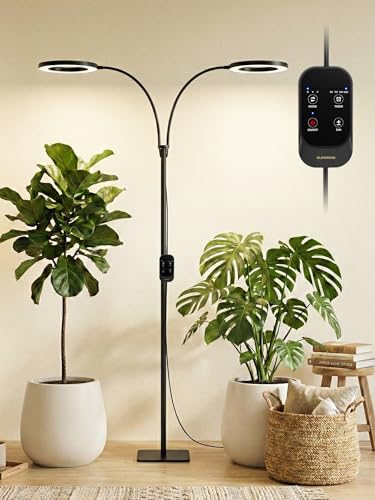
GLOWRIUM Tall Plant Grow Light for Indoor Plants, Full Spectrum Plant Light

VIIVUU Clip-On Grow Light for Indoor Plants, White 1 Pack

Espird Outdoor LED Grow Lights for Greenhouse 6-Light Waterproof String

Espird Outdoor Grow Light 6-Light Waterproof String, UL Certified

Espird 6-Light LED Grow Light String with Timer, Outdoor Waterproof

Kullsinss 3.5in Small Grow Lights for Indoor Plants, 48 LEDs Full Spectrum
The GLOWRIUM 48W stand-mount light reaches up to 79 inches tall, which matters more than it sounds once a tomato seedling stretches past its first true leaves. Compared to the VIIVUU clip-on coming up later, this one gives you a real floor-standing rig you can walk up to and adjust without unclipping anything. I like that it runs full-spectrum output (meaning it covers the range of light wavelengths plants use for photosynthesis, not just blue and red) so a single fixture can take seedlings through to flowering without swapping bulbs. For most indoor tomato growers, that’s the right amount of overhead coverage in a footprint that fits behind a couch or in a corner.
You’ll mostly use this on a rolling plant caddy or next to a south-facing window as supplemental light. The taller pole helps when plants get leggy, and the dimming function is genuinely useful when you’re hardening off young starts.
What Pays Off
- Four-section pole extends high enough for full-size indeterminate (vining, continuously growing) tomato plants
- Stepless dimming lets you dial intensity for tender seedlings versus hungry flowering plants
- Full-spectrum output covers vegetative and flowering stages in one fixture
- Stand-mounted design frees up shelf space compared to clamp or hanging setups
Things To Consider
- The footprint is wider than a clip-on, so tight apartment corners may feel crowded
- Single-head design means repositioning the whole stand to shift coverage between plants
Feature Snapshot
Whose Shelf It Belongs On
Right fit for indoor gardeners growing a couple of tomato plants in pots year-round.
Consider Something Else When
The GLOWRIUM Tall Plant Grow Light suits anyone juggling several tomato starts side by side better than this single-head version.
This second GLOWRIUM doubles down on the first model’s approach by adding a second lamp head, which is the real story for anyone running more than one tomato plant. Where Pick 1 spreads light across one canopy, this 70.9-inch dual-head version lets you angle each panel toward a different pot or seedling tray. I think of it as the step-up choice once you’ve proven you actually like growing tomatoes indoors and want to expand without buying another whole stand.
The dedicated seedling, vegetative, and flowering modes (essentially preset light recipes tuned to the wavelengths each stage prefers) save you from guessing which spectrum setting to pick. For most people starting tomatoes from seed in late winter, the seedling mode alone justifies the upgrade.
Everyday Perks
- Dual heads cover two plants or a wider seedling tray at once
- 268 LEDs total spread the light more evenly than a single panel can
- Three stage-specific modes remove guesswork for beginners
- Tall stand keeps pace with vigorous tomato varieties
Worth Noting
- Dual heads mean more cable management behind the pots
- Larger footprint than Pick 1, so measure your growing corner first
Who It Suits Best
Multi-plant indoor growers who want one rig to handle several tomato starts through a full season.
Not Your Match When
The Kullsinss 3.5in Small Grow Light fits a single windowsill herb-style setup better than this full stand.
The VIIVUU clip-on plays a completely different game than the floor stands above, and that’s the point. Instead of dedicating floor space, you clamp this onto a pot rim, shelf edge, or stick it straight into the soil with the included stake. For a single cherry tomato on a kitchen windowsill or one seedling under a shelf, this is more practical than dragging in a 79-inch pole. The hollow ring design keeps the head light, so the clamp holds position without sliding.
It’s the kind of light apartment dwellers reach for, where a tomato plant has to coexist with a bookshelf. Owners commonly find the dual mounting options (clamp versus soil stake) cover most setups without needing extra hardware.
Practical Pluses
- Dual mounting: clamp onto a shelf or insert into soil, your call
- Compact ring head fits tight spaces the floor stands can’t
- Lightweight clamp avoids tipping smaller pots
- Easy to reposition as plants move around the room
Trade Offs
- Single small coverage area means scaling up requires buying multiples
- Clamp pressure on thin shelf edges may leave marks over time
Quick Facts
Made For
Tomato growers with limited space who only need to light a single windowsill pot.
Look Elsewhere When
The GLOWRIUM 48W Full Spectrum LED Plant Light with Stand handles taller plants and bigger canopies with far less repositioning.
Step out of the living room and into a real greenhouse, and the Espird 6-light string changes the conversation entirely. Instead of one panel over one plant, you get a daisy-chainable string of six lamps you can hang along a bench or tomato row. The IP44 rating (a standard that means protected from splashing water and solid objects over 1mm) means humidity from watering and condensation won’t kill the fixture, which matters more in a closed greenhouse than indoors. Compared to the indoor floor stands above, this is built for a wider canopy and rougher environment.
Full-spectrum output keeps tomato seedlings, flowering plants, and fruiting plants all on the same system. The end-to-end serial connector means you can run multiple strings off one outlet, scaling up as your greenhouse expands.
Useful Highlights
- IP44 waterproofing holds up to humid greenhouse conditions
- Linkable design scales from one row to a whole greenhouse bay
- Six bulbs spread light evenly across long tomato benches
- Aluminum housing helps dissipate heat in enclosed spaces
Honest Caveats
- Overkill for a single indoor pot, this is a greenhouse-scale product
- Installation requires hanging hardware and a nearby outdoor outlet
Best Suited To
Greenhouse growers running a dedicated tomato bench or growing row.
Swap It Out When
The Espird UL Certified Outdoor Grow Light suits anyone in a damp greenhouse who values third-party safety certification.
Where Pick 4 leads on waterproofing, this Espird variant leads on third-party safety certification (UL, meaning Underwriters Labs, an independent safety testing organization). For a string light that lives in a damp greenhouse with condensation dripping off the roof, that distinction is worth paying attention to. The 21.3-foot string gives you serious reach across a tomato bed, and the E26 socket design makes bulb replacement straightforward if one eventually fails.
For most backyard greenhouse owners running a few tomato plants, the certification offers peace of mind without sacrificing the linkable convenience of the earlier Espird model.
Everyday Advantages
- UL certification adds an independent safety layer for damp environments
- 21.3-foot reach covers long tomato benches without extension cords
- Waterproof lamp holders and connectors handle greenhouse humidity
- Rubber-covered on/off switch keeps moisture out of the controls
Possible Compromises
- String design means height adjustment requires re-hanging, not a quick tilt
- Not designed for tight indoor corners where a panel or stand works better
Feature Rundown
Right Fit For
Greenhouse owners who want certified safety alongside weather-ready performance.
A Better Fit Elsewhere
The Espird 6-Light Grow Light with Timer suits growers who’d rather automate on/off cycles than remember to flip a switch.
This Espird string adds the one feature the previous two outdoor picks skip: a built-in timer. Tomatoes want consistent daylength, and flipping a switch by hand every morning and night gets old fast. The IP44-rated housing (same splash-proof standard as Pick 4) keeps the timer electronics safe in a humid greenhouse. For most people who work outside the home, scheduling the light cycle is the difference between consistent harvests and forgetful ones.
It’s essentially the same physical format as Pick 4, but the timer integration is what makes it the set-and-forget option for anyone who’s ever come home to wilted seedlings after a long day.
Reasons It Performs
- Integrated timer keeps daylength consistent without daily effort
- Waterproof housing matches other Espird greenhouse strings
- Six-bulb layout lights a full tomato row evenly
- Full spectrum covers vegetative and flowering stages
Small Caveats
- Timer adds another component that could eventually fail outdoors
- String format still requires a hanging setup, not a plug-and-go panel
Perfect Match For
Busy greenhouse growers who want their tomato lights on a reliable schedule.
Reach For A Different Pick When
The Espird UL Certified Grow Light better fits anyone prioritizing safety certification over timer convenience.
The Kullsinss 3.5-inch halo is the smallest light in this roundup, and that scale is the whole point. A tomato seedling in a four-inch pot doesn’t need a 79-inch pole or a six-bulb string, it needs a small ring of full-spectrum light sitting on the soil or clamped to the pot rim. The detachable base gives you two install methods in one product, which matters for anyone who’s constantly rearranging a small apartment shelf.
Where the indoor stands above scale up to bigger operations, this one stays in its lane: a single starter plant under a desk lamp footprint. Owners commonly report it’s a sensible starting point before committing to a larger system.
What Earns Its Place
- Compact 3.5-inch halo fits where nothing else on this list can
- 48 LEDs cover the full light spectrum despite the small size
- Two install methods: weighted base or soil insertion
- Right scale for a single tomato seedling under a shelf
Room For Improvement
- Too small to keep up with mature tomato plants past seedling stage
- Limited coverage area means moving the light as the plant grows
Technical Sheet
Who Should Grab It
Starter tomato growers nursing a single seedling on a windowsill or shelf.
Skip It When
The GLOWRIUM Tall Plant Grow Light handles a full tomato plant through harvest, where this small halo tops out early.
Picking Grow Lights That Actually Help Your Tomatoes Thrive
Tomato seedlings want strong, sustained light from the moment they sprout. Aim for a fixture that delivers full-spectrum output (covering the wavelengths plants use for photosynthesis, roughly 380 to 760 nanometers) since tomatoes rely on both blue and red light to build sturdy stems and set flowers. Wattage matters less than coverage and distance from the canopy. A 48W panel sitting six inches above a seedling does more good than a 100W panel mounted two feet away.
Match the format to your space. Floor stands work for a single plant in a corner, while greenhouse strings spread light across an entire row. Indoor gardeners running more than one pot typically get better results from a dual-head stand than from a single panel.
Plan for adjustability. Tomato plants grow fast, and a fixed-height light becomes useless within a month. Look for telescoping poles, hanging hooks, or clamps that let you raise the fixture as the canopy climbs. Dimming or staged spectrum modes help when you’re moving seedlings from gentle start-up light into flowering-intensity output.
Heat and humidity matter more than people expect. Enclosed greenhouses trap warmth, so aluminum-housed LEDs that dissipate heat efficiently protect both the fixture and the plants. Indoor growers don’t have to worry as much, but a light that runs cool lets you keep it closer to the leaves without scorching.
Where Shoppers Go Wrong
The most common mistake is buying a single small clip-on for a whole tray of seedlings. The coverage looks fine on day one, but as plants stretch and leaves overlap, the outer ones etiolate (stretch thin and pale while searching for more light). Either match the light to the canopy size or plan to rearrange plants under it weekly.
A second trap is chasing wattage numbers. A 100W light with poor optics wastes energy on a hot spot instead of even coverage. Focus on the spectrum, the spread, and how close the fixture can hang, not the watt printed on the box.
When Paying More Pays Off
Higher-tier grow lights earn their keep through better diode quality, longer lifespans, and useful extras like timers or staged spectrum modes. The upgrade from a basic clip-on to a dual-head stand is worth it once you’re running more than one tomato plant, because the time you save adjusting and repositioning pays back quickly. For greenhouse growers, third-party safety certification like UL adds genuine value in a damp environment where cheaper fixtures corrode or fail at the wiring.
Frequently Asked Questions
How many hours a day do tomatoes need under a grow light?
Tomato plants do best with 14 to 18 hours of light during vegetative growth, dropping to 12 hours once flowering starts. A built-in timer helps hold that schedule without manual switching.
Can a regular LED bulb work instead of a grow light?
A standard household LED covers visible light but misses the specific wavelengths tomatoes use most heavily. A true full-spectrum grow light delivers stronger output in the red and blue bands that drive flowering and fruiting.
How close should a grow light hang to tomato seedlings?
Keep the fixture 4 to 6 inches above seedlings and raise it as they grow. Too far and seedlings stretch thin searching for light; too close and leaves may bleach or burn.
Do outdoor greenhouse lights need to be waterproof?
Greenhouse humidity and condensation easily ruin non-rated fixtures. An IP44 rating or higher keeps the electronics safe through routine watering and weather swings.
Is a clip-on light enough for a mature tomato plant?
A clip-on handles seedlings and very small plants, but most mature tomatoes need broader coverage than a single ring provides. Plan to upgrade to a stand or panel once the plant outgrows the original footprint.
Closing Thoughts
The right grow light comes down to matching scale and format to where you actually grow tomatoes. A small halo on a shelf beats a giant panel you don’t have room to hang, and a greenhouse string beats an indoor stand if your tomatoes live under glass. Pick the option that fits your space today, and remember that tomatoes reward consistency more than intensity, so a light you actually leave on schedule beats a more powerful one you forget to flip.