

Shooting video at home, in a rented studio, or anywhere a client asks me to set up fast has taught me one thing: the light makes the shot, not the lens. I put together this roundup for creators who need solid continuous lighting without hauling a truckload of gear. Every pick below handles a different scenario, from a tiny RGB panel for travel days to a high-output COB head for cinematic interviews.
The Essentials At A Glance

amaran Ray 60c RGB Video Light 60W Portable Studio

Aputure Storm 700x 700W Compact COB Light
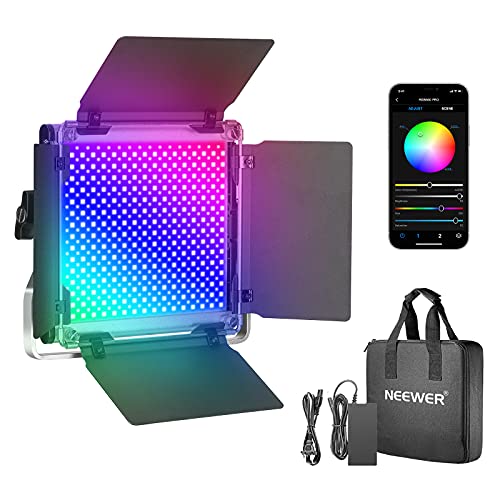
NEEWER 660 PRO RGB LED Video Light with App Control

Aputure Amaran 150c 150W RGBWW COB Video Light
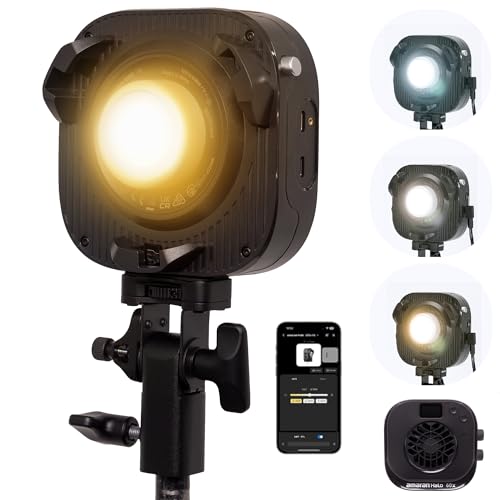
Amaran Halo 60X COB Led Video Light 60W Bi-Color
Taking A Closer Look At The Options
The Ray 60c is the kind of light I want when I’m packing light. At roughly 528 grams for the lamp head, it slips into a camera bag without rearranging everything else, and the IP54 rating means I don’t panic when a light drizzle hits a backyard shoot. Bowens mount compatibility opens up a huge modifier ecosystem, which matters once you start shaping light with softboxes or reflectors. RGBWW output gives full color control, so it doubles as an effect light when a project calls for something moody.
Where the Ray 60c really earns its spot is on hybrid shoots. I can run it as a key light with a Bowens softbox for a clean interview look, then swing to a saturated teal for a music video in the same session. The trade-off is that 60 watts won’t overpower harsh sunlight, so outdoor midday work still calls for flags or shade.
Good Reasons To Consider
- IP54-rated build handles dust and splashes during location work
- Bowens mount opens access to a wide range of softboxes and reflectors
- Full RGBWW color control for creative or accent lighting
- Lightweight 528-gram head keeps travel kits manageable
- Compact COB footprint fits tight home studio setups
Things To Consider
- 60W output falls short against bright daylight without diffusion
- Small body can run warm during long sessions, so plan airflow
- Modifier mounting feels fiddlier than larger COB heads
Feature Snapshot
Who Should Grab It
Traveling creators and solo shooters who need a compact Bowens-mount COB that handles location weather and tight indoor spaces.
Consider Something Else When
Studio work that demands heavy 700W output should reach for the Aputure Storm 700x instead.
The Storm 700x is what I point at when a scene needs serious horsepower. It’s a 700W COB light built around Aputure’s BLAIR chipset, which blends blue, lime, amber, indigo, and red diodes for cleaner whites than standard RGBWW designs. CRI and TLCI both hit 95 or higher, and SSI scores stay in the 80s for both tungsten and daylight, which means skin tones land naturally even when I’m mixing with practical room lights.
This is the kind of fixture that pulls double duty on narrative and commercial shoots. I can flag the Storm into a 6-foot octa for a soft key, or punch it through a narrow reflector for a hard cinematic edge. The honest read is that the head itself is compact for the output class, but the ballast and cabling still demand a proper cart or C-stand mount.
Why It Works Well
- BLAIR five-diode chipset delivers accurate white light and rich saturated colors
- 700W output handles large interiors and diffusion-heavy setups
- High CRI/TLCI scores keep skin tones natural under mixed lighting
- Strong SSI readings across tungsten and daylight balance points
Honest Caveats
- Ballast and cabling add real weight to any mobile setup
- Power draw requires a dedicated 15-amp circuit in most studios
- Cooling fans ramp audibly during extended full-power runs
Right Fit For
Production crews and rental studios outfitting interview or commercial sets where one fixture must cover a wide area with cinematic fidelity.
Swap It Out When
A solo creator working from a small home office will find the Amaran Halo 60X far easier to manage day-to-day.
The NEEWER 660 PRO is the panel-style workhorse of this list. It’s a 50W RGB panel that ships with barn doors and a U-bracket, so I can control spill on set without buying extra accessories. App control is the standout for streamers, because I can adjust color temperature and brightness mid-broadcast without reaching for the light. CRI 97+ helps restore color accuracy for product shots and skin tones, and the bi-color range plus RGB beads covers everything from clean white to creative gel effects.
For content creators running a desk setup, this light plugs in, mounts to a stand, and starts earning its keep immediately. The trade-off shows up when I compare it with a COB head like the Amaran 150c, which throws harder light through a Bowens softbox.
A Few Highlights
- Barn doors control spill without buying separate flags
- App control adjusts settings remotely during live streams
- High CRI 97+ output keeps colors faithful for product work
- 660 SMD LEDs deliver smooth, even light across the panel surface
Points To Note
- 50W output limits throw distance versus COB fixtures like the Aputure Amaran 150c
- Panel form factor means a wider footprint on small desks
- Plastic barn doors feel less rugged than metal alternatives
Made For
Streamers, YouTubers, and product photographers who want app-driven control and built-in spill management in a single package.
Look Elsewhere When
Travelers needing a lighter, weather-sealed setup should consider the amaran Ray 60c.
The Amaran 150c sits in the sweet spot where most hybrid shooters live. It’s a 150W RGBWW COB light with a CCT range from 2500K to 7500K, plus full 360-degree HSI color control covering over 90% of the Rec.2020 color space. CRI and TLCI both score 95+, which keeps skin and fabric looking natural under the beam. The expanded bi-color range, including green-magenta shift, helps me match ugly fluorescent office lights without fighting them.
For documentary and interview work, the 150c punches through a 3-foot softbox with room to spare, and the Bowens mount means my existing modifiers from the Ray 60c transfer over. The honest read is that at 150W, it still isn’t a sunlight killer outdoors, but inside it’s a confident workhorse.
Practical Pluses
- 2500K-7500K CCT range handles warm interiors to cool daylight
- Bowens mount compatibility keeps my modifier kit unified
- High CRI/TLCI 95+ ratings support color-critical work
- Green-magenta shift helps match mixed practical lighting
Worth Noting
- Fan noise rises at sustained full power in quiet rooms
- 150W still needs diffusion for outdoor midday shooting
- Bowens-mount COBs run larger than panel alternatives like the NEEWER 660 PRO
Feature Snapshot
Best Suited To
Hybrid shooters handling interviews, short films, and commercial projects that need strong output and accurate color in one fixture.
A Better Fit Elsewhere
High-end narrative work that requires the deepest color volume and the cleanest white light should step up to the Aputure Storm 700x.
The Halo 60X is the light I recommend first to people setting up a home studio. It’s a 60W bi-color COB head with a Bowens mount, so newcomers can grow into the modifier ecosystem without locking themselves out. Output reaches 3,270 lux at one meter bare, which is plenty for a desk-to-chair talking-head setup. CRI 96+ and TLCI 97+ keep skin tones looking healthy without color correction in post.
The bi-color range from 2700K to 6500K covers most interior-to-window scenarios, and the included DC adapter simplifies power for fixed setups. You may find the lack of RGB limiting if you plan to shoot stylized scenes, but for clean interview and YouTube work, the honest read is that this light simply does the job.
Benefits That Matter
- Bi-color 2700K-6500K range covers most natural lighting scenarios
- CRI 96+ and TLCI 97+ deliver clean skin tones out of camera
- Bowens mount opens access to affordable softboxes and lanterns
- Simple control layout shortens the learning curve for new creators
Small Caveats
- No RGB output, so creative gel looks require additional fixtures
- 60W output means diffusion is essential for soft, even results
- DC power limits flexibility compared to battery-capable units
Perfect Match For
First-time creators and home-studio builders who want a forgiving COB light that grows with their kit and skills.
Reach For A Different Pick When
Color-heavy work like music videos or product shots benefits from the RGB control of the NEEWER 660 PRO instead.
Matching Video Lights To Real Shooting Styles
Choosing a video light starts with honestly answering where and how I plan to shoot. Wattage tells me how much light the fixture throws, but CRI (Color Rendering Index) and TLCI (Television Lighting Consistency Index) tell me whether skin tones, fabrics, and products look true under the beam. For interview-heavy work I want CRI 95 or higher; for stylized scenes, RGB or RGBWW control becomes the deciding factor. Bowens mount compatibility matters once a softbox or projection attachment enters the picture, because it unifies the modifier collection across lights.
Power options shape mobility. DC adapter setups keep things simple in fixed studios, while battery-capable heads open up outdoor and run-and-gun scenarios. Form factor matters too: COB heads punch harder through diffusion, while panels spread light evenly across a wider surface, useful for product tables and overhead keys. Coverage ratings like IP54 indicate dust and splash resistance, which becomes essential during location work where weather and dust are real concerns.
For streamers and desk creators, panel lights with app control simplify adjustments mid-broadcast. For hybrid shooters running interviews one day and narrative scenes the next, a mid-wattage Bowens-mount COB offers the best balance. High-output studio heads earn their keep on narrative and rental sets, but the added ballast weight reduces their appeal for solo creators.
Key Considerations Across These Picks
Wrong Turns To Avoid
The biggest mistake I see is buying wattage without considering modifiers. A 150W COB with no softbox produces harsh, unflattering light that no amount of post-processing can rescue. Beginners often overlook CRI as well, ending up with greenish skin tones that scream amateur footage. Another common trap is choosing a panel light when a COB head would serve the workflow better, or vice versa, without thinking through how the modifier ecosystem fits.
Where The Extra Money Goes
Premium video lights invest in color accuracy, chipset design, and build quality. Higher-end fixtures deliver cleaner whites across the CCT range, stronger SSI scores, and quieter cooling fans. They also tend to ship with more robust Bowens mounts and better heat dissipation for long shoots. For creators shooting a few short videos a month, a mid-tier COB often delivers the best balance of price and performance. For full-time content production, the color fidelity and reliability of a premium fixture pay back through fewer reshoots and faster grading.
Frequently Asked Questions
What wattage video light do I need for interviews?
A 60W to 150W COB head handles most indoor interviews when paired with a softbox. Smaller wattage works for desk setups, while larger rooms benefit from the Amaran 150c or similar mid-output options.
Do I need RGB capability in a video light?
RGB is essential for stylized, color-driven projects but less critical for clean interviews. Bi-color fixtures like the Halo 60X handle most natural lighting scenarios, while RGBWW heads add creative flexibility.
What is Bowens mount and why does it matter?
Bowens mount is a widely adopted modifier standard that lets lights use third-party softboxes, reflectors, and projectors. Choosing a Bowens-compatible head keeps the modifier kit flexible and upgradeable.
Are panel lights or COB lights better for video?
Panels spread light evenly across a wide surface, ideal for overhead and product lighting. COB heads project more concentrated light, which works better through softboxes for portrait and interview setups.
How important is CRI for video lighting?
CRI matters whenever accurate color reproduction matters. For skin tones and product work, CRI 95 or higher keeps footage looking natural and reduces grading time.