

Leaving the lights on in an empty bathroom, fumbling for a switch on a dark porch, or remembering to turn off the holiday display before bed are tiny hassles that stack up. I put together this shortlist of timers for lights that quietly handle those moments, whether you rent a small apartment or own a busy family home. The six options below cover in-wall switches, plug-in outlets, and a few specialty picks for outdoor and high-load setups.
A Quick View Of The Lineup

Leviton Countdown Timer Switch for Bathroom Fan and Household Lights,10-20-30-60 min,No Neutral Required,Single Pole,15A

Intermatic 156T1978A Time Switch Tripper Kit for T100, T7000, WH40

BN-LINK Indoor 7-Day Programmable Digital Timer Outlet, 2 Outlets

BN-LINK 24-Hour Heavy Duty Mechanical Timer Outlet with Indicator Light
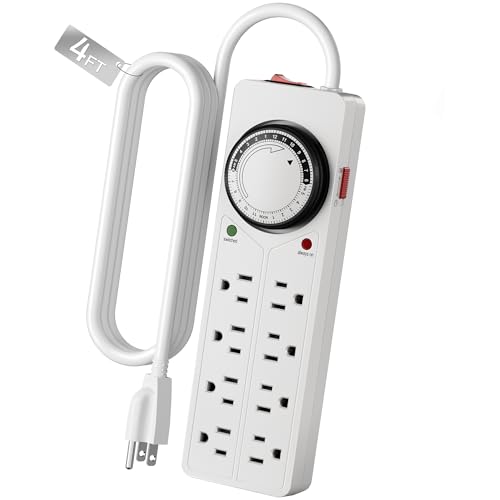
BN-LINK 8 Outlet Surge Protector with Mechanical Timer

myTouchSmart In-Wall Digital Timer with Battery Backup
A Deeper Look At The Lineup
Press the button, walk away, and the fan handles the rest. This Leviton switch replaces a standard wall control with a countdown timer offering 10, 20, 30, or 60 minute presets, which makes it genuinely useful in steamy bathrooms where someone always forgets to flip the fan off. The no-neutral-required design is a quiet lifesaver in older homes, since most switches from a generation ago don’t have a neutral wire waiting in the box.
It handles a range of loads: 600W of LED or CFL, 1800W of incandescent or halogen, and a half-horsepower fan or motor up to 9.8 amps. The shallow body fits into a typical wallbox without forcing you to chisel drywall. A neutral wire is the return path that completes a circuit in modern switch boxes; when your home lacks one, this switch still works.
Well-Handled Touches
- Four countdown presets cover most bathroom and hallway routines
- Works in older wiring because no neutral is required
- Drives a half-horsepower fan directly, no relay needed
- Shallow depth slides into crowded wallboxes
- Pack of ten fits multi-room renovations or rental properties
Things To Consider
- Single-pole only, so it can’t replace a three-way hallway switch
- Presets are fixed at four values, not user-adjustable
Key Specs
Best Suited To
Anyone outfitting a bathroom, laundry room, or garage where lights and fans tend to stay on longer than needed.
Look Elsewhere When
The myTouchSmart In-Wall Digital Timer is a better match if you want a fully programmable 24-hour schedule rather than a fixed countdown.
This kit isn’t a timer itself; it’s the part that wears out inside one. If you own an Intermatic T100, T7000, or WH40 mechanical panel that’s been quietly running your outdoor lights or pool pump for years, the trippers are the small fingers that physically press the on/off lever. Over time they crack, flatten, or disappear into the lawn mower. Each kit comes with two sets of replacement trippers plus set screws, so a single order covers a typical two-circuit panel.
The two-pack format suits property managers who maintain multiple units, and the color-coded pieces (gold, silver, turquoise) tell you at a glance which tripper is on and which is off. A tripper is a small mechanical actuator that triggers the switch at a set time on the clock dial.
Key Advantages
- Exact-fit replacement for the most common Intermatic residential panels
- Two kits per pack, so a multi-circuit panel is covered in one order
- Color-coded pieces make on and off positions unmistakable
- Set screws included, no extra hardware run to the hardware store
Honest Caveats
- Only fits specific Intermatic series, so it won’t help with a different brand’s panel
- You’ll still need the existing timer housing and clock motor to be functional
Built With In Mind
Long-time owners of Intermatic mechanical panels who want to restore lost accuracy without swapping the whole unit.
Swap It Out When
The BN-LINK 8 Outlet Surge Protector with Mechanical Timer is the better pick if you’re starting from scratch and want modern convenience outlets with scheduling built in.
Plug a lamp into one side and a string of lights into the other, then let the timer decide when they wake up. This BN-LINK unit supports up to eight on or off programs across two grounded outlets, with weekday and weekend patterns handled separately. For a living room where the same routine plays out Monday through Friday, the seven-day flexibility is genuinely useful, especially when you travel and want a lived-in look.
One detail owners appreciate: a backup battery keeps the schedule through short power outages, so you don’t walk into a dark house after a storm. Both outlets share a single schedule, which simplifies the setup but means they always switch together.
The Upside
- Eight on/off programs cover nuanced daily patterns
- One-minute resolution supports everything from short accent lighting to long evening routines
- Backup battery preserves the schedule through brief outages
- Daylight savings toggle avoids the twice-yearly re-program ritual
Points To Note
- Both outlets share a single schedule, so independent control requires two units
- Initial programming takes longer than a simple pin-dial timer
At A Glance
Whose Shelf It Belongs On
Frequent travelers and homeowners who want lamps to mimic an occupied house without daily effort.
Skip It When
The BN-LINK 24-Hour Mechanical Timer Outlet is a better fit for anyone who’d rather skip programming and just press pins down.
No apps, no menus, no tiny buttons. You push a row of pins down for on and leave them up for off, then rotate the dial so the current time lines up with the marker. The whole routine takes under a minute, which is exactly why a basic mechanical timer like this still earns a spot on a kitchen counter or workshop bench. The indicator light confirms at a glance whether the outlet is currently powered, useful when the device being controlled has no visible status of its own.
The 3-prong grounded outlet accepts grounded plugs from most household lamps, fans, and small appliances. Compared to the BN-LINK digital model above, this one trades flexibility for sheer simplicity; once you set the pins, the same 24-hour pattern repeats until you change it.
A Few Strong Suits
- Built-in pin dial means no loose parts to lose
- One-minute setup works for non-technical users and renters
- Indicator light shows live status at a glance
- Compact body doesn’t block the second outlet on a typical wall plate
Less Ideal Details
- 24-hour repeat only, no weekday or weekend differentiation
- No backup battery, so a long outage shifts the schedule until reset
- Pin pins can feel stiff for anyone with limited hand strength
Made For
Renters, parents, and older homeowners who want a set-it-and-forget-it timer that doesn’t need an app or learning curve.
Not Your Match When
You want different patterns on different days; in that case the BN-LINK 7-Day Programmable Digital Timer Outlet offers eight programs and weekday selection.
For a media center, home office, or workshop full of gear that should power down at night, a single-outlet timer just doesn’t cut it. This surge protector expands to eight outlets: four always on for things like a router or a phone charger, and four controlled by a mechanical timer dial with 15-minute increments. A circuit breaker switch adds a layer of overload protection, and the surge rating covers everyday spikes.
Setting the schedule is the same pin-down approach as the standalone BN-LINK mechanical model, so the learning curve stays low. The cord is described in the source as 3 feet in one field and 4 feet in the title, so measure the distance from the wall before ordering.
What Earns Its Place
- Eight outlets handle an entire desk, entertainment center, or hobby station
- Four timer-controlled and four always-on outlets cover mixed loads
- 15-minute pin resolution suits most home routines
- Circuit breaker switch adds a basic safety layer
Practical Considerations
- Larger footprint than a single-outlet timer, so plan placement
- All four timed outlets share one schedule, no independent control
Feature Snapshot
Right Fit For
Anyone with a home office, gaming setup, or workshop that needs several devices on a single repeating schedule.
Consider Something Else When
A single lamp on a basic countdown is the goal; in that case the Leviton Countdown Timer Switch handles one circuit cleanly at the wall.
For a porch light that needs to come on at dusk, an indoor lamp on a daily timer, or a fan that should run for a few hours each evening, this in-wall switch hits a nice middle ground. The face offers four programmable buttons, plus two manual on/off buttons for times when you just want the light now. Blue LED indicators light up the active program, which helps in a dim hallway.
Battery backup keeps the schedule intact through short outages, so a storm doesn’t reset the whole house. The switch works with LED, CFL, incandescent, and halogen bulbs, making it a sensible replacement for a standard single-pole switch in most rooms.
The Helpful Details
- Four programmable buttons support multiple daily routines
- Two manual override buttons for instant on or off
- Blue LED indicators make the current program easy to read
- Battery backup preserves programming through short outages
Trade Offs
- Single-pole wiring only, won’t replace a three-way switch
- Face is larger than a standard toggle, so older wall plates may need a fresh cover
Perfect Match For
Homeowners who want a clean, wall-mounted timer with preset programs and don’t want to plug a strip into an outlet.
Where Another Pick Suits Better
The Leviton Countdown Timer Switch is the better fit if you’d rather press one button for a 10- or 20-minute countdown instead of programming a daily schedule.
What To Weigh Before Choosing Timers For Lights
The first decision is where the timer lives. In-wall switches replace a standard light switch and look like part of the home, but they require a compatible wallbox and a basic comfort with wiring. Plug-in outlets skip the wiring entirely and move with you, which is helpful in rentals or temporary setups. Surge-protector-style timers make sense when a single device has grown into a cluster of cords.
Load type matters just as much. A countdown switch rated for a half-horsepower fan is overkill for a single LED bulb, but the same switch may be undersized for a string of incandescent shop lights. Match the timer’s wattage and motor ratings to the devices you plan to control, and remember that LED and CFL loads are typically much lower than incandescent.
Scheduling style is the third axis. Mechanical pin-dial timers repeat the same 24-hour pattern every day, which is great for a steady routine. Digital programmable models add weekday selection, multiple on or off events, and sometimes daylight savings handling, at the cost of a slightly steeper setup. Countdown-only switches sit at the simplest end, turning on when pressed and off when the timer expires.
For outdoor or porch use, look for units rated for the expected temperature range and confirm the outlet or cover is appropriate for damp locations before installing. Indoor-only timers can fail quickly when exposed to rain or morning condensation.
Smart Shopper Notes For Timers For Lights
Where Shoppers Go Wrong
The most common mistake I see is buying a plug-in timer for a hardwired fixture, or an in-wall switch when there’s no neutral wire in the box. Check your wiring before falling in love with a model. Another trap is underestimating the load: timers for lights often list both wattage and motor ratings, and a fan or a motor behaves differently from a bulb. Skipping that step leads to tripped switches or shortened timer life.
Where The Extra Money Goes
Spending more typically buys finer scheduling resolution, a battery backup, a larger display with clearer indicators, and wider compatibility with bulb types. A premium model usually also handles larger motor loads, which matters for whole-room fans and some outdoor fixtures. For a single lamp on a basic schedule, a budget mechanical timer does the same job; for a whole-house system or a busy entryway, the upgrade is often worth it.
Frequently Asked Questions
Do timers for lights work with LED bulbs?
Most modern timers support LED, CFL, incandescent, and halogen bulbs. The key is to stay below the timer’s listed wattage for the bulb type, and to check that the timer’s minimum load is met, since some switches need a small baseline draw to operate correctly with low-wattage LEDs.
Can I use a plug-in timer outdoors?
Only if the timer’s enclosure is rated for damp or wet locations. Outdoor-rated timers usually have a sealed cover over the outlet. A standard indoor plug-in timer can fail quickly when exposed to rain or morning condensation, even under an eave.
How long does installation usually take?
A plug-in timer takes a minute. An in-wall switch takes longer, especially in older homes where the box may be shallow or the wiring may not include a neutral. Many homeowners handle a single-pole replacement in 15 to 30 minutes with the power turned off at the breaker.
What happens to the schedule during a power outage?
Mechanical timers lose their setting and resume on a default 24-hour cycle once power returns, so the clock may need to be reset. Digital timers with a backup battery retain their programming and the current time, and they resume the schedule automatically.
Can a single timer control multiple lights?
Yes, depending on the model. Plug-in surge strips with built-in timers can switch four or more outlets on the same schedule. For in-wall setups, a single switch controls the fixtures wired to it, and a second timer can be added in another box for a separate circuit.