

Telescopic camping lights solve a simple problem that fixed lanterns can’t. When I set up a tent at dusk, I want light from above, not from a single hot spot on a picnic table. A telescoping pole lifts the lantern, and the result feels closer to a ceiling fixture than a flashlight.
I’ve spent time looking at what’s actually out there for 2026, comparing battery size, beam modes, mounting tricks, and how each one collapses for the drive home. The six picks below cover very different setups, from a magnetic-truck-bed tower to a compact flashlight-lantern hybrid. My goal here is to help you match a light to how you actually camp.
A Snapshot Of The Selections

Outask TD2 Telescopic LED Camping Lantern
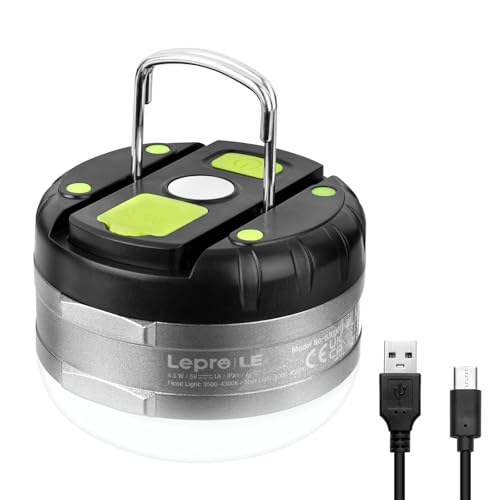
Lepro Rechargeable Camping Lantern 410LM

Blukar 116 LED Camping Lantern Rechargeable

BougeRV CL04 Telescopic Camping Light

Lepro 600LM Camping Lantern with Detachable Flashlights

BougeRV T1 Telescopic Camping Light
Why These Options Stand Out
The Outask TD2 reads like a job-site light that decided to come camping. It telescopes from about ten inches up to roughly 36.6 inches, which puts the beam well above eye level when you’re sitting at a picnic table or working on a tailgate.
What makes it genuinely useful off-grid is the swiveling head, the rotating base, and an integrated magnetic tripod that grabs onto steel surfaces. Mechanics, hunters, and overlanders tend to love this kind of setup. Compared with the Lepro models in this list, the TD2 leans heavily toward “place it once, light everything” rather than carrying it around as a lantern.
Features That Help
- Magnetic tripod locks to truck hoods, RV panels, and toolbox lids for genuinely hands-free use.
- 720-degree head rotation plus a 360-degree base lets you aim light without moving the pole.
- Telescopes from roughly 10 inches to about 36.6 inches, so the beam clears heads and table clutter.
- Collapses into a flashlight-like form for storage in a cup holder or bin.
Things To Consider
- Best on metal surfaces; on dirt or wood you may need a separate clamp or mount.
- Larger collapsed footprint than the Lepro 410LM, so it’s less of a pocket carry.
Key Specs
Right Fit For
Overlanders, hunters, and home mechanics who need one bright, repositionable light source above a work zone.
Where Another Pick Suits Better
For a compact, pocketable lantern in a small family tent, the Blukar 116 LED Camping Lantern Rechargeable is a friendlier match.
This Lepro lantern is the small, capable option of the bunch. It puts out around 410 lumens, runs on a rechargeable cell, and slips easily into a backpack pocket or car glove box.
It carries five brightness levels, including a flashing mode for emergencies, plus a magnetic base that lets it stick to a bike frame or tent pole bracket. Compared with the Outask TD2, it isn’t trying to be a tower. It’s more of a grab-and-go companion that also charges your phone in a pinch. For most weekenders, that’s the right trade-off.
Well-Handled Touches
- Five lighting modes cover everything from a dim reading glow to a directional beam.
- Built-in power bank lets you top off a phone during a long blackout or weekend trip.
- Magnetic base attaches to metal shelving, car panels, or a tool chest for hands-free work.
- Compact body is easy to throw in a tote or emergency kit without taking up space.
Points To Keep In Mind
- 410 lumens won’t flood a large group site the way the BougeRV T1 does.
- The magnetic base is convenient, but it does scratch painted metal if you slide it around.
Whose Shelf It Belongs On
Solo campers, apartment dwellers, and anyone building a small home emergency kit.
Swap It Out When
You’ll want the Lepro 600LM model instead if you’d like removable flashlights for a group.
The Blukar leans into the “cozy campsite” side of things. With 116 LEDs wrapped around the body, it spreads an even, glare-free 360-degree beam that fills a family tent or small cabin nicely.
The 3000K warm white tone reads more like a soft lamp than a clinical flashlight, which matters at night when harsh blue-white light can throw off sleep. Seven lighting modes give you fine control, including side light, bottom light, and red-light options that are common in this category. Compared with the Outask TD2, this lantern is a sit-and-stay piece rather than a work light.
What Earns Its Place
- Warm 3000K output is easier on tired eyes during late-night reading or card games.
- Seven modes cover ambient light, focused reading, and red-light use.
- Glare-free diffusion across 360 degrees keeps shadows soft in a tent.
- Compact and lightweight enough for kids to carry between the car and the tent.
Honest Caveats
- No telescoping pole included; you set it on a table or hang it from the loop.
- Lumens aren’t published in the spec sheet, so it’s harder to compare directly against the Lepro 410LM.
Quick Facts
Best Suited To
Families with kids and tent campers who care more about comfort than raw output.
Skip It When
If you want a light that lifts above eye level, the BougeRV CL04 is the better pick.
The CL04 is the longest-reach option in this roundup. It telescopes from about 10.6 inches to roughly 64.6 inches, which is tall enough to clear a tent peak and light an entire canopy area from above.
Inside the box you get the lantern, a USB-C charging cable, a small storage bag, a user manual, and three fixing nails for ground mounting. The 15600mAh battery is generous, and the kit extras matter when you’re pitching in soft soil or sand. Compared with the Outask TD2, the CL04 trades magnetic mounting for sheer height, which works better on open ground.
Everyday Advantages
- Extends past five feet, so the beam spreads over a large picnic or canopy.
- 15600mAh cell supports long evenings without a wall outlet nearby.
- USB-C charging simplifies cables since most modern devices share the same plug.
- Storage bag and ground nails make setup and pack-out quicker.
Possible Compromises
- At full extension the unit can sway in heavy wind without staking the base.
- It is heavier and bulkier than the Lepro 410LM, so it’s not a hiking lantern.
Feature Snapshot
Who Should Grab It
Group campers, car campers, and anyone hosting a backyard setup who wants overhead light without a stand.
Look Elsewhere When
If you’d rather have a light that mounts magnetically to metal, the Outask TD2 is a better match.
The 600LM Lepro is the modular option of this lineup. It runs as a 600-lumen lantern on two sides, with two detachable flashlights that pop out from the other sides for separate use.
That kind of split design pays off on group trips when you need one big light for cooking and smaller lights for each tent or person walking the dog. It ships with a USB cable and a car charger, which is rare in this category. Compared with the Blukar, this Lepro is more about flexibility than warmth, and compared with the BougeRV T1, it’s smaller but less of a brute.
What Makes Sense
- Two removable flashlights let you hand a light to each camper.
- 600-lumen main lantern is bright enough for cooking and gear sorting.
- Built-in handle and a small compass cover the basic trip needs.
- USB cable plus car charger cover both home and road charging.
Practical Considerations
- Removable flashlights can get lost in shared gear piles, especially with kids around.
- No telescoping pole, so the beam stays at table height.
Made For
Family campers and small groups who want one central light plus handheld backups.
A Better Fit Elsewhere
Reach for the BougeRV T1 if your priority is raw output and a tall telescoping pole.
The T1 is the heavyweight in this list. A 15600mAh battery, multi-panel light output, and a bright setting that can throw roughly three thousand lumens at full power put it on a different level than the smaller lanterns.
It’s designed for extended off-grid trips, and on the lowest amber setting the run can stretch across many nights of use. Compared with the CL04 from the same brand, the T1 pushes brightness over sheer height, making it the better fit for big campsites. The honest trade-off is weight and price.
Practical Pluses
- Approx. 8 to 102 hours of runtime across brightness levels.
- Multi-panel layout (3 panels of roughly 1000 lumens each) covers a wide footprint.
- Amber mode preserves night vision for late-night table work.
- Single-panel mode helps stretch battery when full output isn’t needed.
Factors To Consider
- Heavier than the Lepro 410LM, so it’s a car-camping piece, not a hiking piece.
- At full power it draws the battery down faster than the lower modes, which is expected but worth planning around.
Feature Snapshot
Built With In Mind
Off-grid campers, RV owners, and anyone running a base camp for several nights at a time.
Consider Something Else When
For a small tent and a short weekend, the Lepro 410LM is easier to live with.
What To Weigh Before Choosing A Telescopic Camping Light
The first thing I look at is height range, because that’s what defines a telescoping light. A pole that goes past five feet, like the BougeRV CL04, clears tent peaks and picnic tables. A shorter pole in the 30 to 40 inch range, like the Outask TD2, works well over tailgates and workbenches. Anything fixed or non-telescoping limits where you can set the beam.
Next, think about how you mount it. Magnetic bases need steel. Tripod feet or ground stakes need soil. Hanging hooks need a beam or branch. Pick the mounting style that matches how you camp rather than what looks coolest in a video.
Battery size matters most for multi-night trips. A 15600mAh cell stretches across several evenings on low, while a smaller lantern may need a daily charge. Lumens tell you brightness, but beam angle and diffusion matter just as much, especially in a family tent where harsh glare gets old fast.
Finally, decide if you want extras like a power bank, detachable flashlights, or red-light modes. Those features add weight and cost, but they often replace a second or third gadget. For most campers, one well-chosen telescoping light does more than two cheaper units.
Key Tradeoffs Worth Knowing
Where Shoppers Go Wrong
Picking by lumens alone is the most common slip. A 1000-lumen spotlight pointed at a tent wall is more annoying than a 300-lumen lantern with diffused sides. Decide whether you want flood or beam first, then chase the spec.
Another trap is ignoring the mounting system. A magnetic base is a gimmick if your vehicle isn’t steel, and a tall telescoping pole is annoying if it tips in soft soil without stakes. Match the mount to the surface you’ll actually use.
When Paying More Pays Off
Higher-tier models like the BougeRV T1 trade weight and cost for battery capacity, higher output, and longer runtimes. If you’re heading out for several nights away from power, that extra capacity earns its keep. For a single backyard night, a smaller lantern like the Lepro 410LM is usually plenty.
Frequently Asked Questions
What makes a camping light “telescopic”?
A telescoping camping light has an extending pole that lets you raise the lamp head well above table height, casting light from above rather than at eye level.
How bright should a telescopic camping light be?
For most family and group camping, anywhere from 400 to 1000 lumens is comfortable. Larger group sites benefit from multi-panel models that can push higher, while tent-only setups rarely need more than a few hundred lumens.
Can telescopic camping lights charge a phone?
Some models, like the Lepro 410LM, include a built-in power bank. Others, like the BougeRV CL04 and T1, prioritize battery capacity for the light itself. Check the product page to confirm before relying on it for charging.
Are telescopic camping lights stable in wind?
Stability depends on the base. Magnetic bases grip metal firmly, tripod feet work on flat ground, and tall poles benefit from ground stakes in soft soil. The included stakes with the BougeRV CL04 help a great deal in windy conditions.
How long do these lights last on a single charge?
Runtime varies widely. Compact lanterns may run a few hours at high output, while larger 15600mAh models can stretch from roughly eight hours at full brightness up to one hundred hours on the lowest amber setting.