

There’s something quietly patriotic about seeing Old Glory catch the last of the daylight, then stay lit once the stars come out. A solar flagpole light handles the job without trenching a single foot of cable, and for homeowners and small-business owners alike, that’s a relief. I’ve put together four options worth a look, ranging from gentle residential glows to bright commercial-grade setups, so you can match the rig to your pole and your yard.
An Overview Of The Picks

RAYSLIT Solar Flag Pole Light 360° LED 20-25ft

RAYSLIT Solar Flag Pole Light 440 LED DC Backup

RAYSLIT Flag Pole Light 12 LED Adjustable Clamp
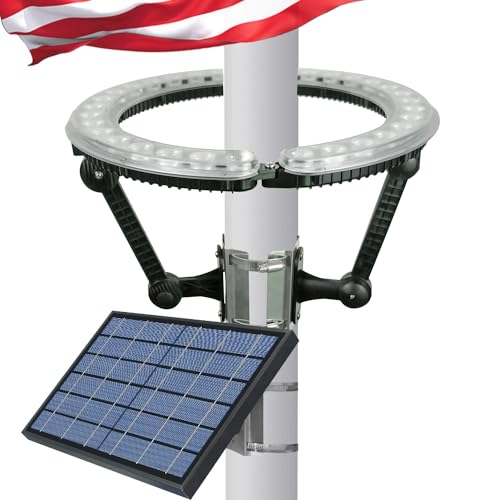
RAYSLIT Solar Flagpole Light 4640LM Upward Glow
A Closer Look At Each Pick
The RAYSLIT 360° model is the kind of fixture that disappears into the yard once it’s mounted, which is exactly what I want from outdoor hardware. It drops onto the spindle of a standard 20–25 ft residential flagpole (the ornamental topper), so there’s no clamp fighting gravity and no drilling into the pole itself. Polysilicon refers to the type of silicon cells used in the solar panel; they’re a common, cost-effective choice for outdoor charging, and the 5.5V/8.8W rating here is generous for a flag light.
What sets it apart from the clamp-style alternatives is the ring of LEDs that radiates outward in every direction, so a flag hanging limply on a windless night still gets a soft wash of light. For most homeowners flying a 3×5 ft flag on a standard yard pole, that coverage feels just right. Setup is tool-free, the dusk-to-dawn sensor handles itself, and owners commonly report that the waterproof housing weathers rain and snow without complaint.
Real-World Strengths
- 360° LED ring lights a limp flag on calm nights, not just a wind-blown one.
- Spindle-mount design fits standard 15–30 ft poles without drilling.
- Polysilicon solar panel handles full-sun and partly cloudy yards alike.
- Auto on/off sensor means zero nightly fiddling after first install.
- Included hooks let you repurpose the light for camping or a market stall.
Things To Consider
- Performance dips in heavy overcast stretches, since solar charging alone carries the load.
- Requires a pole with a 0.55 in ornament spindle, so older or non-standard hardware may not match.
Who It Suits Best
Homeowners with a standard 20–25 ft residential flagpole who want a set-and-forget light that handles a calm or windy flag equally well.
Where Another Pick Suits Better
If your region runs through long stretches of cloud cover, the RAYSLIT Solar Flag Pole Light 440 LED DC Backup (Pick 2) gives you a wired charging fallback.
Where most flag lights trust the sun alone, this RAYSLIT model keeps a DC backup port on the fixture. That single addition answers the most common complaint about solar lighting: a week of overcast skies leaving the flag dark on Independence Day. I like the engineering honesty of it, since the dual charging paths mean the light isn’t held hostage by weather. The 440-LED array is also a meaningful step up from smaller solar-only rigs, so coverage stays consistent across a wider flag.
The mounting pattern works for 15–25 ft poles, putting it slightly below the 20–25 ft sweet spot of Pick 1 but still in residential territory. Auto on/off at dusk keeps the daily routine to nothing, and the waterproof housing aims to shrug off rain. Owners in storm-prone regions, the Pacific Northwest, or anywhere with moody shoulder seasons tend to gravitate toward a setup like this, where the wired backup is more of an insurance policy than an everyday need.
Useful Touches
- DC port provides reliable charging when solar alone can’t keep up.
- 440 LEDs blanket a standard 3×5 ft flag with even coverage.
- Dusk-to-dawn sensor keeps nightly operation hands-off.
- Easy-mount design works on common 15–25 ft residential poles.
Points To Note
- You’ll need to run a DC cable to the fixture for backup charging, which adds install time on remote poles.
- Higher LED count draws more power, so the solar panel needs a fairly sunny mounting spot.
- Mount may sit a touch high on shorter 15 ft poles, depending on your setup.
Made For
Shoppers in cloudy, rainy, or storm-prone regions who want solar convenience with a wired safety net for gloomy stretches.
Skip It When
For renters or anyone avoiding a permanent fixture, the RAYSLIT Flag Pole Light 12 LED Adjustable Clamp (Pick 3) clamps on without altering the pole.
This is the clamp-on entry of the bunch, and that single design choice reshapes who it’s for. Rather than sliding over a spindle or ring the pole, an adjustable metal clamp wraps around shafts from about 2 to 6 inches in diameter, which covers everything from a small house-mounted pole to mid-size yard installations. I think of this as the renter’s pick: nothing is glued, drilled, or permanently altered, and the whole rig can come down at the end of a lease in five minutes.
Twelve LEDs is the smallest count here, but the 6000K color temperature pushes a clean, cool white that reads sharply from the street. Owners commonly mount it a bit down the pole and angle the head upward, which throws a focused beam that suits smaller flags just fine. The metal clamp feels more durable than plastic alternatives, though it does add a smidge of weight at the mount point.
Standout Benefits
- Adjustable clamp fits a wide range of pole diameters without tools.
- Cool 6000K white reads crisp from the curb and at a distance.
- Compact, lightweight body suits smaller yard setups.
- Removable design works well for renters or seasonal flag flying.
Honest Caveats
- Fewer LEDs means narrower coverage, so it suits smaller flags best.
- Clamp adds visible hardware to the pole, which some prefer to avoid.
- No backup charging option, so performance tracks weather closely.
Best Suited To
Anyone flying a smaller flag on a shorter pole, especially renters who want a non-permanent install.
Look Elsewhere When
For a tall residential pole that needs a wider wash of light, the RAYSLIT Solar Flagpole Light 4640LM Upward Glow (Pick 4) is the heavier hitter.
The flagship of the group is the RAYSLIT upward-illumination model, and the engineering choice here is unusual. Instead of throwing light sideways, an elevated ring-style mount pushes light upward from below, chasing the flag from base to tip rather than washing it from one side. For a 4×6 ft or larger flag on a tall pole, that approach reads more evenly across the fabric, which is the visual most people actually want.
The 4640-lumen output puts this on the bright end of solar flag lighting, so it tends to suit larger yards, civic spaces, or any flag you want visible from the street after dark. Setup still stays simple with set-and-forget charging and a dusk-to-dawn sensor. Compared to Pick 1’s gentler 360° wash, this one leans into visual punch, so the trade-off is energy draw versus raw brightness.
Benefits That Matter
- Upward ring-style design lights the flag from base to tip for even coverage.
- High lumen output reads clearly from the street at distance.
- Set-and-forget solar operation, no daily management.
- Auto dusk-to-dawn switching keeps the nightly routine simple.
A Few Limitations
- Brighter output draws more power, so it needs a sunnier mounting location.
- Upward beam is overkill for smaller residential flags.
Who Should Grab It
Homeowners or small organizations flying a large flag on a tall pole where street visibility matters most.
Reach For A Different Pick When
For a standard residential flag on a 20–25 ft pole, the RAYSLIT Solar Flag Pole Light 360° LED (Pick 1) gives you balanced coverage at a friendlier energy draw.
What Matters Most Before Choosing Solar Flagpole Lights
Pole Size and Mounting Style
The first decision is how the light actually attaches. Spindle-top mounts slide over the ornamental ball at the top of the pole, which keeps hardware tidy but limits compatibility to standard residential poles. Clamp mounts wrap around the shaft itself, which opens up diameter flexibility but leaves a small visible bracket. Measure your pole’s shaft diameter and check whether it has a top spindle before choosing, since this single detail eliminates half the options on most lists.
Brightness and Coverage Pattern
Lumens tell you total light output, but the beam direction matters just as much. Side-throw designs wash the flag from one angle, which can leave shadows on a limp flag. Upward-throw designs push light along the flag’s length for even coverage. For most 3×5 ft residential flags, a moderate lumen count and a wide throw feel right; a 4×6 ft or larger flag benefits from a higher-output, upward-throw rig.
Charging Reliability and Backup Options
Solar charging is convenient, but it’s also at the mercy of weather. If your region sees stretches of cloudy days, a model with a DC backup port keeps the flag lit through the gloom. Polysilicon panels handle sun and partial shade reasonably well, though direct southern exposure always wins. Think about your worst-weather month, not your best-weather month, when sizing up a solar unit.
Build Quality and Weather Resistance
Outdoor fixtures live through rain, snow, summer UV, and the occasional ladder bump. Look for waterproof housings, metal clamps where applicable, and a dusk-to-dawn sensor that holds up across seasons. Common owner feedback tends to call out the sensor and the seal as the parts that age first, so spending a little more on build quality pays back across years of nightly duty.
Key Considerations Across These Picks
Pitfalls Shoppers Hit
A common misstep is buying a light based on lumen count alone and ending up with a beam too narrow for the flag’s size. Another is ignoring pole compatibility, especially with spindle mounts that only fit a 0.55 in ornament. The third slip is overlooking charging needs in cloudy climates, which leaves a solar-only fixture dark for a week straight. Matching the mount to your pole, the beam to your flag, and the charging to your climate covers most of it.
When Paying More Pays Off
Stepping up to a higher-output, upward-throw model earns its keep on larger flags and tall poles where street visibility matters. The DC-backup feature in Pick 2 is another place the upgrade shows value, since it solves the worst solar weak spot. For a small 3×5 ft flag on a 20 ft pole, a mid-tier solar-only light is plenty; for anything civic-scale or storm-prone, the upgrade pays for itself in fewer dark nights.
Frequently Asked Questions
How do solar flagpole lights turn on at night?
A built-in dusk-to-dawn sensor detects falling light levels and switches the fixture on automatically, then off again at sunrise, with no daily input required.
Can a solar flagpole light work on cloudy days?
Yes, though output drops. Polysilicon panels still harvest some charge in overcast skies, and models with a DC backup port let you top off the battery when solar alone can’t keep up.
Will a solar flagpole light fit any pole?
Not always. Spindle mounts require a standard 0.55 in ornament at the pole’s top, while clamp mounts fit a range of shaft diameters. Always check the listed compatibility before installing.
How bright should a solar flagpole light be?
For a 3×5 ft residential flag, moderate output covers comfortably. Larger flags on taller poles benefit from higher-lumen fixtures with upward-throw designs for even coverage.
Do solar flagpole lights need maintenance?
Occasional wipe-downs of the solar panel keep charging efficient, and clearing debris from around the base prevents moisture issues. Beyond that, they run themselves season to season.