

I still remember the night I swapped my first smart bulb into a reading lamp and realized I could dim it from my phone without leaving the couch. That tiny moment of convenience is exactly why this category has exploded. I’ve put together six picks that cover the most common setups, from single-room experiments to whole-home overhauls, so you can find the option that matches how you actually live.
Your Options, Compared

Philips Hue Smart 60W A19 LED Bulb 2-Pack (800LM)
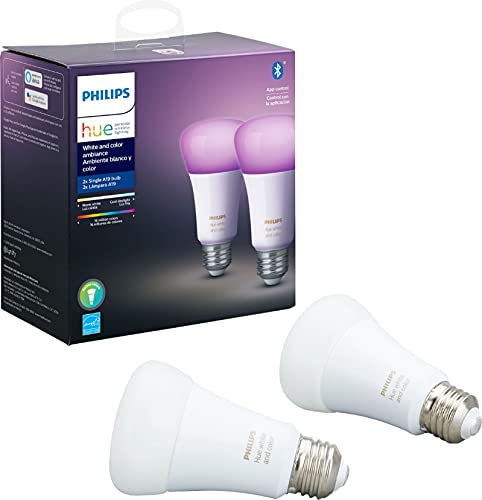
Philips Hue Premium Smart Bulbs, 16 Million Colors (2 Pack)
Philips Hue Smart 40W B39 Candle LED Bulb (450LM, E12)

Lightinginside Smart Light Bulbs 100W Work with Alexa/Google Home, 4PCS

Lightinginside Smart E12 LED Bulbs 60W Work with Alexa/Google Home, 4PCS

Lightinginside Smart Light Bulbs Work with Alexa/Google Home/SmartLife 6PCS
More On The Choices That Made The List
Most people dipping a toe into connected lighting want something forgiving, and this 2-pack from Philips Hue fits that brief. The standard A19 shape drops into most lamps and overhead fixtures, while the E26 base (the common screw-in socket found in North American homes) means there’s no rewiring. Bluetooth control through the Hue app handles up to ten lights in a single room, so a small apartment or a primary living area is covered without extra hardware.
Adding a Hue Bridge later unlocks automations, away-from-home control, and Matter compatibility, which is a nice escape hatch. Voice control through Alexa and Google Assistant works directly via Bluetooth, and Apple HomeKit support kicks in once the Bridge is in play. For newcomers planning to expand, the path from simple to fully featured is smoother than most.
Practical Advantages
- Doubles as a hub-free starter and a Bridge-ready upgrade
- Full color and tunable white in a familiar bulb shape
- Works with Alexa, Google Assistant, and HomeKit through the Bridge
- Two-bulb pack makes room-wide testing affordable
- 800 lumen output covers most reading and living spaces
Things To Consider
- Bluetooth mode limits automations and remote control
- Hue Bridge sold separately for the full feature set
Feature Snapshot
Who It Suits Best
First-time smart lighting shoppers who want a low-friction entry point without committing to a full ecosystem upfront.
Look Elsewhere When
Shoppers outfitting a larger property should step up to the Philips Hue Premium Smart Bulbs, which pair more naturally with a Bridge-led whole-home setup.
Where the first Philips Hue pick is forgiving, this Premium 2-pack assumes you already know you want the full experience. A Hue Bridge is required, which means remote access, routines, and stable multi-room control all work from day one. Sixteen million colors covers everything from movie-night accents to energizing daylight tones.
The fit across common lamps and overhead fixtures makes it a sensible backbone for a color-driven setup. Compared to the entry-level Philips Hue 2-pack, this model leans harder into whole-home ambitions, including smoother Apple HomeKit and Google Assistant integration through the Bridge.
Standout Benefits
- Wider color range unlocks creative scenes and moods
- Stable Bridge connection supports larger networks
- Native Alexa, HomeKit, and Google Assistant compatibility
- Lower long-term friction for automations and routines
Honest Caveats
- Bridge is mandatory, adding to total cost
- Overkill for renters using one or two lamps
- Setup takes longer than hub-free alternatives
Made For
Homeowners committed to a multi-room color setup who already own or plan to buy a Hue Bridge.
Consider Something Else When
Anyone sticking to a single lamp should save with the Philips Hue Smart 60W A19 LED Bulb 2-Pack instead.
Decorative fixtures rarely get love from smart lighting, so I like that Philips Hue offers this candle-shaped B39 bulb for E12 candelabra sockets (the small screw bases common in chandeliers and wall sconces). At 450 lumens, it’s a measured output for ambiance rather than primary room lighting. The narrow form factor tucks into chandeliers, sconces, and accent lamps without poking out awkwardly.
It inherits the same Hue app control and Bluetooth fallback as its A19 sibling, which means you can test a single sconce before committing. For anyone whose dining room centerpiece happens to be a chandelier, this is the rare smart bulb that respects the fixture’s design.
Everyday Advantages
- Fits decorative fixtures the A19 bulbs cannot
- Same Hue app ecosystem as the larger models
- Bluetooth control simplifies single-room testing
- Color and tunable white in a candelabra form
Points To Keep In Mind
- Lower output suits accent use over main lighting
- Single-pack means higher per-bulb cost
Feature Snapshot
Best Suited To
Homeowners with chandeliers, sconces, or candelabra lamps who want smart control without spoiling the look.
A Better Fit Elsewhere
Bright, general-purpose rooms call for the Lightinginside 100W 4-pack, which delivers substantially more lumens per bulb.
Open-plan living areas and high ceilings punish underpowered bulbs, which is where this Lightinginside 4-pack earns its keep. With 1350 lumens per bulb, each fixture lights up a meaningful slice of a large room without breaking a sweat. The 100W-equivalent rating keeps it firmly in the “actually bright” category.
Voice control through Alexa and Google Assistant pairs via Wi-Fi using the SmartLife app, which is a common ecosystem shared with many other smart home gadgets. Dimming happens through the app or voice, not through a wall dimmer switch, so any existing rotary dimmer should be removed or bypassed to avoid flicker.
Strong Points
- High lumen output handles open layouts
- Tunable white and color in one bulb
- Voice control through mainstream assistants
- Four-bulb pack suits multi-fixture rooms
Trade Offs
- Not compatible with traditional wall dimmers
- Requires stable Wi-Fi for full responsiveness
Right Fit For
Owners of large living rooms or kitchens with multiple fixtures who want app and voice control without buying a hub.
Skip It When
Decorators outfitting a chandelier should reach for the Philips Hue B39 candle bulb instead for proper form factor fit.
Multi-socket candelabra lamps are a notorious pain point for smart lighting, since you often need several matching bulbs at once. This Lightinginside E12 4-pack solves that neatly. A 60W-equivalent output sits in the comfortable middle, bright enough for dining nooks and reading lamps without overpowering a small fixture.
The dual-channel BLE plus Wi-Fi chip speeds up pairing, and owners commonly report that the BLE fallback keeps basic on-off control working when the home network goes down. It’s a thoughtful detail for anyone who relies on voice commands at bedtime.
Where It Excels
- BLE backup keeps control working without Wi-Fi
- Matches E12 candelabra fixtures cleanly
- Faster setup with dual-channel chip
- Four bulbs fill multi-socket lamps in one buy
Small Caveats
- Dimming through app or voice only, not wall dimmers
- Output lower than the 100W Lightinginside sibling
Feature Snapshot
Who Should Grab It
Anyone with a multi-socket candelabra lamp who wants matching smart bulbs with reliable day-to-day control.
Another Choice May Suit
A whole-room starter is more economical with the Lightinginside 6-pack, which covers more fixtures per dollar.
When one or two bulbs aren’t enough, a six-pack changes the math entirely. This Lightinginside bundle outfits an entire room for the cost of what most single-bulb ecosystems charge, all while sharing the same SmartLife app, Alexa, and Google Assistant routines. The dual-channel chip trims setup time, which matters when you’re pairing six bulbs at once.
Compared to the Philips Hue 2-packs earlier in this list, the trade is real: no dedicated Bridge, no HomeKit, but a much friendlier per-bulb price. For a first whole-room install, it’s the practical starting point most folks actually need.
A Few Highlights
- Six bulbs fill a full room in one purchase
- Lower per-bulb cost than most competitors
- Shared SmartLife routines across fixtures
- Faster pairing with upgraded BLE plus Wi-Fi chip
Possible Compromises
- No HomeKit support in this ecosystem
- Dimming requires app or voice, not wall switches
Built With In Mind
Budget-conscious shoppers who want to upgrade an entire room at once and live primarily in Alexa or Google ecosystems.
Reach For A Different Pick When
Apple HomeKit households should pivot to the Philips Hue Premium Smart Bulbs for native HomeKit support.
What To Weigh Before You Choose Smart Light Bulbs
Choosing smart bulbs mostly comes down to your existing ecosystem and the fixtures you want to control. Hub-free options pair directly with your Wi-Fi and voice assistants, which keeps setup quick and the total cost lower. Hub-based systems add a small box to your network but reward you with faster response times, more reliable automations, and broader third-party compatibility once you’re running many bulbs.
Socket type matters more than people expect. Standard E26 screw bases cover most lamps and ceiling fixtures in North America, while candelabra E12 bases appear in chandeliers, sconces, and decorative accent lamps. Match the shape before you fall in love with the feature set.
Brightness and color go hand in hand. Higher lumen counts handle larger rooms and high ceilings, while lower outputs suit bedside tables and accent lighting. Tunable white plus full color costs more upfront but replaces every mood bulb you might otherwise buy, so it tends to pay off in mixed-use spaces.
Connectivity And Ecosystem Fit
Wi-Fi bulbs connect straight to your router and are easy to set up, though very dense networks can get sluggish. Bluetooth bulbs skip the network entirely but limit you to in-room control unless you add a hub. Zigbee bulbs (a low-power mesh protocol popular in smart homes) need a Bridge or compatible hub but scale beautifully across dozens of devices. Pick the protocol that matches how many bulbs you actually plan to install.
Brightness, Color, And Ambiance
A bulb’s lumen rating tells you how much light it puts out, while color temperature (measured in Kelvin) tells you whether the light leans warm or cool. Lower Kelvin numbers mean warmer, cozier tones, and higher numbers mean crisper, daylight-style light. Full RGB bulbs add color on top of that, useful for accents but not always necessary for everyday living.
Key Considerations Across These Picks
Common Shopping Slip Ups
The biggest miss I see is buying a beautiful color bulb for a fixture that needs sheer brightness. Color and ambiance are fun, but a 450-lumen candle bulb in a high-ceiling living room leaves you squinting. Match lumen output to room size first, then layer in smart features. Another frequent stumble is keeping an old wall dimmer in the loop. Smart bulbs and traditional dimmer switches rarely play well together and can cause flicker or buzzing.
Where The Extra Money Goes
Stepping up to a hub-based system or premium color bulbs buys three things that budget picks struggle with: faster response times, broader voice assistant compatibility, and cleaner long-term reliability. If you plan to run more than a handful of bulbs across multiple rooms, that upgrade tends to pay for itself in fewer frustrations and more consistent automations.
Frequently Asked Questions
Do smart bulbs work without Wi-Fi?
Some do, particularly Bluetooth models like the Philips Hue A19 and B39 bulbs, which let you control lights from your phone within range. Hub-based systems also work locally through the hub itself. Full remote control from anywhere generally requires a working internet connection.
Can I use smart bulbs with any lamp or fixture?
Most smart bulbs fit standard E26 screw sockets, which cover the majority of household lamps. Chandeliers, sconces, and candelabra lamps need E12 base bulbs instead, such as the Philips Hue B39 or Lightinginside E12 options in this list.
Will smart bulbs increase my electricity bill?
LED smart bulbs use a fraction of the energy of older incandescent bulbs, so any added cost from idle listening is usually offset by lower overall consumption. Dimming them further reduces usage, which helps in spaces where lights stay on for hours.
Do smart bulbs need a hub?
Not always. Wi-Fi and Bluetooth bulbs can connect directly to your phone or router. Zigbee-based bulbs like the Philips Hue Premium line need a Hue Bridge for full functionality, which is an added purchase but unlocks faster, more stable control across many lights.
Can I mix smart bulbs from different brands in one room?
You can, though it usually means running two apps or relying on a voice assistant as the common layer. Alexa and Google Assistant handle mixed-brand setups reasonably well, while Apple HomeKit tends to be pickier about which bulbs join the home screen.