

I’ve lost more sleep than I’d like to admit trying to finish a chapter while my partner slept three feet away. A solid reading light for books solves that problem without the glare, the neck strain, or the awkward headlamp look. The category has quietly matured, with better color tuning, longer battery life, and clip designs that actually hold up to thick hardcovers.
The Shortlist At A Glance

Gritin 2026 Gen 2 Book Light (30 LEDs)
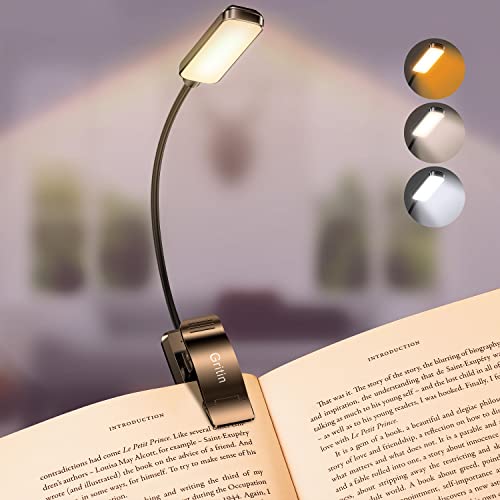
Gritin 9 LED Rechargeable Book Light

Gritin 2026 Gen 2 Book Light (32 LEDs)

Gritin 19 LED Rechargeable Book Light

Gritin Rechargeable Book Light (19 LED)

86lux Rechargeable Clip-On Book Light
A Breakdown Of The Leading Choices
The 30-LED Gen 2 is the model I’d hand a friend who’s never used a dedicated reading light before. Thirty full-spectrum diodes (LEDs, the tiny light sources packed along the bar) sit in a two-row layout, so the beam spreads wide enough to cover both pages of a paperback without leaving the outer edges in shadow.
Two lighting modes let you run the inner row alone for close-up chapters or fire up both rows when the room is darker. Full-spectrum means the light mimics natural daylight tones, which helps cut the harsh blue glare that gives reading sessions a headache.
A Few Highlights
- Two-row LED layout throws light across a full spread with no dark corners
- Inner-only mode saves battery when you just need a soft glow
- Full-spectrum output eases eye strain over long sessions
- Flicker-free design matters most for people sensitive to pulsing light
Things To Consider
- The head runs wider than single-row lights, so it may overhang smaller paperbacks
- Two-row mode drains the battery faster if you forget to switch back
Key Specs
Best Suited To
Nightly readers who want a fuss-free upgrade from a phone flashlight and don’t want to fiddle with apps or sliders.
Skip It When
Travelers should look at the 86lux model, since its flatter bookmark shape slips into a carry-on pocket more easily.
Not everyone needs thirty diodes pointed at a novel. The 9-LED Gritin keeps the core idea (a clip-on bar that runs on a built-in battery) and trims the rest, which is exactly why it lands in so many starter kits.
Three color modes, meaning warm, mixed, and cool white presets, pair with a long-press dimmer that runs from roughly 10% to full brightness. The mixed setting is the one most users settle on for evening reading, since it softens the cool tones without going full amber.
Advantages To Know
- Stepless dimming gives you precise control rather than fixed steps
- Three color temperatures cover bedtime to daytime reading
- Compact head fits paperbacks and slim hardcovers without overhang
- Rechargeable battery cuts down on disposable cell waste
Room For Improvement
- Nine LEDs leave the outer margins of large hardcovers a touch dim
- Plastic clip grip may loosen on thick boards after months of daily use
Who It Suits Best
Casual readers, students on a dorm-room budget, and anyone who reads mostly paperbacks before sleep.
Look Elsewhere When
Sheet-music readers or wide-format textbook users should consider the 19-LED Gritin, since its horizontal head covers a larger surface area.
The 32-LED Gen 2 takes everything the 30-LED version does well and stretches it a bit further. Two more diodes per row adds visible coverage at the edges of wide pages, which is the kind of detail you stop noticing only after you’ve used one.
Like its sibling, it runs in two modes: the inner row alone, or both rows together. The full-spectrum output is the same idea, simulating natural daylight, so the upgrade is about coverage rather than color quality.
Key Advantages
- Highest diode count on the list, giving you the widest usable beam
- Same two-row flexibility as the 30-LED model for close or broad reads
- Full-spectrum output helps color-rendering on maps and illustrations
- Flicker-free build suits readers sensitive to subtle light pulsing
Honest Caveats
- The longer bar adds a bit of weight on slim paperbacks
- Marginal gains over the 30-LED model may not justify the cost for paperback-only readers
Feature Snapshot
Right Fit For
Readers working through atlases, art books, or any format where edge clarity matters as much as center brightness.
A Better Fit Elsewhere
Travelers who mostly read on planes or trains will find the 86lux Bookmark Design lighter to pack and easier to slip between pages.
The 19-LED Gritin is where the brand’s “horizontal head” idea really lands. Nineteen LEDs line up in a straight row, and the wider head throws a flatter, more even wash across the page compared to the typical stubby bar.
Three color temperatures (amber at 1800K, mixed at 3400K, and white at 6000K, where lower numbers are warmer and higher numbers are cooler) pair with stepless dimming, so you can dial in the exact brightness rather than guessing between fixed levels. The ABS plastic shade (a tough, lightweight housing material) keeps the light stable without adding weight.
Real Benefits
- Horizontal head spreads light across both pages at once
- Amber setting is gentle enough for the wind-down before sleep
- Stepless dimmer offers finer control than stepped alternatives
- Sturdy ABS housing holds up to daily clip-on cycles
Things To Weigh
- Longer head may feel bulky on small mass-market paperbacks
- Higher max brightness could be overkill for dim bedroom reading
Made For
Students and book-club regulars who read across textbooks, novels, and recipe collections, and want one light that handles them all.
Reach For A Different Pick When
Kids’ bedrooms are better served by the 86lux clip-on, whose thinner profile is easier for small hands to manage.
This 19-LED Gritin sits in the same family as the previous model but trades stepless dimming for five fixed brightness steps. Some people actually prefer that, since clicking between levels is faster than holding a button to find the right glow.
Same horizontal head, same trio of color temperatures, same wide, even wash. The ABS lampshade design is shared too, which keeps the build consistent across the Gritin 19-LED lineup.
What Makes Sense
- Five brightness levels are quicker to scan than smooth dimming
- Horizontal head design reduces hand shadows on the page
- Amber mode (1800K) is easy on tired eyes at night
- Rechargeable battery means no fumbling for coin cells
Some Limits To Know
- Fixed brightness steps leave gaps that stepless dimming would fill
- Wider head is less discreet than compact single-row options
Who Should Grab It
Bedside readers who toggle between bright morning sessions and dim evenings, and want a clear, clickable mode for each.
Swap It Out When
Minimalists who want the smallest possible bar should consider the 9-LED Gritin instead, which trims back the head without losing the rechargeable core.
The 86lux breaks from the typical bar-and-clip silhouette with a flat, bookmark-style body. It’s genuinely thin, and the frosted lens softens the beam so kids or light-sensitive readers aren’t staring at a hot spot on the page.
Three color temperatures pair with stepless dimming, plus a memory function that recalls your last setting. That’s the kind of detail parents appreciate when the same light gets passed between a child and an adult reader.
What Earns Its Place
- Bookmark shape doubles as a page holder, ideal for kids’ bedrooms
- Frosted lens cuts glare on glossy picture books
- Memory function means no re-tuning for the next session
- Three color temperatures cover bedtime stories to homework
Practical Considerations
- Flat body throws less light across wide spreads than horizontal bars
- Lightweight clip may flex on thick hardcover covers during use
Perfect Match For
Shared bedrooms, kids’ reading nooks, and anyone who wants a low-profile light that disappears into a book bag.
Where A Sibling Pick Shines
Heavy-duty nighttime reading calls for the Gritin 32-LED model, which covers more page area than the slim 86lux can.
What To Weigh Before Choosing Your Reading Light
A reading light lives or dies on three things: how the color temperature feels after an hour, how the clip holds up to your favorite book, and how long the battery lasts between charges. Warm tones (1800K to 3000K, where K stands for Kelvin, the unit that measures how yellow or blue a light looks) are easier on tired eyes, while cool white (5000K and up) keeps you more alert. Pick a light that lets you shift between them, and you’ll use it for both daytime reading and bedtime.
Clamp strength matters more than people expect. A weak clip slides around on a hardcover and ends up aimed at your chin. Look for a padded jaw and a hinge that stays put once you set the angle.
Battery life is the hidden tax. Smaller LEDs sip power, so a 9-LED bar often outlasts a 32-LED one on a single charge. If you travel, prioritize recharge speed over raw brightness.
Color Temperature And Eye Comfort
Lower Kelvin values feel warmer and more candle-like, while higher values feel crisper and more like office lighting. Mixed modes sit in the middle and tend to be the everyday favorite. The amber setting on the 19-LED Gritin is a strong example of the warm end, useful right before sleep.
Clip Design And Book Fit
Padded silicone jaws grip better than bare plastic and protect softcover spines. A wider mouth handles thick dictionaries and art books without forcing the hinge.
Battery And Recharge Routine
Most clip-on lights use USB-C or micro-USB. A two-hour top-up is typical, though larger LED counts may need more. Charging habit matters: running the battery flat regularly shortens its lifespan faster than shallow top-offs.
Where Shoppers Go Wrong
Pitfalls Shoppers Hit
Buying purely on LED count ignores color quality. More diodes in a narrow bar can flood the center while leaving the edges dark, which is exactly what wide horizontal heads solve. The other common slip-up is ignoring clip depth. A light that fits a paperback may pop off a hardcover, so match the jaw opening to the books you actually read.
The Case For Spending Up
Higher-tier models in this category usually add stepless dimming, memory functions, and better lens diffusion. For someone who reads every night, those features add up. For someone who reads occasionally, the jump from a 9-LED to a 32-LED model is mostly about edge coverage rather than comfort, so the upgrade only pays off if you actually need the wider beam.
Frequently Asked Questions
How bright should a reading light be for books?
Aim for around 300 to 500 lumens (a lumen is the unit that measures total light output) for a single-page reading session. Anything brighter risks glare on glossy covers, while dimmer outputs strain the eyes over time.
Are warm or cool color temperatures better for night reading?
Warm tones around 1800K to 3000K are gentler before sleep, since they signal your brain to wind down. Cool tones around 5000K to 6000K are sharper and better for daytime study or detail work.
How long does a rechargeable book light typically last per charge?
Most clip-on LEDs run between 6 and 20 hours on a single charge, depending on brightness level and LED count. Lower brightness settings stretch runtime significantly.
Will the clip damage a book’s spine or cover?
Padded silicone or rubber jaws protect most covers. Bare plastic clips can leave pressure marks on softcovers over time, so check the jaw material before clipping onto a favorite book.
Can kids safely use these clip-on reading lights?
Yes, though flatter designs like the 86lux are easier for small hands to position. Look for cool-touch housings and a light weight to avoid strain during longer reading sessions.