

I’ve spent enough time squinting under a truck bed and crawling through attic runs to know that a good portable work light changes the whole day. Dim drop lights and aging incandescents cost you focus, and swapping batteries on a half-dead flashlight breaks your rhythm. The right portable work light is bright, stays cool, holds a position, and won’t bail on you mid-task. Whether you wrench on cars, frame basements, run power to outdoor kitchens, or just want a reliable light for storm outages, this roundup is built around the kinds of decisions I see real people wrestle with: throw distance versus spread, tripod versus handheld, magnetic versus hook mount. Six picks, six different jobs, no filler.
The Main Contenders

DEWALT 20V MAX LED Work Lights (DCL050/DCL043)

DEWALT DCL050 20V MAX LED Work Light

PBPHX Rechargeable Camping Light with Stand

PBPHX 21000Lumen Tripod Work Light, 3-Head

PBPHX 14000Lumen Tripod Work Light, 2-Head
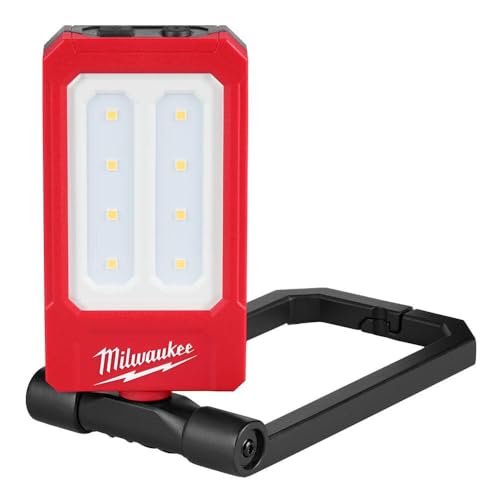
Milwaukee Low-Profile Magnetic Task Light
What Each Pick Brings To The Table
Starter or pro, anyone already sitting on a stack of 20V batteries will appreciate how cleanly this DEWALT pair slots into an existing kit. The DCL050 hand light puts out two brightness levels for tight mechanical work, while the DCL043 throws a much wider beam built for lighting a whole bay or job-site corner.
Both heads pivot, so angling the beam at an engine bay or up into a soffit is straightforward. In a home shop, the smaller light handles a fuse-panel swap, and the larger one doubles as temporary shop lighting during a power-down.
What Works In Its Favor
- Two-tool bundle covers handheld and area lighting in one purchase
- Run on the same 20V batteries most DEWALT owners already own
- Wide brightness range lets you trade runtime for output on the fly
- Pivoting heads reduce the gymnastics of finding the right angle
- Solid choice when you want one system across the truck and the garage
Things To Consider
- Bundle ships as tool-only, so budget for batteries if your kit is empty
- Heavier than a single flashlight, so mounting in tight engine bays takes planning
Who It Suits Best
Existing DEWALT 20V owners who want one system to cover both engine bay and bay-wide lighting without buying a new battery platform.
Where Another Pick Suits Better
Shops without a 20V battery collection will find the PBPHX 14000Lumen tripod more useful on day one.
The DCL050 is the single-light version of the first pick, sized for tool belts and tight quarters. Its pivoting head means you can set the light on a fender, tilt the beam into a wheel well, and keep both hands free for the wrench.
For DIYers and weekend mechanics, this is the kind of light that quietly earns its keep. It stows in a drawer between uses and pops out whenever the under-counter plumbing refuses to behave.
Strengths Worth Knowing
- Compact body slips into tool drawers and roll-cabs without fuss
- Wide pivot range makes awkward angles less annoying
- Two-mode output balances brightness and runtime for the task
- Reasonable price entry for anyone starting a 20V collection
Honest Caveats
- Throws a narrower beam than a tripod model, so it lights tasks rather than whole rooms
- Tool-only, so plan for a battery and charger on the first order
- Plastic housing handles drops but owners commonly report scuffing over time
Key Specs
Made For
DIYers and mechanics who want a grab-and-go light for short tasks more than for filling a whole room.
Consider Something Else When
Anyone painting a full basement will get more spread from the PBPHX 21000Lumen tripod light.
Stepping away from the job site, this PBPHX lantern earns a spot in the truck for tailgates, tent nights, and storm-season emergencies. It throws three color temperatures, so you can dial warm light for the picnic table or cool white for setting up the tent poles.
The built-in stand and magnetic base let you perch it on a tailgate or stick it to a metal surface during a power outage. The built-in power bank feature also tops off a dying phone, which feels small until you need it.
The Value In It
- Pulls double duty as a lantern and a phone charger on the trail
- Three color modes cover both relaxed and task lighting
- Magnetic base and stand free up your hands for cooking or repairs
- Rechargeable cell means no spare battery pack to babysit
Points To Keep In Mind
- Brightness is modest compared to a tripod work light, so it won’t fill a shop
- Magnetic base is only useful around metal surfaces like a truck body
Feature Snapshot
Right Fit For
Campers, tailgaters, and anyone building a blackout kit who wants one light that handles both chores and phone charging.
Look Elsewhere When
Job-site crews will want the longer-throw, broader-spread PBPHX 21000Lumen tripod instead.
Renovating a kitchen, finishing a basement, or repainting a garage wall all ask the same question: how do I light the whole room without wiring a fixture? This PBPHX tripod answers with three adjustable heads, a tall stand, and the kind of throw that turns a dark room into a workable space in seconds.
Compared to the DCL050 handheld, this is a different animal. The DCL050 reaches into one corner of an engine bay; this tripod fills an entire room. It folds down for storage, so it doesn’t have to live in the way.
Notable Gains
- Three independently aimed panels cover a wide area from one stand
- Tall tripod clears furniture and workbenches without shadowing
- Folds compactly for transport between job sites or into a closet
- Replaces multiple drop lights, which simplifies setup and takedown
Worth Noting
- Bigger footprint than a handheld, so it’s overkill for under-hood work
- Tall stand benefits from open floor space; small workshops may find it bulky
Quick Facts
Who Should Grab It
Contractors and serious DIYers running reno projects who need to light a whole room from one setup.
A Better Fit Elsewhere
Anyone working mostly under a hood will find the Milwaukee magnetic task light easier to position.
Two-panel sibling of the previous pick, this tripod lands in a useful middle ground. It’s bright enough to handle a single-car garage, a shed build, or a deck-construction project, and easier to haul around than the three-head version.
For most home shop users, two panels are genuinely enough. The honest read is that adding a third head only pays off when you’re lighting very large spaces like a full basement or a small commercial bay.
Everyday Wins
- Lighter stand than the 3-head model, easier to carry out to the driveway
- Two adjustable panels handle most single-room projects with room to spare
- Folds down for stashing in a closet or shop corner
- Pairs well with smaller-scale renovations and weekend projects
Less-Strong Areas
- Less spread than the 21000-lumen sibling, so very large rooms need extra lighting
- Yellow housing shows scuffs and dust more visibly than darker finishes
Best Suited To
Homeowners who want tripod lighting for garage and shed projects without hauling a full commercial-grade rig.
Swap It Out When
Anyone finishing a full basement will appreciate the extra head and reach of the PBPHX 21000Lumen tripod.
Slide under a car, lean into a server rack, or crawl through a return-air plenum, and the value of a magnetic, low-profile light becomes obvious. The Milwaukee task light hugs the surface it’s mounted to, so it fits where a tripod or handheld simply won’t.
It’s the most purpose-built option in the roundup. Compared to the DEWALT DCL050, it trades handheld reach for body-armor durability and the ability to stick to steel without any clamp or hook.
What Stands Out
- Strong magnetic mount frees both hands for the actual task
- Slim profile fits under cars and inside tight mechanical spaces
- Dust and water resistance handles real shop conditions, not just clean garages
- Three output modes let you pick runtime versus brightness
- Tolerates drops that would sideline a slimmer flashlight
A Few Limitations
- Magnet only works on ferrous metal, so non-metal mounting is a separate accessory
- Higher output drains the battery faster than the lowest setting
Key Attributes
Perfect Match For
Mechanics, HVAC techs, and IT hands who work in tight spaces and need hands-free lighting stuck to nearby metal.
Another Choice May Suit
Anyone lighting a whole room will find the PBPHX 21000Lumen tripod far more useful than a low-profile task light.
What Matters Most Before Choosing Portable Work Lights
Match Brightness To The Space, Not The Spec Sheet
A high lumen count sounds great, but a 21000-lumen tripod in a closet-sized workshop will bounce light off every wall and throw harsh shadows on the bench. Smaller tasks usually call for handheld or magnetic lights in the 250 to 1500 lumen range, which are easier on the eyes and last longer per charge. Look at how wide you need the spread first, then pick a light that can fill that footprint without blasting your retinas.
For a one-car garage, the 2-head tripod covers the room without wasting output. For under-hood or crawlspace work, a magnetic or pivoting handheld is genuinely more useful than a tall stand.
Power Source Changes Everything
Battery platform lights, like the DEWALT 20V models, save real money when you already own batteries, but become expensive on day one if you don’t. AC-powered tripods deliver sustained output without runtime worries, which matters on a long renovation. Rechargeable lanterns with USB output double as a power bank, which earns their place in a blackout kit even if you rarely use the light setting.
For camping and outage prep, rechargeability beats replaceable batteries. For daily shop use, a battery that matches your existing tools is usually the smartest move.
Mounting Style Drives Daily Usability
Hooks work on exposed framing but not on smooth steel. Tripods fill rooms but won’t fit through a hatch. Magnetic mounts stick to cars and ductwork but ignore wood and plastic. The right light is the one that fits the way you actually position yourself on the job.
Mechanics lean magnetic. Electricians lean pivoting and hookable. Renovators lean tripod. Match the mounting to the dominant task and the tool disappears into the work.
Durability Beats Marketing Claims
IP-rated (Ingress Protection, a standard that rates how well a device resists dust and water) and drop-rated bodies earn their keep on real job sites, where lights get knocked off tailgates and rained on. Read the durability details rather than the headline lumen number, because the light that survives year two is the one that actually saved you money.
Smart Angles Across These Picks
Wrong Turns To Avoid
Buying the brightest light you can find without considering the space leads to blown-out close-up work and shorter battery life. Pushing for a tripod in a closet-sized room creates more shadow and more tripping hazard than it solves. Assuming any battery light will work with your existing tools is another trap; sticking with the same battery platform usually wins on convenience and long-term cost.
Skipping the mounting style is the third common slip. A handheld light with no magnetic base or hook is awkward to use in real repairs, no matter how bright it gets.
Where The Extra Money Goes
Higher-tier models in this category usually buy better durability, longer runtime, and more flexible mounting rather than just more lumens. The Milwaukee task light earns its tier through IP-rated construction and a slim body, not just output. The 3-head PBPHX tripod earns it through broader spread, not brighter LEDs.
For most home users, the 2-head tripod is the sweet spot. Pay more when you genuinely need premium durability or platform compatibility, not just to chase a higher number on the spec sheet.
Frequently Asked Questions
How many lumens do I need for a garage or shop?
A single-car garage is well served by 4000 to 14000 lumens from a tripod or two-panel work light. For larger shops or basements, 14000 lumens and up fills the space without leaving dark corners.
Are battery platform lights worth it for casual users?
Casual users benefit most from rechargeable or AC-powered lights with no platform commitment. Anyone already invested in DEWALT, Milwaukee, or similar 20V or 18V tools gets a real advantage from a matching light that shares batteries and chargers.
Can a camping lantern really pull double duty as a work light?
For small repairs, outages, and tent chores, a rechargeable lantern with multiple color modes and a magnetic base is genuinely useful. For full-room lighting or detailed mechanical work, a tripod or magnetic task light is the better fit.
What is IP rating, and why does it matter?
IP rating is a two-digit standard where the first digit rates dust resistance and the second rates water resistance. A higher second digit, like the 4 in IP54, means the light handles splashes and dust without failing in normal shop conditions.
Are tripod work lights safe to leave unattended?
Tripod work lights are generally fine to leave running while you work nearby, though LED runs cooler than older halogen designs. Make sure the stand sits on a stable surface and keep cords out of walkways to avoid trips and tip-overs.